Google Play — Should You Be Uploading Your Ebooks There?

As a self-publisher, I’ve been a big proponent of putting my ebooks in as many of the major markets as possible. Since there are already so many places where we can’t appear (such as all those thousands of physical bookstores), I wouldn’t want to leave money on the table (or miss reaching potential new fans) by ignoring a venue that’s a) easy to get books into (i.e. by checking a “distribute” box on Smashwords) or b) capable of moving a noticeable number of books (so it’s worth the effort to upload individual titles on my own). My first book, The Emperor’s Edge, even shows up in places that aren’t technically bookstores, such as Wattpad and Scribd.

So, you wonder, am I in Google Play?

I’m not. And the reason is that, as of now, other authors are reporting that Google Play arbitrarily lowers the prices of their ebooks. Aside from that being irritating, it’ll actually get you in trouble with Amazon (if your ebook is listed for a lower price somewhere else, their bots will find out, and you’ll get an email about how it’s against their ToS for you to sell books for less somewhere else).

Here are a couple of recent reports on Google Play’s pricing issue, and other user-unfriendliness, from other authors:

Google Play: an Experiment (a write-up by fellow indie author, and my beta reader, Kendra Highley)

Why I Had to Delete My Book from Google Play Books (a Kboards forum thread with lots of commentary)

In the forum thread, one author mentioned that she had made special editions just for Google Play (i.e. two-book boxed sets) that Amazon wouldn’t price match, since those editions weren’t offered on Amazon. That’s something I’ll keep in mind for the future, but I’m not sure GP is enough of a marketplace yet (i.e. that I would sell enough books there) to be worth the effort.

For those of you who have tried it, what are your thoughts?

Update: For those who think you can just guess how much Google will discount your book, you may want to read this recent Kboards thread (GP just randomly made the author’s book free, causing her to lose $400 a day when Amazon price-matched).


Posted in Book Marketing | Tagged , , , | 29 Comments

Increasing Visibility on Amazon with the Big-Fish-Small-Pond Strategy

If you’re hand-selling your books by directing people to Amazon, one at a time (or perhaps in an occasional clump through buying a sponsorship on a blog/forum/mailing list), you might feel that you’re constantly pushing a boulder up a hill, and you never seem to get to the point where your book sells itself. If you stop hustling for a day, your sales tank. On the other hand, you probably know of authors who can release a new title and have it instantly jump to the top of the sales rankings. Maybe you’re even getting Amazon emails that recommend you buy that author’s book. (The nerve, right?)

So, what’s the secret to getting to that point? To having Amazon effectively promote your book for you?

There are two main ways (with overlap between the two):

First, be super popular already, or at least have a mailing list with a few hundred true fans who will buy your new releases the first week they’re out. This means you can sell enough books right away to appear on the first page of some Top 100 categories and in the also-boughts for a lot of other books. This gives you the visibility in the store that allows new readers to find and buy your book, whether you’re out there continuing to promote or not.

If you’re at the top of a popular category, you might end up selling hundreds or even thousands of copies a day and get mentioned in Amazon’s newsletters. (I’ve never been at the top of those categories, so I couldn’t tell you for sure how magnificent that is, but it’s certainly possible to do well and receive steady sales with some visibility in less popular categories.)

If your book isn’t appearing in any of the Top 100 lists, it’s losing out majorly when it comes to visibility in the store. Oh, it might show up in a search here and there (not many people do keyword searches for fiction) or in another book’s also-boughts, but nobody browsing through “cozy mystery” category is going to find your book if it’s the 673th best seller in the genre.

Second, pursue the big-fish-small-pond strategy and find some less competitive categories that you might be able to dominate. Oh, you’ll still have to hustle to sell books initially, but you should find it easier to stick at the top of a less competitive category, and you should continue to have some visibility after that initial burst of promo activity.

I want to talk about the second strategy today, since it’s something I have recent experience with.

Finding smaller niche categories to appear in

As we’ve discussed, it’s good to appear in at least a couple of Top 100 lists. Those popular categories we mentioned are great, because a lot of people are checking them out everyday, but they’re also tough to compete in. As I write this, it takes a 1,000 sales ranking to break into the Top 20 of the epic fantasy category and a 4,600 ranking to reach the 100th spot. On the flip side, you can get into the Top 20 of a similar fantasy category, Sword & Sorcery, with a 3,000 ranking (9,300 gets you in the Top 100). Sword & Sorcery isn’t available as a selection on the KDP dashboard right now — you get into it by putting the right keyword into the keyword field. More on that here: How to Get Your Book into More Categories on Amazon with Keywords.

Getting a sub-10,000 sales ranking is still pretty challenging, especially for a debut author, but it’s a little more doable, especially if you string together some advertising opportunities (if you’ve got some solid reviews already, look into Bookbub, Pixel of Ink, and Ereader News Today) or a whole lot of hustling on the social media sites (check out my interview with Sue London for how she worked that angle to make a bestseller last year). There are categories out there that are less competitive than Sword & Sorcery too.

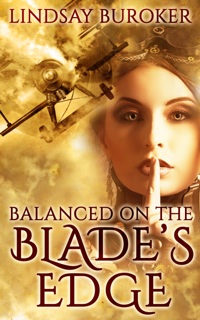
A couple of months ago, I released Balanced on the Blade’s Edge, a fantasy novel I wrote, edited, and published in less than a month as kind of an experiment. I didn’t have high sales expectations for it, because it was unrelated to any of my other work. Since it had a steam-age setting with a fighter pilot hero (think WWI-style planes in a fantasy setting), I put it in the relatively new steampunk category. You don’t need to use the keywords to get into it, but because it’s a sub-category of science fiction instead of fantasy, I’m guessing some fantasy publishers don’t think to look for it there. Read: it’s not that competitive, at least at the moment.

In the last couple of months, Blade’s Edge has sold better than anything else I have out now, even the more recently released Republic, which is the eighth book in my my most popular and established series. Granted, Blade’s Edge is a $2.99 ebook as opposed to a $6 one, so Republic has made me more money, but I’ve only had one other new release have the sticking power that this one has had in its opening months.

So, why the success? It got a lot of reviews early on (more on how I accomplished that in this podcast: Getting Book Reviews and Building a Relationship with Readers), but it’s also been #1, #2, #3, or #4 in the steampunk category for the last two months. For the first six weeks or so, it had a sales ranking between 1,000 and 2,000. It’s since dropped down to around 4,000, and as time passes, I’m sure it will drop more, but most of my books drop much more quickly (most have appeared in the more competitive epic fantasy category and, after the initial sales to established readers, they’ve dropped out of the charts). But even with a 4,000 ranking, as I write this Blade’s Edge is hanging out at #3 in steampunk (remember, that ranking wouldn’t even get me into the Top 100 in epic fantasy).

It’s a foregone conclusion that there are fewer readers browsing that steampunk category than there are the epic fantasy one, but there are more people searching there than I had expected. Blade’s Edge has had a nice run by being the big fish in the small pond.

So, how do you find a less competitive category for your book?

First off, check out that blog post I already mentioned if you haven’t already: How to Get Your Book into More Categories on Amazon with Keywords (it links to the KDP help page that shows you how to get into the categories not listed on the KDP dashboard).

Second, spend some time clicking on the Top 100 books in the category you usually list in. You might find that they have some unexpected second and third categories. I stumbled across the Literature & Fiction > Action & Adventure > Fantasy category that way a few months ago. I had no idea there was a fantasy category under Lit & Fiction, and as I write this, it happens to be easier to rank in than the epic fantasy category. There are also science fiction and fantasy subcategories under Romance. (That’s the other spot Blade’s Edge appears.)

Lastly, make sure your book is actually a good fit for the category you’re sticking it in. It won’t do you much good if the book and blurb don’t match up with reader expectations.

Update: I had to go hunting for this, and it’s a couple of months old so the sales ranking numbers will have changed a bit, but if you’re searching for less competitive categories, it’s worth a look: Top Amazon Fiction Categories to Chart in on 7 Sales a Day or Less.

Posted in Amazon Kindle Sales | Tagged , , , , , | 13 Comments

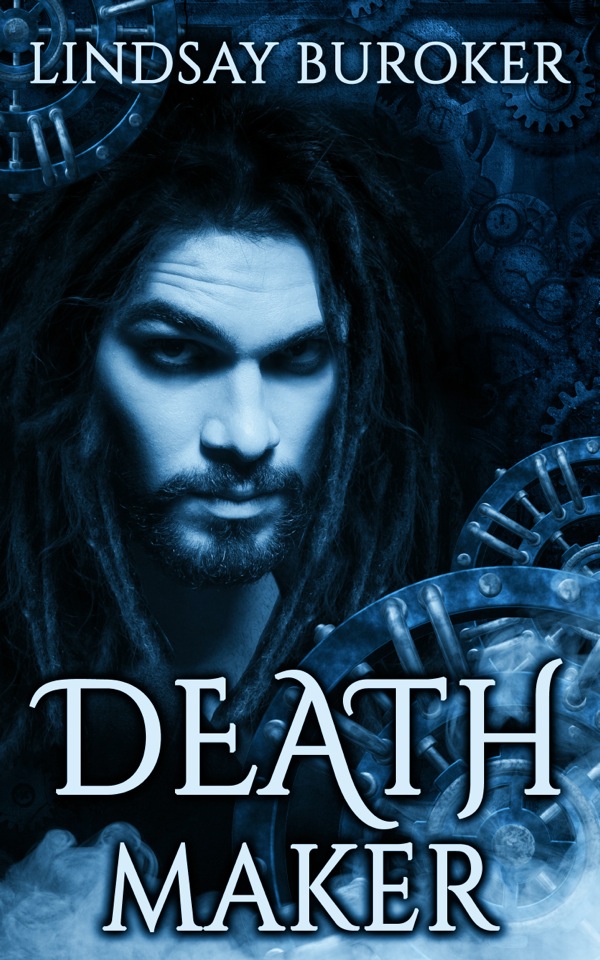
Deathmaker Now Available — Preview Chapters Here

Deathmaker, the new fantasy/steampunk adventure in the Balanced on the Blade’s Edge, world is ready to go.

It’s available at Amazon | Smashwords | Barnes & Noble | Kobo | iBooks

DeathMakerWeb Steampunk Fantasy AdventureWhen Lieutenant Caslin Ahn joined Wolf Squadron, she was prepared for the reality that she might one day be killed in the line of duty. She was less prepared for being shot down, assumed dead by her own people, and dragged off to the Cofah Empire as a prisoner of war. As if being thrust into a dungeon and interrogated wasn’t bad enough, the sadistic commandant decides to give her a cellmate: the notorious pirate Deathmaker. Given the crimes he’s committed against Iskandia, Cas owes it to her people to try and kill him.

Part warrior and part scientist, Tolemek “Deathmaker” Argoson has not only slain thousands with his deadly concoctions, but he has a special loathing for Iskandian pilots. It was Ahn’s commander, Colonel Zirkander, who ruined his military career, forcing him to leave his country in shame and join a pirate organization. Years later, he uses his dreadful reputation like a shield to keep people away; all he wants is to be left alone to work in his laboratory. But when fate lands him in a cell with Zirkander’s protégé, he sees a chance for revenge. Why kill the lieutenant when he can use her to get to his old nemesis?

There’s just one problem: it’s hard to plot against your enemies when you’re in prison with them. Cas and Tolemek will have to work together if they hope to escape the Cofah dungeon. In the process, they may find that neither is what the other expects, and that they have far greater problems to worry about than ensnaring each other…

Opening chapters:

Chapter 1

Cas didn’t like her new cell. After having spent two weeks jammed into a dark locker on a Cofah warship, the space so confining that she couldn’t stand up or stretch out straight, she probably should have considered this an improvement. But she wasn’t one of those irritatingly cheerful optimists. She hadn’t liked the last cell, and she didn’t like this one either. The window might let in the ocean breeze, but it was too small to climb through, not to mention barricaded with iron bars. The cries of parrots and the yowls of monkeys beyond it were a reminder that she was in a strange land, far from home, without hope of rescue.

Heavy footsteps and the jangle of weapons sounded in the hallway.

Cas bared her teeth, hoping the guards would only stroll past on their way to attend to another prisoner. It had been scarce minutes since her welcome-to-the-Dragon-Spit-prison-and-here’s-a-thorough-beating-to-make-you-feel-at-home greeting. She was still lying on the floor and recovering, so she flinched at the idea of another round with those bone cudgels. For all her vows to stay strong, she had spent most of her first beating curled in a ball on the ground, clutching her gut, and doing her best not to whimper. Whimpering wasn’t expressly forbidden in the “Survival, Evasion, and Recovery” chapter of the army field manual, but the line about the “inherent stoicism of soldiers” seemed to discourage it.

The footsteps stopped, and the door opened. Yellow lantern light spilled in from the hallway, making Cas realize that twilight had fallen outside. Not that the time of day mattered much.

A guard scurried inside carrying a stool. He set it down, the legs scraping against the hard sandstone floor, then he stood beside the door. Thanks to the shaven head, scarred face, and broad shoulders, he would have been ominous and forbidding even without the bone cudgel and short sword secured on either hip and the shotgun gripped in his hands.

Another shaven-headed man walked in, this one older and wearing a tiger fur cloak over his brown uniform. It didn’t look particularly climate-appropriate. The man wasn’t carrying any visible weapons, but Cas assumed he was in charge. If the Cofah military was anything like her own, only important people got to tinker with the dress code. For a moment, she thought of her own commander, Colonel Ridge Zirkander, and the way his non-regulation cap was always tilted at a rakish angle, but she hurried to push the image away, lest tears form in her eyes. She could be tough while they questioned her, but only as long as she didn’t let herself think of comrades—friends—back home… and whether she would ever see them again.

“Lieutenant Caslin ‘Raptor’ Ahn,” High Lord Cloak said, settling on the stool. “Wolf Squadron.”

Cas searched for something cocky to say, something to show that she wasn’t intimidated by him or this situation—Zirkander would have had a witty riposte for this statement of the obvious—but all she got out was a muffled, “Yeah?” Her lips were split and swollen from the beating. Even that single syllable hurt.

“Raptor?” Cloak made a point of eying her up and down, or rather, since she was on the floor, forward and back. Then he smirked. “Truly?”

Cas would have liked to stand up and tower threateningly over him, but she had to wear her thick-soled combat boots to brush the five-foot-two mark on a measuring wall. So far, she hadn’t managed to tower over anyone older than ten. It would have hurt too much to climb to her feet anyway.

“I didn’t give myself the nickname,” she grumbled. Not that she minded it; most of the squadron had embarrassing nicknames, especially the other young lieutenants. Pimples and Snuggles came to mind.

“Well, Raptor, our latest intelligence confirms that your people know your damaged flier sank during the skirmish in the Seven Tides Strait. They believe you’re as dead as the other pilot.”

The other pilot—Dash. Her eyes threatened to water again. She had seen the fire in Dash’s cockpit, seen him burning, his skin charred, his mouth open in a scream of pain right before his flier plunged into the ocean. There was no chance he had swum away as she had, having survived by clinging onto a piece of a wing until someone pulled her out of the water hours later. The wrong someone.

Cloak leaned forward, his elbows on his knees, his hands clasped as he regarded her. “That means nobody’s coming for you.”

A monkey howled in the distance. Cas wouldn’t have minded making a similar screech. She muttered a, “No kidding,” instead. Maybe she shouldn’t be saying anything. But if she responded to him, she might get a scrap or two of information in return. Though she wasn’t sure how she could manage it at the moment; escape had to be her priority. That was specifically mentioned in the field manual. Escaping and reporting back, that was her duty.

“That means we can keep you here as long as we need to.” Cloak smiled. Someone who found joy in his job. What a soul to be treasured.

“Oh, good,” Cas said. “I was afraid I wouldn’t get to thoroughly appreciate this hot, humid-as-spit climate before getting shipped somewhere else.”

“We’ll interrogate you, of course,” the man continued, as if she hadn’t spoken. Maybe he was used to talking to himself. “I doubt you know much. What are you, a year out of the academy?”

A year and three months, thank you, but she kept the thought to herself. No need to start giving away intel before they began the interrogation; no matter that they already seemed to know more about her than she would like.

“But you are Wolf Squadron,” Cloak went on. “If you’ve served under Zirkander for a year, my emperor will want whatever information you can supply on him.

Cas had been beyond proud when she had been selected for Wolf Squadron straight out of the academy—she had done her best to live up to the prestigious unit’s reputation—and she would never regret that choice. But, for the first time, she realized her position might not serve her well. Everything that made her commander a lauded hero in Iskandia would make him a loathed enemy here.

“Zirkander?” she asked, licking her lips—odd how dry her mouth had suddenly grown, humid air notwithstanding. “His favorite color is green; his favorite meal is pot roast; he prefers beer to straight spirits; and, when winter comes, he’ll throw a snowball at anyone, even officers who outrank him. If that’s enough intel, you can leave my cell door open, and I’ll be happy to show myself out.”

Neither the guard nor Cloak seemed to find her sarcasm amusing. Given how much saying all that had made her mouth hurt, she shouldn’t have bothered.

Cloak pulled a dagger out of a sheath that his furry garment had hidden. Cas tried to draw back, or at least manage a sitting position, but he moved quickly for an old prison commander. The blade came up beneath her chin, the sharp point digging into tender flesh. She froze, but that didn’t keep a drop of warm blood from welling and dripping down her throat.

“I’ve sent a communication to the emperor,” Cloak said. “It’s possible he’ll simply want to hurt Zirkander by sending him your head. As a sign of his failure.”

Cas lifted her chin, part defiance, and part an attempt to put some air between her and that blade. “The colonel wasn’t even in command of the squadron at Seven Tides. He didn’t fail at anything.” Although Cas couldn’t help but feel that she had failed. Due to her inability to dissuade a Cofah diplomat from groping her, the colonel had stepped in and punched the man, a move which had resulted in disciplinary action. It was Cas’s fault the colonel hadn’t been flying with the squadron that day. The man who had taken over, Major Pennith, was a good officer, but Zirkander never would have accepted the mission, one that ultimately cost the squadron four fliers and Dash’s life. The colonel would have known the odds were too poor and would have pushed back against the general, maybe even the king, or he would have changed the situation, changed the odds somehow. As he always did. As Cas should have done in facing that diplomat. She shouldn’t have needed rescuing. Her father would have been embarrassed for her. Rightfully so.

“Yes,” Cloak purred, “we’ve heard that he hasn’t been flying of late. Care to tell me where he’s been?”

“Not that I would tell you anyway, but I have no idea. You’re right that lieutenants fresh out of the academy don’t get told much by generals and colonels.”

Zirkander had barely had time for more than a goodbye wave to all of them before disappearing to who knew where. Reassigned, he had said, his face almost ashen. Cas had never seen that expression on him before, and it had alarmed her. But he’d told them he couldn’t say more, simply giving everyone pats on the back and encouraging words before collecting his lucky charm from his flier and walking out of the hangar.

“You’re sure you’re not anyone’s bedroom confidant? You’re young and pretty enough. Under the blood.” Cloak traced her jaw with his dagger, his dark eyes growing thoughtful.

For a moment, rage replaced fear, and Cas spat at his face. It was stupid, but it felt good. She found the strength to pull away from him, too, not that she could go far. All he would have to do was get off that stool. If he couldn’t corner her on his own, the guards surely would.

Cloak snorted and wiped his face. “It’s unfortunate there are rules against jailers raping prisoners. If the Iskandians are stupid enough to put women in their military, they’re asking for it, after all. Besides, after all of our men your flier squads have brought down—killed—you deserve it.” He looked at the soldier standing next to the door.

Cas gripped the sandstone bench lining one cell wall, pushing herself into a standing position, bruises and pain notwithstanding. Rules were good, but if Cloak wanted to break them, she meant to face him on her feet.

“If you want me to shut the door and see nothing, I will, sir,” the guard said.

Loyal to his commander, was he? How sweet.

Cloak’s thoughtful expression returned to her. There was far too much consideration on his face.

Cas dug through her mind, looking for a way out of this mess. To distract them, if nothing else, and make them forget about her for the night. “Since you seem to know quite a bit about me, you might have heard of my father. He wouldn’t have been so quick to dismiss me as dead when he heard the news. He could be over here, hunting for me already.”

“Yes, I’ve heard of your father, and my research tells me that he hasn’t spoken to you in three years. I understand he didn’t approve of your decision to join the army and serve the king instead of going into the family business.”

Cas swallowed, disturbed by how much intelligence the Cofah had on specific Iskandian personnel. They couldn’t know this much about every soldier in the army, could they? Maybe the flier pilots had been singled out because they were particularly irksome.

“I doubt he’ll be looking for you,” Cloak finished. “No, you’ll stay here with us for a while. We’ll break you and get every iota we can out of you while waiting for word from the emperor.”

Break you. That did not sound promising.

More footsteps sounded in the hallway.

“Any chance that’s dinner?” Cas asked, hoping this chat was over. “They didn’t feed me regularly on that glorified tug. As you can see, I’m getting a little waifish.”

“You missed dinner. I’ll be sure to tell Captain Trivolt that you called his warship a tug though. I’m sure that will make him more hospitable to the next prisoner he captures.”

A guard jogged into the cell and whispered something into Cloak’s ear. Cas took the opportunity to move farther from him and his dagger. She put her back to the window wall, her canvas prison smock little insulation from the cool, coarse stone against her shoulder blades. Coarse or not, she liked having it behind her and putting as much distance between her and the men as she could.

“Yes, I’d heard about his capture,” Cloak said when his man straightened. “An even more intriguing prisoner. Yes, I’ll question him immediately.”

As he stood up, Cas allowed herself a hint of relief. Good, someone else for the commander to harass.

Cloak paused before walking out the door though. He looked thoughtfully back at her, his hand on the door jamb. Then he threw back his head and laughed, a deep hollow laugh that reminded her of the big bell clanging in Sky Tower back home.

“Sir?” the new guard asked. Judging by the way his mouth dropped open, his commander didn’t laugh like this often.

Oh, good, that meant he had come up with something special. Cas prayed it had nothing to do with her. Would the seven gods hear her prayers over here in enemy territory? Or did they think her dead too?

“Bring him here, Corporal,” Cloak said, his lips still stretched with mirth. Mirth Cas couldn’t help but find alarming, especially when he turned that smile toward her. “I believe we’ll save space by having our two new prisoners share a cell.”

The guard’s brow wrinkled. “But there are plenty of empty cells, sir.”

“Ah, but nobody hates Zirkander and Wolf Squadron more than the Deathmaker.”

Cas stared for a stunned moment as the words sank in. Deathmaker. Cas closed her eyes. She would have liked to scoff at the overly dramatic name—pirates couldn’t ever call themselves Thon or Jed, could they?—but she had been to Tanglewood Peninsula, seen the memorial there, the graves. Six years earlier, the entire village—every man, woman, and child—had been slain by a horrible biological agent that melted their lungs and other organs, killing them from the inside out. There was nothing about the Deathmaker that should make one scoff. The evil scientist belonged to the Roaming Curse, one of the biggest pirate outfits flying the Targenian Sea. Wolf Squadron had battled with them just that past summer, taking back a pair of dragon-flier energy sources the pirates had stolen during a raid. Zirkander hadn’t been lenient, and Cas had been along on that mission. She had helped bring down their flagship. She shouldn’t be surprised that Deathmaker had gotten away. He was one of the few pirates who had a reputation even more horrendous than that of his bloodthirsty leader, Captain Slaughter.

But what would he be doing here? Why would a nefarious pirate scientist be roaming about where he could be captured?

“But won’t he kill her, sir?” the guard asked after scratching his head a few times.

“Possibly. Though I’m hoping he’ll want to prolong her torment a bit.” Cloak turned his unfriendly smile back onto Cas. “The rules say nothing about what prisoners may and may not do to each other.” Cloak laughed again. He even wiped tears from his eyes. What a dung flinger. “If nothing else, she’ll be less lippy in the morning, I’m sure.”

“Yes, sir. I’ll get him.”

Cas stared at the floor, trying hard not to feel defeated… and failing.

Deathmaker. Fate was hating her this month. When she had gone to flight school and joined Wolf Squadron, she had known she would make enemies. Even if Iskandia merely defended its homeland and rarely looked for trouble beyond its borders, the Cofah believed her people were rebels who should be reconquered. Hundreds of years may have passed since her ancestors had killed their externally imposed rulers and cast the Cofah off their continent, but the empire had a long memory. The Cofah had never stopped wanting Iskandia, and they would always believe themselves the righteous ones. When Cas had started shooting down their dirigibles and attacking their ocean warships, it had been inevitable that she would become a target herself.

Well, she didn’t have to be an easy target.

Cloak and the new guard had gone.

Cas eyed the remaining guard. He was watching her right back, his shotgun aimed in her direction. Surprising him and escaping would be difficult, but the door was still open, and he was alone. This might be the only chance she got.

She subtly slid her hands along the wall behind her, hoping to find some crumbled piece of rock that she might hurl as a weapon. There were such chunks in the corners of the floor, but he would notice if she bent to pick one up. Oh, what she would give for the powers of the sorcerers of old, the ability to convince one of those noisy parrots out there to swoop through the window and claw this man’s eyes out. She would have to settle for a more personal attack.

She shifted her weight and found one of those rocks with her toe. She nudged it away from the wall, thinking to kick it across the room. If she could distract him for a second, maybe she could wrestle that shotgun free from him. She might not be much more than a hundred pounds, and little more than salt and vinegar in a fight, but with a projectile weapon in hand, the odds should shift in her favor.

The footsteps returned in the hall. Out of time. She cursed under her breath.

The guard glanced toward the doorway. Cas kicked the rock.

It skittered across the room, banging him in the toe. Not much of an attack, but he looked down, and she leaped across the room. Her wounds protested the sudden movement, but her nerves flooded her limbs with fire to compensate. She grabbed the barrel of the rifle, trying to yank it free before he recovered.

He snorted. His eyes met hers, and there wasn’t a glimmer of concern in them. He lunged at her, bowling her off her feet, and slammed her into the side wall so hard that it knocked her breath away. She tried to knee him, but he thrust her against the wall again, the back of her head thumping the stone this time. Blackness rimmed her vision, and dots of light floated through the air before her. She was vaguely aware of her feet dangling several inches off the ground.

“Women make pathetic soldiers,” the guard said. “That you’re here is a sign of how desperate the Iskandians are.” He rammed her against the wall again.

“That’s enough, Sergeant,” Cloak said from the hallway.

He had returned, along with more guards, a lot more guards. And another man.

Cas blinked, trying to clear her eyes. The man standing in the doorway, his hands shackled before him, appeared more warrior than scientist, with a hide vest leaving his muscular arms and part of his chest exposed. She had expected a crazy old man with spectacles or magnifying goggles and white hair sticking out in all directions. The figure in the doorway appeared to be about thirty, and his long black locks fell down his back in matted ropes. In contrast to the tangled hair, his mustache and goatee were trimmed, and his bronze Cofah skin was clean of grime, but nothing about the dark scowling eyes, the shark-tooth necklace, or the spiked leather wrist cuffs invited one to venture closer. Amazing that the guards had been able to get his shackles on over all that pointy metal.

They were watching him now, far more warily than they had watched her. No less than four pistols were aimed at the pirate.

“Deathmaker,” Cloak said, extending a hand toward Cas, who was still pinned by the guard. “Allow me to introduce your new roommate.”

The guard stepped back, letting Cas drop to the floor. She braced herself against the wall. Her heart was beating a couple thousand times a minute, and she needed the stone for support. So much for her grand escape attempt.

The pirate stared at her. Full darkness had fallen outside, and she doubted he could see much in the shadowy cell, but she didn’t see how that helped her.

Out of some sense that she shouldn’t let him know she feared him or that he had any power over her whatsoever, she said, “How come you got to keep your trendy pirate clothes, and they forced me to put on this potato sack?”

The prisoner turned his dark glower onto Cloak. If he found anything amusing about her question, it didn’t show on his face.

“Ah, are introductions in order?” Cloak grabbed a lantern from the wall and hung it from a hook in the cell—Cas eased back into the shadows near the window again. “Deathmaker, this is the Iskandian, Lieutenant Ahn. From Wolf Squadron.”

That got a reaction. The pirate’s nostrils flared, and his head jerked back toward her, his hair whipping about his face.

Cloak waved to one of the guards. He stepped forward warily and unlocked the pirate’s shackles. The metal fell away, clanging to the stone floor. The pirate lunged inside, springing toward Cas like a lion taking down its prey.

She could only take a step before her back smacked into the wall. She tried to duck and dodge away, but even in the darkness, he anticipated which way she would go and grabbed her. Much as the guard had done, he slammed her into the wall. Her already battered body betrayed her, and a gasp of pain slipped out. She wanted to fight, to spit curses if nothing else, but a calloused hand wrapped around her neck.

Cloak’s dark chuckle came from the hallway, then the door thudded shut, leaving Cas along with the pirate. The hand about her neck tightened.
Continue reading

Posted in Fantasy / Science Fiction, My Ebooks | Tagged , , , | 26 Comments

Creating Engaging Characters That Turn Readers into Fans

FromtheBlueMountainsinMissouaI have ideas for a number of blog posts I need to sit down and write, but I’ve been busy writing the fiction (look for the next Flash Gold novella soon and Deathmaker, a follow-up to Balanced on the Blade’s Edge even sooner). I do, however, have another walking podcast recorded, so for those who like to listen, I talked about what attracts people to a series and about developing appealing characters in this one.

I don’t usually presume to give writing tips, since there are already a lot of people out there who teach that stuff and do a better job than I could, but characters are my favorite parts of the reading (and writing) experience, so it’s hard not to want to talk about them.

Requested file could not be found (error code 404). Verify the file URL specified in the shortcode.

Download

I’ve shared what I think makes a good character (and what turns me off on other characters). Do you have any pet peeves of your own? Or things that make you fall in love with a character? Let us know in the comments!

(Oh, and because someone asked for pictures of the areas where I’m walking/hiking, I’ve included a photo today.)

Update: William Stadler was nice enough to type up a transcript of the episode. So for those who don’t have time to listen, here you go!

Transcript for “Creating Engaging Characters That Turn Readers into Fans”

Hey guys. This is Lindsay Buroker again. Today I am walking and talking to you from, I think it’s like the Blue Mtn. trail system. It’s a little bit outside of Missoula. So I’m kinda’ in the middle of my road trip to Seattle for the summer where I’m gonna’ visit friends and family, and of course…always be writing and working. And the great thing is that writing from home is that you can do it anywhere, wherever your home is.

After the last episode that I posted, I had a few people ask, “You know, if I do all these things to work on establishing a fan base, will I start selling more books?” You know, maybe you can find lots of examples of people that they do have a series out, and maybe they’ve got several books out and they’re still not selling very well. Is all you have to do is to keep writing? Is that all you have to do is keep writing and publishing and you’ll naturally get to that point and you’ll make a reliable income?

Or is it that some people get lucky and some people don’t?

I would say that there’s definitely a lot of luck involved in becoming a huge best seller – kind of a break out novel. Sometimes you see that happening, and you’re not really sure why it happened. You may read the book, and you’re thinking, “It was a good book, maybe, but was it better than fifty other books in the same genre?”

I think in that situation there’s some luck – of course there’s talent and working hard. What’s that phrase: “The harder I work, the luckier I get”?

But I do think that if you’re trying to build up a fan base – trying to reach that 1,000 true fans (maybe you’ve heard of that) that it’s more a matter of figuring out what people like and keeping on doing that.

As I was saying last time, having a series can really help. But of course you have to have something about your series, something about your writing that appeals to people and makes them wanna’ come back for more. And that’s not a gimme’, you know. That’s learning the craft of storytelling and practicing getting better.

I don’t usually try to teach on the topic of how to write. Because I don’t think I’ve studied it enough. I’ve kinda’ internalized [it]. I’ve learned a lot from doing – critiquing and being critiqued. But I haven’t taken a lot of classes or read a lot of books. I don’t know, I always think it’s a little presumptuous sometimes to presume to teach other people unless they come to you, and they’re really impressed by your writing, and they wanna’ learn to do it the way you do it.

Anyway. Today I’m gonna’ try to talk about something I’ve been told I do well. And that’s creating characters that people really enjoy.

I think there’s kinda’ two ways to get people into a series. And one is if you’re this really awesome plotter, you’re really good at creating suspense – really sucking people in.

You know, I think a lot of people saw the series Lost. And I don’t know if any of you did, but I know I didn’t remember any of the characters. I just remembered that I couldn’t care less if any of them even died. But I ended up watching a lot of the episodes, because there are all these questions that you want the answers to. You’ve got all these mysterious things going on. So, that sort of thing sucks you in.

Another series that I ended up watching all four or five seasons of was the new Battlestar Galatica. I guess it’s not that new at this point. And again, with that series, it wasn’t the characters. They were fine…some of them you hated. You were supposed to hate [them]. Some of them you kinda’ liked. But there weren’t any of them where you were like, “Ahh, that’s my favorite character. I’m totally watching this series because of that character.”

It was more a matter of the plot. You know, they were on this quest. You wanna’ see what’s gonna’ happen at the end. Are they gonna’ survive?

So that is one type of series that you can do that can draw people in and keep them coming back for book after book.

You can do cliffhangers at the end, or not. Some readers hate those, but from a marketing point of view, they seem to be pretty effective for people.

Now with all that said about that kind of writing, that’s not really my strength or what I do. I mean, I do, of course, try to make my plots interesting. And I have done a few cliffhangers – mostly because that was sort of a good stopping point where. I had written 120,000 words or something, and decided to break a book in two.

But I don’t necessarily try to string people along like that. And, um, if it’s a compelling plot, great. I always hope for that, but I definitely’ve been told it’s my characters people like, and that’s why they keep reading. And that’s a perfectly legitimate way to have a good series and have a following. Of course you can do both, but I thought I would kinda’ focus on characters today – talk about some of the reasons people seem to get into characters [and] some of the reasons they might be turned off by them.

And, you know, if something helps, great. I don’t always remember to do all these things right myself. I like to think about the marketing stuff. But, I don’t usually think about it too much while I’m writing, you know. I just sorta’ write what I wanna’ write, then try to make the marketing side of things work. Every time I try to write for a specific market, it ends up turning into something else.

But today…characters.

Because what you’ll find is if you’ve got some really cool characters, you’ll have people following along, and it doesn’t even necessarily matter so much what the next book is about. People wanna’ spend time with these characters.

I remember some of the series I’ve read [that are ]not in genres I usually enjoy. (I usually read fantasy or non-fiction, sometimes historical). The reason I’ve gotten sucked into them – usually because my mom or somebody recommends them – is because of the characters.

One example actually as a kid is I read all of the Cat Who mysteries by Lillian Jackson Braun, I think it was. I know she’s passed away now, but she wrote a lot those books, and had a really successful series with the main character and his cats. And she did a good job with these characters, making these quirky, interesting characters, and there was always a mystery, so you wanted to keep reading them because you cared about the characters.

Another example is – I actually do not care about thrillers and horror at all – but…I’ve read most of the Lincoln Child books that have Agent Pendergast in them. So that’s another one my mom got me into. And he’s really quirky – he’s a badass character, of course – but he’s got all these weird quirks that kind of draw you in…you know?

And then for tv people – since I did a science fiction series – as plot example, I got really into Stargate, the first one. Stargate. What was it called? SG-1 and I’ve got, I think, eight seasons on DVD, which is unheard of for me. I hardly ever watch that much tv or buy anything.

And that was an example where a lotta’ times I didn’t care for the plots or the scopes. I think I liked the first few seasons where they were more archeology focused. I hated all the bad guys in that series. All of’em. There was like three sets of bad guys, and I couldn’t care less for any of those episodes.

But I kept watching them because of the characters. I really liked Colonel O’neal and Samantha Carter. She was a great example of a strong female character that wasn’t so badass that she was grating. At least, I felt so.

And of course there was always kind of the subtle, “Maybe these two will have a romance, but, you know, they can’t cuz’ they work together – they’re on the same team, dah, dah, dah.”

I think for female readers, especially sometimes, that’ll be something that draws us in – having a romance. With a series, it’s kinda’ cool if you can have something like that not be resolved for a long time.

I actually did that in my own Emperor’s Edge series. I wasn’t really planning, you know, “How can I make this a great series that people will get into?” But because the main character, the heroine, was kind of a good moral person, and the other protagonist, my assassin character, was a less good moral person, they weren’t, um, an obvious match from the beginning.

But by the end of the series, you know, as things went along, it only took seven books for them to develop a romance. And I know that was one thing that was really drawing people along with that series. So, something to think about there.

Let’s just talk about characters in general – some of the things that can make really good compelling characters that make people wanna’ read along. And like I was saying, “Once you get that, the plot matters less.”

Of course you still want a good plot, but a person’s not gonna’ read the blurb and think, “Uhh, is this for me? I don’t know. I’m not really interested in, uh, oh…submarines, again, really?” But they’re gonna say, “Oh, it’s another book with those characters. Of course I’m gonna’ read it. I wanna’ see what happens next with their relationship.”

It doesn’t just have to be a romantic relationship, of course. You know, if you have a group of characters, or something, even one main compelling character who’s trying to do something with his life, people get involved with these characters and want to see what happens next, and you know, follow along with them.

So what are some of the types of elements for these types of characters?

Well, first off, let me say: anything I say today, maybe it’s a rule and rules can be broken. And we can all think of examples where people have had rules with unsympathetic main characters, or something like that, and the series is still really popular. But that’s usually an exception, other than a rule. If you want people to love your characters, these are things that tend to work, [that] tend to get people to enjoy them.

First thing I would say is, of course, watch out for the Mary Sue character, which is – you’ve probably heard this before – sometimes an author’s fantasy character – all the things he/she wishes she was: so she’s beautiful, athletic, everybody loves her, she’s got the best hair. And this kind of character can grate on people’s nerves, because she has no problems. She’s too perfect. It’s hard to love. Most people aren’t like that. [If they are], they’re kind of annoying; ya’ hate’em. You might like’em, but…ya’ kinda’ hate’em. So, those kind of characters can be a turn-off for readers.

That said, I do think that most people want a character that has some degree of competency in their field or in something that’s gonna’ apply to the plot. We wanna’ walk in a person’s shoes. We want it to be appealing. Because maybe they get to say all the things we wished we always had the guts to say to our boss, or whatever.

To keep these characters from being the Mary Sue type – or, is it Marty Stu? I can’t remember what the male version is, but it goes either way there. You give them some flaws, right? Flawed characters. It makes them feel more human, more relatable, just more appealing. And because they have all these flaws, you tend not to hate them for things that they’re good at because they’ve got all these issues going on.

It’s up to you to figure out what flaws would work best for your characters. You know, a lotta’ times they say, “Oh he’s got a horrible temper, or he’s got a history with a drinking problem or a drug problem.”

Uhm, Those are fine. They’ve kinda’ been done a lot.

The one thing I would say with your flaws is be careful not to make them too despicable that people’re going to just be turned off by that. I think a lot of people can relate to the, “He had a drinking problem. But now he’s trying to move on past that.” And maybe it’s always a difficult thing for him or her to deal with.

But, you know, we like to see somebody that’s fallen really low kinda’ pull themselves out and get on with their lives. Don’t say he had a drinking problem and then never have that come up in the plot. I’m laughing because one of my characters had that. I think it came up once or twice. They were too busy killing monsters and stuff. But um, that was a minor character, so yeah…there’s my excuse.

Whatever flaws you can think of, try not to make them be flaws that are gonna’ be turn-offs, like a really abrasive personality. I think you have more leeway with what you’re gonna’ do if it’s like a minor character, or not one of your point of view characters.

I will tend to make more normalish characters for the point of view characters, because I think people can relate to them. And then kind of the more quirky or more abrasive personalities – the sarcastic ones – might be, you know, a main character in the story, but not one of the point of view characters. So it kind of matters less if the reader is really in love with them.

You never know; sometimes those people, the more curmudgeony types, can become appealing characters. It’ll surprise you. If that happens, then do the next book from his point of view, or something like that.

I think you get bonus points from the readers if the flaw is something that really makes the reader sympathetic to that character. I think one example – I’m gonna’ keep using tv, because I think you get a lot of people that have watched a lot of stuff on tv. Maybe book examples might be less well-known.

So, um, if you saw the show Monk – that was the detective with all these OCD habits that was on for several years – it was funny because he had all these quirks, right. He had to go count the sidewalk cracks and touch the poles, obsessively clean his house every day. But his wife was murdered, and he was trying very hard to become normal enough to that he could get his job back on the police force.

His quirks, his characterization, his flaws, they were funny, and yet at the same time, they were a little sad and you kinda’ felt for him. So I thought that was just a good example of a character that [was] definitely a flawed character. There were so many things that he had trouble doing because of all these OCD issues. And these flaws made him endearing so that the watcher really connected with him.

At the same time, a lot of us have some of these flaws to maybe a lesser extent, so we can really identify with something like that. Or even if we can’t, like I said, you’re sympathetic; you feel for him – the way they wrote the character.

So that’s just something to think about. Flawed characters. Not doing Mary Sues.

Okay. Next thing. And I think I saw this a lot back when I was, um, critiquing a lot of people’s work, back when I was doing the workshop thing a lot. And that is when you have a main character, or a protagonist, who doesn’t really “protag.”

They’re kinda’ being pushed around by the plot. They’re not trying to take action themselves and make things happen. And this happens a lot to people who make the plot first and then put the characters in.

People that come up with characters first and then write a plot that evolves from the characters, this is less of an issue. Both are valid ways of writing and plotting. It’s just something to be aware of if you’re more of a plot first then characters type of writer.

What ends up happening is that you’re not as engaged with these types of characters. Things are happening to them. They’re just reacting. They’re not, like, actively trying to make their lives better, or fix a problem. Um, one story I wrote where…you know, I don’t usually have this problem because…well, it happens. Whenever I come up with a plot first, that’s when it’s gonna’ happen usually.

One other story I wrote was my character was kidnapped, and for most of he book, she’s, like, stuck working for the enemy to decode these ruins. And so it’s really hard for her to take action, cuz’ she’s a prisoner for the whole thing, [because] a really capable army has her.

But you just have to look for ways for them to try to influence someone, try to be thinking about escaping, trying to take action. (I’m saying that a lot.) Don’t just let them go with the flow. It’s hard for people to be sympathetic when someone’s a prisoner, then all they do is lay there and wait, and nothing happens unless the plot says it happens.

And these characters just tend to be less interesting. They’re less likely draw us in. We’re not rooting for them as much. Even seeing someone try and fail, maybe even more so, that makes us wanna’ root for them, makes care what happens to them.

Another thing that’ll commonly maybe annoy people is when you do the telling instead of showing kinda’ thing. Of course as a writer, you’ve heard, “Show don’t tell.” And with characterization, that’s a really big place where that comes into play. Especially if you read romances, the heroine is always described as being smart. She’s like a scientist, or she’s like an attorney, or whatever. And we’re told, “She’s smart, she’s smart.” And then throughout the whole book, she does nothing smart.

And I like to make smart characters, and I like to read about smart characters. But, you know, you don’t say their smart, right? You show them solving problems and getting out of sticky situations, outthinking other characters in the book.

So just…anytime you’re gonna’ say, “Oh, he or she’s smart character,” or you know, “He’s a really great fighter; he’s a navy seal, or a uber knight in your fantasy world,” again, you know, just think of ways you can show that through their actions. If you do say it, just make sure you back it up at some point with the actions. With characters, always show, rather than telling.

And if you don’t tell, if you just let [the readers] decide whether they’re smart, [the] reader can decide whether a character is smart based on their actions in the book, you don’t set up that, “Prove it,” kinda’ mentality. It’s up for the reader to decide. Maybe the reader’s really smart himself or herself and doesn’t think your character’s all that. So, you haven’t set up any expectations that failed to be met.

I think the last thing I’ll mention here is just, um, personality. People say, or sometimes you’ll see a review, “Flat characters” or “All the characters are interchangeable. You couldn’t tell who was talking without the dialogue tags.”

Or, you know, the other…let me reverse the comment, “I could tell exactly which character was talking without the dialogue tags.” And that means that you’ve really made a really distinct personality for each one.

“Okay,” you say. “That’s sounds great, but how do I do that?” Let’s say you’re going to have five or six characters in your adventuring group, how do you make them all different from each other and distinctive?

And um, you know, sometimes [with] different types of personalities, of course, is when conflict arises, and that’s also something that makes the reading more compelling. I guess it’s something kinda’ common in fantasy – which I’ve read a lot of – where you’ve kinda’ got this adventuring party, and it’s a little weird when everyone gets along really well, and the only conflict is external conflict.

Going back to tv shows, one of the shows I liked was Firefly, even though it was only on for, whatever, eleven episodes, cuz’ you had all these characters, you know, that they kinda’ were like a family, but at the same time, you know, you had the mercenary Jane who was always trying to, like, get money and turn in Simon the doctor and his sister. So he was always scheming against them. They didn’t get along. Captain could be abrasive. You had characters with a romance interest, all this stuff going on in this crew. So you had internal conflicts that made it interesting, as well as whatever the problem of the week was that they had to solve.

So, how to make these personalities? You know, you’re probably going to find that your main character or protagonist – especially early on as a writer – that there’s a lot of you in that character. And that’s natural.

But for the other characters, think of friends you know…or people you hate. Think about what about them is different, what stands out in your mind. Well, first thing, I would say, make sure each character has their own goals, their own driving interests, motivations.

It gets a little murky when everybody has the same goal. That’s when, you know, nobody’s disagreeing; everybody’s always happy-happy when they’re working together. Usually in life, everybody’s out for themselves though, right?

So maybe we’ve got one character, you know, maybe he wants to make money. Another one, tryin’ to win a woman. Another wants to be recognized as a hero by everybody; whatever it is.

They’re all gonna’ kinda’ have different life goals, and that’s a starting point for giving them each a different personality. And beyond that, you can think if they quirks, mannerisms that maybe you can just make something up, or maybe you’ve seen with somebody else.

I think I stole one for a very minor character once from a relative that I knew that at least five times a day, or if you had dinner with her, at least five times, she’d say, “You know what your problem is.” So I used that with a character.

Um, one quirk, like I was talking about that show Monk, he had all these quirks that made him a really distinctive character, very memorable. You know, you don’t have to use OCD. There’s lots of little ways, people can have quirks.

One thing I did with the steampunk novel I released about a month ago – I talked about [it] in the first episode – you know, I had a pilot, and he’s kind of a Marty Stu.

He’s always getting in trouble, so he’s not quite perfect. But one of the things I thought would be fun, because I just seemed to remember [that] lots of pilots…um…I don’t know any pilots, I’m kidding. But lots of athletes, I guess – which I do know – are a little superstitious. So I thought, you know, this is a guy who’s risking his life every day, so maybe he’ll be a little superstitious too.

So, I gave him this lucky dragon figurine that he rubs whenever he needs some luck. And it became kinda’ fun to poke a fun at that, sort of a little slight flaw for the character. So yeah he’s a little superstitious. That became like a memorable thing for him.

And it was good for some, uh…sexual innuendo jokes, if you like sort of thing. “Rubbing Dragons.” Yeah.

So, you’d be surprised how a little quirk that you give to a character can actually become a very memorable thing for the reader and something that they enjoy about that character.

Aright, I’ve been rambling for almost twenty-five now. So, I’m gonna’ go ahead and end this. Hope you found it useful. Maybe something sparked an idea.

Like I said, I should remember to listen to these things myself, cuz’ a lot of times when I’m in writing mode, I’m…I’m not thinking about, you know, marketing or the high end – high end plans. A lot of these things you just hope come out naturally. You just try to internalize them so that you remember them.

But I hope, yeah, I hope something helps, and…have a great week. And…happy writing! Bye-bye.
Posted in Walks with Lindsay, Writing | Tagged , , , , | 10 Comments

Summer Projects and Will There Be More “Emperor’s Edge” After Republic?

If you’ve been following my Emperor’s Edge series, you probably already know I published the eighth book with Amaranthe, Sicarius, and the others last month. Republic was a big story and a bit of a departure for me (six point-of-view characters and over 200,000 words), but so far the reception from long-time readers has been positive. And the question has come up…

Will there be more adventures with these characters?

Probably, maybe, I think so. How’s that for a definitive answer?

Right now, my focus is on writing the first few novels in what I never planned to be a series (I wrote Balanced on the Blade’s Edge as a stand-alone fantasy romance novel, but, thanks to your reviews and support, it’s done well at Amazon — it hung out in the #1 steampunk position for over a month, and it’s still selling nicely. In addition, I realized I wanted to explore the world more thoroughly and add some more characters to the mix) as well as writing the long-neglected sequel to Torrent. I’d like to do a series there too. Getting these series off the ground is the summer project. (I’m also doing my final edits on the fourth Flash Gold novella — that’ll be ready to go before summer.)

After that, I’ll look to the Emperor’s Edge world again. As I’ve mentioned before, I have plans for a Nuria trilogy that stars Yanko from the Swords & Salt novellas, as well as Dak, who you might know now from Republic.

As for Amaranthe, Sicarius, and the rest of the EE crew, I’m mulling over how I might do some more adventures with them that could possibly appeal to brand new readers as well as regulars. I’m not sure yet whether Am & Sic would be the focus of a new series or if they would be side characters in it with someone else taking the role of narrator and main protagonist. Some of the other characters have some more growing to do (poor Maldynado is still trying to figure out his life), whereas Am & Sic are pretty well fleshed out at this point. Nothing is set in stone yet though. If you have thoughts, I’d love to hear them.

Anyway, that’s what I’m working on this summer. The next thing out will either be Claimed (FG4) or Deathmaker (the next book in the Blade’s Edge world). Thanks for reading!

Posted in News | Tagged , , , | 28 Comments

Answering the Question: Why Haven’t I Been Able to Build up a Fan Base Yet?

You can read blogs and forums and listen to podcasts all day, but sometimes it’s just frustrating when you see other authors making a killing and you’re struggling to sell a book a day. Everyone says to get on social media, build a fan base, start a mailing list, etc., but what if you’ve tried and that’s just not working?

I recorded another walking podcast last week and did my best to answer this question. I hope you’ll find something useful!

Requested file could not be found (error code 404). Verify the file URL specified in the shortcode.


Download: Walking with Lindsay #3

If you want to hear me elsewhere, I’ve been interviewed on a couple of podcasts lately:

Posted in Walks with Lindsay | Tagged , , , | 20 Comments

The Emperor’s Edge Series Rolls on with Republic

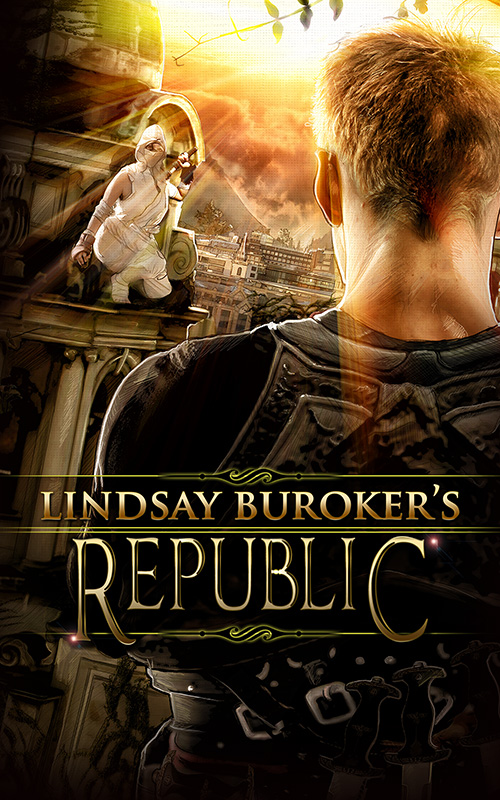
Republic CoverI’m a little late getting this post up, but Republic is now available at iTunes too, so maybe the timing isn’t that bad. With this epic adventure (210,000 words and six point-of-view characters), we’re picking things up a few months after Forged in Blood I & II. Those were originally going to be the final books in the series, but Emperor’s Edge fans asked for more.

Available at Amazon | Smashwords | Kobo | iTunes | Barnes & Noble

Blurb:

After the notorious outlaws Amaranthe and Sicarius helped overthrow the corrupt faction controlling the empire and brought in a great war hero to lead the nation to prosperity, they finally earned their pardons—and some time off. A tropical vacation cruising around in a private submarine? Perfect. But their trip is interrupted by a summons from the new president: they’re needed back at home. Trouble unlike anything they’ve ever dealt with threatens to destroy the capital city and throw the fledgling republic into chaos.

Excerpts: Chapter 1 Part 1 | Chapter 1 Part 2

Posted in My Ebooks | Tagged , | 17 Comments

Character Interviews: Sespian (on fathers, cats, and man-to-man advice)

As many of you know, Amaranthe, Sicarius, Sespian, Maldynado, Tikaya, and several others have been dealing with a few… troubles of late. After the events of the Forged in Blood books, everyone expected a long vacation, but transitioning from an empire to a republic is a difficult business, and there have been a few… incidents.

It’s a little early to go into the specifics, but I’ve managed to pull aside one of the key players in these events, the former emperor Sespian Savarsin, to field some questions. I tried to get the notorious assassin Sicarius to join in the interview as well, but after our last chat together, he was oddly disinterested in speaking with me again. I believe you’ll find Sespian’s point of view interesting, however, and with the help of a number of citizen journalists on my Facebook page, I’ve put together an interesting list of questions for him.

**This interview contains spoilers for earlier books in the series and is recommended for those who have read through Forged in Blood 2.

Sespian Interview

LINDSAY: Greetings, Sespian. Come in. Sit down. Thank you. You’re already being more amenable than your father was in his interview. I appreciate that.

SESPIAN:

He glances around the room.

He’s here?

LINDSAY: No, no. I was referring to an interview from a couple of years ago. As far as I know, he’s not around. Please feel free to answer your questions openly and honestly.

SESPIAN: Of course. I would do so no matter who is in the room.

A concerned frown crosses his face.

The questions aren’t going to be about him, are they?

LINDSAY: It’s possible his name comes up from time to time, but, no, these are about you.

SESPIAN: About… me? Wouldn’t people be more interested in hearing about recent events in the capital? Or about the transition from empire to republic, as seen by the emperor-turned-common-man? Perhaps some speculation on the future of international relations with the enemies we now seek to make peace with?

LINDSAY: Uh, it’s possible something like that will come up. Not… likely, but possible. Shall we start?

SESPIAN: Suspicious squint. All… right…

LINDSAY: Good. Oxalis asks, “You took Sicarius’s hand at the memorial for Books. That seemed to mark a turning point in your relationship. Did you have a chance to follow up on that before he and Amaranthe left on their vacation? If so, how did that go?”

SESPIAN: That evening… I believed that my father, whether he shows his feelings or not, considered Books a friend, and I wished to express my empathy. I also felt the loss of the professor, though I did not know him as well. It seemed a fitting gesture. After that, Father was busy preparing for his trip with Amaranthe. They left as soon as the voting had been completed. There was not much time for us to d anything together, though I confess, we have very little in common, and it is difficult for me to know what to say to him when we are alone anyway.

LINDSAY: Thank you for your honesty. How about a lighter question? Katie wants to know about Trog. Where did you get him, and how did you train him to leave “presents” for people you don’t like?

SESPIAN: I… believe the “presents” are delivered to people Trog doesn’t like and has little to do with my own wishes. Fortunately, he does have good taste and chooses his allies and enemies wisely. I got him from a breeder on the coast, the same one who once gave my mother a kitten from a similar line. Come to think of it, that one may have occasionally left presents too. I’m quite certain Commander of the Armies Hollowcrest cursed that breeder from time to time.

LINDSAY: An interesting line of cats. Next, Rebekah has a question for you: “Hi Sespian! How are you? My sister and I are wondering how weird it is for you to not be the Emperor. How are you adjusting to civilian life?”

SESPIAN: It’s a relief. I was willing to accept the responsibility of emperor when I believed the right—the obligation—was mine, but it was a great burden that always accompanied me. Now, I need only worry about taking care of myself. And my cat.

Granted, I do miss some of the conveniences of having a cleaning staff slipping in and out of my rooms several times a day. Learning to do laundry was an interesting experience. And keeping my little flat clean has been more challenging than I would have imagined. My whole life, I thought I was a fairly tidy person; it turns out there were just people whisking in at all hours of the day, clearing my clutter and putting things away for me. I have recently learned a new-to-me term: dust bunny.

LINDSAY: Yes, authors deal with such things, too, I fear. Here’s a question from Pw Finkle: “You have grown up quite a bit lately. What was the best piece of advice given to you during this time?”

SESPIAN: Well, I can promise you it wasn’t from Maldynado… Ah, let’s see. You may have heard I’ve gone to school to study architecture. I’ve been a little… concerned about public expectations. That people will either have high expectations because I was the emperor or they’ll believe I was a mindless figurehead and not take anything I do now seriously. It’s hard to dismiss the concerns, but President Starcrest told me, “Figure out what fulfills you, do it to the best of your abilities, and don’t give power to your critics by paying them too much mind.”

LINDSAY: Nice, I’m sure that one will end up in a fortune cookie soon.

SESPIAN: A… what?

LINDSAY: Never mind. I think you can only get them in Nuria. The next question is from Cindy. “What happened to that box of art supplies that Sicarius gave you when you were a kid? Did you use that a lot?”

SESPIAN: Art supplies? That Sicarius gave me? I have no recollection of him giving me anything. I rarely saw him as a child, and when I did… I always found it—him—disturbing.

LINDSAY: You don’t remember having some nice drawing items mysteriously delivered to your bedroom when you were a few years old?

SESPIAN: I… He gazes off thoughtfully.

LINDSAY: Next up, Ronmae asks, “After meeting Amaranthe and her gang, you seemed very calm and cool about it, how do you maintain your composure specially when Maldynado is concerned?”

SESPIAN: Maldynado is a trying individual, but I dealt with many such persons as emperor. Unlike so many of them, there’s no maliciousness about him. For all that it took me a while to adjust to the idea of having an assassin for a father, nobody in the group truly offended me. What they think of me is anybody’s guess.

LINDSAY: Sharni asks, “Now that you are getting along with Sicarius a bit better, what things do the two of you do together to bond?”

SESPIAN: …Bond? Er. Thus far we seem to have most to talk about when there’s someone else present, such as Amaranthe. Our private conversations are generally awkward. I suppose if we’re working together to infiltrate an enemy camp, we can get along without too much trouble. Opportunities for such activities are somewhat limited though.

LINDSAY: Kelly asks, “Do you want to continue your involvement in the Turgonian government now that it is a republic and you don’t have to act as head of state? Are you interested in studying the fields of biopolitics or post-colonialism?”

SESPIAN: At the risk of sounding like my monosyllabic father… No.

LINDSAY: All right, I have a lot more questions here from the citizen journalists that I could ask, but we need to get this out in a timely manner. One last one from Ameera. “Did you have friends growing up? If not, who did you spend a lot of time with and what did you do?”

SESPIAN: I had playmates brought in from a short list of warrior-caste candidates deemed suitable. They—and our parents—seemed to think we should shoot bows, wrestle, run races, and practice gouging each other with wooden swords. I wandered off whenever possible to read or draw.

LINDSAY: Thank you for your time, Sespian. Say hi to Mahliki for us.

SESPIAN: Er, why would… she wish to hear from me?

LINDSAY: Oh, no particular reason.

Authorial smile.

~

Thanks for reading everyone! Republic will be out within a day or two.

Posted in Cut Scenes and Fun Extras | Tagged , , , | 15 Comments