Cut Amaranthe/Sicarius Dialogue from EE5 Blood and Betrayal

It’s been a couple of months since the final novel in the Emperor’s Edge series came out, and I’ve mentioned that it’ll be a while (2014) before I jump back into that world, but I was hunting for something today and stumbled across some snipped bits of dialogue from EE5, Blood and Betrayal. This piece was silly and did nothing to advance the plot, but those who enjoy Amaranthe and Sicarius moments might have fun with it. (It’s from their trip out to Marblecrest Island.)

Cut Dialogue from Blood and Betrayal

“Have I mentioned how endearing your taciturnity is?” Amaranthe asked.

“No.”

“Good.”

Figuring she should be dedicated to her duty as well, Amaranthe studied the island again, searching for movement or any sign of recent activity. No smoke rose from the multiple chimneys on the roof of the log dwelling, nor were there any watercraft tied up to the dock. Overgrown weeds half hid that dock and grew up the walls of a boathouse.

“Back in the capital,” Amaranthe said, thinking of a way she might draw Sicarius into a conversation, “at Curi’s Bakery, there’s a chalkboard where you can leave comments or rate the pastries and service on a scale of one to five.”

As usual, Sicarius’s expression did not change at her rambling comment, but he had to be wondering about this new topic.

“If I were to rate your service in the aftermath of my unpleasant ordeal, I would give you fives in almost every area.” Amaranthe gazed out over the lake, ostensibly done with the conversation, though she watched him out of the corners of her eyes.

Several moments passed. Sicarius glanced back to check their progress. Birds chirped in the trees, and a splash sounded as some critter left its perch to dive beneath the placid waters. The cool morning air smelled of wood smoke, and she spotted a dark cloud rising from the chimney of a neighboring island.

At the point where Amaranthe had given up on drawing Sicarius into any conversation that morning, he said,

Almost.”

“Hm?” Amaranthe asked, pretending not to know to what he referred.

“In what area would you suggest improvements?”

“Oh. I don’t mean to be critical, but I did get a touch cold at nights. While I appreciate your dedication to standing a watch–and given that you didn’t ask me to share it with you, I am wondering how you’re able to keep going with so little sleep–I wouldn’t have minded a little snuggling, especially on nights where you deemed a campfire unwise.”

The oars dipped and rose several times, with the rocky outline of Marblecrest Island looming larger ahead of the rowboat, before Amaranthe realized her comment wouldn’t receive a response.

“It’s not your fault, I suppose,” she said, resolving to stop with the frivolous comments after this last one. “I imagine none of your childhood tutors instructed you in the art of snuggling?”

~

For anyone stumbling across this new, you can check out the first Emperor’s Edge ebook for free at any store. Thanks for reading!

Posted in Cut Scenes and Fun Extras | Tagged , , , , | 5 Comments

New Author Series: Novellas vs. Novels, How to Finish Your First Novel, and Pricing

I’ve had a handful of emails related to writing in this last week or two, and I thought I’d answer a couple of them here as well as in email for others who might be interested. I figure if one person is wondering, others might be too! If something helps and you’d like me to do more Q&A posts, please let me know. Comments of any kind are always welcome.

Wilson asks, “I’m putting some final touches on my first longer length work, a fantasy novella, first of a planned series. Any input or suggestions on the length? It runs around 150-160 pages right now, and I’m curious if I should forge ahead and turn it into a full-length novel, or if a series of shorter novellas will work as my first releases. Any thoughts?”

With ebooks, there aren’t any rules on length, and we’re seeing a resurgence in the long-shunned novella (it wasn’t economical to publish them before — they were too long for magazines and too short for mass market paperbacks). From an author’s point of view, the novellas are appealing since they can be written and edited more quickly than novels, and it’s also a way to keep your name out there and publish more regularly.

Personally, I’ve found that readers tend to like novels best (at least that’s what mine have told me), but I’m seeing more and more novellas in the Kindle Store (and some of them are selling very well too — Hugh Howey’s uber-seller, Wool, is a collection of novellas). If readers enjoy your work, they’re often happy to get your stories in whatever format you’re willing to write, so long as they’re priced appropriately (i.e. you might do something like 99 cents for a short story, 2.99 for a novella, and 4.99 for a novel).

I have short stories, novels, and a series of novellas out there. I think a series has power in any format. It allows you to play around with low or free pricing on the first one (wait until you have more out to worry about this), in the hopes that folks will be drawn in and want to read the others. Also, once readers become attached to a theme or set of characters, they’re more likely to buy the next one than if you write something totally different.

As for which would be better for you to write, my advice would be to tell the story you want to tell and not worry about word count. When it’s done and you’re satisfied, you can check the word count and see whether it falls into the novella (about 17,500 to 40,000 words) or novel length and then market and price accordingly. What you want to avoid is adding filler or padding the story to increase the word count. Your first instincts are often best when it comes to pacing, and readers will call you out if you’ve got extra scenes that don’t move the story forward or aren’t critical to the plot!

Claire and a couple of other folks have asked (I’m paraphrasing)… I have trouble sticking with a novel long enough to finish. How do you get past that? What happens if you’re half way through and realize your story isn’t good enough? Or you think of a new idea that’s more promising? Do you plan everything out ahead of time or do you wing it?

I always had trouble finishing stories when I got started too. I used to write 1/3rd or 1/2 of a novel, then stop working on it for a while, and somehow I never made my way back to it. Two things that helped me were to make sure I was writing about characters that were fun for me (as you can probably guess, I enjoy doing the dialogue and having the guys crack jokes), and also to force myself to keep going, even if I thought the story had started to suck. A lot of times when I went back and read what I’d written later on, I’d realized it had turned out better than I thought. And of course there’s always editing to fix the clunky stuff. If you make yourself finish projects, you eventually get into the habit of completing things, and it gets to be a lot easier.

A writing quote from Elmore Leonard that helped me was, “I try to leave out the parts that people skip.” I realized you don’t have to write the boring travel scenes or sections designed to get the characters from Point A to Point B. If you write in scenes, you can simply put in a scene break and start up again when the next important (and interesting) thing happens in the story.

As for planning, I used to just wing it, and I think that’s one of the reasons I didn’t finish things. I’d get to a certain point and not know what should happen next, so I’d wander off until I “got inspired.” (Usually that meant I started something new and forgot about the first story.) Now I do an outline before I get started, usually a basic run down of the major plot points. I often end up deviating when I’m actually writing, but I find I’m much less likely to get stuck if I know how the story is going to end before I start writing.

Posted in Writing | Tagged , , , , | 21 Comments

How Do You Stay Excited About Marketing and Book Promotions as the Years Pass?

This Christmas will mark my three-year anniversary in the e-publishing arena. I put out my first novel, The Emperor’s Edge, in December of 2010. I did book blog tours, submitted to review sites, started this blog, started a newsletter, built a Facebook author page, and became more active on Twitter. I tried all sorts of advertising, I guest blogged on other people’s sites, and I participated in forums. I tinkered with blurbs and keywords and book covers, relentlessly trying everything other authors were talking about in order to get my book into the hands of readers who might enjoy it.

And it worked. Nothing worked spectacularly (with the possible exception of making some of my work free to stir up interest in the rest), but it all added up and little by little contributed to book sales. A year later, with four novels out and some shorter works as well, I was able to quit the day job and write full time.

Now, two years and nine months later, I have nine novels out along with additional short stories and novellas. I launched the last book in my Emperor’s Edge series in July and am working on the first book in a new contemporary fantasy series now. I’m still excited about writing — in fact I’m spending much more time on writing and editing this year than I did in the first year or two — but my blog posts on self-publishing have become sparse because putting out Books 5, 6, 7, etc. was exactly like putting out all the rest, and I’m not doing much with the marketing and promotions side of things right now.

Part of this is because I have a readership now (though we’ll see how many follow me from secondary world high fantasy to a contemporary fantasy set in Arizona!), and I can sell books by sending out a notice to my newsletter subscribers and by posting on Facebook and Twitter. That’s all I did for the release of my last book. On the one hand, it’s great to have reached this point, but on the other hand, I’m aware of how competitive things are out there and how many hungry authors are coming up, working extremely hard to promote their books. I’ve certainly seen that if I don’t do any advertising at all for a while, the downloads of the free book drop off, as well as sales of the others. Any time sales take a dip, I mull over what I could be doing besides simply writing.

So this is less of a “how to stay motivated” post and a question for you all out there. How do you stay motivated? Or do you believe that writing and publishing new work should always be the focus? (I admit that’s been my experience thus far and it’s why I’m not sure I’m doing anything wrong here, though it admittedly doesn’t give me as much new fodder for my blog!).

For me, I think the launch of a new series will be a good chance to get back into things and experiment a little to see what’s working now, in 2013. For those of you that are writers, what are you doing to stay excited about the marketing side of being an author?

Posted in E-publishing | Tagged , , , | 24 Comments

How To Win Followers and Influence Readers on Wattpad

I’ve had a few folks write guests posts about Wattpad in the last year and I keep running across news stories on Wattpad authors getting picked up by publishers, so it must be the place to be right now. At the least, it’s a place where you can offer samples (or full books) of your work for free and build an audience.

I’ll say from my own experience (I have the complete Emperor’s Edge Book 1 up over there and part of Book 2) that it’s working to sell books (I’ve had Wattpad readers send me notes saying they picked up the rest of the series). As with a lot of ebook marketing strategies out there right now, it seems to favor those with series — hook them with the first book and hope they’ll go on to buy the rest when those ones aren’t available for free. I might go more into my own experiences there at some point, but I’ve got a meaty guest post for you today from an author who’s been on there longer and has a lot more page views than I have on my stories. I chat with David Alastair Hayden on Twitter, and I’ve started to think of him as the Wattpad pro! So, without further blathering, here’s his advice:

How To Win Followers and Influence Readers on Wattpad
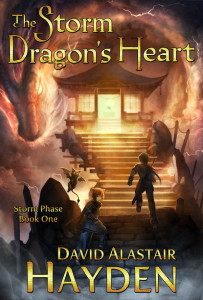
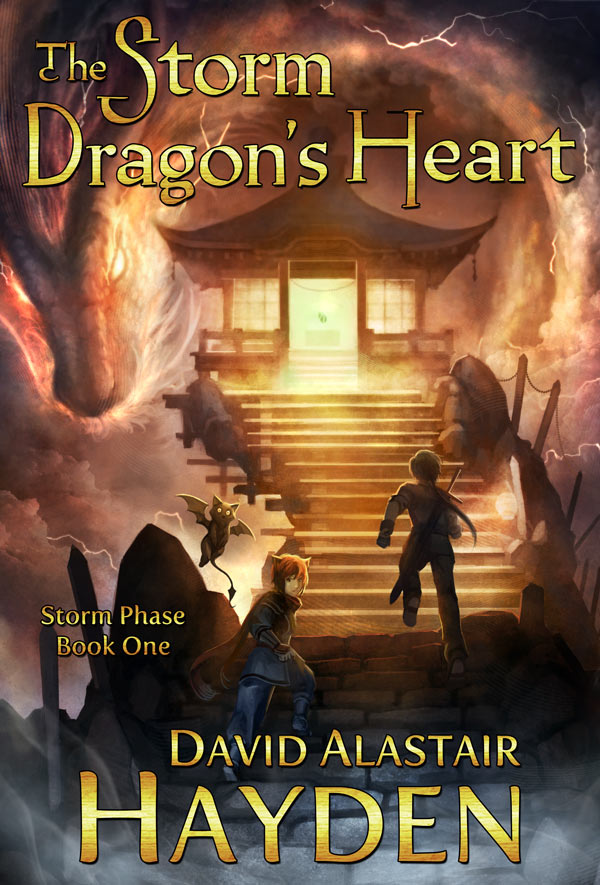
Storm-Dragon-Kindle-EmbedBy now most people here know that Wattpad is an online community for reading and sharing stories. It has a highly active base of readers/writers and allows them to build reading lists, vote for and comment on individual chapters, “follow” their favorite authors, and interact with other reader/writers via both public and private messages. For me, Wattpad has been a wickedly fantastic way to connect with readers, sell books, and build toward that holy grail of 1,000 true fans.

Currently, I have a healthy 1.1 million reads on Wattpad for The Storm Dragon’s Heart and over 900 followers. That doesn’t make me the biggest name on Wattpad, but it certainly ain’t too shabby either. For a fantasy adventure book aimed at the lower end of the YA market, I’d say my numbers are excellent. But I didn’t earn readers and convert them to buyers by accident, or by simply spinning a good yarn.

I used a system.

My Wattpad Technique

Step 1) Post Regularly

I post one chapter each week, every week. Choose a day, let everyone know (see author notes below), and stick to it. The reason for this is two fold.

Once readers find and become fans of your work they will know when to come looking for more. They will descend in mass on your newest chapter and the burst of reads, votes, and comments will shoot your book up the hotlist for your genre. This will give you increased visibility similar to that of appearing on a bestseller list on Amazon. As I released the later chapters of The Storm Dragon’s Heart, the first book in my Storm Phase series, each one would rocket me into the Fantasy Top 5 and the Teen Top 50.

Also, Wattpaders are avid readers and they will consume your latest literary offering far faster than you would imagine possible. Because they want it now, all of it. So, if they know when to expect your newest post, it will dampen the urge to make impatient comments.

A Note on Timing: While posting The Storm Dragon’s Heart, I experimented with different times and days. I found that the best time to post chapters for maximum impact on visibility was on Friday or Saturday.

Step 2: Post Lots

On Wattpad, “reads” is the number of times any particular post has been viewed. So if your book has 10 chapters and each chapter has been read 10 times then your book has 100 reads. Readers can also vote on posts. Votes work and are tallied similarly, except where reads are passively gained as people open up a chapter, votes must be intentionally activated.

Obviously, the more chapters your book has the more opportunities you have to gather reads and votes. The more reads and votes you have the more visible your book will be on the site and the more new readers are likely to discover it. If you don’t write short chapters already, then I strongly advise that you break the book up by scenes. In fact, the wriggling of hooked readers on Wattpad affirmed my belief in short chapters for building tension and keeping the virtual pages flipping.

The Storm Dragon’s Heart has 54 chapters out of 85k words. That’s a huge plus because one hooked reader will give me 54 reads by the end. This is a distinct advantage. Make the chapters worth it and be prepared for the pestering of readers desperate for more story.

Short chapters is also a great way to turn impatient readers into book buyers. Book 2: Lair of the Deadly Twelve has 70 chapters and I am posting one each week. But both it and Book 3: The Forbidden Library are already available for purchase on Amazon and the other booksellers. Readers who just can’t wait will go ahead and buy the book.

Step 3) Link to Your Book

When you post or edit a chapter, there is a spot to add tags and such, like keywords on KDP. If you click on the “Advanced” tab in that section it will let you add pictures and videos and and external link. This external link is where you can enter the link to your book on Amazon. It is very simple to do but not obvious. It doesn’t have to be an Amazon link. It could go to B&N or your book’s page on your website. If you do link to Amazon, the link will say “Amazon.”

That link is insufficient. It’s a tiny link. No one will see it. No one will click it. Trust me on this. Despite having that link from the beginning, I had readers message me over and over telling me my book was wonderful and that I really should get it published. I got tired of answering this and had a little stroke of genius. (See Step 4.)

You can and should post active links to all your sales pages in your Wattpad profile. But you cannot put links in the chapters you post. Wattpad will automatically strip them. You can put a direct link as a comment though. So when readers ask you where they can get your book or suggest that you get it published (and they will, no matter how clear you make it that the book is available for purchase) feel free to respond with a link.

Step 4) Add Author’s Notes

At the start of each chapter I put the following note:

You can buy this book and the rest of the STORM PHASE series at Amazon, B&N, Kobo, iBooks, and Smashwords.

And at the end of each chapter I put this note for a finished book:

You can buy this book and the rest of the STORM PHASE series at Amazon, B&N, Kobo, iBooks, and Smashwords. You can sign up for my newsletter, follow me on Twitter, or like my Facebook page. For more information, see dahayden.com. Your support is appreciated. Thanks for reading!

Or I will put this end note for an ongoing book:

I will post one chapter each week, but there are 70 chapters, so this may take a while. If you just can’t wait, you can buy the complete book and the rest of the STORM PHASE series at Amazon, B&N, Kobo, iBooks, and Smashwords.

You can sign up for my newsletter, follow me on Twitter, or like my Facebook page. For more information, see my website dahayden.com. Your support is appreciated. Thanks for reading!

Once I added the notes and started peaking into the Top 10 on Fantasy, I started getting steady sales. And it was pretty obvious that Wattpad was the cause. As I would release each new chapter and the book popped onto those popularity lists, I got an immediate bump in sales on Amazon and other booksellers.

Of course, once the book was nearly finished, this boost trickled off. Readers could see the end in sight and were more patient. I’d estimate that before Book 2: Lair of the Deadly Twelve debuted, I generated about 200 sales off of Wattpad for The Storm Dragon’s Heart which was priced then at $5.99. (At the time my sales were in a huge slump. Not having a sequel to the first book in a series can do that.) Now, I’m getting steady follow-through sales on Book 2: Lair of the Deadly Twelve and Book 3: The Forbidden Library as well from impatient readers who don’t want to wait two years to get the rest of the story. It has become impossible to judge how many, but I’d say quite a few. Storm Phase Book 2 actually outsells Book 1 on Kobo and iBooks.

Step 5) Be Sociable

Wattpad offers loads of opportunities to interact with people and promote yourself. Some people have had success with the forums, sometimes called clubs, and such. I wouldn’t know. There is, however, one thing you definitely should do on Wattpad. It doesn’t even take much time or energy.

Reply to all the comments on your chapters. Be friendly. It only takes a few minutes each week. If someone posts a rude comment to one of your chapters, you can delete the comment. I had one over-eager young fan who sometimes got too aggressive and needed moderating. Eventually my fans started reporting his comments and I didn’t have to do anything anymore.

At the bottom of your profile page is your message board. Readers can post messages just like they were posting comments on a chapter. And you can respond in kind. Or, if you click the checkbox that says “broadcast to followers” under the message box, that message will be sent to all of your followers. Depending on how they have their notifications set up, you message will appear on their Wattpad newsfeed and be sent directly to their email. This is a great way to announce new projects just like you would with a newsletter. Beside that checkbox is a button that lets you post the message to Facebook as well.

Step 6) Get Featured

The only promotion I have done on Wattpad is participating in their  Writer Partnership Program which allows select authors to “feature” their completed book on the site. Being “featured” brings in a mass of readers through the advertising exposure by the powers-that-be on Wattpad. Your book will appear on the “Featured” page in the discovery section of the site and on the rather ubiquitous “Books You Might Enjoy” banner. They also allow you to write a guest post for their blog.

There are two ways to get “featured” on Wattpad. You can simply post your entire book and then ask to be. This is the path I most often see indie authors take. If I had known it existed when I first started on Wattpad, this is probably what I would have done, too. I’m glad I didn’t. That’s not to say that you can’t or won’t get results with this method, you will.

But by posting a chapter a week, I slowly built up a list of followers before the Writer Partnership Program contacted me. It allowed me to cleverly time up my “featured” promotion with the release of Book 2: Lair of the Deadly Twelve. My numbers exploded. Waiting to tap that Wattpad promotion helped me reach a much broader fan base than I would have if I had used it earlier. I saw the same huge spike in readers others see after being “featured” but that was on top of my original followers.

And that’s it!

Ok, I lied. Wattpad is a big, complicated social network. So as you wade in, there are a couple of other things you should note and or consider.

Sequels

Most published authors put up sample chapters to the sequel as an excerpt and leave it there. If you do this, I strongly advise marking it as an excerpt in the title so no one will be mistaken.

I’ve chosen, however, to serialize Book 2: Lair of the Deadly Twelve as well. It won’t all be posted on Wattpad until early 2014. Barring the unforeseen, Book 4 and possibly Book 5 will be out by then and dedicated readers will have to soldier on or dive into their lunch/latte/iTunes money. Will I post Book 3 on Wattpad? I have no idea. I’ll figure that out when I get there.

I also have a complete posting of my adult fantasy novel Wrath of the White Tigress on Wattpad, and I’m serializing Chains of a Dark Goddess which is in the same series. I don’t think Wattpad has boosted or harmed the sales of those two books because …

Rated R Books

If your book is Rated R it will not appear on the charts and will, apparently, be difficult to find by searching. It also won’t be eligible to become featured. This cripples the promotion of such books and is why Wrath of White Tigress has far, far fewer reads than The Storm Dragon’s Heart. It’s not just because YA is a stronger category. You will, of course, find books with Rated R material that are not marked as such, but I do things the right way because … Well, you can’t be evil all the time, can you? I think Captain America taught me that. Well, he probably said something along the lines of “do the right thing” and “be a good person,” but I have my own interpretations.

Peer-to-Peer Critique

There is a lot of fan fiction on Wattpad. A whole lot. If you don’t know who One Direction is already, you will find out. (A boy band. I’d give you analogies, but doing so would reveal my true age.) Teens writing fiction for other teens, especially fanfic, can succeed (get TONS of votes, reads, and fans) with subpar writing because they’re writing things their peers will like and enthusiastically support. Peers support their peers, and they critique them. The interactions between peers are very different than those on publishable writing. You cannot and should not compare your numbers to the numbers for books like this. You might, however, want to check out these books to see what teens are into if you write YA.

The Real Reason to Use Wattpad

But here’s the one thing you must accept: Most Wattpad readers are not going to buy your books. It’s just not going to happen for myriad reasons. I’ve had readers with low incomes thank me for posting quality fiction for free (for this I’ve been blessed by the names of strange gods). I have many young readers, too, who maybe don’t have the money or allowance, or live in nations where wealth isn’t so plentiful. I had one reader tell me that he was planning to buy my books after he finished saving up for a guitar. The hope is that they will share their love of my work with friends who do have money to spend on books with boy wizards, Asian settings, fetches that turn into diaries, and cat-girl ninjas.

Many Wattpadders who buy my books message me to let me know they’re supporting me, which is touching, and I always thank them profusely. I have a few fans who’ve bought my books yet still drop by to vote on new chapters and leave me comments on what they liked in the chapter. You really cannot get that kind of feedback anywhere else. I have had dark days brightened by my Wattpad fans and their enthusiasm. The comments on the chapters they love, the begging for more chapters when they know I’m only giving one each week, pestering me because I forgot to post … these are things I cherish.
Posted in Guest Posts | Tagged , , , , | 71 Comments

A Full-time Indie Author Answers Your Questions: Part 1

I’ve gotten a lot of nice email since Forged in Blood II came out, but I’m woefully behind in my responses. A lot of them are related to my books, but because of this blog, I often get questions related to self-publishing and book promotion too. I thought I’d try to whack two birds with one stone (if you’d seen me throw, you’d be snickering at this notion) and share some of my answers here. Then the next time someone emails with one of these questions, I can point them to this post. (If you have any questions of your own, feel free to leave them in the comments below.)

Lindsay, I found your old post on earnings (here: March 2011 or here: “What Does It Take to Become a Full-Time Author?”) and was wondering how you’re doing now. It’s been a while since you posted sales numbers. Are you able to make a living writing now?

The short answer is yes. Because I’m writing quite a bit and publishing frequently (three novels and a novella this year), my earnings have continued to grow. My sales per individual books aren’t necessarily any better than they were a year or even two years ago, but I’ve managed to keep them fairly steady (about 400 sales per novel per month at Amazon, with another 100+ from other stores). Naturally the sales on a new release are higher and will be so for a few months, but it’s the steady sales of one’s back list that keep the income up between releases. For that, I credit my perma-free Book 1, the occasional advertising stint, and word-of-mouth recommendations from my awesome readers. For more details, check out my post on “How Do You Keep Your Book Sales Momentum Going Over the Months and Years?“.

As I often point out, I’m a mid-list author who writes books that appeal to a specific audience (those who enjoy female protagonists and an action-heavy mix of swords & sorcery and steampunk). You don’t have to chase the hottest genre or write for mass appeal to make a living as an indie author; you do have to write well enough to appeal to the people who enjoy your niche, and you do have to publish regularly to keep your name out there, especially when you’re first building up your fan base.

I don’t think I’ll be sharing exact sales/earnings numbers anymore, because my readers would probably stop sending me chocolates if they knew, but I’m making more now as an author than I used to in my day job. I’m sure sales would drop off a lot if I slowed down with the writing and publishing, but I enjoy telling stories, and I feel like quite the slacker on days where I don’t knock out any words.

I appreciate the time people like you and JA Konrath take to update your blog and offer advice to new authors, but you guys already have a fan base. I don’t know how helpful your advice is to those who are starting out new today.

I got a kick out of this comment, because the person mentioned me and JA Konrath in the same sentence. He was a big author earning six figures a month when I got started, and I’m not in his league, but I get the gist of the comment. And here’s my response:

Bull.

🙂

Trust me, I get it. When I published my first book in December of 2010, Amanda Hocking had made her bazillions, JA Konrath was raking it in, and Michael J. Sullivan was about to make a big deal with Orbit. Even though I’d just gotten my first Kindle, I realized I was coming into the game late. The 99-cent price point wasn’t working the magic it apparently had six months earlier, and there was more competition in the Kindle Store than when Hocking and the others first uploaded their ebooks. I knew it wouldn’t be easy, but the whole idea of self-publishing appealed to me so much more than playing Agent Hunt and Wait, so I got started anyway. I sold about 30 ebooks that first month, most to people I’d begged or bribed to pick up a copy. A year later, I had four novels out, along with some short stories and novellas, and I’d hit my first goal (1,000 ebook sales in a month). I was starting to think I could make this my full-time job.

For those of you starting now, the tricks that worked six months ago don’t work now, and there’s a ton of competition in the Kindle Store. Sound familiar? That’s because it is. But I promise you that the same core things I did to gradually build a fan base still work. I never used KDP Select or any tricks to get ahead (it’s not because I’m above that sort of thing — it’s just that I wasn’t willing to go exclusive with Amazon, and none of the iffy gimmicks seemed wise to pursue to one who wants to make a career out of this).

My core marketing philosophy has been to give away stuff for free (on Podiobooks, on Wattpad, on Smashwords, on Amazon, and anywhere else I could), to make sure the free stuff is an obvious lead-in to my other books (AKA a Book 1 in a series), and to promote the freebies through advertising, guest blog posts/interviews, and social media. If you’re trying this and it’s not working, get some outside advice on your cover art, blurb, and novels. And keep writing. I published Book 3 in my series before I really started gaining some traction.

If you need more inspiration (and marketing ideas), check out the interviews I’ve done with folks who published for the first time this year (2013) and sold tons of books right out of the starting gates:

It can happen. Not everyone is going to hit it big with their first book (most won’t), but I know that a lot of the people who are starting this year will be making a full-time income by 2015 or 2016. You can be one of those people, or you can take a defeatist attitude that it’s too late now to jump in.

How many ebooks do you have to sell a month to make a living?

How much you need to “make a living” is a different number for everybody. If you’re single without any debt and live in an inexpensive part of the country, it’s not going to be a very big number. If you’re married with children and want to support a spouse while you live in a coastal metropolis, it’s a different story.

You can do the numbers for yourself pretty easily though. For ebooks at 2.99 and above, you earn about 70% at Amazon (it’s less at Barnes & Noble and more at Smashwords). So 1,000 ebooks a month at 2.05 gets you a little over $2,000. Sell your books for $4.95 and you’ll make more than $3,000. Get up to 3,000 ebook sales a month, and now you’re talking.

That can seem like a ton of ebooks when you’re getting started, and it is if you only have one title out. It’s less daunting when you start thinking in terms of having 10 or 20 ebooks out, and if you want to make a career out of this, that’s probably where you’ll be eventually.

But as far as feeling like you’ve “made it” and you’re ready to quit your day job, it’s more important to cultivate your 1,000 true fans than have a good sales month here or there (as many who’ve been there can tell you, success can be fleeting if it came as a fluke and you didn’t take advantage of it by turning casual readers into true fans). When you have a certain number of people who will buy anything you publish, that’s when you can start to feel secure in your continued ability to write for a living. Publishing tends to be a cyclical business, but when you start to know that a book release is good for X sales, then you can predict what your income will look like for the next and beyond.

That’s enough for this post. Any comments or questions you’d like to see addressed in the future? Please chime in below!

Posted in New Author Series | Tagged , , , , , , , , , | 28 Comments

Tips for Getting a Movie Deal as an Independent Author (with Lisa Grace)

It seems that most authors love the idea of seeing their books on the big screen — and the extra income from selling book rights to a movie producer doesn’t hurt either. But is a possibility as an independent author? Sure, you say, sell enough books and they’ll come knocking on your door, but do you have to sell zillions and become as famous as Amanda Hocking or Hugh Howey before someone approaches you?

Well, it happened to indie author Lisa Grace. She not only sold the rights to her books, but the first one is in production now. She’s here today to give some tips for those authors who’re hoping to see their characters being played by their favorite actors.

Getting a Movie Deal as an Independent Author with Lisa Grace

Can you tell us about what made you decide to self-publish and the events that led up to the movie deal?

DIGITAL CAMERAThanks Lindsay for having me as a guest on your blog. I decided I would self publish on May 23rd, 2011 as an ebook after getting some interest from an agent who said he would shop around my book. Seven months later he tells me he was too busy with other clients and never got around to approaching anyone, but he thought it was good and he didn’t want me taking it to someone else. Luckily, I’d been writing book 2 in the meantime. So I self published them as ebooks only seven weeks apart. I made it to #1 on the Amazon sub genre lists for teen horror in the Kindle store, which is where two movie producers saw. it. It was bumped to #2 by the 1983 book , A Woman in Black which was being made into a movie starring Daniel Radcliffe, AKA Harry Potter.

Movie producers do look at the best seller genre lists to find books that interest them. I went with the one I felt offered the best chance of getting the movie made. Motion Picture Pro Studios.

A few months later they sent me the contract, I hired an entertainment lawyer, and a few months after that, I had signed an option agreement for the first two books in my series. Angel in the Shadows, Book 1 is currently free at all major ebook retailers if your readers want to check it out. Motion Picture Pro Studios “exercised” the option, and the project is currently in development.

angel-in-the-shadows

I think people assume you have to be a mega-seller to attract these guys. Do you mind sharing how many books you were selling at the time? Or perhaps how visible your books were (Top XX at Amazon?)?

Being at the top in your genre is important. They have to feel passionate about the project, and feel it will translate well to film. I’m very much a mid lister. I’ve made it to #13 in the free ranks back in the days when you could move 12,000 a day outside the romance genre. I’m not sure that’s as easy to do now. I slid in fairly high to the paid ranks coming off of free, but never stayed on op top of all Kindle books for very long. At that time, the only place my ebooks were available was on Amazon. I only opened distribution this year in December 2012, to more book stores.

Do producers always find your book on their own and come to you, or are you aware of any ways a moderately successful indie author can get in contact with them and suggest their title?

Producers are like book agents. They get pitched to all the time. They want to find projects on their own, and do. After all, it has to be something they feel passionate about. Shoot. I wish I could get them to be interested in all my books! I’d love to have everything I write optioned for a movie, but that isn’t likely to happen.

Every deal I know about, it’s been either a book agent pitching it to a director (who will read it first) or the producer reading the book and loving it.

You seem to have gained quite a bit of insight into how and why books get picked up. What genres or types of stories are more likely to attract producers?

It depends on what the producers like. Some skip around different genres, some stick with one. They’re just people who know what they like and what they can do with a project. Your best bet is to write a good book that makes it to the top of its genre so those who might be interested find it and read it. Also, some authors do have producers coming back to them again and again, because they’re writing books that will translate well to film.

In your guest post, you suggested writing, “A Simple Story in Seventy to One Hundred Scenes.” Can you talk a little about that for my audience here?

There are certain authors who get their books optioned all the time, because they write books that will translate well to film. By the way, you won’t be hearing from them, because they’ve got a wonderful second income coming in from optioning their stuff, and they don’t want you moving in on their market. I’ve heard from many of them privately.

One idea that helps is the “man in the box” type of writing, where scenes are set in one location. It makes a movie cheaper to shoot. Most movies are not huge blockbusters, and costs are a consideration.

Write a novel that can be broken down into seventy to one hundred scenes. Most movies are only going to be between an hour and half to two hours. There is a market for selling movies to TV and cable, after commercial release, and if your story takes longer to tell, your chances of getting a deal decrease. These suggestions come directly from producers (the money people with all the power, they sign the checks) that I’ve had discussions with.

You’ll get authors and scriptwriters who aren’t selling their stuff who disagree (I know because I’ve heard from them too), but I think I’ll listen to the ones signing the checks and so do the authors who are getting one book after the other optioned.

If there’s any parting advice you’d like to share, please feel free to do so.

Write the best book you can. Then write the next one. “See” your books as a movie in your head. Do think about costs when planning out settings. For instance, setting a book on a sinking cruise ship is a lot more expensive than setting it in a forest.

Watch movies in your genre (not block busters, but those with budgets of 2mil to 25mil) and take them apart scene by scene, so you get an idea of what a novel would need to include to translate well. I’d also suggest praying as it can’t hurt. Enjoy the journey because even if your book is optioned, it may never make it into development, and if it makes it into development, it may not make into pre-production. Movie making is a loooong process, so once you sign your option, kiss your baby goodbye, and start working on the next one.

~

Visit Lisa and check out all of her work on her website, or say hi on Twitter and Facebook. You can also hop over to Amazon or Smashwords to grab copies.

Posted in Interviews / Success Stories, Tips and Tricks | Tagged , | 7 Comments

Forged in Blood II (The Final Emperor’s Edge Book) Is Available

The last novel in The Emperor’s Edge story line is ready to go. I’ve posted the first couple of chapters and the cover art here, in case you’d like a preview, but if you want to pick it up right now, it’s available at Amazon, Amazon UK, Barnes & Noble, Smashwords, and Kobo (Apple coming soon).

Thank you all for coming with me on this journey. I hope you’ll enjoy the last part of the team’s adventures and will find the ending satisfying. That said, there’s a link to a poll at the end of the book. Please let me know if you want to see more from these characters in the future.

Posted in My Ebooks | Tagged , , , , | 30 Comments

Forged in Blood II Preview Chapters

Forged in Blood II, the final novel in the Emperor’s Edge storyline, is now out at Amazon, Barnes & Noble, Smashwords, Kobo, and Apple.

Since I already included the first part of Chapter 1 at the end of FiB1, I guess I better do two preview chapters here. I hope you enjoy the sneak peek. Thanks for reading!

Forged in Blood II: Chapter 1

Forged in Blood 2 Cover

 Amaranthe wasn’t dead. At least, she didn’t think so. Dead people probably didn’t hurt all over. The flying lifeboat had insulated them from the crash somehow, though her head had connected with a couple more walls before the craft stopped bouncing.

“Books?” she asked into the darkness. “Akstyr? I hope one of you is alive, because I have no idea how to open that door and get out of this thing.”

A deep, pained sigh came from underneath her—she’d tumbled back on top of the men again during the landing. Amaranthe crawled to the side, though there wasn’t much open space in the cramped cabin.

“One of you?” Books repeated. “You have no preference as to whom your survivor is, nor a belief that one of us would be more equal to the task of opening a door secured by ancient unfathomable technology, or of deciphering instructions written in an inscrutable alien tongue?”

He must not be wounded horribly if he could utter all that.

“You saw instructions?” Amaranthe asked.

“Well, no, but it was hard to get a good look in the dark. And while we were being shot at.”

“We still have the darkness problem,” Amaranthe pointed out. The viewport that had appeared while they were in flight had disappeared before the crash, leaving the inside of their lifeboat utterly black. “Akstyr?” Amaranthe patted about, finding his back, then following it up to his neck so she could check his pulse. She hadn’t heard from him since he’d hurled himself into the craft, dodging the incendiary beams of those indestructible cubes.

He mumbled something at her touch on his neck.

“What?” Amaranthe breathed a sigh of relief. They might be a thousand miles from the capital, but at least they were all alive.

“Wanna rest,” he slurred. He lay facedown, his mouth pressed into the floor. “But some muddy’s knee is up my buss.”

“I think he’s referring to your body part,” Amaranthe told Books mildly, fairly certain she wasn’t sitting on anyone anymore. Though she couldn’t be sure what a “buss” was.

“Ah.” Books shifted. “I’d wondered why that section of the floor was so bony.”

“Ma buss not bony,” Akstyr slurred.

Maybe more than his positioning accounted for the mangled words. Amaranthe prodded his scalp and found a lump. He must have hit his head, among other things. He’d also been wearier than a long-distance runner after a race when he’d stumbled into the lifeboat. Out of curiosity, Amaranthe investigated her own scalp. She snorted when she found three lumps. Maybe her words were coming out slurred too.

Books groaned as he stood up. “I’ll see if I can find the—”

The door slid up, the material disappearing into the hull. Starlight, freezing air, and the scent of snow-covered pine trees entered. The cold air slithered through Amaranthe’s leggings, and she tugged her dress down as far as it would go. A chunk of blonde hair tumbled into her eyes. She shoved it behind her ear and wished for a beaver fur hat. She had a feeling her Suan costume wasn’t going to be suitable for this next adventure. Not to mention that ridiculous underwear she’d let Maldynado pick out. One slip down an icy slope, and she’d have snow all the way up her—

She sighed. At least the fur boots were practical.

“Good work, Books.” Amaranthe patted around, finding two of their rifles. The cartridge ammunition littered the floor, and she scooped up as much as she could. Who knew what they’d face out there? The craft could have plopped them down into grimbal or makarovi territory.

“Uhm, yes. Except I didn’t do anything. Perhaps it sensed that we’ve landed and is ready to spew us forth into the world of its own accord.”

“That’s fine,” Amaranthe said. “I’m ready to be spewed.”

“Think I was already spewed,” Akstyr muttered and curled his legs up to his chest. “It’s cold. I wanna stay here and sleep. Be warm.”

“If the door closes again,” Books said, “you may be stuck inside forever, because I don’t know how to open it.”

Akstyr lurched to his feet and stumbled out into the snow. “Never mind. I’m ready.”

He barely made it through the threshold before slumping against the hull.

“Why don’t you stay here,” Amaranthe suggested, “and try to make a fire? Books and I will figure out where we are.”

When she stepped outside, shivering at the wind scouring the mountainside, her optimism floundered. A few pines, the bases half buried by drifts, dotted the slope below them. They’d landed above the tree line and, she feared, far from any towns. Not good. They weren’t prepared for winter wilderness survival conditions.

Books stepped out beside her and surveyed their dark surroundings. “Hm.”

“Does that mean you don’t know where we are either?” Amaranthe wished she had an idea of how far they’d flown and in which direction. Were they fifty miles from the capital? Or five hundred? Though she’d been out of Stumps more times in the last year than in her entire life prior to meeting Sicarius and the others, she didn’t exactly qualify as a world explorer yet.

“That may be a pass over there,” Books mused. “And those four peaks in a row remind me of the Scarlet Sisters, though there are arrangements like that in other mountain ranges, too, I’m certain. We don’t seem to have left the climate zone, albeit we’re at a higher and, ah, chillier altitude. The stars are familiar.”

“That was a yes, right? You don’t know where we are?”

Books grumped something that might have been agreement.

“I hear a train,” Akstyr said from where he still leaned against the lifeboat hull, his eyes closed, his arms wrapped tightly about himself and the rumpled guard uniform he’d acquired on the way down to the Behemoth.

Amaranthe perked up. He was right. She caught the distant chuffing of an engine working hard to pull its load up an incline.

“Oh!” Books said. “Those are the Scarlet Sisters then. That’ll be the East-West Line, and that train is either traveling to or from Stumps.”

Given the chaos the Behemoth’s appearance must have caused—Amaranthe had no idea if it’d sunken back down into the lake or taken off for some distant destination, but people would have witnessed it either way—she thought traveling from was the more likely scenario. Or fleeing from perhaps. Still… “Let’s see if we can get to the rails before it’s gone. If it’s going to the city—”

“It could be our ride home,” Books finished.

“Does this mean no fire?” Akstyr asked.

“Sorry.” Amaranthe grabbed his arm. They’d have to hurry to have any chance of scrambling down the mountain in time.

“You can sleep on the way back to the city,” Books said. “We’re over one hundred and fifty miles from Stumps.”

Amaranthe’s mind boggled at the idea that they’d traveled that far in a couple of minutes, but she was more concerned about getting back now. She handed Books the other rifle and led the way down the mountainside, plowing through snow that enveloped her legs up to her knees with every step. It didn’t take long for sweat to break out on her brow and weariness to slow her limbs. Her newly acquired bruises and lumps further protested this unasked-for workout, and she wasn’t altogether upset when Akstyr announced he was too tired to go on. They stopped to rest, huddling beneath the boughs of a tree for protection from the wind. The chugs of the train faded from hearing.

“I believe that one was heading away from the capital,” Books said.

Amaranthe doubted he could tell—with the mountain walls, canyons, and crevasses distorting sound, she couldn’t—but she could understand the desire for optimism. Especially when her toes were freezing in her boots. Once again, she was glad she’d ignored Maldynado’s suggestion to wear sandals to the yacht club.

“Anyone have any food?” Akstyr asked when they started out again.

“Not unless Amaranthe’s purse contains more than glue for her fake nose,” Books said.

“Actually, I have some of Sicarius’s dried meat-and-fat bars in here,” Amaranthe said.

“I’d rather eat the nose glue,” Akstyr said.

“You may change your mind after another day out here.”

Akstyr’s grumbled response was too low to make out.

They continued their trudge, cold and miserable and unequipped for the terrain, though traveling downhill took some of the anguish out of the trek. As dawn broke over the mountains, the clear sky untouched by smog and impressive in its gradated pinks and oranges, they reached the pass. The cleared tracks, snow piled high to either side, wound through the treacherous terrain, a black snake navigating boulders and slopes.

Amaranthe angled toward a bridge, the support structure towering well over the tracks. It’d be an opportune place—or rather the only place—to jump onto a moving train, and the team had practiced such maneuvers before.

That didn’t keep Books from groaning as they approached. “Why am I certain of what’s in your mind and certain it’ll be dangerous?”

“Really, Books, we’ve been chased by man-incinerating machines, flung from an aircraft so alien our science can’t begin to fathom it, and hurtled hundreds of miles to crash on a mountainside. You’re going to complain about something as benign as hopping onto a train?”

“She’s got a point, you know,” Akstyr said. “It’s freezing out here. I’d do just about anything to get off this mountain.”

Books’s harrumphed.

Amaranthe nudged Akstyr. “He’s just complaining out of habit now. It’s what men do when they get old.”

“I am not old,” Books said. “I probably wouldn’t even have any gray hair yet if I weren’t traipsing around after you all the time. This last year has been enough to age a man ten.”

“That’s a lie. You had gray temples when I met you.”

“Fine, these last two years have been enough to age a man ten.”

They’d reached the base of the bridge, frothy white water frozen into ridges of ice far below, and Amaranthe stopped teasing Books. She didn’t wish to remind him of the death of his son and the difficult times he’d faced before joining her team. Granted, he was right that the last year hadn’t been without difficulties either. But it’d all end soon. One way or another.

This time, Amaranthe heard the train first, the distant chugs coming from the west. “It’s heading to the capital. This is our opportunity.” She waved for them to climb halfway up one of the towers rising from the suspension bridge. “It’s still dark enough that, if we’re lucky, the engineer won’t notice us crouching up there.”

“We’re due some luck,” Books said.

“Let’s be happy there are trains coming through and that we didn’t have to wait for days out here.” The East-West Line was a busy one, taking passengers and freight from Stumps to the various ports on the west coast and back, but Amaranthe hadn’t known what to expect with the capital locked down. She did know the train would be stopped and searched before being allowed into the city. Best to worry about getting on first. “Akstyr, can you make the climb?” she asked.

Books was shimmying up the steel supports, but Akstyr stood at the base, staring upward, his eyes sunken and his body slumped.

“Yes,” he sighed and started climbing. “But promise me I can curl up in a corner and sleep the rest of the way back to the city.”

“It’d probably be best to stay on the roof,” Books called down, “so they don’t know we’ve sneaked aboard. You can sleep up there.”

“Sounds cold.”

Amaranthe secured her rifle across her back and climbed up after them without commenting, though she agreed the roof might be best. That way, they could jump off the train as it was pulling into the checkpoint, before any soldiers climbed aboard to search.

By the time she joined the men on a ledge halfway up the tower, the train was lumbering into view, its pace slow as it wound its way up the mountainside and into the pass.

“Dead ancestors with caltrops,” Amaranthe said when she spotted black-painted cars with golden imperial army logos on the sides. Those cars, dozens of them, would be filled with soldiers. More troops to support Flintcrest? Or Heroncrest? Or even Ravido? Whoever’s men they were, they wouldn’t be coming to join Sespian.

Definitely best to stay on the roof,” Books said, “or avoid getting on altogether. How do you feel about waiting for the next train?”

Akstyr groaned, doubtlessly displeased at the idea of climbing back down, then having to climb back up again later. And then there was the cold and the limited food supply. Amaranthe flexed her numbed fingers within mittens made to ward off the chill during a quick outing into the city, not to protect digits from sub-zero mountain temperatures. Thanks to the wind, she already couldn’t feel her nose, and white crystals had frozen her lashes together. Now that they’d stopped moving, the chill was more noticeable. The sun might bring a reprieve, but another storm could come in that day too.

“We have no idea how long we’d be waiting,” she said, “and the next train might be more of the same. Someone ought to block the pass so all these reinforcements can’t continue to trickle in.”

No,” Books said, sounding like Sicarius for a moment, he being the only one of the men who blatantly naysayed her.

Amaranthe had simply been musing aloud, so she wasn’t affronted by his vehemence. Their priority should be getting back to the city, not attacking supply lines, and she knew it. Yet… she had a hard time dropping the idea now that it’d formed.

“We don’t have any explosives,” Akstyr said. “And I’m too tired to make a landslide.”

“We wouldn’t necessarily need anything so permanent. What if we jumped on behind the locomotive, and decoupled the rest of the cars, the same as the last time we hopped a train? The soldiers would be stranded, and the railway into the city would be blocked until someone got another locomotive out to move the cars.”

Books was staring at her. “Can’t you ever take the easy route? Why can’t we catch a ride into the city and leave it at that?”

“You disagree that it’d be wise to deny reinforcements to the generals competing with Sespian for the throne?”

“No, but why do we always have to do these things?” Books sounded tired and frazzled. They’d all been up for too long without sleep.

“Who else will?” Amaranthe asked.

He growled. “Maybe we should stand back, let them all fight each other until they’re tired of it, then come in and offer a less bloodthirsty system of government to the survivors.”

“You think it would be that easy?”

Books sighed and leaned his head against the steel beam. “No.”

“It’s going to be here in a second.” Akstyr pointed at the oncoming train, the black locomotive leading the way, its grill guard like a wolf’s snarling face, full of sharp fangs.

Amaranthe shifted her weight on the ledge, readying herself to jump. “Coal car,” she instructed.

Books didn’t look pleased, but he didn’t resume the argument.

The pass was flat compared to the terrain the train had finished climbing, and it picked up speed as it bore down on the bridge. They’d have to time their jump carefully. None of them were fresh.

Judging the approach in her head, listening to the clicketyclack of the wheels rolling over rail segments, Amaranthe said, “Now!” and dropped from the tower. Wind roared in her ears, then faded as her feet hit the coal.

Elbows jostled her as she turned the landing into a roll, Akstyr and Books doing the same. They couldn’t have dropped in any closer to each other if they’d held hands. She banged someone with her rifle, and the coal scraped her fake nose off, but that was the worst of their injuries. As one, they rose into low crouches, careful to keep their heads down. If someone in the first troop car had seen them drop, or noticed them now… She was all too aware that Sicarius, Maldynado, and Basilard weren’t with her this time. As much as her ego wanted to reject the notion, she, Books, and Akstyr were the weakest fighters on the team. When she’d been separating everyone into neat parties, she hadn’t planned on combat for her half. Naive, that. She hoped Sespian was finding her men useful in Fort Urgot.

Books pointed to the locomotive and signed, Do we take it first? Or try to decouple the rest of the train?

The last time the team had decoupled cars on a moving train, Sicarius had been the one to do it. Even though she’d suggested it, the idea of attempting the maneuver herself daunted Amaranthe. She didn’t know how much physical strength it would take. At least nobody was shooting at them this time. Yet.

She eyed the route ahead. The locomotive had sped off the bridge and was on a downhill slope, picking up speed as it went. More snowy peaks loomed ahead, so there’d be more uphill swings.

Let’s wait to do that, Amaranthe signed and waved at the rest of the cars, until we slow for another climb. It’ll be less dangerous then. Besides, the engineer and fireman will be alert and ready for trouble if we try to take over after the majority of their train wanders off of its own accord.

Agreed, Books signed.

We’ll take care of those men first. She pointed at the locomotive.

Books grimaced, but didn’t argue. Akstyr yawned. Such heartening support.

On a military train, the men in the locomotive would be trained fighters, a soldier and an officer shoveling coal and working the controls. Knowing the transport was heading into trouble, its commander might have placed guards up front as well.

I’ll go left, Amaranthe signed, and you go right, Books. With luck, there’ll only be two of them, and we can stick our rifles in their backs and convince them to tie themselves up.

Akstyr, Books signed, you can usually tell how many people there are in a room. Is it just two?

Akstyr closed his eyes, winced, and shook his head. “I can’t right now, sorry.” He didn’t bother with hand signs, and Amaranthe struggled to hear him over the wind and the grinding of wheels on rails. “When I try to summon mental energy, my head hurts like there’s a knife stabbing into the backs of my eyeballs.”

Old-fashioned way then, she signed. Akstyr, you come in after me and help out if there’s more than two people, or there’s trouble.

Akstyr tossed a lump of coal. “When is there not trouble?”

The odds suggest something will go easily for us eventually. Amaranthe winked. It was more bravado than belief, but she tried to use the thought to bolster herself. Rifle in hand, she clambered down the side of the coal car, the wind tearing at the hem of her dress—ridiculous outfit to hijack a train in—and pulled her way along the ledge toward the locomotive.

On the other side, Books was doing the same. Amaranthe trusted they’d make the same progress, but paused to peer in the window next to the cab door before jumping inside. The two men in black military fatigues with engineering patches were as she’d expected, a sergeant leaning on a shovel by the furnace and a lieutenant standing behind the seat overlooking the long cylindrical boiler and the tracks beyond. What she didn’t expect were the two kids in civilian clothing. A boy and a girl, both appearing to be about fifteen years old, shared the cab with the two men. From the rear side window, Amaranthe couldn’t see much of their faces, but the girl had a pair of brown pigtails and sat in the engineer’s seat, pointing at various gauges and speaking, asking questions perhaps. The boy stood shoulder-to-shoulder with the sergeant, a book of schematics open in his hands as the fireman pointed things out inside an open panel.

“What is this?” Amaranthe muttered. “A private tutoring lesson?” She’d be less mystified if this were a civilian transport; she could imagine some warrior-caste lord on a family vacation arranging for special access for his privileged offspring, but what could children be doing on a military train? Was one of the invading generals, having realized he’d be in the capital for some time, having his family brought in? She couldn’t fathom it. Even if there wasn’t much outright fighting in the streets—or hadn’t been when she left—who would bring kids into a volatile situation?

At the other window, on the opposite side of the cabin, Books’s nose and eyes were visible, he too wearing a perplexed expression.

Amaranthe tilted her head, indicating they should go ahead with their plan. They still needed control of the locomotive. The sergeant and officer wore their standard-issue utility knives, and there were flintlock rifles mounted within reach above the cab doors, but the men were otherwise unarmed. Neither of the youths had weapons, as far as Amaranthe could tell, though in examining them, she took a closer look at their clothing and grew even more confused. Beneath parkas suitable for the cold weather, they wore homespun garments of light colors and materials, the styles foreign, though Amaranthe wasn’t worldly enough to put a finger on their origin. She only knew the children weren’t wearing the typical factory-made clothing or styles currently common around the capital.

Books was moving, so she ended her musings. A second before Amaranthe opened the cab door, the boy glanced in her direction. She hadn’t thought she’d made a noise, but she must have. Books opened his own door and jumped inside, rifle at the ready. Amaranthe entered as well, raising her firearm to her shoulder, aiming at the lieutenant’s head. The weapon wasn’t ideal in the tight space, but she had enough room. When the officer spun around, his eyes crossed as he found himself staring at the muzzle.

The sergeant’s hand twitched toward his knife, but Books prodded his arm with his own rifle, and the man scowled and desisted. The youths—siblings, Amaranthe decided, as soon as she saw their faces and the gray-blue eyes they shared—spread their arms to their sides, calmly opening their hands to show they held no weapons. That calm was surprising in people too young to have had military training, and she made a note to watch them, though the soldiers were more of an immediate threat.

“Who are you people?” the lieutenant asked, glancing out the door, as if to assure himself that yes indeed the train was still moving. Rapidly. He also shifted his stance so that he stood in front of the girl. The sergeant shifted so he stood in front of the boy, though his glances were toward the rifles above the door.

“My apologies for hopping onto your train without a boarding pass. We found ourselves lost in the mountains and need a ride to Stumps.” Amaranthe eased forward a couple of inches so Akstyr could squeeze in behind her. “Get their weapons,” she told him without taking her eyes from the soldiers.

“Hijacking an imperial train is punishable by death,” the lieutenant said, glowering as Akstyr removed his knife and patted him down for hidden items.

“Is it?” Amaranthe asked. “Then I probably shouldn’t tell you it’s not our first. Search the children for weapons, too, Akstyr.”

Children?” the girl whispered to her brother. She had a grown woman’s curves, even if the pigtails made her look young, and Amaranthe probably could have used a different word. Indeed, the speculative consideration Akstyr gave her as he searched her suggested she was plenty old enough by his teenaged reckoning. Amaranthe was thankful his pat down was professional.

“She’s talking about you, naturally,” the brother responded.

They were speaking in Turgonian, but with a faint accent. Again, Amaranthe couldn’t place it. She wondered if Books had a better idea.

“Oh, yes,” the sister said, “I’m certain the three minutes longer you’ve had in the world than I grants you scads of wisdom and maturity.”

“Mother does say I was born with a book in my hands. I imagine that gave me a head start.”

The lieutenant exchanged glances with the sergeant, and the two men lunged, one toward Amaranthe, and one toward the door behind her. She reacted instantly, ramming the muzzle of the rifle into the officer’s sternum, the blow accurate enough to halt his charge. She tried to whip the weapon around to crack him in the head with the butt, but it caught on the doorjamb, and she settled for stomping on his instep. In the same movement, she brought her knee up to catch the soldier angling for the exit. By that point, he was stumbling for the exit, since Books had slammed the butt of his own weapon into the sergeant’s back. Amaranthe lowered her rifle, tapping the side of the lieutenant’s head with the muzzle. He’d bent over under her attack, and didn’t straighten, not with the cool kiss of metal against his temple.

“Next time, we’ll shoot.” Amaranthe hoped they wouldn’t know she was lying.

Akstyr had a knife out and was keeping an eye on the siblings, who were exchanging looks of their own. Amaranthe thought she read an oh-well-we-tried quality in their expressions. They’d been hoping to divert their attackers’ attention with their arguing? Hm.

“Slag off,” the sergeant snarled. Sort of. His cheek was smashed into the textured metal floor, and the endearment lacked clarity.

“Akstyr, tie everyone up, please. The sooner we get to phase two of our plan, the better.” Amaranthe peeked out the door toward the coal car and the rest of the train. As long as everything was attached, anyone could amble up front and cause trouble. For all she knew, shift change was three minutes away.

The girl murmured a question to her brother, not in Turgonian this time. He nodded back.

Amaranthe met Books’s eyes, sure he’d have an answer as to the language.

Kyattese, he signed.

Kyattese? Emperor’s warts, now what? It was bad enough the Nurians were tangled up in this vying for the throne—did the Kyattese want some part of it too?

Amaranthe signed, Any idea who they might be?

She was aware of the siblings watching her, noticing the finger twitches, though she was positive they wouldn’t understand Basilard’s hand code. Even his own Mangdorian people were hard pressed to follow it, given how much he’d added to the lexicon over the last year.

“I’m out of rope and belts.” Akstyr had tied the lieutenant, but not the sergeant yet. He gave Amaranthe an aggravated look.

“Get creative,” she told him.

“My head hurts too much for creativity. I—” Akstyr stood abruptly. “Sci—” He switched to code: Science.

What? Amaranthe stepped toward the siblings. She knew it wasn’t the soldiers, so that only left—was that one of those I’m-about-to-fling-magic looks of concentration on the boy’s face? Though she was reluctant to aim her rifle at a youth, Amaranthe prodded him in the chest with the barrel, hoping to distract him.

Something popped on the furnace, and black smoke poured into the cabin. Amaranthe cursed, left with little choice but to club the kid. As she drew back the rifle to swing, the girl reached into her coat, toward a pocket or perhaps a belt pouch.

“Books,” Amaranthe barked.

“I can’t—ergh.”

Someone grabbed Amaranthe from behind, yanking her away from the siblings and propelling her into the rear of the cab with jaw-cracking force. Though she threw an elbow back, trying to catch her attacker in the ribs, the person evaded the blow. Her rifle was torn from her fingers. She didn’t know if it was the same someone or someone else. Men in black uniforms moved in her peripheral vision, and soon the cabin was so crowded with bodies, she couldn’t have unpinned herself even if someone didn’t have a forearm rammed against her spine. Now it was her face that was smashed against something, her eyes meeting Books’s—he was in a mirror position two feet from her. It was neither the familiar sergeant nor the lieutenant who had him pinned, a cutlass prodding his back, but a grim-faced captain. Strong, calloused fingers tightened around the back of Amaranthe’s neck. She couldn’t see her own attacker, but he spoke from right behind her.

“Captain,” he asked in a rich baritone, that of an older but obviously not—as the grip pinning her proved—infirm man, “is hijacking a train still a capital punishment in the empire?”

“Yes, my lord. It is. In addition,” the captain said, his tone icy, “it is also quite illegal to attack warrior-caste children.”

Amaranthe blinked. It was all the movement she could manage at the moment. Warrior-caste children that muttered to each other in Kyattese? Just who in all the abandoned mines in the empire was standing behind her? Another general charging in to make a claim on the throne?

Books, with his head turned sideways toward her, must have had a better view of the man behind her, or he was simply more adept at assembling the pieces of this particular puzzle, for his mouth dropped open in… Amaranthe was sure that was recognition.

“Enlighten me,” she whispered to him.

“I… I could be mistaken,” Books whispered back, “since I’ve never met the man nor even seen him in person, military history not being my favorite subject in the least, but—”

The captain jostled Books, probably to discourage him from talking. Amaranthe wished the jostle would encourage him to get to the point.

Who?” she mouthed, wanting the name, not an explanation.

The captain was discussing what to do with “these interlopers” with a third man, another officer. Take them to the capital to face the magistrate or simply hurl them from the train and let the mountain—and the high-speed fall—handle the matter?

“That one is a criminal with a bounty on her head.” A finger jabbed toward Amaranthe’s nose. “The others may very well be too.”

Books finally mouthed a response to Amaranthe’s question. “Fleet Admiral Starcrest.”

Amaranthe sagged insomuch as the iron grip holding her would allow.

One of the empire’s greatest war heroes. And her just outed as a criminal. Oh, yes, this was sure to go well.


* * *


The air smelled of musty tent canvas, coal smoke, and the pungent scent of sandalwood incense. That aroma was popular amongst Nurian practitioners; they believed it focused the mind. An odd odor to find in a Turgonian army tent, but not a surprising one.

Few sounds came from within the canvas enclosure—only the soft hiss of the fire—but outside, men moved about. Some spoke, some grunted and grumbled as they carried gear, and others simply walked past, their boots crunching on snow and ice.

Sicarius opened his eyes. He shouldn’t have. Wakefulness brought awareness.

And memory. And pain.

Finding the former too depressing to contemplate, he examined the latter, assessing his fitness. Though the aches that emanated from his calf, shoulder, and abdomen were not trivial, the physical pain wasn’t as intense as he would have expected. He recalled being shot multiple times, and before that, the soul construct had torn a chunk out of his leg. He grew aware of bandages around the wounds, stiff after being saturated with blood that had since dried. All of his digits responded to orders to move, and he flexed his muscles without untoward discomfort.

The mental pain…

Sicarius closed his eyes again. His son was dead. Amaranthe was dead. The rest of her team was likely dead as well—at the least Basilard and Maldynado would have fallen, just as Sespian had, crushed beneath that monstrous artifact from the past.

Footsteps crunched outside the tent. A moment later, the flap lifted, and cold air flowed inside.

A white-haired general with thick spectacles strode in, followed by two Nurians, one the silver-haired practitioner who’d created the soul construct and the other, a younger fellow with a limp. Enemies, Sicarius’s instincts cried, and he sat up, a hand going to his waist, where his black dagger usually hung. It wasn’t there. None of his knives were. He’d been stripped of shirt and shoes as well. He might have attacked the Nurians anyway, but a strange tingle throbbed at his temple. He found himself lying down on his back again, his muscles operating of their own accord—no, of the practitioner’s accord. In a final humiliation, his hands betrayed him by folding across his abdomen, fingers laced. His face tilted attentively toward the newcomers.

Flintcrest was eying him through those thick spectacles, chomping on a cigar as if he wished he were chomping on Sicarius. “It’s not a good idea, Kor Nas. Safest to kill him right now, if you can.”

“Of course I can,” the silver-haired man said smoothly, his accent barely distinguishable. “But I wouldn’t have brought my associate to continue healing his wounds if I intended to do that.”

“This man isn’t some soldier,” Flintcrest said. “He’s an ancestors-cursed assassin, a notorious one. He’s killed dozens of high-ranking Turgonians, including one of my fellow satrap governors.”

“I know precisely who he’s killed. The Nurians have also suffered at his hands. But he can be made to work for us now, as surely as my soul construct did. Perhaps one of his first tasks will be to figure out a way to retrieve my pet from the bottom of the lake.” The Nurian’s dark eyes glittered, the almond shapes narrowing further as they oozed menace toward Sicarius.

As far out into the lake as he’d hurled the creature’s trap, Sicarius would drown trying to swim down and open it. Perhaps that was a way to escape this. Better to be dead than enslaved, especially now when there was nothing to live for, nothing waiting for him if he fought and escaped. One way or another, these people would send him to his death eventually. He cared little what happened in the meantime.

“Well, get him fixed up and out of my camp,” Flintcrest said. “My men will welcome him even less than that beast of yours.”

“That is the plan, General. After which target should I send him first?”

Flintcrest grimaced. “You want me to make use of an assassin?”

“You were willing to make use of my beast, as you call it.”

“I… don’t remember agreeing to that exactly either.”

“So long as you agree to my people’s requests for favorable trade agreements,” spoke a third man as he pushed aside the tent flap and walked inside. In his early thirties, with shoulder-length black hair swept into a topknot, he wore a feathered flute and a long rek rek pipe across his back as others would wear a sword. The items were the symbols of a Nurian diplomat.

Kor Nas waved to the healer. “Finish repairing my new minion.”

“Yes, saison.”

Saison, the Nurian word didn’t mean “master” precisely, more like a term of respect for a high-ranking practitioner, often a teacher, but it might as well have meant it in this case. He’d be loyal to the older man and do as told.

“I have not forgotten, He shu,” Flintcrest told the diplomat. “The trade agreements will be created as promised.”

He shu, that was an address for a male who shared blood with a great chief, close blood usually. After all the missions Sicarius had undertaken for Emperor Raumesys, ensuring Nuria wouldn’t gain a toehold in the empire, it irked him to know that the Nurians might have found a way in anyway. He didn’t know whether they’d be worse than this Forge outfit or not. He decided he didn’t care—what could he do about it at this point anyway?—though he did admit that it bothered him that everything he had endured in his life had been for naught.

The healer laid a hand on Sicarius’s bandaged abdomen and warmth spread from the fingertips. Weariness seeped in as well. He didn’t bother seeking a meditative state, didn’t bother with trying to control his sleep—or his dreams. He simply sank into oblivion.

Chapter 2

 Amaranthe, Books, and Akstyr sat against the back of the locomotive cab, their wrists tied behind them and rifles aimed at their chests. This wasn’t quite how Amaranthe had imagined the hijacking going. Judging by the scowls Books and Akstyr were shooting her, they thought the team should have remained in the coal car for the rest of the ride.

The fireman and engineer had returned to their duties, while a captain and colonel stood in a cluster with Starcrest, discussing the situation. In the confined space, one couldn’t have squeezed in any more men, so the captain had been elected to hold the rifle on the prisoners. A redundant security measure, since Amaranthe’s ankles were tied as well as her wrists, with her legs folded beneath her. She couldn’t have started a brawl if she’d tried with all her might. In addition to Starcrest and the army men, the two siblings remained in the cramped cabin; they were standing in the doorway, probably hoping their presence wouldn’t be noticed and they wouldn’t be ordered to go back to the passenger cars. The captain glanced at them a few times, as if he wished to give precisely that order, but he refocused on Starcrest and said nothing.

Amaranthe considered the legendary man, not surprised that he could command the respect of officers twenty years after his exile, but impressed. One might have expected a softness in someone who’d spent so long on the Kyatt Islands, but he appeared lean and powerful, even in his civilian clothing, a mix of browns and forest greens beneath a fur-trimmed parka. Beneath his beaver cap, his silver hair was short and thick, a regulation military cut. His height and broad shoulders surely lent him authority—he had to duck his head to keep it from bumping the ceiling of the cab—but Maldynado possessed the same physical dimensions, and people didn’t stare raptly at him, awaiting an opportunity to please—unless they were women of course. Starcrest probably had a few admirers of that sex too. His face, not so angular as Sicarius’s but of a similar vein, was weathered and creased from the sun, with an old scar bisecting one eyebrow, but he’d still fit any woman’s definition of handsome. Amaranthe could easily imagine him as a rock-solid admiral, commanding his troops in the heat of battle, though his brown eyes lacked the cold intensity she associated with so many of the senior military officers she’d met; rather, there was a hint of warmth in them, or even mischievousness, as he chatted with the men, as if now that the threat to his children had been nullified, he appreciated this break from the monotony of cross-country train travel.

So, Amaranthe mused, how do I get a legend to join our team?

Unfortunately, she feared he was heading in to join one of the other candidates, Ravido most likely, given Forge’s connection to the ancient technology and Starcrest’s history with it. Though his wife was the expert at deciphering it, wasn’t she? If the children were along, did that mean she’d come on the trip too?

After all Amaranthe had done to ensure Forge didn’t have anyone left who could control the Behemoth—she winced, remembering Retta’s horrible death—here came someone who had a better mastery of the technology than anybody else in the world.

“Lord Admiral Starcrest,” Amaranthe said during a lull in the men’s conversation, “I…” She grew uncharacteristically shy as every set of eyes in the cab swiveled toward her—even those of the engineer. Shouldn’t he be studying the snow-covered trees and bends in the tracks ahead? Amaranthe cleared her throat and pushed on. “I must apologize for any harm you perceived we meant to do to your children. We didn’t know they were up here and that they were… gifted enough to impact our, uhm, results.” Right, reminding them that she’d meant to take over the train probably wasn’t wise. She shifted to, “What the captain says about my comrades and me is true. We’re outlaws, but we’re wrongfully accused outlaws and seek to clear our names. We also seek to put the rightful emperor back on the throne, Sespian Savarsin.”

“You thought to do this by hijacking our train?” Starcrest asked, his voice mild. Deceptively so? There might have been an edge beneath it. Amaranthe had heard foreigners call the Turgonian language guttural and harsh, but his accent had been polished smooth by so many years away from the empire.

Books nudged her and whispered out of the side of his mouth, “Sespian wasn’t born yet when he was last in the empire. He might not care about him.”

“It’s not a good idea to remind your captors of their advanced age when they’re holding firearms on you,” Starcrest told him.

Amaranthe thought it had been a joke, but Books’s eyes widened with concern. “Urp?” he announced.

Akstyr snorted. He was doing his best to look tough and surly, a hard image to convey when hunched in a ball on the floor. In addition, his sneer faded every time he glanced at the girl.

Amaranthe was on the verge of deciding Starcrest’s humor might be a sign that they weren’t in as much trouble as she’d thought, but his tone grew cooler for his next question, “Why did you seek to commandeer the train?”

“It wasn’t the original plan. We were…” Amaranthe tilted her chin skyward, then caught herself—explaining a flying lifeboat that traveled hundreds of miles in minutes seemed a daunting task—and shifted her chin tilt toward the back of the train, toward the mountains they were leaving. “We were stranded in the pass and needed to get back to the city as quickly as possible—Fort Urgot was under siege, and there may be full-on war in the streets by now.”

Starcrest’s jaw tightened, and he glanced at the children. As one, they blinked innocently, clasped their hands behind their backs, and pretended to study the ceiling. Amaranthe imagined some past argument about whether they should be allowed to come or not.

“Sespian needs us,” she continued. “We’ve been helping him with—I don’t know what you’ve heard, but there’s been a business coalition trying to control him from within the Imperial Barracks for the last year, and before that, Hollowcrest was drugging him, and… well, he hasn’t had a chance yet to prove what he can do for the empire. He hired us to help him.” Technically true, though he’d only wanted to be kidnapped, and they’d succeeded at that task several weeks earlier.

“Sespian is dead,” the colonel snapped. “My lord, you can’t accept any of this woman’s words as truth. She’s a criminal, and I sincerely doubt she’s ‘wrongfully accused.’ She runs with that assassin, Sicarius, after all.”

Starcrest’s face grew closed, masked. “Does she?” he said neutrally.

Cursed ancestors, of all the times for him to hide his thoughts… He and Sicarius had met in those tunnels, twenty years earlier, she knew that, but had they been working together? Or against each other? Sicarius would have been doing the emperor’s bidding—quite loyally at that age, she imagined—and Starcrest had gone his own way afterward. Had they parted as enemies? Allies? Agreed not to kill each other this time, but with no promises for the future? She knew Sicarius respected Starcrest—one might almost say idolized, though that was a strong word to attribute to someone so cool and aloof as he. What had Starcrest thought of him?

“Where is the assassin now?” Starcrest asked.

“I haven’t seen him in a couple of days,” Amaranthe said, “but I can take you to him once we return to the city if you want to talk to him. I understand you had an adventure together once.” She raised her eyebrows, inviting him to elaborate.

He didn’t. His face grew colder.

Amaranthe couldn’t tell if that was a warning or a threat in his eyes. “He should be with Sespian right now. I know Sespian would like to see you.” Belatedly, she added, “My lord.” She wasn’t sure what his status was, as Emperor Raumesys had been the one to send him into exile and Raumesys was years dead now. The military men were “my lord”ing him, though, so she better do it too.

“If Sespian has been alive all this time,” the colonel said, “why’d he let all of this come to pass? Why isn’t he on the throne now?”

“Forge ushered him out of the city on that months-long inspection of the border forts,” Amaranthe said. “They tried to arrange his death on the train ride back, only, with the help of some plucky outlaws, he refused to die in the fiery explosion that lit up the night.” She decided not to mention that the plucky outlaws had been responsible for the explosion. The Behemoth had been on its way with plans to annihilate the train anyway.

“My lord,” the colonel said in an exasperated you’re-not-believing-any-of-this-rubbish-are-you voice.

“Let’s secure them in one of the freight cars,” Starcrest said. “I’ve kept in touch with General Ridgecrest over the years, and my understanding is that he’s currently commanding Fort Urgot.” When the colonel nodded, Starcrest finished with, “I’ll get the latest intelligence from him.”

“He doesn’t know the latest intelligence, my lord,” Amaranthe said. “He might only have the version that’s been in the newspapers. Very few know what’s really going on, that Forge has been angling to run the empire, more than the empire, from the beginning. They own Ravido Marblecrest. They—erk.”

The captain had grabbed her arm, hauling her to her feet. With her ankles bound, she had to concentrate on not tripping over Starcrest’s boots—that seemed a faux pas an exoneration-seeking outlaw should avoid—instead of speaking. Books and Akstyr were similarly hoisted. Akstyr did trip and would have planted his nose in the metal decking right in front of Starcrest’s daughter, except someone caught him by the collar, like a mother wolf picking up a pup by the scruff of its neck. This save didn’t keep Akstyr from blushing with indignation, perhaps embarrassment.

“Sergeant,” someone yelled out the doorway.

Were there reinforcements waiting in the coal car? There must be, for mere seconds passed before three burly men swung inside, crowding the already crowded cab further. Amaranthe got a face full of someone’s back, then a meaty arm wrapped around her waist, hoisting her into the air. She landed with an “oomph” on someone’s shoulder.

Her captor swung out of the cab and climbed along the narrow ledge back to the other cars. Icy wind clawed at them, and tree branches whipped past, all too close for comfort, but neither the threat of a fall nor his burden slowed him down. Amaranthe decided not to wriggle or attempt any sort of escape at that moment.

Not until she, Akstyr, and Books had been paraded through five cars of troops—more than one man hissed at her with recognition in his eyes, half-rising from a seat, a hand reaching for a dagger—and dumped in a freight car did she start considering escape plans again. Crates were piled all about them; surely she could find something to facilitate rope freeing. Although, given the overpowering smell of turnips and potatoes, that wasn’t a guarantee. The two armed soldiers stationed on either side of the door provided a further obstacle to freedom.

“Did I not say we should ride back to town and forgo the hijacking attempt?” Books asked.

Alas, the soldiers had not thought to gag anyone. Well, that could be to her advantage. Perhaps she could plant some suggestions in their captors’ minds.

“You did say that,” Amaranthe agreed. “But if we had, we wouldn’t know that Fleet Admiral Starcrest has returned to the empire, and we couldn’t have begun the process of wooing him to our side.”

One of the guards grunted with disbelief while the other rolled his eyes. Books and Akstyr’s expressions weren’t much more supportive.

“He didn’t look wooed,” Akstyr said, “and didn’t we agree to stop using that sissy word?”

“Maldynado mocked it, but we didn’t discuss removing it from our collective vocabulary.” Books dropped his head, looking much like a man who would be pinching his nose and rubbing his temples if his hands weren’t bound. “Are you suggesting that this is all going according to plan, Amaranthe?”

“No.” She made eye contact with Akstyr, silently urging him to do something to loosen their bonds. “I’m only suggesting that the plan could be modified to incorporate these new circumstances.”

“New circumstances such as us being trussed up like a leg of lamb about to go in the oven?” Books asked.

“Among other things.” Amaranthe shifted so she could gaze serenely at the door guards. “Who are you fellows working for, anyway?”

The younger of the two, a gangly private who had more growing to do, opened his mouth. The other, a corporal with a few years on him, stopped him with a glare and a, “Sh, don’t talk to them.”

“Why not? I’m sure it’s been a long, boring train ride.” Amaranthe assumed they’d come from the west coast, if they’d been toting Admiral Starcrest all the way. “We’re probably the most interesting thing to happen in weeks.”

“She’s got a point,” the private muttered. The nametag sewn onto his parka read Gettle.

“We’ll be in Stumps soon,” his comrade said. His name, Moglivakarani, must have challenged the seamstress who’d sewn the tag, shrinking the letters to fit. “Ignore them.”

“You’re not wearing any armbands,” Amaranthe observed. “Does that mean you haven’t sworn allegiance to anyone yet? You’re not working for Admiral Starcrest, are you? He’s not an officer any more, or even an imperial citizen right now, is he?”

“Not as I understand the situation,” Books said.

“We’re Colonel Fencrest’s men. That’s all that you need to know.” Moglivakarani squinted at her. “What armbands?”

A tickling sensation, like a kiss of air, brushed the hairs on Amaranthe’s wrists. Something plucked at the knot on her ropes. She struggled to keep any hint of discomfort off her face, though it was an eerie sensation, knowing her bindings were being untied without anyone being near her. “Flintcrest, Ridgecrest, and Marblecrest’s men are all wearing different color armbands on their fatigue sleeves. Someone asked Sespian if we should adopt a color for the troops he’s gathering to his side, but he objected, saying let the less legitimate parties change their uniforms. We are in the right here.” Actually, Amaranthe had said that when Yara asked, but Sespian, after hesitating over the “in the right” comment, had nodded.

Sespian?” Moglivakarani asked.

Emperor Sespian?” Gettle asked. “But he’s dead. That’s why all this… this.” His wave encompassed the train.

“The newspapers reported him dead, but I assure you, he’s quite alive.” Or was when she’d last seen him two days before. Or was it three now? Amaranthe needed a full night’s sleep. All the crazy events were blurring together, the days seeming unending. “My team is serving him. By detaining us, you place obstacles in front of him. He seeks to reclaim the throne even as we speak.”

The ropes fell away from her hands, and the ones on her ankles loosened as well. With her wrists behind her back, she doubted the guards could see, but she did her best to scoop the slack ropes in close anyway. Akstyr had his chin to his chest, hiding his eyes and the concentration on his face from the guards. Books gave her a slight nod. He was either free or would be shortly.

Several feet separated her from the men and the door. Since she was on her knees, with ropes tangled about her ankles, it was conceivable, no, probable, that the guards would be able to pull out their weapons before she could cross the distance and attack them. A distraction would be good.

“You could be telling us any sorts of lies,” Moglivakarani said, “thinking it’d improve your position.”

Akstyr sat up straighter, met Amaranthe’s eyes, and gave the barest hint of a nod.

“That’s true, Corporal.” She tilted her head. “I do have a letter in my pocket with his signature on it if you want to take a look. It’s dated so you’ll know it’s from this past week.”

Books gave her a curious look. She gazed blandly back at him.

“Which pocket?” Moglivakarani took a wary step toward her.

Belatedly, Amaranthe remembered she wasn’t dressed in her usual pocket-filled fatigues. Though the prosthetic nose had fallen off, she still wore her Suan costume, complete with blonde hair and a pocket-free dress. Oh, well. Improvise. The letter wasn’t real either, after all.

“It’s an inside pocket.” Amaranthe lowered her chin, eyes toward her bosom.

“I’ll get it,” Gettle blurted and hustled forward.

Moglivakarani lunged after him, grabbing his arm. “Private, you’re not going to grope the—”

Books and Akstyr leaped to their feet, each barreling into a separate man, as if they’d somehow coordinated their attack ahead of time. It didn’t take Amaranthe much longer to rise, but she needn’t have hurried. Akstyr and Books were both kneeling on the backs of their men, pinning arms behind backs and mashing faces into the worn floorboards. She gave them nods, admiring how efficient they’d grown in the last year, then collected the soldiers’ weapons.

“Perhaps I should wear dresses more often,” Amaranthe said. “That ruse doesn’t work as effectively when I’m in those figure-shrouding army fatigues.”

“Ruse?” Gettle muttered. “Does that mean there was no letter?”

“No pockets either,” Amaranthe said.

“Idiot,” Moglivakarani said.

“How was I supposed to know their hands were free? How were their hands free?”

“Tie them up, please,” Amaranthe told Books and Akstyr. She didn’t want to encourage the private’s line of thought.

The clacks of the wheels on the rails seemed to be slowing. Wondering if they were reaching the lake and the capital, Amaranthe clambered onto a crate and peered through a slat in the wall. They’d come out of the mountains, but were passing through white rolling hills rather than the farmlands west of the lake. “Willow Pond,” she guessed, naming the last stop before Stumps.

“Perhaps we should get out here and catch the next train,” Books said.

“And let a legendary war hero go without making a solid attempt to win him to our side?” Amaranthe asked.

“We did attempt that,” Akstyr said, “and we got thrown in here. We—”

The metal rollers of the sliding door squeaked, and light flooded the car. Amaranthe spun, raising her new army pistol. She halted, however, when she spotted a similar weapon already pointed at her chest. The hand holding it belonged to Starcrest. Books and Akstyr had finished tying the soldiers, and they, too, spun toward the door, crouching, fists curled into loose fists, ready for a fight.

“Interesting,” Starcrest said, taking them in, as well as the prone soldiers.

They groaned when they heard his voice, more in embarrassment than pain, Amaranthe guessed.

She lowered her pistol. Starcrest was the only one standing in the doorway as the train slowed, icicle-bedecked buildings passing behind him, but she couldn’t be certain there weren’t ten more soldiers lined up to either side of him. She didn’t want to fight with him anyway.

“We like to think so.” Amaranthe propped an elbow on a crate. “Won’t you come in? We’d love to discuss things with you.”

“That is what I had in mind.” Starcrest eyed her pistol.

Since he had the advantage anyway, his weapon still trained on her chest, Amaranthe set her firearm on the floor. If there was a chance she could earn his trust, she’d happily make the first concession. Besides, she always had Akstyr’s secret skills to draw upon if needed, so long as Starcrest didn’t bring his children in. They obviously had some mental sciences training and might sniff out Akstyr’s gift. For all she knew, they’d sensed him untying the ropes and that had been what drew Starcrest back here to start with. But, no, it must be more than that, or he’d simply have sent soldiers. If he’d come alone, he must want to talk to them about something. Maybe he’d believed what she said in the cab.

Books kicked aside the other firearm they’d taken from the fallen men. The train rolled to a stop, and Starcrest nodded and waved to someone out of Amaranthe’s sight.

That made her nervous until he holstered the pistol and stepped inside. “Mind if we let these two go?” He spread a hand toward the soldiers.

“Won’t they go off and tell that colonel that you’re in here alone, being suborned by outlaws?” Amaranthe asked.

“Suborned?” Starcrest’s eyebrows rose.

“I was going to say wooed, but I’ve been told that word is ‘sissy.’” She glanced at Akstyr.

“Well, it is,” he muttered.

“I simply wish to have a private discussion with you,” Starcrest said. “I’ve already expressed this desire to Colonel Fencrest, and he’s already expressed his vehement disapproval over the notion. What these two report back will matter little in regard to our ability to converse privately until we reach Stumps, which is, if I recall correctly, less than a half an hour away.” He stepped inside and sat on a crate. “We’ll be departing shortly, as nobody’s boarding here in Willow Pond and only two passengers have departed.”

Two fifteen-year-old siblings too young for the dangers of the capital? There was a north-south train that ran through Willow Pond, heading to numerous quiet rural towns along the way. Maybe Starcrest had relatives in the area, or his own lands might be nearby too, if he still had lands.

Amaranthe used one of the soldiers’ purloined knives to sever their bonds. Shoulders slumped, heads bowed, they shuffled for the door.

“My lord,” the corporal said, avoiding Starcrest’s eyes, “we… we were tricked. They—”

“I’m not in command of anything here, Corporal.” Starcrest said Corporal in the same tone a father might say son. “I suggest you report to your superior for orders.”

“Yes, my lord.” The corporal shambled the last two steps to the door, but paused again. “My lord, are you going to tell Sergeant Nastor… uhm.”

“I doubt I’ll have time to tell your sergeant anything before we arrive in the capital.”

“Oh.” The corporal exchanged glances with his private, who shrugged back at him. “Thank you, my lord,” he said with more spirit upon realizing that he wasn’t going to be outed for his inability to keep the prisoners secured.

They hopped from the car and jogged out of sight. A whistle blew outside.

Before the train chugged into motion again, a woman climbed up to the doorway and hesitated on the threshold until she spotted Starcrest sitting on the crate. Her thick blonde-gray hair fell in a braid down her back, spectacles framed her blue eyes, and freckles splashed cheeks that Amaranthe would consider pale, despite the tanned skin. She wore a soft gray felt dress with wool leggings and heavy boots to thwart the cold.

“Have a seat, love.” Starcrest gestured to a crate next to his. “These are the outlaws I told you about, people who have unlikely knowledge about our first adventure together.”

This must be Tikaya Komitopis, the Kyattese linguist and cryptographer. Amaranthe immediately wanted to pump her for information on the Behemoth and what she knew about Forge, specifically Suan and Retta. The sisters had both been to the Kyatt Islands on Forge’s behalf, Retta to study the ancient language, and Suan to purchase submarines for her wealthy colleagues.

“Outlaws.” Tikaya sat next to Starcrest on the crate. “And here I thought an excursion into the empire in your wake would mean a chance to meet aristocrats and military leaders from the highest echelons of society.”

“That might have happened if you’d married me when I was an upright young officer. These days… well, I don’t think anyone has scribbled out the exile mark next to my name. These—” Starcrest spread a hand toward Amaranthe, Books, and Akstyr, “—should be precisely the sorts of people you expected.”

“Should we be offended?” Akstyr muttered to Books.

“I believe so, yes,” Books said. “Word of my sublime work mustn’t have reached the Kyatt Islands yet.” He sighed.

Amaranthe swatted him on the arm.

“I haven’t been informed of their names yet,” Starcrest said, “but they know Sicarius.”

Tikaya grimaced. “Is that association as precipitous for them as it is for most people?”

Starcrest’s eyes sharpened as he regarded Amaranthe. “I don’t think so.”

“It is for us.” Akstyr pointed to his chest, then Books.

“Do you actually know what precipitous means?” Books asked him.

“Dangerous, right? You’ve used it before. You’ve even used it when talking about Sicarius.”

“I didn’t realize you’d listened.” Books sounded pleased.

“Sometimes. If I’m not doing something more important.”

Books’s eyes narrowed, some of the pleasure fading.

Amaranthe shushed them and said, “My name is Amaranthe Lokdon, and this is Akstyr and Books, formerly Professor Marl Mugdildor.”

Books’s back straightened, and he glanced at Tikaya, as if hoping she’d heard of him. She merely gazed back at the three of them with an expression of polite wariness. Outside, the train had started up, and Starcrest slid the rolling door shut before resuming a seat next to his wife. Enough light slanted through the slats in the walls that the two parties could see each other.

“You already know who I am,” Starcrest said, “but you can call me Rias. This is my wife, Professor Tikaya Komitopis.”

“Just Tikaya,” she said.

Sure, like Amaranthe was going to be on a first-name basis with people out of the history books.

Starcrest slipped a hand into his jacket and withdrew an envelope. “Do you recognize this?”

Books and Akstyr shook their heads.

Amaranthe didn’t. “Was it, by chance, postmarked from Markworth a few weeks ago?”

“It was indeed.”

“Sicarius didn’t tell me what was in it or who it was going to. I got the impression that he hoped for an answer, but didn’t expect one.”

Starcrest and Komitopis exchanged wry looks, and Amaranthe had the sense that there’d been quite a discussion as to whether to respond to that letter or not. “Can I see it?” she asked. “It doesn’t mention me, does it?”

Starcrest’s brows rose.

“I ask because there was a hasty postscript penned after I… ah, I was there when he wrote it. It’s possible my plans had some influence on the information contained within.”

“As in,” Akstyr whispered to Books, “please help, Admiral, before my crazy girlfriend blows up the empire.”

Long accustomed to their teasing, Amaranthe might not have flushed, but the topic—and the agreement implicit in Books’s smirk—made her self-conscious. “It doesn’t say that.” She eyed Starcrest. “It doesn’t, right?”

“Show her the letter, love,” Komitopis said.

The pair exchanged looks again, and this time Amaranthe couldn’t decipher the hidden meaning. For a moment, she allowed herself to wonder what it’d be like to be married to someone—not someone, Sicarius—long enough to understand each other so well that words weren’t needed. She knew Sicarius better than most, but that wasn’t saying much. It was rare for her to have a clue what was going on behind his facade.

Starcrest held out the crinkled envelope, distracting her from wistful thinking.

It was addressed in Sicarius’s precise hand to Federias Starcrest at 17 View Ridge Loop, Eastern Plantation County, Kyatt.

“We weren’t anywhere we had access to records.” Amaranthe opened the envelope and pulled out the single page inside. “I wouldn’t have guessed he knew your address.”

“Nor I,” Komitopis said. “I was alarmed to learn that.”

Starcrest spread a hand. “It’s not surprising. The emperor has surely kept track of me over the years, and he was the emperor’s man.”

Henchman.”

Amaranthe’s lips flattened. She was glad Starcrest didn’t share his wife’s unveiled rancor toward Sicarius.

When she lowered her gaze to the page, she stared blankly at it for a moment. The words were gibberish. No, a code. Sicarius must have assumed other eyes would read any mail addressed to Starcrest from the empire. She imagined some Kyattese intelligence analyst pawing over letters to the kids from their Turgonian grandparents.

“The translation is on the back,” Komitopis said. “He used an old key, one employed during, as your people call it, the Western Sea Conflict.”

“Nothing wrong with the man’s memory then,” Amaranthe said, remembering that they’d been out in the woods when Sicarius penned the note. There were a few lines on the back, a signature, and a postscript.

“He was a bright boy,” Starcrest said. “I thought it was a shame what the emperor molded him into.”

“Oh, that’s right.” Amaranthe lowered the letter, distracted by a new thought. “You knew his father. Did you know about… more? His upbringing?” She wasn’t sure how she’d feel about the man if it turned out he had known about it and had ignored the cruelties being perpetrated in the name of creating a perfect assassin.

But Starcrest’s mouth had dropped open. “I knew his father? I wasn’t aware of Sicarius’s existence until…” His gaze skimmed over Amaranthe, Books, and Akstyr, as if he was wondering how much of those classified times he should be sharing, even at this late date. “He was fifteen when our paths first crossed.”

“According to Hollowcrest’s records, his father was… Books, what was the name?”

“Sergeant Paloic.”

Starcrest sank back on the crate, bracing himself with his palms. “I remember him. He died—”

“He committed suicide,” Amaranthe said. “After being ordered—coerced—into impregnating the woman they’d chosen to bear Sicarius. A Kyattese woman.” She glanced at Tikaya. The professor’s eyes widened, but she didn’t say anything. “According to Hollowcrest’s files,” Amaranthe continued, “Paloic’s name first came to his attention after you recommended the sergeant for a promotion.”

“I see,” Starcrest whispered. “I’d… never known.”

It was a harsh thing to bring up—it wasn’t as if Starcrest had been to blame—but she didn’t regret laying the tiles on the table. If he felt guilty, he might be more inclined to work with them. He’d already come at the behest of the letter, but that didn’t mean he meant to join forces with them. She didn’t think so anyway. Maybe she should read the translation before forming conclusions.

Lord Admiral Starcrest,

Emperor Sespian has been ousted from the throne, and numerous men with blood ties to the Savarsin line are marching armies into the city. A business coalition named Forge seeks control of the empire through a Marblecrest figurehead. Forge possesses the technology we saw on our mission twenty years ago. Among other things, they have a great flying craft from that ancient race and can use it to force their candidate onto the throne. A student of Professor Komitopis’s has mastered its flight and at least some of its many weapons. I’ve seen them. They are devastating, and the whole world is in danger. You and your wife may be the only ones who can bring about a peaceful solution. If you still care anything for the empire, you must come.

Sicarius

Postscript: Sespian is alive and in hiding, but it is unlikely anyone will be able to bring about a solution that doesn’t involve much bloodshed. The people and the military will listen to you.

Amaranthe lowered the letter and handed it to Books. Akstyr peered over his shoulder to read it as well.

“Our foremost reason for coming is to deal with the alien technology,” Starcrest said. “As for the rest… at this late date, I’m less certain than Sicarius that my influence over people or troops would be great.”

Truly? Someone had given him command of a train full of men…

“What we didn’t understand,” Starcrest said, “is why Sespian was ousted in the first place. And why he isn’t marching on the city to reclaim the throne. You say this Forge outfit has been imposing their will upon him?”

“As it turns out, Sespian isn’t Raumesys’s son,” Amaranthe said. “Forge has learned this. It’s possible the whole city will learn it soon, if it hasn’t already. We haven’t seen a paper in a couple of days.”

“Sespian is a bastard?” Professor Komitopis asked.

“Not exactly.” Given that Sicarius had personally written Starcrest and pleaded—or as close to pleading as he’d ever get—for assistance, Amaranthe didn’t think he’d mind sharing secrets. “He’s Sicarius’s son. Princess Marathi, after going through all the typical bedroom adventures one is expected to have with one’s husband, failed to produce an heir. She assumed the problem was Raumesys, and it turns out she was correct. Not wanting to suffer the fate of a previous wife who failed to produce, Marathi found someone suitable to lend his, ah, essence.”

“Essence?” Akstyr choked.

Books tried to elbow him, but they weren’t standing closely enough together.

“I didn’t think any of you Turgonian men fired blunt arrows,” Komitopis said. “You being such a hale and hearty people, prolific enough to populate a massive continent in a couple hundred years.”

Her words stirred Starcrest from whatever dark thoughts had devoured him, and he managed a half smile. “Given how many relatives you have, I don’t think you can accuse us of being overly prolific.”

“Yes, but we have a bountiful supply of sun, surf, and those fertility-boosting oysters I’ve mentioned. Your people manage it in a much harsher land, with nothing except those dreadful tooth dullers to fuel your gonads.”

Amaranthe blinked at the blunt term, but she’d heard that the Kyattese had a habit of saying things by their proper scientific names. Either that or “love apples” weren’t a common crop on the islands.

“The field rations are dreadful,” Starcrest agreed. “Or they were twenty years ago.”

“You should try one of Sicarius’s dried organ bars,” Akstyr grumbled.

Amaranthe leaned against one of the crates, eyeing the white fields passing beyond the slits in the walls. She didn’t know what to make of the professor’s derailment of the conversation. She supposed this talk of covert organizations, militant politics, and deflowered secrets was all academic to Komitopis. What did she truly care about the empire?

A banging at the door surprised Amaranthe. The train was still in motion, though the white flatlands outside had grown familiar. They had to be close to the lake, if it wasn’t already passing by on the other side of the car.

“Enter,” Starcrest called over the noise of the train.

The door slid aside, and Colonel Fencrest stood on the ledge, his face ashen. He gulped. “My lord.” He didn’t seem to notice that Amaranthe, Books, and Akstyr were no longer tied. He didn’t notice them at all.

Starcrest rose. “What is it?”

The colonel’s mouth opened and closed, but he couldn’t find words. He pointed past Amaranthe, toward the slats allowing glimpses of the countryside.

She climbed onto a crate for a better view as everyone else came to that side of the car. She leaned her temple against the cold wood, trying to see what lay ahead of the train, though she had a guess. They ought to be closing on Fort Urgot. If that army was still camped around it, that would certainly alarm someone coming into the situation new.

But it wasn’t an army that came into sight. It was…

“No,” Amaranthe whispered. Overwhelming horror swallowed her, weakening her limbs and invading her stomach like a poison. If she’d been standing, her knees would have given out, dumping her on the floor. She would have deserved it.

“Dear Akahe,” Komitopis whispered at her side.

The unmistakable black dome shape of the Behemoth towered over the landscape—what was left of it. Felled trees and flattened tents littered the white fields, along with one corner of collapsed rubble, of…

Amaranthe shook her head slowly, not believing, not wanting to believe. Never in her worst nightmares had she imagined the massive craft would crash into—onto—Fort Urgot. It had annihilated the walls, the building, everything. The people, she admitted though her mind shied away from the awfulness of that thought.

“How could we have…” Books whispered. “How could it have possibly landed in that one spot? The odds…”

Amaranthe thumped her forehead against the slats. The odds didn’t matter. What mattered were the thousands of people that had been in that fort. They couldn’t have seen it coming, not in time. They couldn’t have escaped. And if Sicarius, Sespian, Maldynado, and Basilard had still been within those walls…

Where else would they have been? She’d sent them there.

Amaranthe climbed—fell—off the crate and shambled to—she didn’t know where. A corner, she had in mind, but didn’t make it. She dropped to her knees and vomited.

* * *

Grab the rest at Amazon, Barnes & Noble, Smashwords, Kobo or Apple.

Posted in My Ebooks | Tagged , , | 36 Comments