New Short Story (Enigma) Available

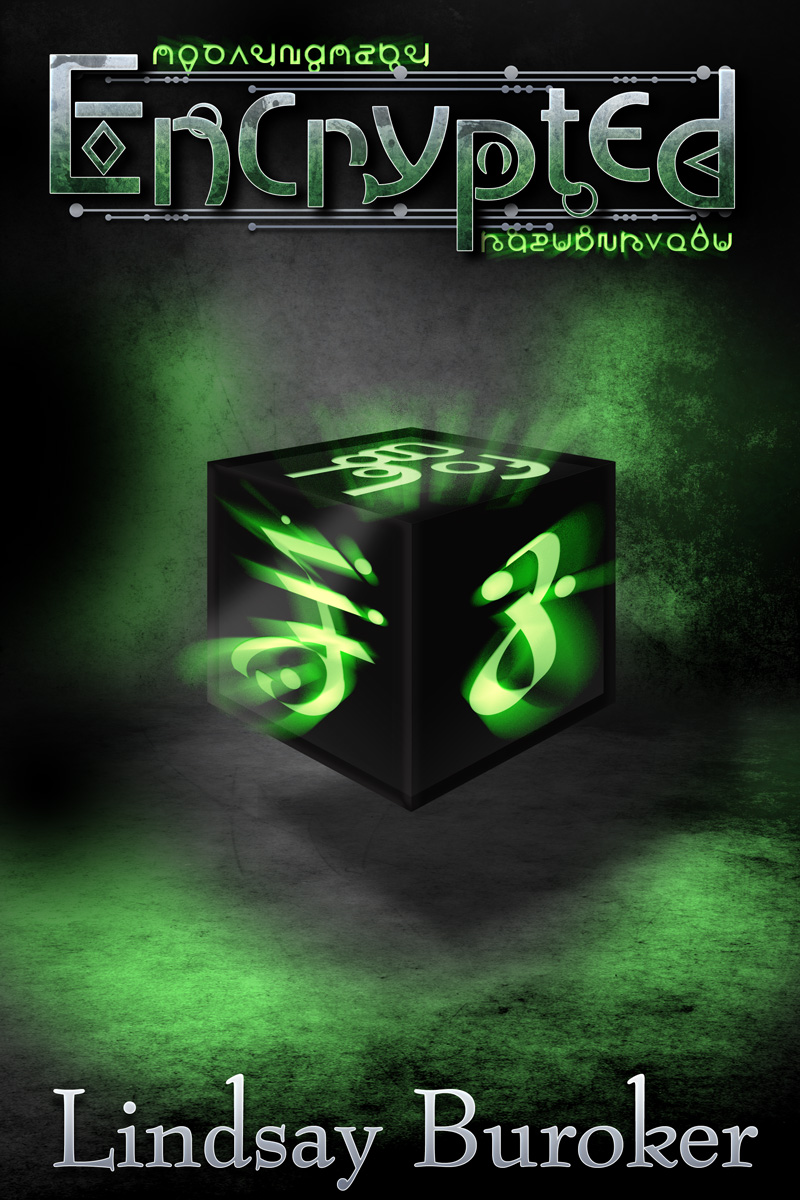
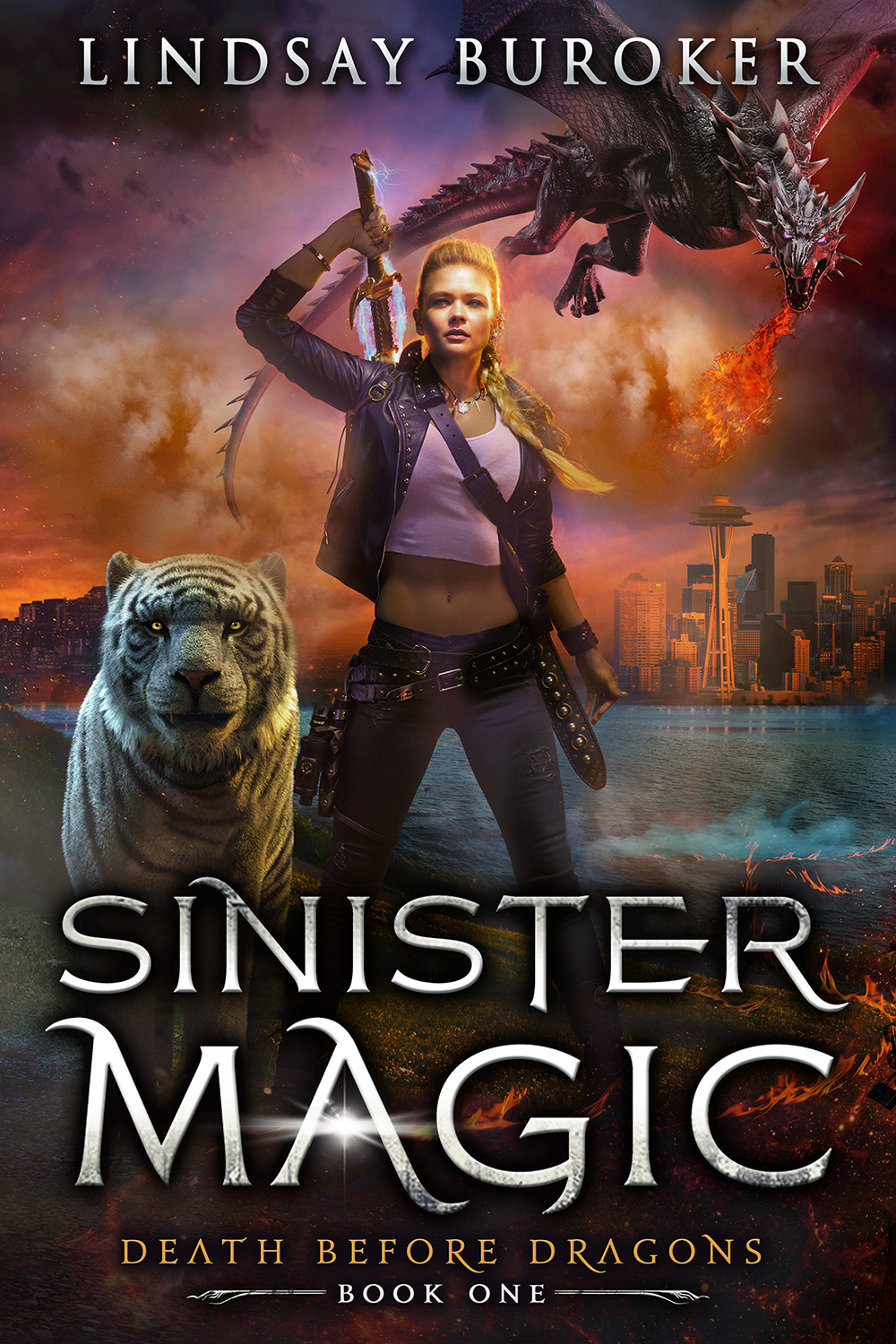
If you’re looking for something to read, I’ve just published a new short story featuring Tikaya and Rias from Encrypted.

Here’s the blurb:

After surviving ancient booby traps, deadly puzzles, and torture-happy imperial marines, cryptanalyst Tikaya Komitopis can’t wait to return home, even if that means explaining to her family how she came to love Fleet Admiral Rias Starcrest, the empire’s most notorious commander and the man responsible for the decimation of her people during the war.

Tikaya and Rias believe they’ll have several calm weeks at sea to mull over the problem of irate citizens and horrified parents, but the ship they board is on the run. The captain has acquired a mysterious stolen artifact… and the owners want it back. When he learns of Tikaya’s background, he urges her to decode its secrets, implying her life—and everyone else’s—might be forfeit if she fails.

Engima is a 15,000-word short story set after the events in Encrypted.

It’s available for 99 cents from Amazon, Barnes & Noble, Kobo, and Smashwords (iTunes and other stores coming soon).

Here’s a preview to get you warmed up:

Part I

Point 1: Rias saved my life, and I never could have escaped my kidnappers and those blighted ruins without his help.

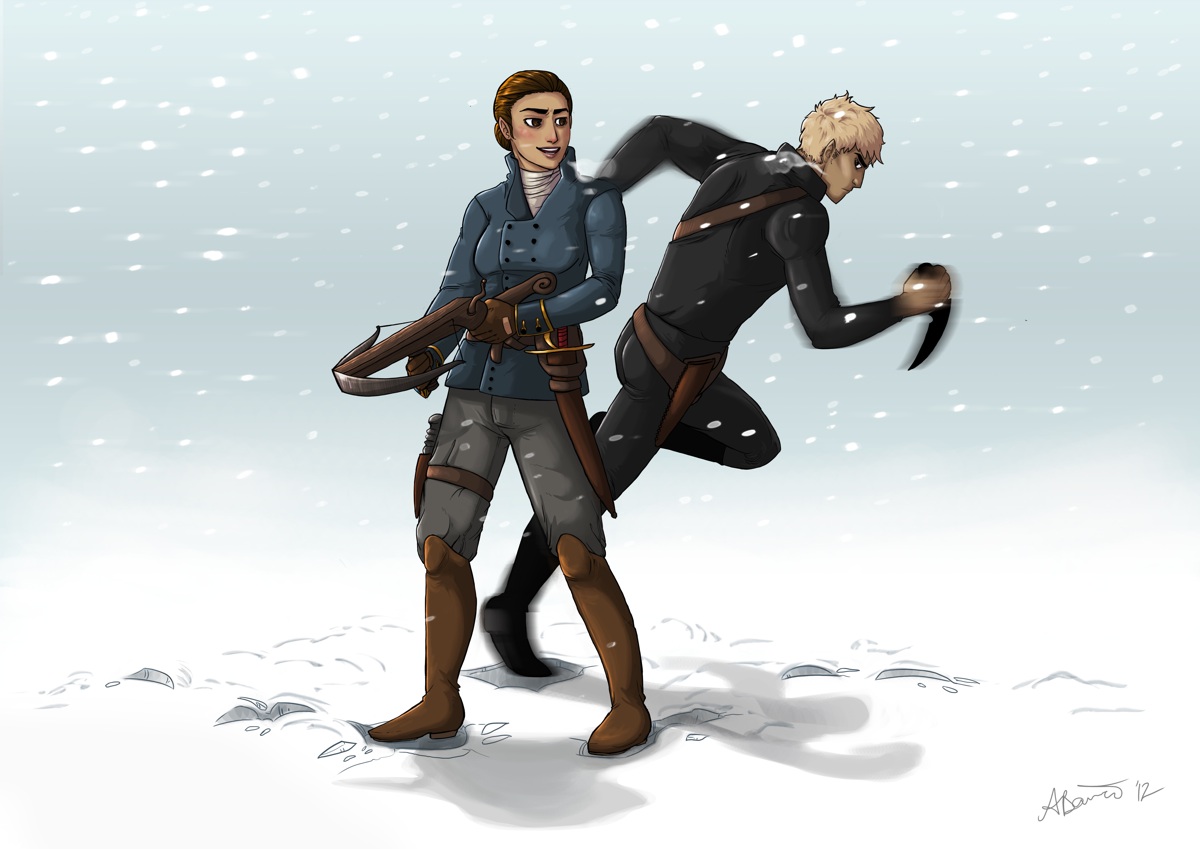
Professor Tikaya Komitopis nibbled on the end of her pencil while she considered her first argument. Her toe bumped against a sharp rock, interrupting her musings. Writing while traversing a goat trail across a mountainside in Northern Turgonia had its downsides.

A frosty wind blew down from a snowy peak to the left, tugging at the pages in her journal. Not far to the right, a cliff dropped hundreds of feet into the sea where foamy waves surged and churned, their temperature equally frosty, she wagered. The only warm thing in the land walked on the trail ahead of her. Rias navigated the rocky path with easy grace, though he possessed a broad-shouldered, six-and-a-half-foot frame that should have belied agility. For a long moment, her gaze lingered, admiring that grace, and other attributes as well.

Tikaya caught herself and snorted. If you want to continue enjoying that view in the future, she told herself, you’d best get back to the list.

Counterpoint, she wrote, anticipating her family’s response to Point 1, you never would have been in danger if his people hadn’t kidnapped you in the first place.

Yes, that would be the first argument her father made, if she got him to speak at all. He might be too busy fuming and glaring at Rias to utter words. That was if she could somehow get him past the port authorities and out to her family’s plantation to meet her kin.

Point 2, Tikaya scribbled, he’s been exiled from the empire and holds no further loyalty to the emperor. If we allow him on our islands, he could become an advisor and invaluable ally.

Counterpoint: Whatever he is now, he was Fleet Admiral Sashka Federias Starcrest during the war, a war in which thousands of our people died because he and his cursed emperor thought it’d be nice to have an “outpost” in the middle of the ocean.

Tikaya grimaced. Maybe making a list had been a bad idea. She was coming up with stronger counterpoints than points. She craned her neck and stared up at the blue sky, searching for an answer amongst the fluffy clouds drifting past. All she saw were puffs of her own breath crystalizing before her face.

Her toe caught on a rock, and this time Tikaya tripped, the rucksack, canteen, longbow and quiver strapped to her back colluding to undermine her balance. Only luck—and copious flailing—kept her from pitching face-first to the ground.

Rias halted. “Are you all right?” It was at least the three hundredth time he’d had occasion to voice the question in the last two weeks.

“Yes.” Tikaya had no doubt that he would have caught her if she’d fallen and was glad she hadn’t needed such a rescue this time. Not that she minded falling into his arms—quite the opposite really—but she liked to do it on her own terms. She adjusted her gear, pushed her long blonde braid over her shoulder, and straightened her spectacles. “How do you manage to so effectively think and walk at the same time? I know your brain is as busy as mine.”

He might be retired, however forcibly, but she’d caught him designing ships and engines by the campfire several nights.

Rias plucked her pen out of a clump of tenacious weeds growing from between two rocks. “I don’t imagine it’s the thinking that’s causing you trouble.”

As he held out the pen for her, Rias offered a warm half-smile. The gesture always gave him a boyish mien despite the silver peppering his black hair, the laugh lines at the corners of his brown eyes, and the old scar bisecting one brow. He, too, carried a rucksack and weapons—a marine-issue dagger and a muzzle-loading rifle instead of a bow—but he wore the gear as if it weighed him down no more than a shirt.

“Perhaps so,” Tikaya admitted.

“Fortunately, I can offer you a possible solution. You may find it easier to think aboard a ship.”

Rias stretched an arm toward the south, and Tikaya blinked at the realization that they’d reached something more than harsh wilderness. Granted, the town of Tangukmoo might be just as harsh as the surrounding lands—indeed, the log and hide cabins, gambling halls, and taverns spreading out from the docks lacked a posh, civilized appearance—but the ships in the harbor lightened her heart. Even the abstemious nature of a cabin at sea sounded delightful after the nights spent sleeping on cold rocky ground.

“Any idea how we can pay for passage?” Tikaya asked.

“I can volunteer for employment as a fireman in the boiler room.” Rias took out a collapsible spyglass and perused the harbor. “Hm, make that as a seaman.”

Even without magnification, Tikaya could see that most of the vessels had masts rather than smokestacks. She smiled. “Are you sure you know how to work a ship that doesn’t come with an engine?”

“Of course. I can sail anything.” Rias lifted his chin, and Tikaya might have teased him for letting his Turgonian arrogance show, but he winked and added, “Even wooden toys in the tub.”

“That doesn’t sound like a difficult feat.”

“It is if there are a lot of them and they’re engaged in mortal battle with each other while cannonballs fly.”

“Cannonballs?” Tikaya asked. “In… the tub?”

“I carved them from the soap bars.”

Tikaya imagined an eight-year-old version of the former admiral, orchestrating this conflict in the washroom. “I’m sure your parents appreciated that.”

“It did mystify Mother for a while until she discovered me at the task.” Rias lowered the spyglass and pointed to the harbor. “We have a challenge.”

“You say that in the way other people might say we have a problem.”

“Most of those are fishing and whaling vessels. They’ll be plying the coast and the Durtan Sound, not heading south. Our two options are a Nurian merchant vessel and a schooner of indeterminate origins. The schooner lacks the size and armament of a typical brigadier or pirate ship, but it shows signs of having been in a battle—or at least fired upon—recently.”

Those limited options definitely sounded like a problem to Tikaya. “The Nurians would kill you for all the trouble you caused them in the war, and pirates might try to steal the priceless artifacts we took from the ruins.” Artifacts she planned to take to the Polytechnic for further research, not hand over to high seas marauders.

Rias’s eyebrows rose. “Should I be concerned that it’s not entirely clear which would be more objectionable to you?”

Tikaya grinned. “Well, I have been passionate about archaeology and philology since childhood. You’re a more recent interest.”

“I believe the answer to my question is yes, then.” Rias collapsed the spyglass and returned it to his pack. “During our long sea voyage, I shall have to see what I can do to raise myself from interest to passion in your mind.”

Tikaya swatted him as he led the way down the goat trail again. His sense of humor always warmed her heart. She wondered if it was significant enough an attribute to earn a spot on her list of arguments. Reminded of the task, her grin faded and she stared glumly at the page. Would her people ever be able to see him as something other than an enemy? What if she was risking his life by taking him back to Kyatt? More than once, she’d considered going home alone and promising to meet him at some foreign port where they could start a life together, but the thought of saying goodbye to her family forever brought moisture to her eyes.

“This passion that I’m going to bestir in you,” Rias called over his shoulder, “it requires that we stay together.”

“Oh!” Tikaya wiped her eyes, put away her journal, and hustled to catch up. “I thought you might be planning to do it through love letters or poetry sent from afar.”

“Alas, we Turgonians are a military lot, not known for our literary prowess.”

“Just so long as you can convince any would-be pirate thieves to leave us and our gear alone.”

“I’ll keep you safe.” This time when Rias looked over his shoulder, his humor was gone and his eyes were intense with the promise.

Yes, Tikaya thought, but who was going to keep him safe?

* * *

 Amazon | Barnes & Noble | Smashwords | iTunes | Kobo

Posted in Ebook News | Tagged , , , , | 19 Comments

How Do You Maintain Steady Book Sales at Amazon, Barnes & Noble, etc.?

Whether you’re self-publishing or releasing a novel with a traditional publisher, when you first launch your book, you’re excited to promote it. You jump onto forums, you get active on Facebook, you blog, you guest blog, you sign up for book tours, you try and fail to get onto Oprah, etc. And, we hope, you see a payoff for your efforts. Amazon, in particular, makes it easy to monitor your results with sales rankings and up-to-the-minute sales reports (available for authors self-publishing through the KDP platform).

But what about the months and years after you release your book? With ebooks, a title need never go out of print, but it’s not doing you any good if people aren’t finding and buying it.

On Amazon, if you can hand-sell your first 1,000 books or so, their algorithms kick in and help with the promotion (your book may appear in some category Top 100 lists and it’ll show up in the also-boughts of other authors’ books). But even once-popular books can and do fall off the radar. Sometimes that fall is steep, too, if the author doesn’t continue to promote the book. Now that I’m coming up on two years of publishing, I’ve seen a lot of this.

About a year-and-a-half ago, Ridan Publishing was making waves by taking its newly signed authors to the tops of the Amazon bestseller charts. Marshall Thomas’s Soldier of the Legion Series was one of their hits with sales in the tens of thousands a month for a while. As I write this, the first book in the series has a sales ranking of 60,000+, meaning it’s probably not selling even a copy a day now. I’ve seen other authors, who sold fewer books during their peak periods, fall much farther, to 500,000+ sales rankings or more.

So, what’s the secret to maintaining steady sales at Amazon (and Barnes & Noble, Kobo, Apple, Smashwords, etc.) month after month? I won’t pretend that I have all the answers, but I’ll share what I’m doing here. I’ve gradually increased my sales over the last two years and, at Amazon, tend to sell 400+ books a month of each of the titles in my core (Emperor’s Edge) series. During book release months, I’ll do better, but I can’t bemoan steady sales that pay the bills every month. My sales at Barnes & Noble and the other stores chug along too.

Here are three tactics I’m pursuing to keep sales going:

1. Don’t “check out” after the launch

This one’s obvious, but I see it all the time. If you get tired of promoting your book after the first month or two and completely abandon all of your marketing efforts, it’s natural that sales are going to decline.

So how much work do you have to do to keep that from happening? You’ve already put the effort into getting a big boulder rolling, so you needn’t continue on at full steam (I’m full of locomotive references today, aren’t I?), but you do need to put a little effort into keeping that boulder rolling.

Here’s what I do (none of which take more than a few minutes a day):

  • Seek out occasional advertising opportunities — Some indie authors poo-poo on advertising because it hasn’t worked for them (they haven’t broken even), but it’s the easiest and least time-consuming marketing you can do, and it can pay off if done correctly. I advertise the first book in my series, which, through price-matching, is permanently free at Amazon as well as in other stores. If a number of people go out and download it in one day (which is what tends to happen when advertising on a popular site), I not only get all of those people to give my series a try, but this moves my book up to the first page of the Top 100 free ebooks in epic fantasy. There, other people browsing Amazon are more likely to notice it. This gives me a nice boost in downloads for a while, and some of the people who like the freebie gradually buy the other books in the series. A one-day sponsorship on a popular ebook site can increase my sales for a month or two. Here’s a list someone put together with the best book sites out there right now (some of them only promote free ebooks but others have paid sponsorship options for non-free ebooks).
  • Update my Facebook author page about three times a week — As I’ve mentioned before, at the ends of my ebooks, I encourage readers to come say hi or “like” me on Facebook, so there’s actually someone keeping an eye on that page. Being active there (and trying to get others to interact with my comments) can bring a trickle of potential new readers by (when people post comments on your page, their Facebook friends will see those comments and maybe check you out).
  • Stay active on Twitter — I’m not big on posting constant promo tweets (though I’ll plug something when it’s new), but by interacting with readers and posting interesting links that people “retweet,” it’s another place where new people can find out about me. In my bio, I tell people exactly what I write and have a link to my blog and also to my first ebook at Amazon.
  • I post regularly on my blog — I used to think I was blogging for the sole purpose of selling books, and that does happen to some extent (I use affiliate links, so I can tell how many sales originate here), but I’ve come to realize that the benefits of blogging are less tangible. By being out there in a (I hope!) helpful manner, I get people interested in helping me out in turn. I’ve received quite a bit of free advertising, in one way or another, because I’m out here, talking about my journey and offering advice for other authors. I’ve been mentioned on other people’s blogs, podcasts, and I’ve had my books plugged on other people’s sites. If all you’re doing is writing and publishing books, these opportunities might pass you by.

2. Publish often

With each new book you put out, you’ll increase the doorways people can find into your world. Someone might stumble onto your fifth book, enjoy it, and go back and buy everything else you’ve written. When you publish more often, your regular readers are less likely to forget about you as well. A lot of authors just assume that people will remember them, and remember to check for new releases, but voracious readers go through books like chocolates at Halloween, and you’re just one of many authors they’ve tried this month.

How much do you have to publish? Well, that’ll depend on what’s feasible for you. Not everybody can fit in thousands of words a day (and I question the overall health of you people claiming to do 10,000 words a day, ahem!), but you can be a prolific author if you can manage to write 1,000 words a day. That’s a full-length novel every three months. Even allowing for editing time, that should allow you to produce two novels a year and perhaps some shorter works as well (shorter works are excellent for keeping your name out there and giving fans new material in between novel releases).

I’ll admit that 1,000 words can seem like a lot in the beginning (it did for me — my first novel was about seven years in the making!), but there are lots of tricks out there for improving your productivity as a writer. Perhaps the most basic thing I’ve found is that, like anything, it gets easier with practice. Another perk with writing more quickly is that it’s a lot easier to keep an entire novel in one’s head when working on it over a couple of months as opposed to a year or more. When I took longer, I’d forget what I’d written in the first half and end up having to go back to re-read often.

3. Have your work out there in many places

I know, Amazon’s KDP Select (which requires exclusivity) has been the soup de jour this past year, but there’s a lot to be said for rejecting the short-term gains that may (or may not) come with granting a merchant exclusivity in favor of the be-everywhere approach to marketing. The more places you are, the more ways there are for people to stumble across your work.

In my first year, I didn’t make much at Smashwords, Barnes & Noble, or Apple, and I made next to nothing from Kobo and Sony. These days, those stores combined still don’t come anywhere close to my Amazon earnings, but they are significant enough that I wouldn’t want to leave that money on the table. In these last few months, I’ve reached a point where I could make a modest living as an author even without Amazon. Of course, I hope Amazon will continue to give me the lovings for years to come, but it’s comforting to know that I don’t depend 100% on them. Also, it’s worth pointing out that I sell just fine there without being in KDP Select.

In addition to being in all those other stores, it helps to have a free offering. I’ve already talked about how I use my free Book 1, so I won’t go into that more here, other than to say getting that freebie into Apple and Barnes & Noble, in particular, has made a huge different in my overall sales there.

All right, another monster Monday post. Do you have any tips you’d like to add insofar as maintaining book sales month after month?

Posted in Book Marketing | Tagged , , , , , , | 37 Comments

Is Becoming a Best-Selling Author a Matter of Luck?

A couple of days ago, I saw a video review of The Click Moment: Seizing Opportunity in an Unpredictable World on The Creative Penn. I needed something to listen to on a road trip anyway, so I picked up the audio version of the book. Joanna already did a nice review of it, so I won’t summarize it here, but one of the ideas was that talent and hard work only get you so far in business (including art, music, and writing). You need a serendipitous moment here or there (AKA a lucky break) in order to succeed in our rapidly evolving world.

For authors, the ultimate sign of success is often considered hitting the bestseller lists and hanging out there long enough to sell a million (or more) copies. This doesn’t mean you can’t make a perfectly nice living as a mid-list author (something that is more possible than ever in the world of independent e-publishing right now), but that’s not quite the same as rocketing up the charts to fame and fortune. True, that’s not something to which every author aspires, but, especially in today’s economy, one can certainly understand the desire to not simply make a living but to be “set for life.”

But can a bestselling book be manufactured? Is there a formula that, with enough practice and talent, an author might follow? Or do the stars need to align in just the right way for one to reach such lofty heights?

The Click Moment author, Frans Johansson, suggests it’s the latter.

Among other examples, Twilight gets a mention in the book. As we all know, the series took off without precedent. Stephanie Meyer wasn’t an experienced author with years of practice penning novels; in fact, she hadn’t been writing much at all before getting an idea for her story and going from there. She wasn’t well-versed in vampire lore and made things up as she went. Johansson even points out that much of the series’ success might be attributed to Meyer’s lack of knowledge, which allowed her to tackle things from a fresh angle. Had she been better versed in vampire lore and gone with the accepted norms, she couldn’t have written the same story, the one that resonated with so many teenage readers and rocketed her up the charts.

Stephen King is also used as an example in the book. He had some early success, then was able to build on it until he reached a point where his name alone could place a new release on the bestseller lists. But, Richard Bachman, a pen name King used early on (because his publisher wouldn’t allow him to publish more than one book a year) failed to have that early break-out moment. The Bachman books, despite being written by the same author with the same storytelling talents, failed to gain traction until it was revealed that King was Bachman.

In these cases, as well as many others, it seems that some serendipitous moment caused a tipping point in the authors’ careers, and it is that moment, rather than simple hard work and talent, that allowed them to achieve bestseller status.

So, what does that mean for the rest of us? All we can do is hope to get lucky?

Well, yes, and no. Johansson argues that randomness and luck do play a part in success but that we can set our selves up to be in a position where luck will be more likely to strike for us.

How we can improve our odds of becoming a bestselling author

1. “We have a strategic plan. It’s called doing things.” – Herb Kelleher (AKA Write a Lot!)

Johansson uses that quotation in the book, and I caught myself nodding. The more books you write, the more chances you have of hitting it big with one.

As some of you know, I used to build content-based websites and monetize them with affiliate programs and Google Adsense (that was the old day job). I must have made about twenty sites over the six or seven years I was making a living doing this. I read up on SEO and learned about the various keyword research tools that let me see exactly how many people were searching for which terms on Google. I also knew how to find out how much advertisers were bidding for clicks on ads in the various fields (so I could estimate how much I would earn for each ad click originating on my site).

All that science should have meant that I could pick a winning website topic every time and turn each one into a cash cow. It’s true that none of them failed utterly, and they all ended up making at least a dollar or two a day, but perhaps one in five would make much more than that, and one in ten might make more than a hundred dollars a day. The thing is… I couldn’t, despite all that research, accurately predict which sites wold take off. A random link from a popular blog (which often resulted in links from many more blogs) could make a site overnight. Or one particular topic might resonate with people, and word-of-mouth marketing would come into play. In other words, some sites got lucky and others didn’t.

When it comes to novels, I think the lesson is that most of us aren’t going to hit it big with one book. But if we write ten or twenty books, the odds are much better of one become a hit. One thing I pointed out in a post on JA Konrath’s $140,000 earnings month is that one or two of his 30- or 40-odd titles were responsible for the majority of his income. (There’s a chart on that post, showing his sales numbers.)

So, if we hope to become bestsellers, we must not only write well, but we must write and publish lots to increase our odds for success. Johansson calls this making a lot of bets and suggests we should also minimize the size of those bets. If you’re not the fastest writer, this might mean trying some novellas and shorter works (Joanna from the Creative Penn link above is planning to try this). It might also mean publishing a number of potential series Book 1s before committing to a six-book storyline, thus to see which series has the most potential to take off. There are doubtlessly numerous ways authors can pursue this philosophy.

2. Don’t try to follow a formula or use current trends as an indicator of what to write

Hollywood, for all its money and power and experience, can’t predict which scripts will turn into blockbuster hits and which will flop. That’s why they buy so darned many; they’re also hoping to “get lucky.”

New York publishing houses can’t predict which books will become hits either. They try their darnedest to manufacture them, but again and again they’re surprised by what actually takes off. When they’re regurgitating popular formulas, it’s not necessarily in hopes of creating a bestseller, but rather in putting out a middle-of-the-road style of product that’s proven over and over again that it can be profitable enough. These folks are usually as dumbfounded as you and me when something like 50 Shades of Greys takes the world by storm.

As we discussed, one of the reasons Twilight may have been such a hit is because Meyer made up her own versions of vampires through sheer ignorance of the precedents in the genre. She was essentially an outsider, and, in being so, brought fresh ideas to the table. This is actually a fairly tried and true concept. Sometimes the most brilliant ideas come from people outside of a field, because they haven’t been trained to think in a certain way. There are sites out there (and I forget the name or where I read about this, so someone please post more details if this rings a bell) where huge companies with staffs of brilliant engineers, scientists, etc. post problems on the web with rewards for those who can solve them. And the most random, sometimes utterly unskilled, people solve problems that eluded teams of specialists in the field.

So, what does this mean for us as writers? Johansson suggests we go places and do things that have nothing to do with our core work, thus to open ourselves up to moments and experiences that will give us unique ideas. He mentions talking to random people, traveling and experiencing different cultures, and going to conventions and conferences in fields outside of our niches.

For authors, I think, too, it’s important to read widely in areas that have nothing to do with the genre in which you write. When I was in my teens, I read nothing but medieval fantasy for a few years. And the stories that I wrote at the time were medieval fantasies that sounded a heck of a lot like all the other stories I was reading. I won’t claim that I create the most original worlds these days either, but I do find a lot of fun plot ideas from reading real-world history and listening to podcasts on a variety of non-fiction topics. I’ve found that travel can indeed inspire ideas, and you don’t necessarily need to cross the world (something we authors aren’t always rich enough to afford!); an hour drive and a tour of a small town with an interesting history can also stir the imagination.

3. When something seems to be working, exploit it!

Once one of your bets pays off, and you have a winner, take advantage of that. Write more books in a similar vein.

This doesn’t necessarily mean that you have to wait for a book to become a bestseller. If one of your titles sparks better reviews and more fan mail than the others, it may make sense to launch a series based on that book. This may be Step 1 in creating a bestselling series.

Each of Stephen King’s books becomes a bestseller because he’s built up a fan base of readers who know they will get what they expect when they buy a new King book. If he’d decided to bounce around between genres and write something different each time, he might have been, at best, a one-hit wonder. But, by writing the same types of novels each time, novels that have proven popular for him, he’s created, as Johansson calls it, a self-reinforcing loop.

Final thoughts

Though I can see many of the points in the book, and often found myself nodding, it’s hard for me to give up the belief that a savvy author could gradually work one’s way up to bestseller status without some random bit of luck suddenly turning a book into a phenomenon. If one can put out good stories and build on small successes along the way, gradually gathering more fans with each successive release, it seems that one would eventually hit a tipping point (caused by X number of fans buying a new release on Day 1, and thus propelling it into visibility on bestseller lists) regardless of lucky breaks. But perhaps that would only result in one becoming a popular author and not a bestselling one.

Your thoughts?

Posted in Book Marketing | Tagged , , , , , | 56 Comments

Emperor’s Edge Extras: Interview with Sergeant Yara

As some of you who chat with me on Twitter know, I’m planning to take a breather from Decrypted and work on a new Emperor’s Edge novella for November’s NaNoWriMo challenge. I haven’t worked out the entire plot yet, but it’ll feature Sergeant Yara as the POV character and will take place on a steamboat ride back up river, between the end of EE5 and the beginning of the forthcoming EE6. To get you all in the mood for some Sergeant Yara action, she’s here today to answer interview questions that were sent in by readers on Facebook and the EE forum.

Sgt Yara Interview

Sergeant Yara, thank you for taking the time to visit with us today.

Did I have a choice? *suspicious glower* Aren’t you the one responsible for sending Lokdon and that assassin to my family’s doorstep, starting a chain of events that resulted in my brother tattling on me, and my job being placed in jeopardy?

No, no, Amaranthe thought up that plan of her own accord. Besides, I might be able to get you your job back if you’re pleasant and answer these questions for your fans. Did you know you’ve gained a few fans by joining up with the EE team?

*only slightly less suspicious glower* There won’t be touching, will there?

No touching. Maldynado’s off somewhere, basking in the adulation his interview earned him.

Very well. Proceed.

Thank you for your enthusiastic agreement. Here we go with the first question. Maggie asks, “What were the best and worst things about growing up with so many males?  And how old is she?”

I’m 28. The best thing about having so many brothers? Let me think about that. I guess they made me tough and capable of taking care of myself. The worst thing? Do you want a list? How long do you have? There was the time they made me eat worms, the time they rolled me down a hill to see how many times I’d bounce before I hit the bottom, the time they dropped me in the well down the street, the time they convinced me I’d broken my “lady parts” and would never have kids, the time–

All right, thank you. That’ll do. Next question… Alex asks, “What’s her motivation for becoming an enforcer? Amaranthe wanted to go down in history as something – what about Yara? P.S. What is with that self-cut hairstyle? I get being self-sufficient but there are some areas you just don’t mess with. Maybe you and Sicarius could start a club?

I do not like to talk about this subject.

Why you became an enforcer? Or… the hair?

*glower*

Remember, cooperation could earn you good things in the next book…

I seek only a return to my old job and my old life.

Well, we’ll see about that. Do you want me to repeat the questions?

*glowers and grumbles* No.

Up until I was eighteen, I worked in the smith with my family. I hadn’t decided if I wanted to do something else with my life. My mother worked in the city, selling the family’s wares from the back of a wagon. I had no interest in business, so my little brother always accompanied her.

The city isn’t a kindly place, though, and one night they were jumped by thieves who wanted to steal the day’s earnings. My brother was only sixteen then, but he stood up to the criminals and refused to give in. Unfortunately, the confrontation escalated from there. Someone pulled out a gun and… my mother was shot. A pair of enforcers showed up and apprehended the criminals, but it was… too late for her.

After that, my brother and I eventually both found our ways to the enforcer academy. I wanted to make sure that such atrocities would be less likely to happen to other families.

*throat clearing* Is that enough?

Yes, sorry to bring up a sensitive subject. And, ah, the hair?

You’re not going to drop that, are you? It is not a “self-cut” hairstyle. Ms. Graytov on Elm Street cuts my hair. Yes, it’s short, but that’s practical for an enforcer. I used to wear my hair longer and back in a braid. Early in my career, I was chasing a bandit through some corn fields (yes, yes, it’s very rural out here, I know) and didn’t realize he had an ally. The miscreant jumped me from behind, grabbed the braid, yanked my head back, and almost slit my throat. With luck, I managed to get out of the situation and apprehend the pair of them, but it was a lesson not to leave hair dangling. I find it easy to care for as well when it’s short.

Liana asks, “Sespian chose you and one other female enforcer for promotion to Sergeant — why do you think you were chosen?”

I’d like to say it’s because I’m a hard worker and my record showed it. I have a feeling he was just trying to encourage women in the force and picked me because there weren’t many to choose from.

Maria asks, “How did you react when you found out about your promotion, and what was it like when you first met Sespian?”

I was excited, of course, and nervous to meet the emperor. The Imperial Barracks is bigger than my entire town, so I might have been intimidated too. Just a little. Don’t tell Maldynado I said that. He’d call me a bumpkin.

During my first time meeting the emperor, I was too nervous trying not to say something stupid to notice much about him, other than that he was young and nice. He didn’t make you feel like you were some peon who was beneath his station. I liked him and knew I wouldn’t have to pretend to respect him during his reign. Not like some of the superiors I’ve had as an enforcer.

On my second meeting with the emperor, I sensed the tension behind his eyes, that he wasn’t quite as in charge of things as I thought. I wished I could help him, but didn’t see what a simple enforcer sergeant could do against the powerful people surrounding and pressuring him.

Mana asks, “What is her current opinion of the EE team and how did or didn’t it change from before she came on the train heist?”

I’m still trying to decide what I think of these crazy people. I now believe they think they’re working for the good of the empire–at least Lokdon thinks that and has convinced the others to go along with her–but their methods are reckless.

More than that, their methods are illegal! As an enforcer, it is difficult for me to go along with these mad schemes. On the way back to the capital, I shall have to consider whether I can continue with them or if it would be wiser to return home and report everything to my superiors.

Racine asks, “Why is she so immune to Maydynado’s charms?”

He’s a dolt.

All right, maybe he’s not entirely a dolt, but his “charms” as you call them make me uncomfortable. He is obviously someone who gains female favor easily; I have no doubt he’s wooed many a girl only to leave her in tears when he grows weary of her and moves on to the next conquest. I refuse to develop an attachment to someone like that. He’s not as if he’d reciprocate the feeling.

I’m also quite perplexed as to why he insists on plying his “charms” on me. I suspect because there are a lack of other women around at the moment. I’m sure that will change once we return to Stumps.

K2N2 asks, “Of Mal’s hats, does she have a favorite?  Is there any sort of hat she’d like to see him in?”

His hats are idiotic. I don’t know why he wears them. Why cover up such gorgeous soft, wavy hair that invites one to touch it, and… *cough* Never mind that. The hats are idiotic. Why someone with an otherwise respectable fashion sense insists on adding such dubious flare is beyond me.

Kayla asks, “Now that you’ve seen Sicarius interact with Amaranthe and the others, do you still think he is totally a monster?”

I think he’s a viper that Lokdon has charmed, the same way she’s won over the rest of her men. As long as she’s playing the pipe, I’m not too worried about being around him, but I have no doubt that he deserves the bounty on his head, and I would not wish to be around him if something should happen to her. I was relieved when he left the team to find her on his own.


Part II of the interview is now available, which includes Yara’s views on Amaranthe, her dating experience, and her “real” thoughts on spelunking (yes, these are the things people want to know!)…
 

Posted in Cut Scenes and Fun Extras | Tagged , , , , | 33 Comments

Are There Downsides to Giving Away Free Ebooks?

If you’ve stopped by my blog before, you’ve doubtlessly heard me suggest that giving away a free ebook (whether a short story, a novella, or a complete Book 1) can be a great way to boost sales of your other books. I’ve been doing this almost since the beginning of my e-publishing adventure, first with a short story and then, for the last year, with my first Emperor’s Edge book. I’ve had countless people tell me they tried my first book for free, then went on to buy the rest of the series. And my sales numbers do back up that notion.

But are there any downsides to giving work away for free?

I don’t buy into most of the “downsides” I hear mentioned, i.e., that it’s devaluing your work or that people will assume something free is junk and ignore it — the numbers of downloads I see (and sales of subsequent works) don’t support that belief. (I’ve notice that authors are very good at assuming their own beliefs are those of the market in general; real-world testing is, of course, a more logical way to make pricing decisions.)

That said, there may certainly be some less-than-ideal consequences of offering an ebook for free, and it’s up to each of us to decide whether the upsides outweigh the downsides.

Here is one thing I’ve noticed of late:

Bookstores may choose to prioritize paid titles and display them more prominently

For the last few months, Amazon was displaying it’s Top 100 paid and free side-by-side for various categories. Recently, they’ve started adding an extra click (people now have to choose the “Top 100 free” link at the top of the category page to see the list), which makes those most-downloaded titles a little less visible. I’ve also heard from folks browsing via their kindles that they have a hard time finding the free ebooks at all. I’ve had fewer than average downloads so far in October (though not by a large margin) and wonder if this change is the reason.

Amazon changes things around often, and we can count on them to do what’s in their best interest, so it’ll be interesting to watch and see what happens. If free titles become harder to find, it may negate the perk of having a free ebook in the store. Of course, we can still use advertising and other forms of promotion to drive potential readers to our book pages there, but there might come a time at Amazon where one would be better served by having an inexpensive Book 1 that will appear in the normal paid-book lists rather than a free one. Or, something I’m contemplating, it might make sense to have a free ebook and then a special not-free edition with cut scenes, interviews, etc, so that you can have a title in the free and paid lists.

Here are a couple of other possible downsides that people have brought to my attention:

A free ebook may receive harsher reviews than one a person had to purchase

I’m not sure I necessarily believe this — I think it’s more that people are seeing something that’s common with books that become more popular: with most titles, you’ll see fewer rave 5-star reviews once reviewers have no connection, however loose, to you (i.e. friends of friends, readers of a blog where you were interviewed, acquaintances from Twitter, etc.).

At the end of the day, it’s important to remember that people still try books with 1-star reviews. As long as there are some good ones, too, it’s probably not a big deal. There are some extremely popular books out there (Shades of Gray, what?) with as many 1-star reviews as 5-star reviews.

Some people only “buy” free ebooks and won’t go on to try others

If this is true, then those folks weren’t going to be your customers anyway. You don’t lose anything by having them read your free titles (and you might even gain fans who will mention your books to friends, people who do buy books). Other people will use the freebies section, much as they would use a library, to try new authors without risking an $5 or $8 price tag. If they like the book, they’ll buy others in the series.

To snag those folks, though, you need to make sure your free offering is something good. I’ll see people “go free” with 3-page short stories that were rejected by 50 magazine editors. First off, this may not be a good example of the work you can do now, and second, such a short read isn’t going to be enough to turn someone into a fan. I’ve definitely gotten the most mileage out of having an entire novel free.

All right, that’s all that comes to my mind now (though I’m blogging from the road, so am a tad distracted as my dog lets me know that she’s tired of sitting on the porch at the coffee shop). Do you have any downsides to add? Or arguments you’d like to make? Please chime in below.

Posted in E-publishing | Tagged , , | 46 Comments

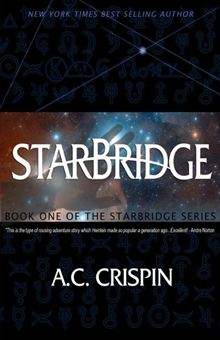
Long-Established SF Author AC Crispin Goes Indie with StarBridge Series

When I was in sixth or seventh grade, before I found my way into fantasy, I picked up my first major geek cred by reading Star Trek books. A lot of Star Trek books. At one point, it was a source of pride that I’d read every single Trek book out there, even the hard-to-find short story collections from the 70s. I’d even read some of those upstart Next Generation books that was starting to proliferate on the SF shelves (I was well into adulthood before I developed an appreciation for Captain Picard). As I’ve confessed before, Mr. Spock was my favorite character, so it shouldn’t be surprising that a couple of Trek books that I re-read several times were A.C. Crispin’s Time For Yesterday and Yesterday’s Son. I later read Ann’s Star Wars novels too (more geek cred for the jar).

I drifted away from series tie-ins as I got older, but Ann’s name has come back on my radar again of late, due to the fact that she signed on with small press Ridan Publishing last winter to create ebook versions of her original-world StarBridge series. Ridan had a lot to do with Nathan Lowell’s e-publishing success and has turned Joe Haldeman’s The Forever War into a bestseller all over again. Ridan also launched Michael J. Sullivan‘s career, turning him from a small-time self-published author into someone who earned a lucrative publishing deal with Orbit books.

Apparently, things didn’t go well with Ridan this last year, though, with the owner going MIA for long periods of time, at least insofar as communicating with authors and readers went. Ridan didn’t do any marketing or promotion for Ann’s books, nor did it fulfill orders from Crispin fans who ordered the ebooks from the publisher’s site. For those who want more details, they’re up in their ugliness over at the Kindleboards. Last week, Ann announced on her Facebook page that she’s parting ways with Ridan. She’s since reached an agreement with the owner, and her Starbridge series is now up under her own name. In other words, she’s one of us now!

I’ve picked up the first book and will be giving the series a try. Ann has long maintained the Writer Beware blog, a helpful resource for up-and-coming authors, and I hope she does well with this first foray into independent publishing.

If you’re a fan of science fiction and are interested in checking out her work, here’s the blurb for the first book:


WE ARE NOT ALONE, AND WE’RE ABOUT TO MEET OUR NEIGHBORS.

After more than a hundred years of space travel, a stray radio signal indicates the possibility that alien life might exist. The crew of the Désirée has no training in interstellar diplomacy and a minor dispute turns to disaster that could escalate into a full scale war.

Can the bond formed between two very different friends be strong enough to bridge their differences and save their people? Come along in this first book in the StarBridge Series in an exciting journey across the stars in a desperate gamble to save both their worlds.

StarBridge at Amazon, Barnes & Noble, and Kobo.

http://www.accrispin.com/

.

Posted in Fantasy / Science Fiction | Tagged , , , , | 7 Comments

Can Posting Stories on Wattpad Help You Sell Books?

As authors, we’re always looking for new ways to stand out and attract readers to our work. The online world presents numerous opportunities, some of them effective, some not so much. I’ve been aware of Wattpad for a while, but haven’t had a chance to tinker around there much yet. I learned that independent author CJ Archer has had some success there and asked her if she’d answer a few questions. If you’re looking for new ways to promote your work, you may find this short interview useful.

Using Wattpad for Book Promotion with CJ Archer

Thanks for stopping by, CJ! First off, could you give us an overview on what the Wattpad site is all about?

Wattpad is a place where writers connect with other writers as well as readers. They can get feedback on their “works”, interact, and build a community. For readers, it’s a place to read free stories and find new authors.

It sounds like you and quite a few other self-published authors have been using Wattpad as a promotional tool. What strategies are you using?

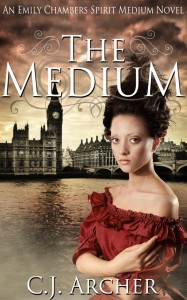
I initially put up a few chapters of one of my self-published books on Wattpad, but it gained very few readers. I decided to investigate the site further to see what works and what didn’t. I found that authors who had the most success were posting young adult books, posted the entire book, and they interacted quite a bit. So I put up the first book in my new YA trilogy, THE MEDIUM. I posted a new scene every few days until the entire story was up, which coincided with the release of the 2nd book.

Something to keep in mind is that Wattpad is geared towards teenage readers (mostly female) who want to read free books. When I started posting THE MEDIUM, I interacted in a few relevant communities to gained some initial exposure. Since THE MEDIUM is historical paranormal romance, I posted in “clubs” that focus on these three genres. I made sure to include the cover image in my posts. It’s a professionally designed cover with a striking model. I’ve since had people tell me they were attracted to the cover, then went on to read the blurb and first chapter.

If you do use Wattpad to post the first book in a series, expect some backlash from readers who want to read the subsequent books for free too. Make it obvious that the Wattpad book is part of a series, and that you will not be posting subsequent books. I think it’s important to keep the price of the remaining books low, so that readers on a tight budget won’t feel cheated. Most will be happy to pay you for your efforts if they enjoyed the first book and they don’t feel ripped off by an expensive 2nd book.

How much time do you spend over there? Do you have to comment on other people’s work to get folks to check out yours?

In the first week of posting THE MEDIUM I spent perhaps half an hour per day, mainly posting in the clubs and commenting on other people’s works as well as updating mine. After that, I tapered off my efforts and now I only reply to comments left on my story which takes only a few minutes. If another writer asks me to comment on their Wattpad story, I’ll usually take a look at the first chapter and offer some encouraging comments and some tips.

If someone started posting a novel at Wattpad today, how long do you think it might take for him/her to attract an audience and (we hope) see some sales?

This is not an easy one to answer. I think if you put in some early effort over a few weeks, you should see some reads quite quickly. BUT it all depends on whether readers like your story, connect with the characters etc, otherwise they’ll abandon the story without finishing it. A lot of Wattpadders won’t read anything until it’s complete, so it pays to post the entire book and mark it as “complete”.

Does it seem like certain genres do better than others over there?

Stories geared towards teenage female readers do better on Wattpad. Romance is very hot on the site, but also the most competitive category.

Do you have any comments or advice for authors who might be worried about putting their published work out there for free?

Personally, I’d only post entire books on Wattpad that I’m comfortable having free. For me, this means only the first book in a series, never the subsequent books. Since THE MEDIUM is also free at all the major ebookstores (currently waiting on Amazon to price match), I’m content to have it on Wattpad in its entirety. I’ve heard of other authors posting the entire book for a limited time, then scaling back to only a few chapters after they’ve gained some reads. I haven’t tried this, however, and I’m not sure if I will.

Thanks for taking the time to answer my questions, CJ!

You can find CJ on her site, Facebook, and Twitter, and you can check out her books on Amazon, Barnes & Noble, and Smashwords. Of course, you can read The Medium on Wattpad too.

What do you guys think? Have you tried Wattpad? I’ve had an account there for a while but haven’t done anything with it yet. I may try posting my free ebooks over there.

Posted in Book Marketing | Tagged , , , , | 25 Comments

My Self-Publishing Thoughts After 50,000+ Ebook Sales

In September, I released Blood & Betrayal, the fifth novel in my Emperor’s Edge series. I sold about 2700 copies of it during the month (not including those who purchased through my eARC offering in August) and about 6,000 ebooks across all of my titles and all stores (over 5,000 came from Amazon U.S.). September has been my best sales month to date, with May (the first full month after the release of EE4) being the second best. It’s taken me into the realm of 50,000+ ebook sales total.

There are a lot of other independent authors who’ve hit that mark (with many selling more than 200,000 already), some with fewer total books out, but I feel like this is an encouraging start to my writing career. I published my first ebook less than two years ago, in December of 2010. I sold about 30 ebooks that month (most to people I knew). Fortunately, it got better from there.

Thanks to the high ebook royalty rates Amazon offers (70% for books between $2.99 and $9.99 and 35% for others), I’ve been doing this for my full-time job since December of 2011. I average about 2,500 to 3,000 sales most months with new release months obviously doing much better.

As I mentioned in an interview with Joanna Penn over at the Creative Penn, I haven’t experienced any major “lucky breaks” or spent any time at the tippy tops of the bestseller charts (lately, my debuts have been hanging out in the Top 20 of the Epic Fantasy category for a couple of weeks over at Amazon, but that’s about as close as I can get to claiming to be a “bestseller”). I’ve just been plugging away and doing my best to write every day, so I can put out at least two new novels (and some shorter works) a year.

I’ll share a few of the things I’ve learned in a moment, but for those who are curious about such things, here’s a breakdown of September sales from Amazon (US), which, as I mentioned, accounts for the majority of my income:

  • The Emperor’s Edge (a novel — free — I don’t count free downloads as “sales”): 9658
  • EE2-EE5 (novels — sold at $4.95) — 3,934
  • Encrypted (novel — sold at $3.95) — 329
  • Flash Gold (novella — free) — 807
  • Flash Gold 2 (novella — sold at $1.79) — 209
  • Flash Gold 3 (novella — sold at $2.99) — 184
  • Shadows over Innocence & The Assassin’s Curse (short stories — sold at $0.99) — 545
  • EE1-3 omnibus (I un-published this at Amazon early in the month — sold at $7.99) — 40
  • Goblin Brothers Adventures (middle grade short story collection — $0.99) — 36

Amazon US total (not including free downloads): 5,277

I also sold close to a thousand copies at Barnes & Noble this month and a couple of hundred at Smashwords, iTunes, and Amazon UK, with just shy of 100 at Kobo.

The numbers show that novels do best for me, which isn’t that surprising, with each one in my EE series outperforming the stand-alone, Encrypted. I don’t have a freebie associated with Encrypted (for now), or perhaps it might do better.

Overall, I certainly can’t complain. As I said, this is my best month to date, and I’m grateful that so many readers have been open to trying an independent author.

Random Thoughts and Advice for Other Up-and-Coming Authors

  • If you’re serious about having a writing career (i.e. you hope to make a living from your word crafting), I believe self-publishing is the best way to get started right now. It’s a lot of work, and is best suited for those who are fairly prolific and don’t mind learning how to market online, but I think you need to be both of those things to make it with a traditional publisher these days anyway. Also, just because you get started self-publishing doesn’t mean you have to stay with it. A lot of authors are choosing a hybrid model these days. Once you prove you can sell and that you have a fan-base built up, it doesn’t seem to be that hard to get a deal. I got my offer fairly early on but wasn’t ready to make the switch at that time.
  • A series can be a powerful tool. Though I haven’t sold as many books as some of my peers, I’ve definitely seen the cumulative effects of working on a series. With ebooks, your first book is always out there, on the “shelves,” so people can continue to find it and, if they enjoy it, go on to buy the rest of the books. With stand-alone novels, purchasing follow-ups is less of a no-brainer for readers, and it’ll probably depend on whether the blurb piques their interest. That said, a downside of a series is that people like to start with Book 1 and if your Book 1 isn’t that strong, and it’s not until further into the series that your writing improves, that can mean fewer readers give you a second try. You also get tired of promoting Book 1 all of the time!
  • In the ebook world, adult fiction sells far better than children’s fiction. Not much of a surprise there (how many kids have e-readers and credit cards to buy on Amazon?), but I actually published my Goblin Brothers’ stories first and was of a mind to create a series of novels with those characters. I have the rough draft of the first one on my computer. I’ve left it in draft stage, though, because I know I’ll earn more by working on my adult fantasy novels. For the middle grade (and younger) market, it may still be worth trying to find an agent and traditionally publishing. Every now and then I kick around the idea of trying that route for the series, but I have a bunch of projects on my plate (EE6, a sequel to Encrypted, and more Flash Gold novellas in the immediate future) at the moment.
  • The more books you have out the better you do. This is another one that seems obvious, but I see a lot of authors promoting the heck out of the one book they have out. Honestly, I did the same thing (though I published two novels to start with — EE1 and Encrypted). It’s what you’re supposed to do, right? The truth is, though, that it’s not really worth the time to spend a lot of hours on promotion when the most you can possibly earn is $2.05 or thereabouts (if you sell your first novel for $2.99) per customer. Now, if you have six books out in a series, and could earn closer to $20 per customer (assuming quite a few folks go on to buy all of the books), it starts to make more sense to spend a half an hour or an hour to “get a sale.” As we discussed last Spring, most of the independent authors I’ve come across who are making a living from their work have multiple books out, sometimes multiple books in multiple series. Not many people make a living wage on one book.
  • Being approachable and doing a little extra for your readers goes a long way. I’ve had quite a few readers tell me that they appreciate that I write up character interviews, post cut scenes, chat with people on Twitter and Facebook, and pop into the EE forum. They always sound… surprised, whereas I think, what author wouldn’t do these things? I can understand getting to a point where it’s hard to answer all of one’s emails, especially if you blog about self-publishing and get a lot related to that as well (I’m trying batch processing to improve my efficiency in the email area), but I can’t tell you how many people have said things like, “I’m really enjoying your books and have recommended them to X and Y friends.” I’d like to think I’m clever at online marketing, but I know I’ve been fortunate to get a lot of readers through word-of-mouth. It’s true that people will talk up a book they like regardless of whether they’ve ever interacted with the author, but I think folks are even more likely to want to see you succeed if they’ve come to know and like you through online interactions.
  • Your social media pages are for building a community, not for turning strangers into book buyers. Every day I see people promoting their books on Twitter and Facebook. I think you can stir up some interest on Twitter (though you’ll get a lot more mileage out of promoting a free ebook rather than a non-free one), but really these sites are about connecting with readers and creating a community. Or as Seth Godin calls it, a building a tribe. Nobody’s going to go to your Facebook page and then decide to buy your book. They’re not going to know you or your Facebook page exist until they’ve read your work, liked it, and been inspired to look you up (hint: put your social media links at the end of your books and encourage people to stop by). Facebook is a place to update existing fans, keep them interested in your world between books, and encourage interaction. By connecting people with common interests (your books), you have the opportunity to create something that’s larger than yourself. I believe the EE forum I mentioned originally grew out of a conversation people were having in the comments on my Facebook page. I do my best to plug it when I get a chance now, to encourage growth, as one of my characters would say.
  • Giving away freebies doesn’t devalue your work; it gives people a chance to try your stories at no risk. I can’t tell you how many people have written and said they first tried my books because EE1 was free, then went on to buy the rest of the books in the series. The result is that I sell more — and earn more — overall because I offer a couple of ebooks for free. I’ve heard authors argue that people who download free ebooks don’t read them or never buy others, but this simply isn’t true. Haven’t you ever found a new author by first checking out his/her work from the library? Or by borrowing a book from a friend? I know I have. Beyond getting people to try your work, I believe that offering free ebooks counts toward the “doing a little extra” for folks that I mentioned above. It starts your potential relationship with a new reader off on a good foot.
  • If you build a community of “ravenous fans,” you’ll never go hungry. Every other week some author is blogging about falling ebook prices (the “race to the bottom”), the sketchy marketing tactics others are employing (paid reviews being the most recent cause for hubbub), or perhaps just the ever-increasing amount of competition in the marketplace that’s making it harder and harder to stand out. Books aren’t a commodity, though, and what other authors are doing matters less than you think. If you can develop your writing to a point such that others truly derive enjoyment from it in a “I have to tell friends about this” way, your career is well on its way to being established. Step 2 is to make sure you have the contact information (AKA through a newsletter subscription) for those passionate readers so that you’re not relying on the whims of Amazon for your income. We’ve interviewed authors who have made close to $100,000 on a single Kickstarter campaign. If you have enough fans and a way to contact them, you’ll always be able to make a living telling stories, one way or another.

Thoughts? Please post them below!

Posted in Amazon Kindle Sales, E-publishing | 64 Comments