NaNoWriMo Success Tips (have any to add?)

It’s the beginning of November, and, for a lot of us, that means the first day of NaNoWriMo, a self-inflicted torture worthy project where we attempt to write the first draft of a novel (50,000 words of one anyway) by the end of the month. No, it doesn’t matter that this is a hectic time for many people. We are writers; we will conquer!

I did NaNo last year and knocked out the 50,000 words, and I usually write 1500 to 2000 words a day anyway when I’m working on a first draft, so I thought I’d throw together a few tips here for those who might be new or who’ve participated before but not met the goal. (If you have tips of your own, feel free to add them at the end.)

NaNoWriMo Success Tips:

Get ahead early

You’ll probably find the writing comes easiest in the first week, because you’ve been thinking about this novel for a while. You know how the first chapter goes and maybe the first few chapters. You’re excited about the project, and you’re excited about NaNoWriMo. This is the time to get ahead i the word count. It’ll be a little extra cushion for later, when life gets in the way or you just get stuck in the story (it happens to the best of us).

Write every day

Try not to blow off any days. If you write every day, you’ll need to pump out about 1667 words before bed each night. Perhaps not a “piece of cake,” but a manageable goal. If you miss a day, you’re suddenly looking at over 3200 words that need to be written the next day. That’s a lot. If you put things off and say you’ll catch up on the weekend, it’s even worse. You’ll start to hate the whole process, and maybe give up, if you’re looking at a Saturday where you have to write 7,000 words because you haven’t gotten any writing in since Monday.

Instead, try to write every day. You’d be amazed at how much you can write in 20 minutes if you’re focused. Even if you don’t make the 1667 words that day, at least you made some words, so catching up isn’t quite so difficult.

Don’t put off starting until the end of the day

I’m a night owl, so I know all about saving writing for the end of the day, but it’s easier to reach goals when you’re able to knock out a few hundred words before you get going in the morning, a few hundred more on your lunch break, a couple hundred before dinner, etc.

You may actually find that you’re more productive this way too. If you know you only have 15 minutes to spare before you leave for work, you’ll sit down and write without screwing around. If you start writing at 8pm, and know you have the rest of the night to work, you might check email, play a few rounds of Scrabble on Facebook, tweet with your buddies, etc. The length of time needed to complete a task tends to expand to fill the length of time allotted. This is why some of your best NaNo days might be on a hectic Thursday instead of a Saturday where you have nothing else planned.

Don’t obsess over having your entire novel outlined in advance

If you didn’t get your entire novel plotted out in October, don’t stress about it. A lot of us who write full outlines end up deviating from it by Chapter 3.

If you know where to start, and you know how it’s going to end, you can probably find a road to get you there. In fact, there’s a quotation about that. E.L. Doctorow: “It’s like driving a car at night. You never see further than your headlights, but you can make the whole trip that way.”

Use your time away from the computer productively

Most of us can’t sit at the computer and write all day. We have work, family, and various obligations that keep us busy, but you probably do have some hours during the day where your brain doesn’t need to be 100% focused on its current task. Time where you’re exercising, dog walking, commuting, etc.

Use that time to work out the next scene in your story so that when you do get a chance to sit down at the computer, you’ve got the next thousand words or so all planned out, and there’s no need to dawdle.

Only write the good scenes

Most of us don’t enjoy writing exposition, the stuff where we explain the world, the setting, the characters’ histories, etc. And don’t forget the transition pages where we feel we have to show how the characters got from Destination A to Destination B (even though absolutely nothing integral to the plot happens during those pages…). Well, guess what? If it’s a slog to write, it’s probably not going to be that interesting to read either.

Elmore Leonard’s Ten Rules of Writing tells us to, “Try to leave out the part that readers tend to skip.” You’d be surprised at just how much exposition you can leave out without any sort of confusion on the reader’s part. And you’ll have an easier time staying excited by just writing “the good stuff.”

Worried that you’re leaving out something important? You can always add it on the next pass. You’re writing 50,000 words and most novels are in the 70-90,000 word range (SF & F are often over 100,000!), so you’ll probably want to go back and flesh things out later anyway.

Worried that you’ll get confused if you leave gaps in the narrative? Using a program like Scrivener (there’s a free trial for NaNoWriMo participants) lets you name all your chapters and scenes and see them over in the sidebar, so it’s easy to jump around and find things. (If you decide not to buy Scrivener, don’t worry about losing access to your work; you can compile it into a Word file before the trial runs out.)

All right, that’s enough of a list from me! Are you an experienced author or NaNoWriMo veteran with tips of your own? Please share them below!
Posted in NaNoWriMo, Writing | Tagged , , | 20 Comments

Who’s Doing NaNoWriMo This Year?

I waffled back and forth on whether to sign up for NaNoWriMo (I did it last year and finished the word count but didn’t end up finishing the novel — it was something new and the characters never came together that well), but I decided to go ahead and do it again this year, since it’s time to start the next Flash Gold adventure anyway. I doubt I’ll need 50,000 words to finish it (the last novella was 27,000 words), but who knows? I’ve plotted the first half out, and there is quite a lot going on in this one!

I’ll be traveling most of November, and won’t always have wifi, so I’m sure updates will be sparse, but if anyone wants another writing buddy, you can find me here:

http://www.nanowrimo.org/en/participants/goblin_writer

I’ll be happy to “buddy” any of you guys back. Good luck to everyone who’s entering this year!

Posted in Writing | Tagged | 25 Comments

Is Self-Publishing Right for You?

Traditional PublishingToday’s question is one I received via email rather than through my Q&A blog post, but I know it’s a common one these days, so I wanted to take a stab at answering it here:
How do you know if self-publishing is right for you?

A few years ago (shoot, a couple of years ago), self-publishing was a lot less popular than it is today. For most, it wasn’t something you considered if you were a “serious” writer (someone who wanted to make a career out of it), unless you were working in a small niche with a limited market. You can read more about how the tides have turned in my post on Why Self-Publishing Is So Popular Right Now.

Even though the perceptions of writers and readers are changing, it’s still not the road everyone wants to follow. Let’s break this down into reasons why you might want to self-publish and reasons why you might not want to.

Reasons to Self-Publish

  • Complete control over your work — You get to write your story, your way. Choose your own cover art, write in the genre you love (not what’s popular), and do whatever you want when it comes to word count. There are no rules on length any more, especially when most of your sales will come as ebooks. Want to write an epic fantasy novel that’s 300,000 words long? Go for it. Prefer short stories and novellas, since you can pen them more quickly? That’s an option too. At Amazon, my 17,000-word steampunk adventure Flash Goldis selling better than all except one of my novels this month.
  • Far greater earnings per book — As an indie, you take home 70% per ebook priced between $2.99 and $9.99 (35% on others), whereas, as someone beholden to the traditional system, your cut is whatever your agent can get you (I’ve heard anywhere from a high of 25% to a low of 8% for ebooks — I make 7% as an Amazon affiliate just for linking to a book from my website…it’s truly abysmal to imagine writing the entire book and only getting 1% more than that). And don’t assume you’ll sell a lot more books if you’re traditionally published. I know lots of indies with better sales rankings at Amazon than even popular traditionally published authors. I link to this post a lot, but here’s a comparison of two mid-list fantasy authors, one indie and one traditionally published (note: the trad. published fellow has been in the biz a lot longer and, yes, the indie is making a lot more).
  • You can get books to market much more quickly — If your hoping to write for a living someday, it pays to get your books out there sooner rather than later. The sooner you have a body of work out there, the sooner you can start marketing, and the sooner people can buy it and (we hope!) become fans and try your other books.
  • Ability to make changes, especially in price — As an indie, you can change the cover art, blurb, and price at any time to see if your book sells better one way than another. Not only do traditionally published folks not get much say in this, but, when it comes to ebooks, the prices the presses set can really hurt your odds of selling books. If you’re a new author and your publisher has decided to sell your ebook at $8 or $9…good luck.
  • Horror stories of bad contracts and rights being tied up long-term — Check out this interview I did with Bridget McKenna, a traditionally published author who got sick of working with the system and is turning indie. She never did get the rights back to the books she published in the 90s. Hers isn’t an unusual story.

Reasons to Try the Traditional Route

As you can see, I’m a fan of self-publishing (obviously!), but I can see why some people want to give the traditional route a try. Here are a few reasons that this path might be for you:

  • An advance on a book sale — Most of the advances I’ve heard of people getting are pitifully small, but you do see stories here and there of bidding wars between houses that result in authors getting a big advance.
  • More hand-holding when it comes to marketing — As far as I can tell, you don’t get much help (money-thrown-into-advertising type help) with the actual marketing unless you do get one of those big advances and the publisher has something wrapped up in your success, but even the small publishers seem to be willing to help with showing you how to arrange blog tours and such. I’d argue that you can learn how to do everything yourself, and you have more control over doing book giveaways and such, but not everybody cares to be all alone in this endeavor.
  • A near-perfect manuscript to present to the public — I’ll be the first to admit that even with multiple passes, beta readers, and the work of a good freelance editor (something you have to pay for as an indie), it’s hard to catch all the typos and flubs in a 400-page manuscript. You’ll see typos occasionally in traditionally published books, but they’re rare, since more people have gone over the file. I hate it when someone points out a typo in a review. (I don’t hate the person for doing it; I just hate that the typo slipped through!) With ebooks, I can easily go in and fix the typo, but the review is there forever. You also tend to take such things (formatting mishaps and digs against your cover art too) a lot more personally when you’re an indie, because you can’t pass the buck and say, “Oh, that was my publisher’s fault.”
  • The prestige of making a sale to a big publisher — If you sell your book to one of the Big 6 publishers, it’s cool. It just is. You know your paperbacks (maybe hardbacks too) will be on sale in physical bookstores (those that are left!) across the country, maybe across the world eventually. Like I said, cool.

While I hope I’ve given the writers out there something to think about, I do want to sign off by pointing out that it doesn’t have to be an either/or decision. A lot of traditionally published authors are using their names to sell short stories and novellas as indie ebooks and make extra money on their own. Some hardcore independent authors eventually seek representation and a deal with a Big 6 publisher once they’ve shown that their books sell well. Whatever you decide today doesn’t have to be forever.

Posted in Writing | Tagged , | 7 Comments

Writing Characters, Dialogue, and Humor Q & A

Today I’m answering more questions from the gift-certificate-giveaway post (The winner has been picked and awarded, but you’re always welcome to send in questions!). This time the topic is writing, specifically related to characters and dialogue. I’m always reluctant to offer writing advice (after all, I’m a self-published author, not Stephen King), so please consider everything “in my opinion,” as it were. If something helps, great!

Claire asks:

Any specific tricks you use to define your characters voices so well? E.g. mindmaps, character surveys, profiling.

I can’t say that I have any tools that I use or suggest (I looked up a character profile questionnaire, and my eyes were crossing before I’d scrolled halfway down the page, heh). For me, I need to know characters’ backgrounds, what they want (goals that will play into the story), what their quirks or foibles are, and the voice tends to come out of that. I don’t really need to know what their favorite color is, how many cousins they have, or if they like pumpkin (yeah, that was on the character profile page I found!).

In a group, it’s going to be natural for some people to have stronger personalities than others (and, of course, that’s how it works in real life too), but if you have characters who feel flat or drab, it may be that they’re just kind of there because the plot tells them to be. If you remember that everybody is angling for something all of the time, and you have them fighting for what they want, then they’re going to be more likely to speak their minds and have something interesting to say, rather than just being yes-men (or women).

Doing a series is nice because the characters start to become as real to you as actual people after you’ve spent a lot of time with them. I can do the gang from the Emperor’s Edge novels without any conscious thought about voice, but with the characters from Encrypted, for example, I’d need to go back and re-read the book before writing a new story with them.

Alyse asks:

I love the banter between the characters; especially how the reader can easily distinguish between individual characters just by their type of response in dialogue. I think that’s a sign of very strong characterization. 🙂 So my question is: do you make up the dialogue as you write the scene, or do you have an idea of what they will say before you start writing?

I’m glad you’re enjoying my garrulous guys, Alyse. I make it up as I go, though sometimes, when I’m planning a scene, a snippet of dialogue will come to me while I’m out walking the dog or driving somewhere, and I’ll rush to jot it down.

For humor, a lot of it just comes out of the different personalities of the characters, but I’ll set things up too so that there can be a punchline. Sometimes that setup will come in the previous line of dialogue, but sometimes it might be chapters earlier (the eyepatch bit in Dark Currents, for example), and that means not everybody will remember it, but for those who do it’s like a little Easter egg find.

For an important scene, I might have to go over the dialogue a few times to get it right (or close enough — I’m one of those people who is rarely 100% satisfied with how something comes out, but you have to learn when to stop editing and let it go). I rewrote the big-reveal chat between Sicarius and Amaranthe at the end of EE a number of times before getting it “close enough.”

Raymond asks:

You do a wonderful job of adding humor into your books (mainly through Maldynado and his antics!). Is it hard to balance the humor with the serious situations that the characters always find themselves in? How do you know as the author how much is too much when it comes to humor/jokes in serious situations?

Thanks, Raymond! (Maldynado will be so pleased that you are noticing and appreciating him.)

My characters do love to chitchat, and, yes, I often have to rein them in when it’s supposed to be a serious situation with more tension. Sometimes it’ll be my crit buddies who will say the heroes probably shouldn’t be bantering right then.

At the same time, I’m much more a fan of campy SF/F than the dramatic stuff (I enjoyed Battlestar Galactica, but it’s Stargate SG-1 that I have on DVD and have watched numerous times), so I’m not likely to keep things too serious for too long.

Lisa asks:

Are any of your characters based on real people?

Nope, though I’ve been known to snag someone’s habit or tic and use it. 😉

I will say that I knew a couple of Bocrest (the sergeant leading the expedition in Encrypted) types when I was in the army, and his voice was particularly easy to channel, curses and all.

Monica asks:

How did you come up with your characters names? Do they have special meaning to you?

Back in the day, I was more likely to do a name that meant something. Sicarius came from a browsing of the Latin-English dictionary (I looked up assassin for kicks, and there it was. Despite being rather literal, I liked the way it sounded and decided to keep it). Amaranthe was Tasha (as a placeholder) all through the first EE novel, and I finally decided to go with a name that meant something instead. I kind of knew the etymology for some reason (I think I’d looked up amaranth grain at one point), and I liked that its root meant “unfading.” I thought that was good for a determined character.

These days, I’m more likely to just make something up, though I have been known to browse through the ranks of pro tennis players for ideas. They’re from all over the world, so you get an eclectic mix of names.

Posted in Writing | 3 Comments

Should You Add a Forum to Your Author Website?

I was chatting online with another author this weekend (you know, during that time when I was supposed to be editing my manuscript), and we got to talking about forums and whether or not an author should add one to his or her site.

I have a little experience with forums (I added one to the first website I ever built with the intention of making money, and it actually grew quite popular), so I thought I’d post some of the some pros and cons. Instead of putting this over on my self-publishing blog, I’ll write it up here, in case any readers want to chime in (I’m not ready to add a forum to my own site, but I could see doing it at some future date). So, without further introductory rambling…

Should Authors Add Forums to Their Websites?

First off, on the chance you haven’t participated in any forums, and you’re not quite sure how they work, let me answer the question….

What is a forum?

Perhaps the earliest form of social media, forums or message boards are websites (or features on a larger website) that people can join to interact with each other, usually on a certain topic. For example, if you’re into ebook readers, you might want to hang out at the MobileRead Forum. It’s an opportunity to have your say and communicate with people who share a common interest.

As far as author forums go, the first one I remember visiting (this was ten years ago, and I even ended up meeting some of the regulars at a local Olive Garden) was the R.A. Salvatore forum. He used to have the message board on his own website (which is what I’d do if I were starting one), but it looks like it’s on a free forum site now.

How does one start a forum?

If you have your own domain name and web host (I talk about how to get the heck off Blogger and start a professional website here and also in this podcast), it may be less work than you’d think. There are lots of web hosts, including the one I mention in that article, that have one-click-installation forum software that’s included for free with your plan. So, adding a forum needn’t be an added expense, and it’s something that can probably be set up in an evening.

Buuut, before you get overly eager and rush to do this, let’s talk about some of the pros and cons. As I mentioned, I’ve run forums before, and there are some downsides. In fact, I’ll talk about those first, lest you get too excited by this idea and forget to read the rest of the post.

Disadvantages of Adding a Forum to Your Site

  • Forums are hard to get started unless your site is already popular — Having an empty forum that nobody visits can be a bad thing for your site. If your fans pop in but don’t see anybody else participating, they probably won’t join and post either. In fact, an empty forum could even work against you. If a potential reader visits your site and sees that nobody’s posting in your forum, they might think you’re not a very popular author and that nobody is buying your books. If you don’t have many (or any!) reviews on Amazon yet either, that could reinforce the feeling, and they might feel they should stay away. Social proof is a bitch when it works against you!
  • Maintaining a forum is a lot of work — Let’s say you do get your forum rolling, and it’s getting popular, with dozens or even hundreds of people visiting each day. With that popularity comes a need for moderation — spam, blatant promotion, off-topic messages, etc. may all need to be deleted or modified. Are you going to do that task yourself? (It is often possible to find a faithful member of the community to become a moderator, but you’ll still want to check in regularly, and there’s a limit to how much you can ask someone to do for free.)
  • Popular forums use a lot of bandwidth — If you keep your forum focused on your books, then you probably don’t need to worry about this, but if it grows and expands (as forums sometimes do) and covers multiple subjects in your genre (as a fantasy author, maybe I’d end up with a section for SF/F movies and steampunk and epic fantasy and who knows what else), it might get to the point where all your visitors are loading dozens of pages a day. You might then receive a note from your web host, stating that you need to buy a more expensive hosting plan, or you’ll just try to load your site one day and find that it’s down for the rest of the month with a “bandwidth exceeded” notice. Doh!

Advantages of Adding a Forum to Your Site

Okay, now that we’ve talked about the downsides to having a forum, let’s talk about some of the perks.

  • Creating a community for your fans — As I said, people like to meet and chat with those who share their interests. It’s amazing how many self-proclaimed introverts (as many readers are) you can find chatting it up online. By turning your site into a destination people visit daily (to check for new posts and to contribute their opinions), you’ll more easily keep your name in readers’ minds. They’ll be talking about your work in between books, and, because they’re visiting your site often, they’ll know exactly when your next book is due out, and they’ll be ready to grab it on release day (compare this to people who might just forget about you between one book and the next).
  • Loads of free, original content for your site (content you don’t have to write!) — If you’ve read any of my posts on search engine optimization, you know that Google loves big, authority sites and also that each unique page on your site is a chance for someone to stumble upon you via the search engines. If you’re a prolific blogger, you might get three to five new pages up on your site each week. Even a slightly popular forum could give you three to five new threads (pages) a day, each with lots of responses — i.e. lots of content that could come up on someone’s Google search. Once a forum gets rolling, you’ll see a big increase in the number of visitors that find your site via the search engines.
  • The possibility of selling more books — This goes hand-in-hand with my last bullet point. More people finding your site through the search engines means more chances to expose new readers to your work. You can set up your forum so your free short stories and sample chapters show up in the menu for each page, and you could have the cover art for one of your books as the header.

As you can see, adding a forum to your site can be a big responsibility, but it comes with some perks too.

If you have any experience with forums or have an opinion on whether authors should have them, let us know in the comments.


Posted in Tips and Tricks | Tagged , , , , , , | 6 Comments

Self-Publishing / E-publishing Q & A

For today’s blog entry, let’s answer some questions on self-publishing and e-publishing.

LB asks:

Epublishing has broadened the market for novellas. Do these sell as well on Kindle as novels?

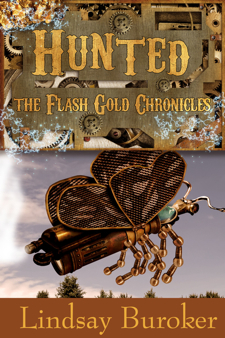
While many readers prefer longer stories, lots of them will give short stories and novellas a try if the blurb sounds good. Most months, Flash Gold (and its recent sequel, Hunted) has been behind my novels in sales, but not necessarily far behind. I’ve come across some ebook authors who are specializing in shorter workers, and they only write novellas (and they sell more ebooks than I do!).

You’ll probably want to price novellas for less than novels, and I also recommend making it clear in the blurb that the story isn’t a novel. Some people get irked when they thought they were buying a novel and they ended up finishing the ebook in an hour.

Joe L. asks:

With the advent of ebooks and self-publishing, the ideas that I’ve had wandering around in my head for many years have the possibility of becoming at least short stories.  Where do you suggest I start on getting them out?

First, get some complete stories down on paper (there are a lot of writers who start lots of projects, but never finish them, and that’s kind of important if you want to publish!). Then it’s a good idea to get feedback from people who are in the biz (other writers or editors who aren’t related to you and won’t feel obligated to say nice things). Nobody’s stuff comes out perfect, and most of us spend a lot of time taking classes and participating in workshops before we have stories that are ready to publish.

I personally think it’s a good idea to submit some short stories to magazine and e-zine markets out there. While it probably won’t do much for your writing career, and you’ll be lucky to make $5 in most cases, it’s sort of a sign that you’re ready. If you start making some sales, your writing is probably polished enough that you can find an audience out there that will enjoy it.

Ceae asks:

What was your experience with getting your novels into the Kindle store? The Nook store?

That’s been the easiest part! (Getting people to find and buy the novels is the hard part, heh heh.) You can upload your ebook files and cover art at Amazon’s Kindle Direct Publishing and Barnes & Noble’s Pub It.

Marc Johnson asks:

How come you don’t use different covers for your paperback books and your ebooks? And how can I sell lots of books like you? 😀

Does anyone use different covers for ebooks and paperbacks? Hm. I’d think that would be confusing to the audience. Also, if you’re paying for your cover art, you’d have to pay twice as much.

As for the rest, I’m pretty transparent on what all I’ve tried and am continuing to try. You can browse through the archives here or check out my new self publishing blog.

Chad Kearbey asks:

How do you handle taxes with e-book publishing?

This will be my first year getting tax forms from Amazon, Smashwords, Barnes & Noble, etc. for e-publishing specifically, but I assume they will send out 1099 Misc forms (for the U.S. anyway; I’m not sure what folks in other countries get from them), and I’ll treat it like any other self-employment income.

You tend to have to pay more in taxes when you’re self-employed, so it’s a good idea to set aside a chunk of the money as it’s coming in. You do get to write off your expenses, though, and that’d include things like buying advertising, web hosting for your author site, paying for an editor, cover designer, formatter, etc. Make sure to keep receipts for everything like that.

Then you can decide whether you want to use an accountant or tax adviser or just wing it with TurboTax or something similar. Those software packages have versions for self-employed folks and wizards to walk you through everything.

In your second year of earning income as a self-employed person, the IRS (again, U.S. only here) will expect to you pay quarterly estimates based on your previous year’s income.

Of course, a tax adviser can answer your questions here much better than I can!

Serena Casey asks:

Do you know what percentage of people who sample your books actually end up buying?

No, they don’t share this information with us. It’s too bad, since it might be helpful to know. Although, it might be a blow to the old ego too!

Ikkinlala asks:

Would you rather have readers purchase printed books or e-books?

Whatever someone is interested in buying is fine with me! If you want the author to receive the biggest cut, it’ll depend on what the author has everything priced at. If paperbacks are priced below $12 (and I’m talking about indies doing print-on-demand publishing), they’ve probably made the book as affordable as they can, and they’re not making a huge chunk of change on the sales. If their ebook is above $2.99, you’re sending them about $2 on every sale (we don’t make much on 99-cent ebooks though, and most authors are using that price to try and get you into their world, so you’ll try their other books!).

But anyway, the short answer is that most authors would be delighted to have you purchase anything from them, ebook or paperback.

Posted in E-publishing | Tagged , | 8 Comments

Flash Gold Chronicles Q & A

I’m continuing to work through the questions from my “ask a question and get entered to win an Amazon gift certificate” (still open!) post. We’ve done a general Emperor’s Edge Q & A and one just on Sicarius. Today, let’s tackle the Flash Gold series (I’ll do the tackling; you can just read.)

Jenna asks:

When shall we expect the next Flash Gold installment (My friend and I are really anxious to see what happens next . . . )?

And Diana asks:

Are there more “Flash Gold” stories in the works?

I’m just starting to work on the next story, so I don’t have a date yet, but I’ll shift more focus to it soon (I’m sending EE3 off to the editor next week, and then I’ll be done working on that).

Ed asks:

I read a LOT, mostly books with lots of pages because there will always be a lot of info on not only the people in the story but the story itself. BUT, I’ve read both Flash Gold books and I have to tell you, you did an awesome job on both points while still making it great reading.

So I have to ask, are you working on the 3rd book or are we just going to be left hanging like so many TV shows do to us?

Thanks, Ed. Glad you are enjoying them! I’m not planning to leave anyone hanging! I’m not sure yet how many Flash Gold stories there will be, but I like to wrap things up (eventually). 😉

Amy asks:

Hubs and I are LOVING Flash Gold. Are you going to do more with that series? We particularly enjoy the unexpected setting, and the character interactions are fabulous.

And while we’re asking, how did you decide on the setting for Flash Gold? Because it’s just so not what one expects from any of the categories I’ve seen the series assigned.

Glad to hear it, Amy! I’d like to do at least six stories, so it should end up being the equivalent of a couple of novels. Of course, once Kali gets her airship built, they might have to go off on more adventures around the world. We’ll see!

As for the setting, I’ve always liked the Old West, since it was wild and uncivilized, leaving lots of potential for adventure. I decided to head up to the Yukon, since I was a big fan of Jack London as a kid and read lots of other books set up there.

Molly asks:

Do you have any plans for a longer entry (novel length for preference) in the Flash Gold storyline? I love the novellas (and everything else you’ve written to be honest) but something with a little more meat to it would be fantastic too. Flash Gold and Hunted ended too quick, I want more! 😉

I’m glad to hear that you want more, Molly! I won’t say I’ll never do a novel with the characters, but I’m choosing to do novellas right now since they’re something I can work on when I need a break from the books in my other series. It takes a lot longer to write a novel (especially since mine are always over 100,000 words!), so I like that I can finish a novella in a month or so. Once I finish with The Emperor’s Edge series, I’ll have to see where things go.

Ryan asks:

I have just put together a couple of stories that required research (and got bogged down in a third – too much research), and also began reading Flash Gold.

I always like authentic settings, and I’m enjoying the Gold Rush feel in FG. I was just wondering how much you knew, and how much research you did for FG – and perhaps other stories.

I know what you mean, Ryan. Sometimes I start looking something up on the web, and then twenty web sites and an hour later, I’ve learned all sorts of good stuff…but it isn’t what I started out looking up. Sometimes I just end up on Facebook or Twitter. 😀

I take some liberties with my stories, but I try to get the names of the towns and river right and a feel for the time period. I don’t really trust my memory, so I look up most things before including them in a story.

The next adventure will have our heroes tramping around Dawson more, so I’m trying to figure out what some of the local businesses and such were, and they’ll be visiting the local Hän camp (Kali’s mother’s people), too, so I’m reading up on those guys to get the details right.

With my high fantasy stories, I get to make up my own world, but I still do quite a bit of research on the technology of the time period, trying to figure out what might be viable (even if there’s a little magic helping things out!). I’ve spent a lot of time reading about early diving suits, steam-powered ships, and steam vehicles. There are some great videos on YouTube of steam engines and trucks if you’re ever bored.

Okay, that’s it for the Flash Gold questions. Thanks for asking them, folks, and thanks for reading!

Posted in Cut Scenes and Fun Extras | 3 Comments

The Emperor’s Edge Q & A on Sicarius

throwing knivesMuch to the other characters’ chagrin (especially Maldynado’s), Sicarius is getting a lot of attention in my giveaway + reader questions post (plenty of time left to ask questions if you’re interested!). Let me see what I can do insofar as answers…

Gwen asks:

It’s been awhile since I’ve read the The Emporer’s Edge and Dark Currents so please forgive me if you already answered this question in these books. Do we find out where Sicarius came from and who his parents were before the emperor started “training ” him?

There are a couple tidbits along these lines in Book 3. I haven’t decided yet if his parents are still alive (and should make an appearance at some point). That could be fun. 😉

Margaret asks:

Will there be romance between Amaranthe and Sicarius?

And what is Sicarius’s true name? Sicarius is latin for assasin, or dagger-man, so I’m assuming that you may have a different name for him.

I’m not sure romance is a word I could ever see associated with Sicarius, but Amaranthe makes a little progress with him in Book 3…

As for any other names, I haven’t decided if anything will come out yet. It’ll depend on if Mom is still alive and we ever meet her.

Sara asks:

You’ve said that you want to write a book from the perspective of each of the main characters. I can see Akstyr’s and Sicarius’ books being very challenging to write — Akstyr because he’s a punk teen, Sicarius because so much of his character is about what he doesn’t say or share. Have you thought at all about how you’ll keep those characters consistent with what we’ve seen so far while writing from their point of view — and keeping it likable?

Yes, I’ve thought much about it, heh. Especially Sicarius. I know I can do Akstyr — he’s not particularly loveable, but doing his POV would be a good opportunity to have him grow up a little bit. Sicarius is more daunting, and I’ll probably save him for last and do a short story or two for practice first!

Raeann asks:

What’s your brainstorming process? Have you thought of doing a prequel-stand-aloneish book on Sicarius?? I’m curious about how he got entangled with everything.

For brainstorming, I take note of cool things I read about or hear about and that I’d like to incorporate in a story someday. (The idea for the Ice Cracker II short story came out of a History Channel special on ice-breaking ships.) I also decide whose story it’s going to be (like in Dark Currents, it was very much Books’s story, even though Amaranthe was a POV character too) and what that person is trying to accomplish or come to terms with over the course of the story. I mix everything together, and a story eventually comes out.

As for a Sicarius prequel, probably not a book (that would be a long time for me to spend in the head of someone with a very dry-to-non-existent sense of humor!), but maybe  something shorter at some point. I’ve thought about writing the story where young Sicarius and Admiral Starcrest (from Encrypted) meet for the first time.

Okay, I think that’s it. If I missed anyone’s question, feel free to ask or remind me below. Thanks for reading!

Posted in Cut Scenes and Fun Extras | Tagged , , | 10 Comments