Pen Name Update: 10 Weeks In (Earnings: $12,824)

I’m about ten weeks into my pen name experiment, which I first blogged about back in November: Pen Name Launch: First Month Earnings $3043 (what worked and didn’t for marketing).

The first book launched around October 10th at 99 cents and went permafree about a week later, at roughly the same time as I launched the second book. The third book was ready to go four weeks after that. On Christmas Eve, I launched a fourth book, but there hasn’t been time for it to do much, so today’s post will focus on the first three books.

For those curious as to the earnings, my pen name has made approximately $12,824.88 between October 10th and December 25th. (I say approximately, because the second and third books are in Kindle Unlimited, so I’m guestimating what the December borrows will be worth, based on November’s rate). Also, several regular readers emailed me after my last blog post on this matter, letting me know that they had figured out who my pen name was. I know some of them picked up books, so we could subtract $200 or so from the earnings, since those books would not have been sold if the pen name author was not me. As far as influencing Amazon rankings, I believe those sales were statistically insignificant (as of December 25th, only one LB book appeared in the also-boughts for the pen names books, and it was eight pages deep).

I revealed my pen name to my newsletter subscribers and Facebook followers yesterday, so whatever earnings and rankings come from these books in the future may be a little fuzzier. I don’t know how many of my fantasy readers will cross over and try the science fiction romances, but I would guess it to be less than 10%. That will be hard to judge, though, so this will be the last post where I can say that these results could be achieved by a brand new author, coming into this without a following or even any family/buddy early reviews starting out.

I detailed my launch strategy (such as it was) in my last post, so I’ll try not to repeat myself too much, but I’ll discuss the last 5-6 weeks or so, whether I experienced the 30 Day Cliff, and how I managed to “stick” in the Top 20 of my sub-genre for a good eight weeks or so before dropping. I’ll also talk about some of the things I could have done better, in the hopes that what worked and did not work for me can help others.

Sales Rising and Falling with the Success of the Peramafree Title

All of the books except for the first one are in KDP Select and Kindle Unlimited (so they’re exclusive to Amazon). I’ll go into the why later on, but let me talk about the book that isn’t first.

The first book in the series, Mercenary Instinct, has been permafree since the second week I released it. I made it 99 cents at Amazon and free at Barnes & Noble, Kobo, iBooks, and Smashwords. Eventually, Amazon price-matched.

As I mentioned in my last post, it did well as soon as it was dropped to free. Even though it wasn’t picked up by Pixel of Ink or any of the major sites that monitor such things, I think the 70 or 80 sales I manage to get while it was 99 cents helped thrust it onto people’s radars. Even though the cover art is just made with stock images, I think it’s better than a lot of what you see in the science fiction romance niche (admittedly, a tough genre to nail with stock art, since models so rarely dress suitably for a galaxy far, far, away), and I’m sure that helped get people to download it. It reached around 225 in the free list at Amazon and hung out in the Top 500 of its own accord for quite a while.

I did buy a few ads, the most useful being an Ereader News Today ad for $15. Later in the month, around Thanksgiving, I spent a whopping $85 for an ad on My Romance Reads. That was the most I spent on any ads, and it resulted in around 2,000 downloads, which was nice since the momentum had started to wane by that time.

In December, the freebie dropped further, hanging around 1,000 for a while, and it’s now dropped to 1600. A couple of days ago, I tossed $40 at eBookBooster to see if they could try to get it onto some sites that hadn’t already featured it. I also paid $30 at Kindle Nation Daily for a spot in their automated daily freebie roundup this weekend. I don’t think either service will give it a big boost, but maybe it will pop up a bit in the SFR free chart for a little longer.

Why bother?

As you might guess from the sub-title of this section, the sales of the second and third books have risen and fallen in sync with the freebie. As long as the freebie was getting a lot of downloads, the other books stuck in the Top 20 of the SFR sub-category on Amazon, which has resulted in steady sales. Lately, the books have been dropping off, appearing on the 21-40 page. They’re still selling — I can hardly complain about a 3,000 sales ranking (paid) in the Amazon store, especially when none of my LB books are in that range, except for the recently released Patterns in the Dark. But they haven’t sold as well as they did in November, when both were under 2,000 in the Amazon store for quite a while.

If my second and third books featured the same hero and heroine as the first book did, I suspect the sales would have been even better. Once of the tough parts of writing romances is that you typically wrap up the story at the end of the book and bring in different protagonists in future novels. All of the stories center around the same spaceship, and main characters become side characters in later books, so I’m sure that does help, but for those of you writing a clearcut series with the same heroes continuing the story from book to book, you might do much better than my pen name has done, especially if you can push a permafree Book 1 and keep it up there in the free rankings.

What I’ll be trying in the future with the permafree angle:

The big thing is that I’m mulling over making the first book $3.99 (the price of the others) after a while. I don’t think there’s much point in having a permafree that hangs out at 6,000 or some such in the free store. My Emperor’s Edge Book 1 is dealing with that now, after being free for years, and the sales have really dropped off on the rest of the series. I’m kicking around some ideas for bringing it back to life in 2015, but it’s definitely a challenge to keep even a free ranking up, because there are so many offerings out there. Also, for people who are KU subscribers, they have no need to browse the free books when everything in the KU store is essentially “free” for them.

If I revert Mercenary Instinct to a paid book, I’m thinking that I’ll either make something else in the series permafree for a while or I’ll use the Kindle Countdown Deals (an option for those in KDP Select) to temporarily make the other books free or 99 cents. One perk of this being an open-ended series, with different heroes in each one, is that people don’t have to have read Book 1 for Book 3 or 4 to make sense. So I do have the option of trying to get people into the series using the other titles. As I get more novels out, it may make sense to cycle between the first three or four, having a different one free at different times in the year.

Of course, it’s possible the pen name will get to the point where it has a big enough fan base that I don’t need to use permafree to gain momentum and keep relatively new releases in the Top 20 for the sub-genre, especially if I’m able to keep putting out books regularly. I would love to manage one a month, but I’m still writing books for my regular name, so it’s more likely that I will get a new novel out every 6-8 weeks. Still not shabby. We’ll see how things work out. In the end, science fiction romance is a small sub-niche, and the space operas I like to write are even smaller (I’ve been watching the Top 20 of the niche for a while, and the stories that are set on Earth, usually involving hunky aliens coming to visit, seem to be a much easier sell than the far-future outer-space stuff). I’m not sure how many readers there are, overall, to tap into. There’s a reason why the Big 5 doesn’t touch this niche.

Still, I’ve found a lot of people so far, and I can hardly complain about the early results!

Launching with More Than One Title (and why I wish I’d had Book 4 ready to go sooner)

A permafree alone doesn’t do much for you. As I’ve mentioned, one of the reasons the pen name books (2 and 3) sold decently right from the start is because Book 1 was free and a lot of free ebooks were being downloaded at the same time as I released Book 2. When I released 3 about four weeks later, the freebie still had some momentum. I did see some of that momentum wane in December, at which point I was basically ignoring the pen name stuff (not attempting to promo anything) and working on getting the new Dragon Blood book out.

I wish I’d had the fourth and fifth books in the pen name series ready to go like clockwork, 30 days after the release of the previous ones, as I think this would have helped keep the momentum going. No, not everyone writes that quickly, but if you’re launching something new, it might make sense to hold back on the release of that first title until you have some more in the pipeline.

I believe the reason launching with multiple titles really helps is because it gives you some more promotion options (you can make one free, or maybe trying some rolling Kindle Countdowns if you are in KDP Select), and it also gives readers more of a chance to connect with you as an author. A world or a set of characters is much more likely to stick in a reader’s head if they’ve read several of your adventures instead of just one. Assuming they like the experience, they will be more likely to remember you and seek you out in the future, even if they don’t sign up for a newsletter or follow you on the social media sites.

Also, when you’re releasing something every month, you have the opportunity to be featured as a hot new release in your category on Amazon. If you’re worried about falling off the “30 Day Cliff,” then having a new title to take the place of the old makes sense (I didn’t notice the cliff, but I think that’s because the permafree was what was feeding my Book 2 and 3 sales, rather than any particular loving from the Amazon algorithms).

Do you have to keep up this pace indefinitely? A book a month? I don’t think so. Ideally, you’ll reach a point where you have XXXX newsletter subscribers and so many people waiting for your new releases that even if you’ve got a 3- or 4-month gap between titles, your new releases should make it to the top of your category lists.

Of course, if you can put out a book a month, it can only help, especially if you’re writing in any of the romance sub-categories, where readers tend to be voracious. But it’s a pretty nutso pace for most people, and I’m sure I’ll drop back to one every other month or so, since I’ll be writing and releasing my usual LB fantasy novels too.

How often you need to publish to keep the momentum going likely depends on your genre. I’ve noticed that there’s a lot of churn in those romance categories, but in some other categories, where readers might take longer to consume books on average, it may be easier to stay in the charts without publishing every month (if you have thoughts on this, feel free to comment below!).

How Kindle Unlimited Helped with the Pen Name Launch

I talked about this in the last post, but right now, there’s an advantage for any author in Kindle Unlimited, because borrows get weighted as heavily as sales, insofar as your overall Amazon sales ranking goes (which affects how high up in your chosen categories you will appear). To get paid for borrows, a reader must get to the 10% point in the book, but right now, every single borrow that is made gives a boost to your sales ranking, regardless of whether the person reads any of it. (Here’s my earlier post where I hypothesized about this, and here’s a more scientific approach from a German publisher that backs up my suspicions).

What’s the big deal, you ask? A borrow is a heck of a lot easier to come by than a sale. As I mentioned above, for anyone enrolled in Kindle Unlimited, every book in the program is free under their $10 monthly fee. They can borrow 10 books at a time, and all they have to do is return one to grab another one. Just think about how you used to grab books off the shelves at the library (back before we were all doing this digitally). If you’re like me, you’d leave with a huge pile every time, even if you only ended up reading two of them. There was no punishment for checking something out, not getting past the first paragraph, and returning it, so why not do so?

In short, if you’re selling enough books to get into some Top 100 lists, being in KU can be a huge advantage right now, especially if you’re a new author. (As others pointed out on my earlier posts, being in KU doesn’t do much at all if you’re not moving enough copies to make those lists and show up in other authors’ also-boughts.)

Will my pen name stay in KDP Select indefinitely?

I doubt it. Even though I’m talking about the advantages right now, I believe that if you’re trying to build a career and want this to be a reliable source of income, then it doesn’t make sense to rely completely on Amazon. With my LB books, I could pay my bills and make a living (albeit a more modest living), based on my iBooks/Smashwords/Kobo/Audible/CreateSpace(paperback) sales. Even though I sometimes lament that I’m missing out on the opportunities that being exclusive offers (for the moment), I feel a lot more comfortable knowing I wouldn’t be dead in the water if Amazon decided to freeze my account tomorrow or if Amazon suddenly decided all ebooks only receive 35% royalties instead of 70%.

Because I don’t depend on the pen name income, and because KDP Select offers tools that help a new author with visibility, those books are in the program for now. I do plan to start cycling some of them out later in 2015. As long as being in there is an advantage, I’ll probably put new releases there, but I think these titles could do well on other sites too, especially since the first book is already out there as a permafree.

Social Media and Mailing Lists — did I use them?

I talked about this in the earlier post, so I’ll keep this brief, but I did start a mailing list and website for the pen name. Right now, I’m only giving information about book releases on the blog, and I send out a newsletter when I have a new release. There are 120 subscribers, so far.

I’m debating if I’ll give away a free novella or something like that in the future, as an incentive to get more people to sign up for the list. I haven’t done that with my regular list, but I know a lot of authors do give away extras, designed to entice existing fans onto the list (i.e. You finished the first book and want an extra epilogue with these characters? Sign up here…). I wouldn’t bother trying to get people onto the list who haven’t read at least one of the books, such as by giving away gift certificates or the like. Those guys don’t usually stick around, and they’re not the true fans you really want to gather to you.

As for social media, I haven’t done anything yet. I may do a Facebook page eventually, just because I enjoy sharing snippets of the works-in-progress, but as far as promotions go, I’m seeing that social media can help but that it isn’t necessary for every author. If you write fun stories and you’re prolific, you can probably focus on putting out good books frequently and on taking advantage of advertising and less time-intensive methods of increasing visibility at Amazon.

Advertising — how much did I spend?

Less than $200. For kicks, I tried to get a Bookbub ad for the permafree, but they rejected me. It’s probably just as well since I’d have to put these under science fiction, there being no SF romance category, and I’m not sure how many of those readers would turn out to be romance fans too. ENT, at $15, was the best deal, and My Romance Reads did decently, though I suspect that site is better for contemporary romance authors. I’ll see how the eBookBooster thing goes (these guys, for $40, submit to a big pile of the sites that will mention your free book for free), as some of those plugs should come out in the next week or two. Overall, though, I didn’t spend a lot, especially not when you consider the overall earnings in the last couple of months.

Cover Art — anything special?

A few people mentioned this in the comments of the last update, that I had money to spend on really professional covers (they hadn’t seen my covers yet at this point, har). With few exceptions, these are the cheapest covers I’ve had made. They’re completely based on stock photos. I’m lucky that this is pretty much what everyone in the genre does, unlike epic fantasy, where custom illustrations are common (and expensive).

So what’s the pen name… name, anyway?

For those who want to check things out, here’s the author page for the pen name. As I mentioned, the genre is science fiction romance (specifically space opera romance, so it’s a tiny niche, but I think it’s a lot easier to gain visibility if you can come on strong in a small niche).

Will there be more updates?

I just released a fourth book, and I’m enjoying writing these stories, so the pen name will continue. But since I’ve now shared the name with my regular readers, future results wouldn’t be as pure, insofar as the new-author-starting-from-scratch concept goes. I’m planning to continue to blog about how things go, though, most likely sharing what I’m doing with KDP Select and Amazon-specific promotions. So if that’s of interest, please stay tuned in the new year!
Posted in Amazon Kindle Sales, Pen Name Project | Tagged , , , , , , | 40 Comments

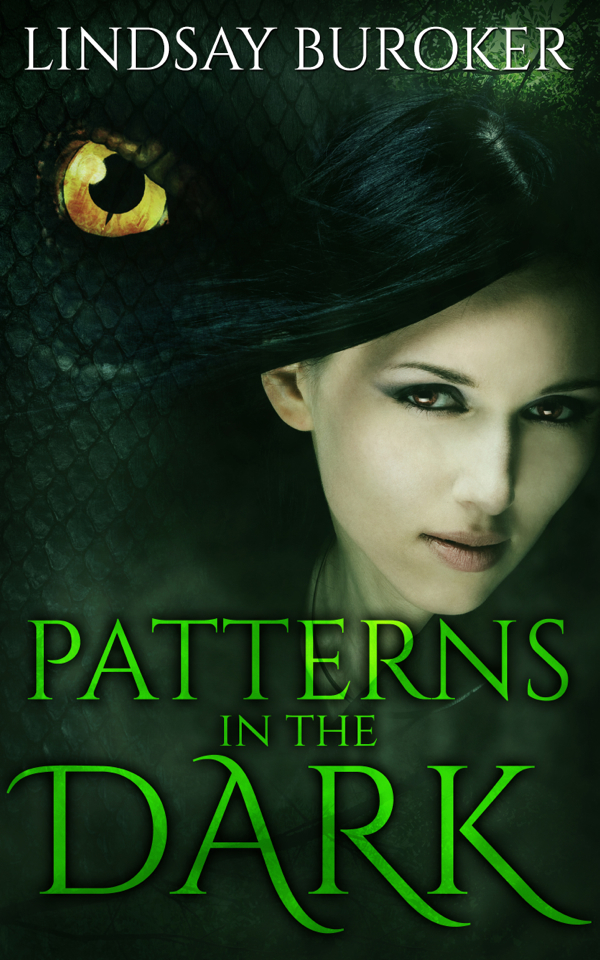
Patterns in the Dark (Dragon Blood Book 4) Available Everywhere

I know some of you are waiting for more updates on the pen name, or just more on self-publishing in general, and I’ll be posting some more articles in the new year (in the meantime, check out the new marketing/publishing podcasts I’m a part of: Science Fiction & Fantasy Marketing and The Writing Podcast). For today, I’m announcing that the fourth book in my Dragon Blood series, is available everywhere now.

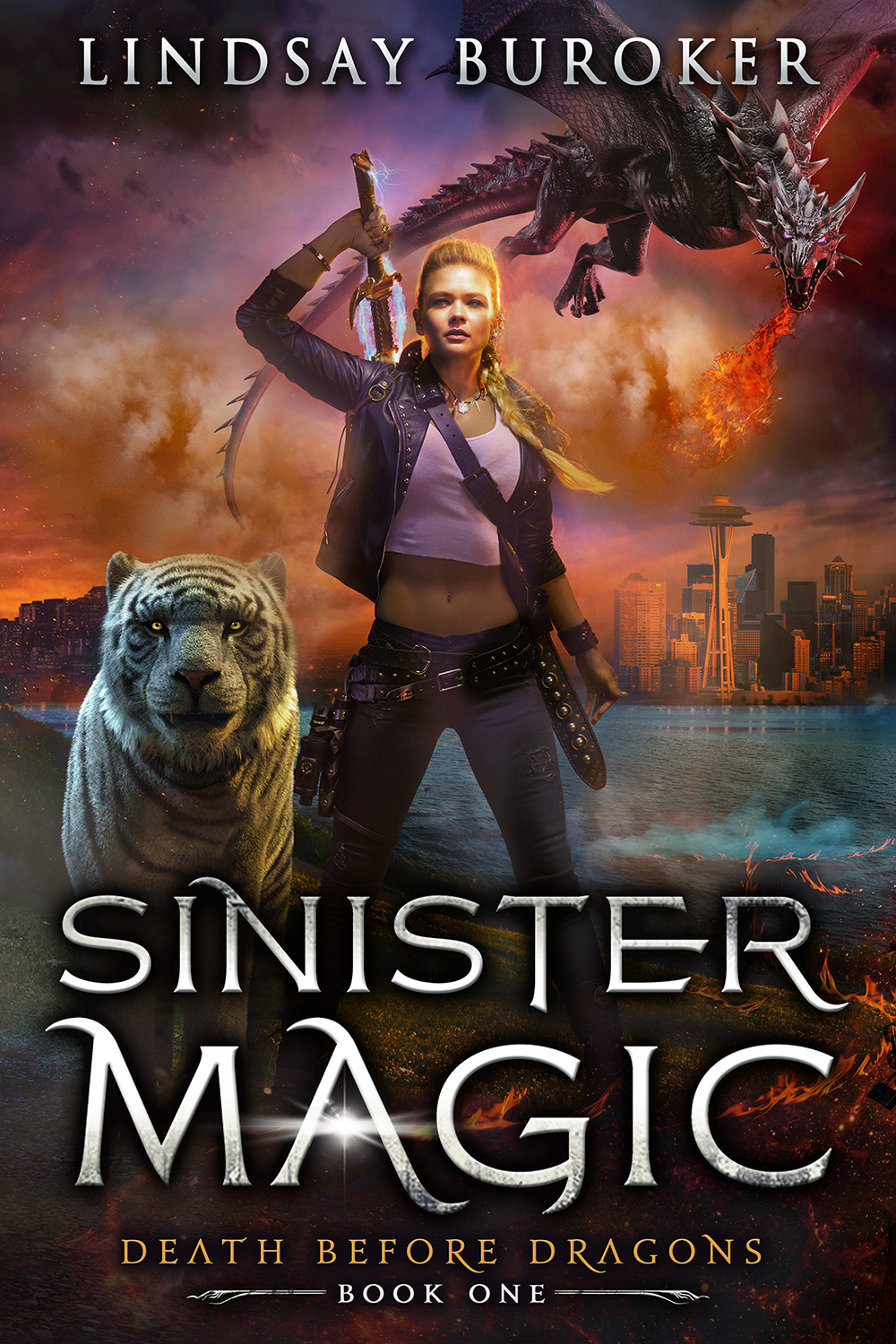
DB4-Web-CoverYou can grab Patterns in the Dark at Amazon, iBooks, Smashwords, Barnes & Noble, and Kobo.

Everyone knows dragons have been extinct for over a thousand years. Everyone is wrong. At least one dragon remains, and military scientists from the Cofah Empire are experimenting with its blood, using the magical substance to power deadly new weapons that could be used to bring the world to its knees.

That’s a concern for Zirkander, Cas, and the rest of the Iskandians, but all Tolemek wants is to find his missing sister. The last time he saw her, their father had locked her in an asylum because of a mental illness with no cure. Now the military has taken her. What use the Cofah have for her, Tolemek can only guess, but he is certain she is in danger. He must save her before it’s too late. But her fate is inexplicably tied to the dragon’s, and he must find it to find her.

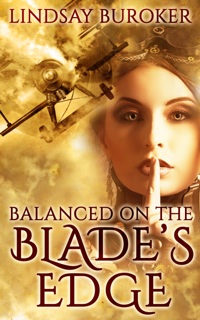
If you haven’t checked out this series yet, the first book, Balanced on the Blade’s Edge, is available for free for the holidays in most stores.

Thanks for taking a peek!

Posted in Ebook News | Tagged , , | 29 Comments

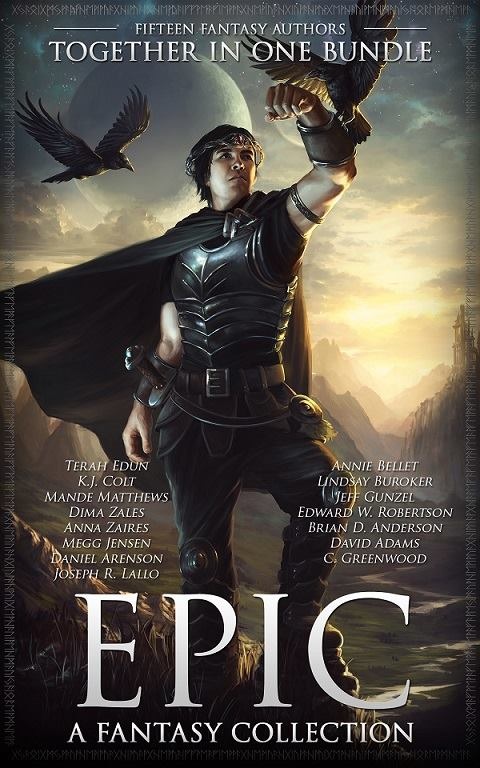
Grab 14 Epic Fantasy Novels by Best-Selling Indie Authors for 99 Cents

I’ll have a new Dragon Blood book out in a couple of weeks (and, for those who are interested, I’ll be sharing the pen name so you can check out those titles, too), but if you’re looking for something to read in the meantime, I’m a part of a new bundle that should be a great deal for those who enjoy epic fantasy and swords and sorcery.

It’s another 99-center, this time with fourteen authors participating, several of whom are indie bestsellers. My Encrypted is in there, as well as thirteen other titles. Encrypted is usually $4 or $5, so if you haven’t read that one yet, this is your chance to get it for 99 cents (or about 8.5 cents, depending on how you look at these things).

The bundle releases on December 10th, but you can pre-order it now from:

Amazon
Barnes & Noble
Kobo
Apple

Here’s a closer look at the stories inside:

epic-fantasy-bundle-webTerah Edun – Blades Of Magic

As an unstoppable war breaks out, a young girl enlists to find out the secrets that everyone is trying to hide.

Daniel Arenson – A Legacy of Light

War rages in Requiem, an ancient kingdom whose people can grow wings, breathe fire, and rise as dragons.

Megg Jensen – Anathema

A young slave girl discovers a world of magic she never knew existed and must face her enemies as prophecy unravels.

Jeff Gunzel – Land Of Shadows

A young blacksmith, born into a simple life, watches helplessly as the world he knew crumbles before his eyes.

C. Greenwood – Mistress of Masks

When an ancient evil stirs in Earth Realm, a group of unlikely heroes must find a way to stop the wave of darkness that is devouring their land.

Dima Zales & Anna Zaires – The Sorcery Code

Blaise’s magical creation is not an object of sorcery, but rather a beautiful woman who’s unlike anything their world has ever seen.

Annie Bellet – Witch Hunt

A cursed elven archer and her ragtag group of adventuring friends battle witches to stop a deadly plague and save a small village.

David Adams – Ren Of Atikala

Humanity is found in the inhuman when a “monster” is forced out of her home and into the world of elves, humans, and dragons.

Joseph Lallo – Jade

A little girl, selected as a sacrifice to end a mighty dragon’s reign of terror, instead finds both the protection and the family she so badly needs.

K.J. Colt – Concealed Power

Adenine has been quarantined for being the last carrier of a plague that killed thousands, but when trouble strikes, she is forced to leave her sanctuary and enter a world full of secrets, enemies, and plots.

Lindsay Buroker – Encrypted

After being kidnapped, linguist and code-cracker Tikaya Komitopis must work with her people’s greatest enemy to stop an ancient evil that threatens the entire world.

Mande Matthews – Bonded

Two children–one a born leader and the other a born servant–are bonded across worlds as Soul Warriors, but they must discover the secrets of their past if they hope to overcome the darkness that threatens their future.

Brian Anderson – Starfinder

Lee Starfinder embarks on his first adventure with a sword at his side and confidence in his heart, but he will soon discover that the perils of the world are far stranger than he had ever imagined.

Ed Robertson – White Tree

A young man is obsessed with mastering death magic, but his studies make him the key to resisting a powerful god–as well as the intended prey of the god’s dark acolytes.

~

Pick up the collection for 99 cents at Amazon, Barnes & Noble, Kobo, or Apple.

Posted in Ebook News | Tagged , , , , | 5 Comments

Pen Name Launch: First Month Earnings $3043 (what worked and didn’t for marketing)

If you’ve been following the blog and Twitter, you may have heard me mention my pen name project. I haven’t shared the details with many people — mostly just my editor and beta readers — because I wanted to see if I could start from scratch today and do reasonably well as a “new author.”

I have a breakdown of sales and borrows farther down, but the quick summary is that I earned about $3043 in the first month, most of that coming from one book (but that book being bolstered by another free one). The book was priced at $3.99, participated in KDP Select (and therefore Kindle Unlimited), and received 638 sales and 683 borrows between October 17th and November 16th.

Note: I’m using the $1.33 October figure to calculate earnings from borrows. If that drops in November, it might knock off $100 or $200 from my earnings estimate here.

The multi-book launch strategy

I knew it would be hard gaining any momentum with just one book, so I planned from the beginning to launch with three, with the goal of putting out another novel (or at least a novella) each month after that. I wrote the rough drafts for the three novels this summer, but of course I was working on my own LB novels at the same time. By the time the pen name books were beta read and edited, it ended up being more of a launch with two novels with the third coming almost a month later (it went live on Friday night, November 14th, and had 79 sales and 59 borrows Sunday night when I tallied everything). But at least I had two books to work with from the start and that was key in gaining some momentum.

Here’s a look at what I tried for marketing, what worked and what didn’t, and what I didn’t bother with.

Pre Launch

I didn’t want to make a whole second persona that I would have to manage, so I didn’t sign up for any of the social media sites with the pen name. I did put up a website, using WordPress as the backbone, and started a mailing list with the sign-up form on the front page of the site. I put some samples chapters up on the blog, but I don’t think that did anything, since nobody knew the site existed yet.

So far all I’ve done on the blog is post release information. Honestly, because I already sink time into my posts here, that’s all I’m planning to do in the future.

Wattpad Experience

In the hope of finding some people who might review the first book when it launched, I made a Wattpad account for my pen name. I started posting chapters as soon as I had the rough draft finished (around July) and updated regularly to try and get some early fans. There were a handful of people who found it and followed along, but I never gained much traction on Wattpad. I had a few positive comments from the people who did read it, but part of the trouble, I believe, is that the novel has R-rated material in it, so I had to check the R-rated box. On Wattpad, users have to specifically checkmark that they’re looking for adult content in order to see it, and I don’t think they even see that option if they’re younger than 18 (perfectly understandable).

(For those who are wondering at the how and why the pen name came about, I got some backlash from readers last spring when I published Balanced on the Blade’s Edge, a steampunk romance which had a sex scene in it. Even though I haven’t exactly been a prude in my other novels, most of them are less detailed in that area. I decided to split things off and use the pen name to write stories that include more, ahem, naughty bits.)

I have heard of authors gaining a good-sized following when they have R-rated content on Wattpad (even though there’s a large user base of teenagers, I learned in an interview with a Wattpad representative that there are also some 20+ readers), but I should point out that I am writing in a small niche here. There are some voracious readers (i.e. the types of people who go through a book a day) in it, but it’s quite a limited pool of people overall. I wouldn’t have tried jumping into this niche at all if Amazon hadn’t finally made a subcategory for it about a year ago.

(I’m debating here whether to share the niche, but because I’m still incognito with the pen name, I think it would be pretty easy for curious people to go find me if I talked about it here. By the end of this post, you might be able to guess anyway, but I’m going to wait another month before going public, as I want to see how the “30 Day Cliff” and other things effect the pen name before muddying the waters as to where readers are coming from.)

I won’t say that Wattpad was a total waste of time, but it was pretty close, at least in this case. I ended up with two pre-launch mailing list signups, and I don’t think anyone commented more than twice over the course of the novel, so I didn’t feel we had enough of a relationship for me to send them private messages and ask if they would like review copies of the final book.

The other thing I did with the pen name was join Romance Divas, a forum where self-published and traditionally published authors hang out. I had a notion of maybe finding some readers there by chatting about the industry and including a link to the Wattpad chapters in my signature (with a promise of review copies for anyone who was interested), but I didn’t end up posting there that much, as it felt weird to chime in and give advice on self-publishing and marketing when I was, for all they knew, an utter nobody without any books out.

In short, very little that I did pre-launch mattered.

Launch Week

On October 11th, 2014, Book 1 went live for 99 cents at Amazon and for free at Smashwords and Kobo (I ticked the distribution box, so it would eventually end up at Barnes & Noble and Apple for free as well). I knew I was going to launch the rest of my books in KDP Select so I could take advantage of the way Kindle Unlimited borrows count as sales (for more details, see my earlier post on Kindle Unlimited: Why Ebooks Not Enrolled Are at a Disadvantage), so the only reason I was putting Book 1 in the other stores was so it would be made free on Amazon.

I wasn’t sure how long it would take for Amazon to price-match the first book to free, but I didn’t expect it to happen quickly. It’s generally been my experience that already-popular books get price-matched almost right away, whereas it can take much longer for books that aren’t selling.

I wasn’t planning to do any marketing whatsoever of Book 1, since there was little point until I had Book 2 out, and since it wasn’t as if I would make much money with it at 99 cents. But a few people found it within 24 hours of publication (okay, three) and apparently liked the 99-cent price tag enough to give it a try, even though it was by a new author. That got me a little excited (yeah, I know, it doesn’t take much), so I decided to see if I could find any place to advertise.

Attempts at Advertising Book 1

If you’ve tried to buy advertising lately, you probably already know that there aren’t many places that will plug books with no reviews and on short notice. I was also limited by the fact that these books don’t fall neatly into any of the categories that book blog sites offer, so I stuck with sites that basically just say, “Yo, this stuff is free/99 cents today — go get it.”

That first weekend, I paid $5 each to bknights and genrepulse through Fiverr. Bknights has a site where he posts free and 99 cent ebooks, and GenrePulse (which has since moved off Fiverr, but still offers the same service) plugs your book through his Android and Kindle Fire aps. I had heard about these guys on Kboards.

I think I can attribute about 10 sales to each service (they went out a day apart). This was enough to get the book into the Top 100 for the subcategory. It currently takes a 9300 sales ranking to hit the #100 spot (that makes the category sound more popular than it is, but there are a ridiculous number of books in it that don’t belong there, and yes, it’s irritating).

I bought a couple more ads from places that accepted books but that had more of a delay. None of them went live until the book was free, something that happened after about six days.

Overall, I spent about $50. The only other site that gave me results worth mentioning was Ereader News Today, which currently allows you to plug a free book for a mere $15. This was a deal as I ended up getting over a thousand downloads that day from their site (even though the book ran with a big pile of other free books). I’m sure people publishing in more popular genres would get many thousands of downloads.

I should mention that the book got as high as 225 in the free list of its own accord when it first went free (before the ENT ad kicked in). I think that it helped that I had actually sold some copies at 99 cents before it went free. I also made sure to use the right keywords to have it listed in about five different subcategories, rather than the two Amazon gives you in the dashboard. (I admit I was a little nervous about adding those extra action-adventure types of categories, because even though the story surely qualifies, there are a lot more male readers browsing those other subcategories, and this was also clearly a romance. But overall, the experience has been positive, and I got some nice emails from male readers who probably would never have wandered over into the romance subcategory to look for it.)

As I write this now, Book 1 has dropped to 528 in the free store, but I have an ad coming up later in the month on My Romance Reads that may give it another nice boost. After that, I think I’m going to put the book back to 99 cents, rather than keeping it permanently free. Since the other books are in KU, I can play around with free or 99-cent days on them when sales start to fall.

How effective was permafree for selling copies of Book 2?

I published the second book in the series on the night of October 16th (I don’t think it went live until the 17th). The day before that, the first book went free, so that was nice timing. I immediately added a link to the second book at the end of the Amazon version of the free book. (Note: the afterwords also include an invitation to sign up for my pen name’s mailing list.)

I don’t think permafree is nearly as effective as it used to be (there are more free books out there now; thanks to KDP Select making it easier for authors to make books free; the lists aren’t displayed as prominently as they used to be; and KU subscribers can essentially get all the “free” books they want for their $10 a month, so there’s no reason for them to browse the free lists anymore), but it was instrumental for me in my launch of Book 2, which jumped into the Top 100 of its subcategory right at the beginning.

It hung out in the 60-100 range for the first week, then gradually improved to make it into the Top 20. It topped out at 8 or so, which was about a 1350 Amazon sales ranking. It’s been around 2000 for a couple of weeks now, thanks in large part to the borrows. On sales alone, it wouldn’t have been anywhere near the Top 20, so I’ll thank KU for the extra visibility (even as I loathe this aspect for all of my other books, which aren’t in KU and which don’t get their sales rankings artificially propped up by borrows).

The book has been out for 30 days now, so I’m expecting to see it drop in rankings, as a result of the 30 Day Cliff, which I mentioned before. Countless authors have noted that books seem to get a boost in visibility when they’re first published on Amazon, but then start a downward descent after being out for a month. This doesn’t hold true for every book — some have enough sales momentum behind them that they keep going — but it’s true in enough cases that just about every author on Kboards knows exactly what you’re talking about when you mention it.

Permafree when Book 2 has different characters from Book 1

Even though having Book 1 free definitely helped me sell Book 2, I should point out that it wasn’t as effective as I think it would have been if Book 1 had left some things unresolved and 2 had picked up with the same characters. I am writing in a series, but all of the books stand alone and feature different main characters. Outside of writing serials that follow the same heroes across the different installments, it’s tough to get around this with romance-centric novels, where readers expect the hero and heroine to get together in the end. If you continue on, you’re not really writing a romance anymore, not to the formula anyway.

You’ll see from my numbers (below) that a relatively small number of people went on to buy Book 2 compared to the number who downloaded Book 1.

I do think more people “hoard” freebies these days, since there are just so many of them out there, and don’t try them right away (or ever), but I do see a much higher buy-through ratio with my Emperor’s Edge series where Book 1 is free and Book 2 continues on with the same characters.

On the plus side, because each novel stands alone with its own characters, I can experiment in the future with making different books in the series free or discounted — something that didn’t make much sense with EE, since it would be confusing for new readers to start with Book 4. With this series, there would be some spoilers for someone starting in the middle (the old heroes and heroines stick around as side characters), but it’s not as if there’s any surprise about whether or not people are going to hook up in a romance anyway.

Okay, this post has gone on forever, so let me include the numbers, for those who like that kind of thing, and then I’ll sign off on this subject for another month (I’m planning to post another update before I share the pen name with my regular readers around Christmas).

Book 1 sales and free downloads (Oct 10th to Nov 17th):

Sales at 99 cents: 89

Free downloads at Amazon to date: 14950

Book 2 borrows and sales at $3.99 (Oct 17th to Nov 17th):

Oct: 166 sales, 139 borrows

Nov: 472 sales , 544 borrows

Book 3 borrows and sales at $3.99 (Nov 15th to Nov 17th):

79 sales, 59 borrows

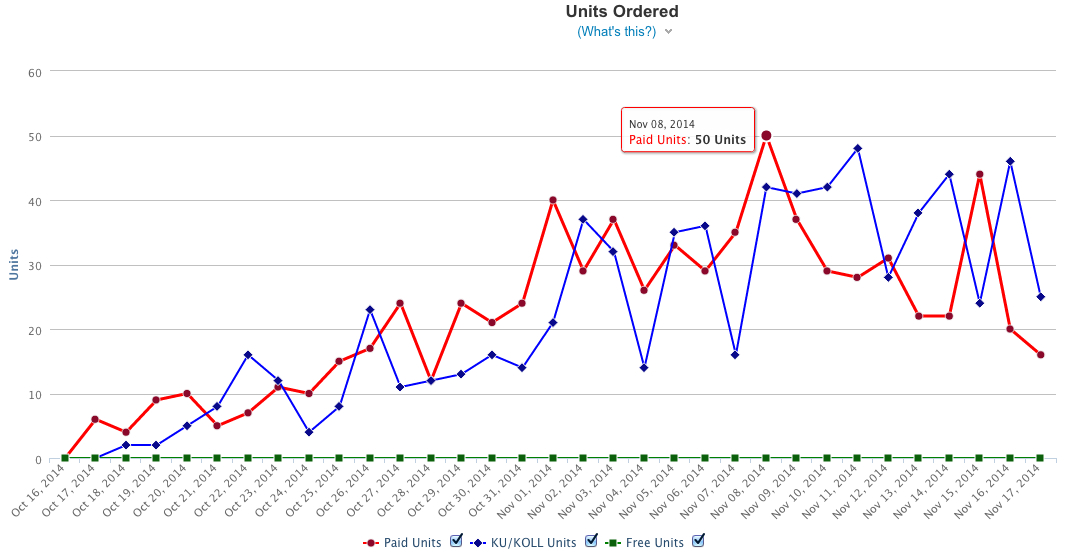
Book 2 sales chart on Amazon, for those who are curious about the snapshot for the month:

PenNameBookSalesAmazon1Month


A couple of extra notes

Books 1 and 2 have 50 reviews on Amazon now (and some on Goodreads as well), which I credit to making it clear in the back of the book that review copies were available to anyone who would post a review. I’ll likely take that out soon, since they have enough reviews now, but in the past, this is the kind of thing I would only put out to my mailing list. Since the pen name had two subscribers when I started, that seemed a little pointless. But I was more than happy to give away free copies to get some early reviews.

The mailing list is up to 58 subscribers (I sent out the first email on Saturday to announce Book 3).

I used my regular editor (who isn’t the cheapest out there), but I did go cheap on cover art, having someone make collages with stock photos. Even so, the covers are better than a lot of them in the subcategory. (This niche is probably one of the few out there where there’s still a lot of really awful cover art in the Top 100).

Closing thoughts

Overall, I think the pen name is off to a nice start. As I’ve been saying, it’s not a very popular genre, but there’s something to be said for the big-fish-small-pond tactic. There will doubtlessly be indies who start in 2015 and rock it by publishing in a big, popular genre, but I’m positive it’s easier to get noticed today if you can find a subcategory that you want to write in and that has some readers but that isn’t super competitive. (The Big 5 publisher presence is entirely non-existent in my subcategory, presumably because they don’t think it represents a big enough market to bother with.) I would guess that if my pen name established herself here, then later moved into a more popular category that was closely related to this one (so readers would cross over), she would find it much easier to get the sales necessary to rank there.

I’m going to stop talking about myself in third person now. Thanks for reading this beastly long post. Good luck with your own endeavors!

Posted in Amazon Kindle Sales | Tagged , , , , , , | 101 Comments

6 Ways to Make Money as an Author (in Addition to Selling Books)

The “KU Apocalypse,” as some writers have called it, has cut into the bottom line for many independent authors, especially those who have refused to participate in Amazon’s KDP Select program, because they’re not willing to go exclusive with the mega retailer. I’ll be the first to admit that the sales rankings on most of my books have taken a dive since the program launched this summer.

I thought I would write this post to offer some ideas for authors who are feeling the pinch and are staring at their sales reports, wondering what they can do to boost the income a little. I do a couple of these things already, mostly out of habit (as some of you know, I was a professional blogger/content creator for my day job before I could make a living from my fiction, and I watched what a lot of the internet marketing gurus were doing, even if I never fully immersed myself in that world), and because it just makes sense not to leave money on the table.

Before jumping in, I’m assuming that as an author, you already have a mailing list and a blog (and possibly other avenues of putting out content beyond your books). If you don’t, maybe this will give you another reason to rethink the decision not to have those things.

1. Affiliate Income from Mentioning Your Books in Your Newsletter

Every time I send out word of a new release to the readers who subscribe to my newsletter, I put the links to my books in the email, and for the Amazon pages, I use an affiliate link. (Not a member of the program yet? Sign up here.) This means I get 70% of the ebook price from selling a book on Amazon and also that I get another 7% or so (the percentage depends on how many products you sell in any given month) from the affiliate commission.

Now, if you’ve got four people on your mailing list and you’re selling seven books a month, you’re not going to make a big wad of dough doing this. But if you’re determined to become a career author, and you’re succeeding in slowly building up a mailing list and accumulating readers, then this extra money can add up eventually. As some of the ladies pointed out on the recent Mailing List episode of the Self Publishing Podcast, this can end up covering all of the expenses associated with running a newsletter service and then some. (Many newsletters are free to start but then start to cost $XX/month as you acquire more subscribers.)

*Note: I’ve been too lazy to apply for the other stores, but Smashwords, Barnes & Noble, Apple, and Kobo all have affiliate programs too.

2. Affiliate Income from Mentioning OTHER People’s Books in Your Newsletter

Even if you’re prolific, there’s a limit to how often you’re going to release a new book, but common newsletter-publishing wisdom suggests that you stay in touch with your subscribers so they don’t forget about you (and then unsubscribe in a huff when they get a random email six months after they’ve signed up).

So what do you send them? If you’re reading widely in your genre and have some books you would be comfortable recommending, you can send them the latest title that rocked your reading world (with the affiliate code of course). You want to be careful here and not just send random books that you haven’t vetted, but readers are always on the lookout for more good books, and chances are, if they like what you write, they’re going to like a lot of the same types of books as you do.

Since I’ve read so little fantasy of late, I haven’t done this much (I’m going to try it with my pen name’s mailing list, because I’ve actually read more in that genre in these last couple of years), but I have done this with some of my beta readers’ books. We all write fantasy and have similarly quirky senses of humor, so I feel comfortable recommending their books.

If there are other independent authors you read and enjoy who write in your genre, you may even look into forming partnerships with them where they promote your new releases and you promote theirs.

I do think you have to be careful with these situations and make sure you’re still primarily giving your readers what they subscribed for — news about you and your works. What you can do when you’re plugging someone else’s book is also include an update about what’s going on with your own works in progress.

3. Affiliate Links on Your Blog/Author Website

I know, I know, you’re sensing a theme here… I’ll change it up after this, but let’s add this section too.

If you’ve been thinking of starting a blog, but you’ve been told it’s not very effective at selling books, what  if you were also making money from other things? At the least, you could have affiliate links for all of your books, but if you’re the kind of person who reads a lot, you can also review other people’s books, the same as with the newsletter.

The difference between your website and a newsletter is that there’s less risk that you’re going to be “bugging” someone by putting something in their inbox that they didn’t ask for. Also, if you’re blogging about things people are interested in, you can get random traffic from the search engines with first-time visitors landing on your site, visitors who might never have heard about you otherwise. They might just check out your books while they’re there. (I don’t sell a lot of books through this blog, , but I do sell some — because of the affiliate links, I can tell where the sales originated.)

So, what do you write about on your site? Product reviews work great with ads and affiliate links. Ebooks aren’t the way to riches, since the affiliate commissions are going to be pretty low unless you’re selling $10 ebooks, but if you’re a tech lover, you might also review some of the latest products related to reading that you’ve purchased or had the chance to play with. I reviewed one of the kindles before the holidays one year and ended up making some nice commissions, since these were $200 products. Before Christmas, you’ll get a lot of people buying extra items on Amazon, too, and you make a commission on anything they buy within the 24 hours that they click on your link.

4. Running Advertising on Your Blog/Site

This is how I made a living when I was a professional blogger (thank you, Google Adsense). I don’t do it on my author page, because I don’t feel the need to and I also don’t want to send people away from my site (and my books), which is what happens when people click on an ad, but the tradeoff is that I don’t make much money from this site, despite putting time into it every week.

If you’re producing content regularly and writing about more than your own writing struggles and book launches (as I mentioned, some people review books or other products), then it can make sense to add advertising to your site. If you’re a non-fiction author, this can be especially effective. Nobody’s out there bidding a lot for placement on ads about “fantasy novels,” but if you cover diet and fitness, home repair, travel, or even self-publishing, there are merchants with related products who want to advertise on your site.

Wet your feet with Google Adsense, and if you don’t mind giving up the real estate on your site and you have the traffic to support it, you can also sell banner or text links directly to interested parties (this takes more work since you have to find interested parties).

5. Setting up a Subscription Model

This is something I toy with every now and then but have never done myself. I’m not sure if I’m ready to take on the pressure of putting something out every month for reader-subscribers. But there is no steadier income than having subscribers who are automatically paying $X every month or quarter. The money is typically withdrawn from their account (Paypal has a subscription option) until they unsubscribe. And if you’re giving them what they want, they might stick around for a while.

So how would this work for an author? The guys over at the Self Publishing Podcast are so prolific that they started a subscription service for their “Story Studio” that allows their dedicated readers to get their newest content every month, often before they release it to the stores. I believe this is a fairly new endeavor for them, but it’s a way to bypass the retailers, sell direct to the customer, and earn more overall on your books.

Don’t think you can put out a new novel a month? Yeah, that’s kind of crazy. But here’s someone else that I interviewed a couple of years ago who uses a subscription model for short fiction.

The ultra prolific Dean Wesley Smith puts out an entire magazine of his own work every month.

A perk to starting a subscription service? The added pressure to produce! Okay, okay, that’s the same thing that has me leery of doing this, but if you need a reason to get your butt in the chair every day, the fact that people are waiting for the next story might just do the job.

6. Get Support Directly from Readers with Patreon

I first heard about this service from Joanna Penn, AKA The Creative Penn, who is using it to help cover the time she puts into publishing her free podcast. The site is called Patreon and its exactly what it sounds like, an opportunity for someone to act as a patron to support your work. There’s a long history of well-off individuals supporting artists and writers, but this brings it into the 21st Century, allowing anyone to support, by donating as little as $1 a month.

As an example, here’s Joanna’s Patreon page, where people pay a dollar or two per podcast that she produces.

Personally, I like this more than the Kickstarter “crowd-funding” model, which is great if you genuinely need the money to make something happen, but can feel a little skeezy (yes, that’s a word) if you’re doing well financially and still trying to get people to back something.

I browsed through the writing category, and it looks like a lot of people are finding support for their web comics, but I bet someone publishing a novel to the web could find some supporters too. If the KU Apocalypse continues, maybe I’ll even give it a try!

That’s all I have for today. If you’re doing any of these things, or doing something else, we would love to hear about it. Please comment!

Posted in New Author Series, Tips and Tricks | Tagged , , , , , , , , , | 20 Comments

Writing Schedule (and what’s coming) for the Rest of the Year

I’ll get back to the self publishing and marketing related posts next week, but I wanted to share a quick what-am-I-working-on update for the readers today.

Yesterday, I finished the first draft of Patterns in the Dark, the fourth installment in the Dragon Blood series (now with an actual dragon!). It needs some tinkering, so I’m not sure yet when I’ll send it to beta readers, but I’m definitely planning to get it published before Christmas.

Today is November 1st, and after some waffling, I decided to sign up for NaNoWriMo again this year. (If you’re doing it too and need a writing buddy, I’m here.)

I’m going to work on the first Nuria novel, Warrior Mage, that stars the hero from my Swords & Salt novellas and also brings in Dak from Republic as a major character. A few other characters from the EE series might pop in for cameos too (look for Akstyr in this first one). I’m planning to do about six books in this series and have the first three sketched out. It will probably be my major project for 2015.

Somewhere in the not-too-distant future, I plan to write the last Flash Gold novella and the fifth Dragon Blood book as well to wrap up those series, at least for the time being. I’ll look at doing a third Rust & Relics novel next summer, most likely with trouble popping up in Phoenix this time. Look out Scottsdale. 😉

As if all of this weren’t enough, I’m writing books under a pen name now too. I published the first two in October and have one more in the hopper to come out in November. Right now, I’m not going public with the name, so I can talk about promotional things that are working (or not working) for new authors, since people often tell me how much it sucks if you’re just getting started today… (more later, but the pen name books, which were released in the middle of the month, have made $500 so far, not including whatever comes in for KU borrows later).

For those who might like to cross over to the new genre with me, I am planning to go public with the name around Christmas.

If you’re looking for something new to read right now, Torrent is in another 99-cent urban fantasy bundle, so you can check out a number of new novels for about 9 cents a book. Heroes: Urban Fantasy and Superheros Bundle #2.

For secondary world fantasy fans, Encrypted is also in a small bundle (also 99 cents) that was put together quickly for an Apple promotion last month. It’s also available on Amazon.

That’s all the news I have for now. Have a great November!


Posted in My Ebooks | Tagged , , , | 26 Comments

KDP Select & Kindle Unlimited: Why Ebooks Not Enrolled Are at a Disadvantage

Until a week and a half ago, I had never enrolled any of my books in Kindle Select. The program came out after I started self-publishing, and I already had readers on the other platforms. That doesn’t mean I’ve never been tempted! Oh, I’m not in favor of giving exclusivity to Amazon, but from the beginning there have been perks to those who are a part of the program.

As you doubtlessly know, the latest is that the ebooks enrolled in Kindle Unlimited (available only if you’re in Select) can be borrowed in addition to being bought. Since borrows currently pay around $1.50 (this amount fluctuates from month to month, depending on the number of books in the pool and the total money Amazon puts in the pot), this may or may not be a good financial deal for authors. If you have a 99-cent ebook in KU, you’ll get that 1.50 (assuming the reader reaches the 10% mark in the book) instead of the usual 35 cents for a sale. Great deal. If you have a 5.99 ebook in KU, you’ll still get that 1.50, instead of the $4 or so you would get for a sale. A less great deal, assuming borrows cannibalize  sales instead of existing in addition to sales (I’ve actually heard from many authors that such an assumption may not be true, that borrows don’t affect their total sales numbers to a large degree).

If you don’t sell enough books to make it into some Top 100 categories and appear in a number of book’s also-boughts around Amazon, you may want to be a part of the program (or not), based purely on whether you’re coming out ahead (or not) with the borrows. But there’s something else to consider here.

How KU borrows affect sales ranking (a lot)

As I’ve mentioned before, I have a pen name side project that I haven’t gone public with yet. I launched the first two books in October, one at the beginning of the month, and one a week and a half ago. Since the first one is up on Wattpad, I couldn’t put it in KDP Select, but with the second one, I decided to finally give the program a try. I didn’t have readers on other platforms waiting for it, so I figured nobody would be irked when it wasn’t available elsewhere.

Around the same time, one of my writing buddies launched a new book of her own, one in a new series in a new genre. She did not put her title in KDP Select.

Neither of us were expecting piles of sales. What was interesting (or depressing, for non-exclusivity supporters) was how different our sales rankings were right out of the gate, even though we were selling nearly the same number of books in those first few days (we compared numbers).

My KU book started its life at around a 10,000 sales ranking, even though it only got six sales that first day (and two were to other countries, so would have no affect on sales ranking in the main store) and no borrows (at least no borrows that showed up on my dashboard — more on that in a minute). My friend’s book had a similar number of sales (if memory serves, she was ahead for the first couple of days) but had a significantly higher sales ranking. At 10,000, my book squeaked into the Top 100 of its little sub-category. My friend’s book didn’t make it onto any category lists.

The next day, I had four sales and two borrows. The day after that, the book had eight sales and two borrows. It crept up to around a 5,000 sales ranking. It’s hung out between 6,000 and 4,000 for the last week now. A week and a half in, it has a grand total of 77 sales and 84 borrows in the U.S. store.

I’ve been kind of floored by the sales ranking. From my other books, I know it takes a lot more sales a day than that right now to maintain a ranking that high. Even if I counted each borrow that shows up in my dashboard as a sale, the ranking still shouldn’t have been that good. My assumption is that I’m getting credit every time the book is borrowed, even if the reader hasn’t started it or if the reader abandoned the book before reaching the 10% mark.

How many sales would it take for a non-KU book to obtain a similar ranking?

It’s hard for me to answer this without guessing, since I don’t have any other non-KU books quite in that sales range, but as an example, Thorn Fall (not in KDP Select) sold an average of 63 copies a day in the same time period that the pen name book has been out, and its sales ranking has been hovering around 3200.

Just as a guess (and if someone knows of a site that actually figures this out, please let me know), I’d say a non-KU title would need to be selling 30-40 copies a day to stay in that 6,000-4,000 range. On Saturday, October 25th, my KU book sold fifteen copies and had eight borrows show up on the dashboard.

I’ve known all along that borrows count for as much as sales over at Amazon (I’ll let you guys debate on whether or not they should), but what I’m assuming is happening here, based on the fact that I don’t have enough sales or borrows to justify the sales ranking, is that you get credit (your sales ranking gets a boost) even if readers never get to the 10% point required for a borrowed book to “count” and show up on your dashboard. So even if someone just tries your book, decides “meh, not for me” and returns it, you get a sales ranking bump.

I will say that because my book is so new, it’s possible the borrows-credited to actual-borrows-made ratio will even out (as a KU customer, you can check out up to ten books at a time, so mine could be in waiting in a lot of to-read piles) and that in another couple of weeks, I’ll have a lot of borrows show up that haven’t yet. But even so, this is a huge advantage to a new release KU title, as opposed to a new release non-KU title, which can only improve its sales ranking through actual sales. (Novel concept, eh?)

So, what’s the bottom line?

It’s not all that surprising, but it appears that ebooks that are in KU have a big advantage over the ones that aren’t, because as we all know, a better sales ranking means more visibility in Amazon (once a book gets to the point where it appears in Top 100 lists). Books that aren’t in KU, that may have previously only needed 5 or 8 sales a day to appear in a category chart might now need 10 or 15 sales, because they’re competing with all of those borrows.

Anyway, I doubt this is news to most of you who have been in the program for a while, but I hadn’t previously realized that books are getting a boost for all borrows, whether a reader gets past the first page or not.

For more on Kindle Unlimited, here are a few other blog posts covering it:


Posted in Amazon Kindle Sales | Tagged , , , , , | 32 Comments

Texting New Releases, Series Pricing, and Succeeding in YA Fantasy with Terah Edun

Even though I know you guys love hearing me ramble every week (you do, right?), it’s nice to hear from other authors. Terah Edun has been rocking it this year with her YA fantasy novels, so I cornered her in a dark alley and interrogated her. I was particularly intrigued when I noticed she was using a text messaging system for sending out new-release information to readers who signed up for the service. The newsletter 2.0? If you read on, you’ll see how her experience trying this went at the bottom here.

Interview with YA Fantasy Author Terah Edun

Thanks for stopping by the blog (er, dark alley), Terah. Let’s jump right into the questions! 

You’re making waves and selling well with your YA fantasy novels. Do you want to tell us a little about the stories and what made you choose to self publish?

Hi Lindsay,

First, thank you for having me on your blog! This is a really cool occasion for me and you’ll see why in a minute. I’m primarily a Young Adult fantasy writer, with two High Fantasy series and one Urban Fantasy series. They all have a heroine as their protagonist and focus on coming of age in a medieval world that’s more Game of Thrones than Tolkien. Except for the magic. I go overboard on magic.

Young Adult Fantasy stories have been my passion since childhood and when I began self-publishing at the start of 2013 I really wanted to write what I loved to read. As do most authors. However, my writing journey was a rocky road of understanding what worked for the market and what worked for myself.

At the start of my selfpub journey I’d never written a fictional account of anything aside from English 203 essays in high school. I wasn’t the writer who submitted short stories to magazines at age 12 or went to conventions to get her books signed and asked ‘How do I do what you do?’. I read half a dozen books a month but I never wrote.

Now let’s fast-forward a few years to when I was a full-time development specialist working overseas. In my free time, when I had no electricity (so no tv or internet) I started writing out of boredom. Something to keep my mind occupied. Once I put pen to paper, or fingers to the keyboard as it were, nothing could stop me. I wrote my first novel in a little under a year, and it was representative of all the things that can go wrong in a first attempt. But still I loved it. So I queried three agents, got zero replies, and just about gave up.

Now, when I said it was a cool occasion for me to appear on your blog, I really meant it! And this is why. I wasn’t really pursuing traditional publishing all too enthusiastically (hello, 3 queries) but I didn’t think about self-publishing either. That is until I started to read the stories about Amanda Hocking. The expositions on Hocking’s brilliant run however didn’t quite explain how she went about it. And that’s where you (and KB) came in. A friend tipped me off to your blog and it was your posts that gave me the nuts-and-bolts on how to go about finagling an Indie career.

I figured out where to go and who to hire from your wonderful posts and then I self-published. I unpublished it a few months later, but once I figured out how to self-publish, the desire to continue stuck. So I tried again, this time with a related series and a new book.The next book stuck and that is the first book in my Courtlight series.

So thank you Lindsay! Without that start, I wouldn’t be where I am today with eight books and two manuscripts, over 50,000 sales, and a career that I couldn’t be happier with.

It looks like you’re a fan of writing in series. What are your thoughts on pricing when it comes to a series? Have you experimented much? Any strategies that work better than others?

Series is something I fell into. I can’t seem to write a first book without thinking of entanglements and back-stories and plot devices, which just expand the world and push me to question why? Why did this happen? What’s his story? What was this place like two hundred years ago? So I’ve been expanding my world further with each book I write.

My primary marketing concept for my first series was a pricing ladder. Again, something I learned from you. I currently have five books in Courtlight and the books scale up in price from Free to $0.99, $2.99, $3.99, and $3.99. This gives my readers a way to taste the series and even save on the second book before they dive in for the entire thing. For a long time, I’ve read series that are epic arcs of ten to twenty novels from the likes of Robert Jordan and Michelle Sagara I don’t intend to go that long but I do plan to push the envelope and I see no harm in giving my readers a break on price for the first couple of books.That pricing, however, only works when you have a good number of books to put on the different rungs. So by necessity, my second series is different. There are two books out and they’re currently both $2.99. That series found a broader market which seems comfortable at that price point, so I leave it. I do however do consistent promotions with Book One where I discount it to $0.99 and even Free to give more readers a chance to grab the first book.Overall the pricing ladder has worked for me and I’m contemplating trying new options as we go into the new year, primarily focusing on compiling more boxed sets, and testing those. Indies always have to be innovative after all!

You’re doing all the right things (awesome covers and blurbs) when it comes to selling books. Do you have any suggestions for other authors?

If you’re serious about trying to sell a series and want to make this work I would say: A) Have a consistent series look, B) Brand your books to your genre not what you think your genre should be, C) Stand out with quality, and D) Hire out if you can’t do it yourself.

I’ll be the first to say, that investing money into your books that you may not have or don’t want to part with can be tough. But it’s that investment which can pay dividends. At the same time, you don’t need the most expensive cover artist or the most expensive formatter to make your books shine.

My first two covers: Red Madrassa and Sworn To Raise, I paid between $120-$350 for the cover design. That was a fair price, but for someone who wanted to put out product at a fast pace as they built a fanbase, it quickly became prohibitive. So I learned to do my own cover design. Each time I design my cover I’m saving money. Not just in the initial eBook design but also for subsequent Audiobook and Print covers. In addition to the fact that I can make my own promotional graphics, social media graphics, and swag (buttons/bookmarks). As to how I became proficient, I put time and effort into studying Photoshop. I learned everything on my own with tips from lovely self-published authors like S.M. Reine and Dannika Dark who shared their knowledge and their love of Youtube tutorials. But you don’t always have to do everything yourself.For instance, formatting is another way to save money. But I personally find formatting tedious, so I hire that out to places like Polgarus Studios (really great prices!) and Streetlight Graphics (gorgeous design work).

Above all, whatever you decide to do with your own self-published books, be sure to always be flexible and willing to experiment. If one look for your series or books isn’t working, change it up. If you have an editor who books five months out for an appointment and you need one who can fit you in consistently every two months, find a new one. Flexibility is key in the way you present yourself and the way you adapt to the market.

You released a Book 1 in a new series back in March, and it’s been selling well, appearing near the top of your category lists, the whole time. Any thoughts on how you’ve done so well with that one?

The book Lindsay is referring to BLADES OF MAGIC, Book One in the Crown Service series. Blades was a risk for me. It was a story I desperately wanted to tell and I even wove in references to it in my previous series, but it wasn’t one I was sure my readers would take to. I feared that the entire concept of the series was too different from my original series. From the personalities of both characters to the design of the covers, they were just worlds apart. What if my readers loved the first series so much, that they wouldn’t take to a second at all?

In addition to the normal fears of doing something different, I was stepping out of my comfort zone in another way. I was putting a diverse protagonist front-and-center on my cover, come hell or high water, and I was making her black in the books. Not ambiguous. Black. And for me, that was a risk. I had just began to grasp the brand of who I was, a young adult author who wrote high fantasy books. To expand that brand to be a young adult author who wrote diverse high fantasy books seemed a risk. There were very few successful self-published as well as traditionally-published speculative fiction authors that I know of who wrote books with diverse characters as their protagonist and had those characters represented on their covers. That last part is very important. (You can see a list of a few of those authors here.)

I can still count a list of them off on my hand for self-pub and trad pub. It wasn’t a very comforting thought.
But I wanted to be different and I wanted a darker-skinned young woman as the main protagonist of my second series. I say want, but she didn’t appear in my mind in any other way. I had no choice about who she was, but I did have a choice about how I would present her. So when I designed the Crown Service covers I made sure that she was true to her racial background on the cover as she was within the pages.

With trepidation I published. Thinking this book would flop as my first book did. I was wrong. In the first month, the Crown Service series outsold the first six months of the Courtlight series. Part of that was due to the fact that over time I’d built a larger fanbase but part of that was just the fact that a new host of readers were connecting strongly to a character I didn’t think they would. Seven months after the release of Blades Of Magic, I released BLADES OF ILLUSION on October 18th. The reception was phenomenal. I managed to get to #440 overall in the Amazon store and get some screenshots that had me positively screaming. I honestly believe that I’m rocking the charts with this series because I’ve created something different in a genre that is well known for staying the same.

You seem to be trying quite a few things when it comes to marketing. I was particularly curious about your option where readers can text a number for updates on new releases. Can you tell us how you got signed up for that, what it costs, and if anyone is using the service yet?

The service I use to TEXT readers on their mobile phones when I have a new release is by a company called Textmarks. I first noticed it when I came across the option on Cassia Leo’s page. I thought it was an innovative way to contact customers who may prefer an option to email and have a second way to reach my fanbase if an apocalypse happened and my mailing list dissipated. I’ve had the Textmark service for 3 1/2 months now. They make it very easy to sign up with one month free and live customer service reps to answer your questions. There are multiple plans, based on the consumer’s needs. For $49.00 a month, I can assign up 5 keyword groups and send out 1,250 messages (each recipient counting as a message).That is the smallest plan they have and for that reason I think it’s overkill for a normal author but I’ll get into that later. In principle, it’s very simple. I assign each group a separate keyword, for instance I can do AUDIOFANS and EBOOKFANS. I then pass out the keyword and the text code, and have readers text the number to sign up for messages from my account. The process itself is not something customers are unfamiliar even if they don’t always realize it. For instance, I’m signed up for text messages from AMC Movie Theaters and they send me coupon codes for discounts on popcorn.
I don’t know how well the service works for AMC but for an individual author I’m not so sure it’s worth it. I was waiting until I had concrete data from my latest release before making a decision. In the twelve weeks that I’ve had the service only 49 individuals signed up for the text plan. In comparison, my mailing list (which this was supposed to be a supplement plan to at best and a fallback plan at worst) has thousands. This also means I’m paying a $1 a month for every person that’s currently signed up for my plan. In addition to that, I don’t have data on who signed up or why. It might be a case of readers only liking one of my series over the other, but my release day open rate for the texts (I used a coded URL) is only 15 out of 49. When I’m paying for a service like this, I don’t like those odds. So I’ll be signing off from the plan before my next billing cycle.

~

Thanks for checking out the interview, everyone! You can visit Terah’s website for more information or check out her books on Amazon. She’s also on Twitter and Facebook. The first novel in her Courtlight series, Sworn to Raise, is currently free.

Posted in Interviews / Success Stories | Tagged , , , , | 8 Comments