Amazon KDP Select for eBook Promotion, Yea or Nay?

I’ve avoided Amazon’s KDP Select Program since the beginning because it requires exclusivity (you can only sell your books at Amazon as long as you’re enrolled). It came out a year after I started publishing, and I already had readers following my work through Barnes & Noble, Smashwords, Apple, etc, so I wasn’t willing to take my books out of those stores. The program does offer some promotional opportunities, though, and other indie authors often ask me if it’s worth it for those starting out. I cringe a little at the idea of giving any one store exclusivity, but some authors like to try KDP Select for the required ninety days, then move their books out of the program and into other stores once they build up some momentum.

I invited Joe Turkot here to talk about this, because he has the experience with the program that I lack. He’s been using KDP Select to help market his Black Hull books and recently had his best sales month after taking advantage of the free days. But I’ll let him tell you more about it…

Using Amazon KDP Select for Book Promotion

The main reason that all but one of my ebooks are in the KDP select program is the free book promotion tool. Sure, there are two other benefits to going exclusive with Amazon: %70 royalties in Brazil, Japan, and India (not important to me because I sell no books there), and entrance into the Kindle Owners’ Lending Library (KOLL), which helps authors find readers in the growing number of Amazon Prime members. The KOLL is neat, and the affirmative power of seeing people lend your books to other readers is awesome. I don’t average a lot of lends per month (maybe 10-15), but each time someone borrows one of my books, I actually earn more than if they’d bought it. I charge .99 cents for all but one of my books, which amounts to a whopping .35 cents royalty per sale. Each borrow, on the other hand, racks up about $1.50 in royalties (the exact amount fluctuates depending on Amazon’s current allocation of KOLL funds). It’s pretty nice to see Amazon deposit two checks into your bank account—one for sales, and the other for total borrows.

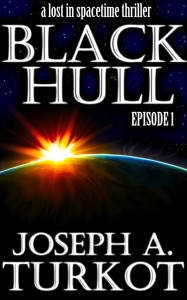
Black-Hull-COverThe real exciting part of KDP, however, is the free book promotion tool. It can be vitally important to the burgeoning author who has absolutely no quick way to reach a wide audience of readers (I humbly place myself in the burgeoning author category). There is another reason this promotion is great: it is non-restrictive—you’re only stuck in it for 90 days at a time. If you feel you are getting a big enough fan base to spread your wings, or simply want to see the results you’d have going the multiple vender route (B&N, Kobo, and the many other venders where Smashwords distributes your ebook), you can simply remove your book from the Kindle Direct Program.

The free book tool lets you schedule 5 free days for each 90 day block of Amazon exclusivity. You pick the days—they can be back to back, two at once, or one day at a time spaced out over the three months. The bottom line is that the free book tool gets your book into readers’ Kindles, but one sad truth must be stated: the free book tool is not what it once was. It used to be, so the legends of indies before me tell, that a book’s free days transferred into huge sales once the free days expired. This had to do with the Amazon ranking system, where a book’s rise up the free charts translated into a rise on the paid charts afterwards. This so-called KDP “gold rush” is over. To make matters worse, the way Amazon promotes the KDP free days does not amount to many downloads anymore. Depending on the popularity of your genre, you may only see thirty or forty downloads in a free day. In the past month, I tested a free day for various episodes in my Black Hull series. Without additional promotion on my part, the books received about forty downloads. Bummer. But there are still ways to maximize this tool, bringing you new readers, fans, borrows, and hopefully, some good word of mouth.

The first tool that I used to promote my KDP free days was Kindle Nation Daily’s Facebook promotion. This is a good way to get one to two hundred downloads in a low-interest category such as fantasy or science-fiction. As a rule with any giveaway, if you have a polished product, your numbers will be better. Whatever your success with KND sponsorship, your free book promotion tool is no longer free—KND sponsorship, at its cheapest, is about $35.00. Here’s what I stumbled upon to maximize my free days: Author Marketing Club’s Free Kindle Book Submission Tool. The concept is simple: they’ve gathered logo links to all the sites you want to submit your free book to in one place. Here’s what I did for promoting my most recent Black Hull: Episode 1 KDP giveaway days:

I started at the top-left link, Pixel of Ink, and submitted my book. Then, I kept the main window open and methodically went through each link on the Free Kindle Book Submission Tool. Occasionally, the site I submitted to would tempt me to purchase a featured spot for about $10.00 or $15.00. I rationalized that it would be cheaper than using KND, so I bought a couple of the featured spots when they prompted me. Keep in mind, you don’t have to spend anything using this tool if you don’t want to or can’t: each site listed takes your submission for free. But given the small amount of money I paid, relatively equal to what I’d spend on a KND Facebook sponsorship, I received a massive amount of downloads. For the two days I had Black Hull: Episode 1 available free, I garnered over one thousand downloads. For a military sci-fi episodic novel that received forty downloads with Amazon’s promotion alone, there is no comparison: Using the Free Kindle Book Marketing Tool is a must. Black Hull skyrocketed to number one on the Military Sci-fi free book charts, and number two on its other category, High Tech Sci-fi.

Given that Black Hull is my first attempt at publishing a serial novel, I wasn’t sure what to expect. The free promotion worked much as I’d hoped though, for once readers read Episode 1, some of them went on to purchase the rest in the series right away. The free promotion pushed me to my first month with over 300 sales.

The idea of publishing your novel serially isn’t new, but the idea that you can promote a single episode on this scale, leading to readers purchasing each successive episode, is very similar to the concept of keeping the first book in a series free. The only difference is the pricing really—you can charge $2.99 or up in most cases for a full-length sequel in a series, whereas the serial novel, in my opinion, should be 0.99 cents per episode to be competitive.

The most annoying thing about the KDP free book promotion is that, ironically, you actually have to do the promoting yourself. Gone are the days where the system was good enough to do wonders on its own. If you couple the Author Marketing Tool with sites like Konrath’s recommended ebookbooster.com and your social media presence, you can probably achieve results far better than mine.

I’m a learner in the indie publishing scene—I’ve been absorbing from those who have been doing this before me (a la Lindsay Buroker) for about six months now—but I have learned that Amazon’s KDP, and specifically free book promotions, is a wonderful place to start your indie writing career. Beyond the number one spot on the free chart, I went from one review on Black Hull: Episode 1 to seven. Before you run your free book promotion, be sure you have a nice afterward that politely asks readers who enjoyed your book to review it. Now, I wish I had learned sooner about wasting those precious five days—never give the book away for five days in a row. I learned that law of conversion too late from the blogs of more experienced authors. Schedule one or two days in a row, and give yourself ample time to promote the heck out of those days. And yes, you can promote without spending any money, and keep that KDP free book promotion free. Start with the Author Marketing Club’s Free Kindle Book Submission Tool, and then go promote somewhere else if you’re willing to put in extra effort. The process can seem very repetitive and time consuming, but it works. The more time you put in, the better your results will be.

If you want to hear more from Joe, or you’re interested in his books, check him out at his blog, on Twitter, or on Facebook.

Posted in Guest Posts | Tagged , , , , | 27 Comments

How Do You Keep Your Book Sales Momentum Going Over the Months and Years?

When you first release your book, you’re excited to share it with the world, and you’re ready to devote tons of energy to marketing. Blog tours, forum posts, interviews, guest posts, tweets, Facebook updates, advertising campaigns… if you can do it, you will. And, if you’re lucky, you’ll have a great launch, jumping to the top of the Amazon sales rankings. (Don’t worry — we’re not all that lucky, especially with first books, but it’s possible to “win” the slow-and-steady way too, especially if you’re committed to making a career of writing and publishing.)

Inevitably, your time and enthusiasm for marketing wanes, or maybe you feel you’ve exhausted your options (as awesome as Bookbub is right now, they’re only going to promote the same book so many times). Other authors come along with fresh new releases and fresh enthusiasm for marketing. You scowl as your awesome book gradually drops in sales ranking, falling out of the Top 100 lists, and daily sales drop as well. You remember some pundit saying how awesome ebooks are because, unlike with paperbacks, they can stay on the shelves forever, putting money in your pockets year after year. That’s only true, though, if people continue to find and buy your books.

So, how do you keep your sales rolling in, month after month, year after year?

It’s been almost two and a half years since I released my first Emperor’s Edge book, a negligible amount of time to those authors who have been in the biz for decades, but a small eternity in our new e-publishing era, one in which independent authors are making full-time incomes solely on their ebook sales. The Amazon sales charts are particularly volatile, with their rules changing and algorithms being tweaked all the time. Top sellers come and go. Some of the authors I interviewed last year or the year before who had hot new break out books have fallen off the radar in the 12-24 months since.

I haven’t been doing this long enough to swear that I know the answer, but I’ll tell you what I’m doing to keep my Emperor’s Edge series selling and to keep the monthly paychecks high enough that I’m able to continue to pay the bills (and buy chocolate bars and lattes — we all know how important those are for a writer).

First off, I’m continuing to write and publish.

I know this sounds obvious, but some folks get so hung up in the marketing side that they put the writing on the back burner. I’m averaging about three book releases a year right now, and I usually sneak in a short story or novella or two in there as well. My writing schedule isn’t that grueling, and I’ve come across authors who spew out a lot more words a day than I do. If you’re trying to figure out how to get more done each day, you can check out one of the books like, 2k to 10k: Writing Faster, Writing Better, and Writing More of What You Love. 10k sounds a little insane to me, but even if you manage 1,000 words a day, you could get two novels out in a year fairly easily. That was my word-count goal when I was still working the day job.

Continuing to release new books in my flagship series is the most important thing I do to keep my name out there where people can stumble across it. Because I’ve gotten to the point where many current readers automatically buy the next book when it’s published, a new release will rise up into the Top 20 of my genre category at Amazon, at least for a while, and this is one way new readers find me. They spot the series for the first time via the new release, and, if they think it sounds interesting, they can go back and try the first book. If they like that, they can go on to buy all of the titles.

I’m planning to publish the last book in my series’ current story arc at the end of the summer, but I won’t do something crazy like killing off the main characters until I’ve written another series that has proven itself capable of being the bill-payer. Fortunately, I still enjoy writing about those characters, so this isn’t any sort of hardship for me. The point is, though, to think like a business person as much as like an artist. Once you figure out what’s popular, it’s probably worth making that your focus.

Note: as I’ve stated before, it’s important to get your readers to sign up for your newsletter, and/or follow you on Facebook/Twitter/your blog so that you can get in touch with them when you have a new release. Don’t assume people will just know that you have a new book out and buy it without any input from you.

Second, I continue to engage in high-result/low-time-investment marketing tactics

I’ve never had a lot of luck with blog tours and interviews and such. They’re a lot of work (time that could be spent writing the next book), and unless you can get onto a very popular blog, they’re unlikely to result in many sales.

On the flip side, advertising can deliver small to huge results (depending on the popularity of the venue) and it only takes five minutes to fill out a form and send money to a site. It’s a struggle to find those popular sites that actually deliver sales, but they are out there. Right now, Bookbub is moving a lot of books for folks, and I’m still hearing good things about Ereader News Today, though I haven’t used them for a while. Pixel of Ink is another big site, though they’re not taking new sponsors at this time (I did, however, have them pick up EE1 a few months ago when it jumped into the Top 100 free at Amazon, thanks to a Bookbub ad).

Watch the Writers’ Cafe on the Kindleboards to see how people’s ads with various venues are going. It’s a good site for keeping up with what’s working and what’s not this month. (Note: I don’t actually have an account there; I just watch. Forums can be a huge time sink without much of a return, insofar as selling books go. If you join, do it because it’s fun and something you’ll do in your free time.)

I also post on Facebook and Twitter (and keep meaning to get more serious about Google+). This is less about selling books and more about keeping in touch with my readers between releases. If you follow me on Twitter or peep at my author page on Facebook, you’ll notice that I don’t plug my books very often (typically only if I’m running a rare sale or releasing a new book), but I believe there are a lot of intangible benefits to connecting with readers this way. Social media sites can be the beginning steps to building a community that has a life even when you’re not around, and there’s no limit to the ways a community can help you, should you ever need it. Also, it’s really fun to hang out with people who share your sense of humor (and they must if they enjoy your books, right?)!

Neither Twitter nor Facebook need to take a lot of time each day. If you grab the apps for your phone, you can check in while you’re waiting in line at the grocery store or watching the kids’ soccer practice.

Lastly, I don’t worry about sales ranking — I just pay attention to the bottom line

I know that if I can sell 400 ebooks a month for each of my Emperor’s Edge titles, I’m making a nice monthly income. Your requirements will vary, of course, depending on how many books you have out and what their sales prices are (most of my EE books are $4.95 so I take home $3+ from each sale), but once you know how many you need to be selling and what you have to do to achieve that, it becomes a numbers game rather than a cross-your-fingers-and-hope game. If you’re crossing anything, you’re not ready to rely solely on this income.

For me, giving away a lot of Book 1s in my series (often via an ad) will result in a very good sales month, one that’ll carry over into the next month. Not everyone who tries Book 1 will go on to buy the rest of the series, but lots of people do. This month, April, is a slower sales month for me. It’s been a couple of months since I released anything (and that was my sequel to Encrypted, a novel with some fans but one that never sold as well as my core series), and it’s also been a couple of months since I had a big boost from running an ad on a popular site. I did run an add on a small site earlier this month, but it only resulted in a few hundred extra downloads of my free book. That said, I’ll still sell 400+ ebooks a month across my EE titles this month.

If people enjoy your books and if you keep the publish-and-plug cycle going, you’ll continue to have readers in different parts of your series, and sales will continue to trickle in. The longer you’ve been publishing and the more fans you have who spread the word, the more of those steady trickle-in sales you’ll get. As long as your book continues to sell, Amazon and the other sites will continue to help you, too, with your books appearing in other authors’ also-boughts and in personalized email recommendations.

I expect May to be a good sales month for me, because I’ll have a new EE book out. As I already pointed out, nothing helps more than releasing a new book, especially in a series that’s already proven itself. The great thing about independent e-publishing is that you can find out quickly which of your books/series are most popular and have the most potential to bring home the bacon each month. Those are the ones you probably want to focus most of your energy on. This doesn’t mean you can never branch out and try new things (it may be the next adventure that really takes off, after all), but I believe that having a series like that is key to getting to a point where you can rely on your book-publishing income month after month.

Do you have any thoughts on this topic (some extra tips for people?) or questions? Let us know in the comments!

Posted in Book Marketing, E-publishing | Tagged , , , , | 27 Comments

Attorney Laura Kirwan on Contracts, Copyright, Foreign Rights, and Other Author Issues

Of all the questions I get in regard to writing, marketing, and publishing, the ones on law and taxes are the ones I’m least likely to have a clue about. I still can’t help you with taxes, but I have someone here today to answer common questions on copyright, contracts, and other legal topics related to books and publishing.

Attorney Laura Kirwan, who specializes in literary and publishing law, practices here in the Phoenix area and maintains a blog that should be helpful for authors all over the U.S.

Hey Laura, thanks for stopping by! Let’s start with this one… What are some of the pitfalls self-publishing authors should look out for?

The biggest mistake I see self-published authors make is not taking their work seriously enough, particularly with e-books.  Just because you’re self-published, the reader is not going to give you a pass on typos and misspellings and sloppy editing.  And they likely aren’t going to give you a second chance to convince them to buy another book.

As a self-published author, you’re not just an author.  You’re also a publisher.  So you need to understand the business side of things and act like a business owner.  Successful business owners understand the industry in which they operate and take good care of their customers.  They honor their obligations.  They hire help when they need it.  They sweat the details.

At a bare minimum, you need to pay for a good line editor. If you start making money, you need an accountant not just for tax prep, but for financial and tax planning.  And if you don’t understand any agreements you run across, hire a lawyer.  It’s not a divorce, it won’t cost $30,000.  An experienced lawyer can review a contract, tell you where the problems are and help you negotiate a better deal and it generally won’t cost you more than a few hundred bucks.

I’m an author, too.  I know what goes into writing.  There’s that Ernest Hemmingway quote about sitting at the typewriter and opening a vein.  You’ve put energy and love and tears and untold hours into your work.  You’ve built a world.  Don’t cheap out and starve it to death on the publication side.

Do you need to file a copyright in order to protect your work?

You hold the copyright to your work as soon as you create it.  Copyright registration isn’t required to create or maintain your copyright, but it’s a good practice.  It creates a public record of your ownership of the work and it provides some specific benefits in the event you have to sue someone for copyright infringement.  I have more detailed information on copyright registration, as well as how copyrights are created and how to use a copyright notice on my website.

What about ISBNs? Most e-bookstores (Amazon, Barnes & Noble, Apple, etc.) don’t require them for ebooks, and Smashwords provides a free one. Createspace also provides one for paperbacks. Are these okay to use or should you buy your own?

Legally, it won’t affect your copyright to get your own ISBN or use one provided by book production companies like Smashwords or Createspace.  There’s no legal significance to an ISBN.  It’s an inventory management tool.  So, despite the more hysterical claims I’ve run across on the internet, using a book printing company’s free ISBN by itself does not grant that company any rights in your work.  But that doesn’t mean you can’t sign your rights away in a contract you enter with them.  So, again read and understand every contract before you sign it.  That includes the one you click through on the company’s website when you sign up with them.

So, it’s really more about the appearance of it. One of the reasons I want to self-publish is I want to maintain control over my work.  I don’t want someone else to pick my cover or my title or tell me to change the names of my characters, etc.  (A lawyer and a control freak.  Go figure.)  I want to self-publish.  Which makes me the publisher.

ISBNs get dramatically cheaper the more you buy, you can hold onto them and use them as you need them, and you can write them off as a business expense.  To, me it’s worth the expense and a sign to the rest of the industry that I take myself seriously as a business owner and an author.

If we get popular as authors, we’ll be approached by agents and publishers. Can you talk about when or why we might want to hire a lawyer instead of an agent?

It’s not an either/or decision.  Lawyers and agents serve different roles and can help you in different ways.  The one time when you absolutely need a lawyer instead of an agent is when you’re reviewing a proposed agency agreement.  I heard an agent say at a writing conference that his agreement was on his website and if he decided to represent you he’d be happy to sit down with you before you sign it and explain what it means.

And my lawyer bells started ringing. His duty of care to you does not begin until the agreement is signed.  Which makes it a conflict of interest for him to advise you on it. What an agent should tell you is that you should review the agreement with an attorney before signing it. (That agent I mentioned? His agreement basically lets him, and his heirs, collect a commission on any deals you make even remotely related to the original book for the life of the copyright.  Ouch.)

Agents get paid on commission.  So they have strong incentive to fight hard to get you the best deal they can.  The good ones, and most are, represent you because they believe, often passionately, in your work and your talent. Lawyers, at least the kind that you’d want to hire for this sort of work, generally get paid by the hour. They may not fall in love with or even read your book and they get paid about the same regardless of the deal you reach.  They’re going to take a dispassionate and skeptical look at the proposed deal.  They’re going to ask questions you and your agent never even considered. Lawyers are trained to spot potential problems and legal potholes. A good lawyer is skilled at imagining the myriad and spectacular ways your deal can go sideways, and help you avoid them.

And there’s more to a publishing contract than just the publishing stuff.  An agent can guide you on the intricacies of subsidiary rights and royalties.  But your agent is probably not going to be quite as adept at explaining what the term “indemnify, defend and hold harmless” means.  Think of the agent as the substantive editor and the lawyer as the line editor.  They bring different eyes to the project and will help you in different ways.

What if approached by publishers in other countries who want to negotiate for foreign rights on our books? Agent? Lawyer? Do it ourselves?

Well, I’m kind of biased but I think you should always have a lawyer involved when you’re entering into a deal to sell any of your rights whether you have an agent or not.  Not necessarily for the negotiation stage but to review the contract.

If you want to seek out buyers for your foreign rights, then an agent experienced in that area can be a big help.  If you already have an agent, you need to look at your agent agreement and see what it says about negotiating foreign rights.   Have your lawyer review whatever contract the purchaser provides or have your lawyer draft the contract if the purchaser doesn’t provide one.

If you don’t have an agent and you receive a foreign rights offer, or know how to shop for one yourself, then you don’t need to go out and find an agent.  A knowledgeable copyright attorney can help you negotiate the terms of the deal and prepare or review the paperwork.

Thanks, Laura!

If you guys have any more lawyer-esque questions, please leave them below, and I’ll try to get Laura to pop in and respond.

Posted in Interviews / Success Stories, Tips and Tricks | Tagged , , , , , | 9 Comments

How Leeland Artra Is Rocking the Amazon Sales Charts with His First Book

If you asked me how many sales you could expect to get on your first book, I’d probably say something like, “Well, if you want to make money, it’s more important to think about a career and to plan to write a lot of books… It takes time to build up an audience and start selling well.” Probably not bad advice per se, but every now and then an author starts rocking it right out of the starting blocks.

Leeland Artra published his first book, Thread Slivers, in January, and, it’s spending a lot of time on various Top 100 fantasy lists on Amazon. I’m not sure how many books he’s sold, but I know from his sales ranking that it’s in the thousands, maybe even ten thousand already. I hunted him down (not hard since we chat on Twitter from time to time) and pumped him for answers to questions I’m sure you’re all wondering about.

Hi, Leeland! Do you want to tell us a bit about your book and what made you decide to self-publish?

LeelandArtraFirst, I just need to side step a bit and get a picture, smile! Seriously, I’m getting interviewed by Lindsay Buroker! How cool is that? I am so totally a fan boy. Thank you for inviting me to do this.

To answer your question impatience and dreams are what made me an indie author. I put in the time to learn about the industry. I read how-to books, I read blogs, and I read trade magazine articles. Most importantly I sought out successful authors and analyzed what they were doing.

I was not happy with traditional author stories of sending manuscripts to black hole submission addresses, waiting six months for any reply; and doing it again and again. When they were accepted the best a debut author could expect was next to nothing. The idea of spending years trying to find a publisher who would do something a little different was too much. But, I also found you (Lindsay Buroker), Elle Casey, Melissa Foster, and Michael Hicks. I had no idea what an indie author was, I knew what a vanity published book was; but, here were examples of successful authors who were doing it all without a traditional publisher. I read the articles and dug into the process and decided this was really the only option for me to start.

Yes, I said only option. Dreams, that was the second motivator. My books were not going to be traditional books. I like complex stories and not knowing everything. I’m a Firefly and Babylon 5 fan. I don’t care if the story isn’t completed at the end of the episode or season or book. All I care about is there are clues, some things come out, the world moves, the universe follows solid rules, and the good guys don’t always live just because they are popular. My world is the same. Anyone could tell you my books would never get accepted by a mainstream publisher until I had a solid fan base.

A key item that makes my books different is they are all POV. This means if the current POV character wouldn’t notice or know something you’re not going to get that information. For example Ticca barely cares about what people look like, she sees people based on her assessment of their abilities. When I write a chapter from Ticca’s POV there are very little descriptions of other people and what she notices of the surroundings is more tactical than tactile. Lebuin on the other hand notices clothes first, and can tell you the precise details of every outfit he saw and who wore it. Lebuin starts as very ignorant, that gives an excellent way to explain things to him and the reader as the story moves. The basic rule is no long winded explanations unless directly applicable to the current situation.

A reviewer mentioned that it wasn’t until second half of the book before you actually met the protagonist. This is all on purpose because at the beginning of this series none of the main characters had any clue what was really happening.

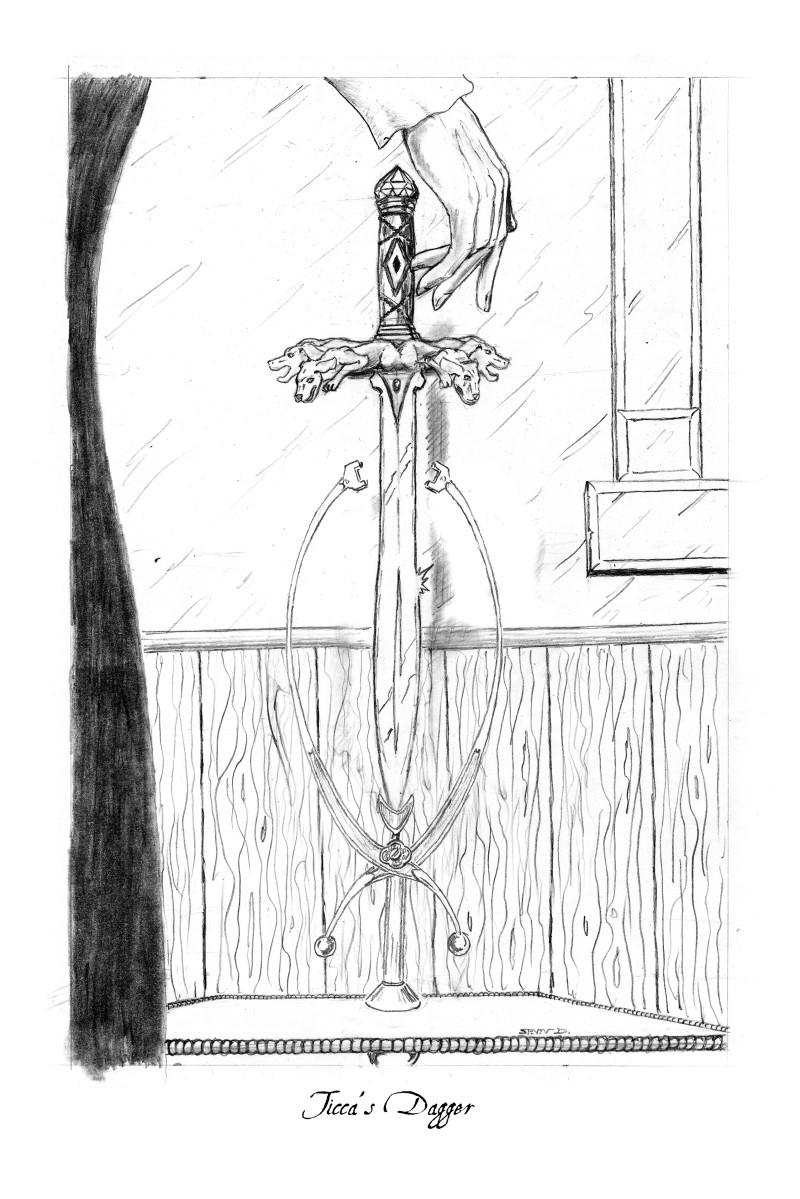
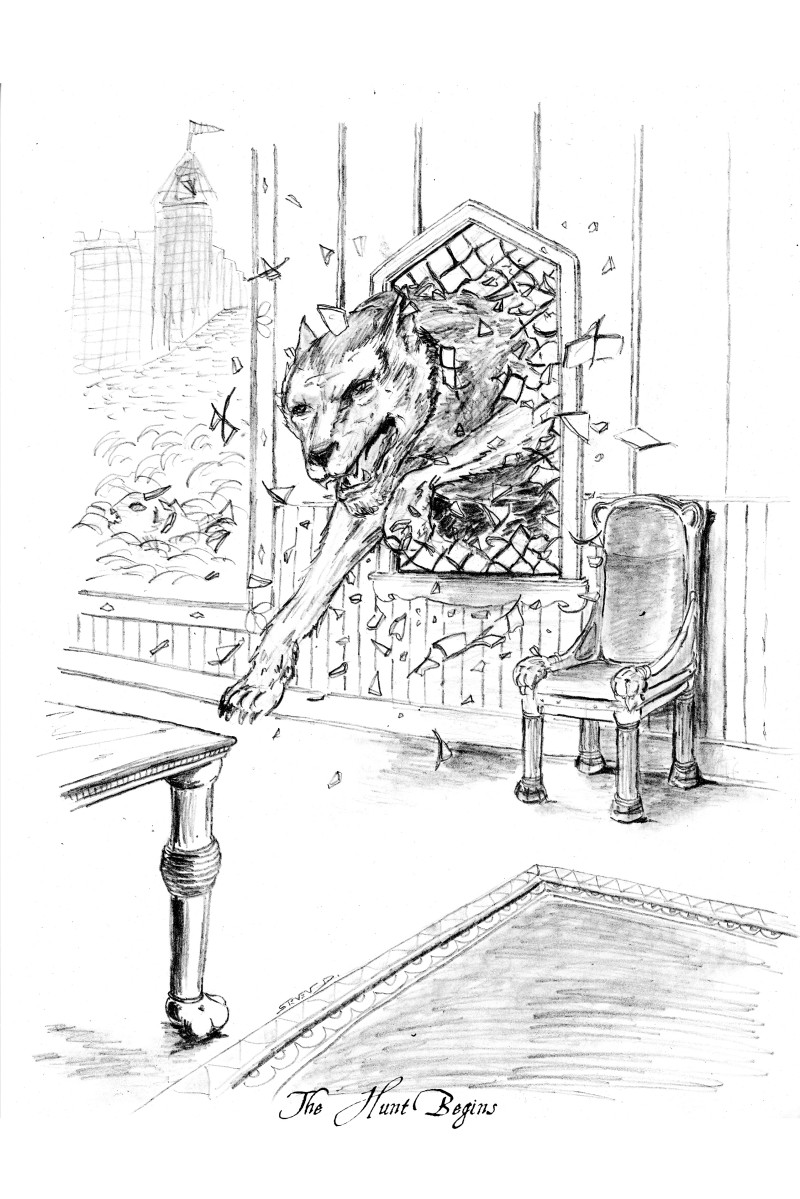
Chapter-03-thread-slivers-sketch-artraThe clincher was I had an unnatural desire to have sketches in my book of the events. Not just any sketches, I wanted them to be good but not over the top good, making them look like something Ticca or Lebuin might have drawn into their journals. It has been a long time since I have seen a paperback book with illustrations. As a debut indie author I could do this. The results are the first book, even as an eBook has sixteen custom art sketches, two fabulous maps, and feels very different than other books. The first book ended up being far beyond my expectations. The second book is shaping up to be just as good if not better.

And now for the good stuff… it’s been less than three months since you published Thread Slivers, your first book, and its sales are rocking at Amazon. As I write this, it has a #2700 sales ranking, 30 positive reviews, and appears in numerous fantasy charts. What’s your secret?

Yes, the sales since the second week after Thread Slivers came out have been steady at an overall ranking between 1100 and 2800 on all of paid Amazon, as well as hanging out at around #11 in urban fantasies, and #25-50 for contemporary and epic fantasies. I am just as shocked at the results as everyone else is. I really wasn’t expecting to have even the possibility of this type of sales until the third book (Thread Skein) was published.

The biggest driving item is I believe Thread Slivers is the very best I can make it. I decided if I was going to do this I was going to do it right. It has been professionally edited (4 full passes with rewrites.) It has a top artist (Steve Doty of Streetlight Graphics) doing all the sketches (we went round and round on these, most of the 16 sketches went through three revisions before being called done.) It has a cover design that is every bit as good as one by the very best publisher house done by another industry professional (Glendon Haddix of Streetlight Graphics, there were 11 revisions.) I hired a second editor outside of the fantasy genre to give it a final pass (Kitten Jackson.) I also had a top notch promotional video made with professional sound mixing and voice acting (Slow Cooked Pixel.) This is as good as it can get. Every book I put out will have the same level of care behind it.

Another item was I practiced selling the book by first selling its Facebook page. So the last half of 2012 I advertised, tweeted and tried to get some preliminary interest in the book and build up followers on Facebook. For the book’s release I wanted to do something huge, so I did a massive giveaway (which by the way I made a number of mistakes on like not realizing how much real money I was handing out, but it was fun and a learning experience).

Once the book was published I have kept a steady low key advertising campaign running. I am not dumping very much into advertising. Mostly I am using some twitter groups, a few Facebook ads and the occasional book list sale. So far I haven’t found what I could do to get it much better. I keep experimenting. It has only been cooking for a couple of months. I don’t plan on stopping anything I am doing. I will just keep experimenting with other channels. So far no magic bullet has been found.

Chapter-13-thread-slivers-leeland-artraI love the reviews because most are from people I didn’t ask. I laugh at that, because the articles I read said you’d be lucky if you got one review for every twenty you asked for. That was right on the nose. I sent out a little over 50 “reviewer” free copies of the book and got only a couple of reviews in exchange. However, I have gotten a lot of spontaneous reviews which is wonderful. I’m also very happy that all of the reviews are that the book is good to great. The overall star ratings are more a personal call than anything else even so I have gotten mostly 5-stars, a few 4-stars and only a couple 3-stars.

You chose a $5.99 price tag instead of the $2.99 or even $0.99 that many indies start out with. Why the higher price and do you think it’s had an impact on sales?

It was a hard choice to set the price. I talked to a lot of people about this. I got the gambit of opinions all strongly argued from give it away free to charge at least $8. I decided on this price for a few reasons.

First this book is different, it isn’t just a reasonable indie book it is a high quality book with qualified professional editors, artists, cover designer, and formatters. Further it has lots of bonus materials like the 16 custom high resolution sketches, maps, and glossary. On the Kindle Fire you get full color maps plus you can expand the pictures.

Second I don’t agree that the 99-cent or free first book is the best way to get an audience. It is unquestionably a great way to get a lot of downloads. But, the goal isn’t to have the most downloads. The goal is to have happy fans that read the books and buy the new books allowing me to be a full time author. Further, it has been demonstrated most of the books downloaded for free are not likely to be read. I know I have added dozens of free books to my kindle which I never had time to get around to reading. But, every book I paid more than a dollar for I have read. The last bit here is that Amazon lets people return the book for a full refund, so try before you buy is supported.

All the above meant my price was already going to be at least 2.99. I chose to go for the 5.99 price because that still left the book in the impulse purchase range, but it also represented a significant investment as well. Hence I believe almost every copy I have sold has been read, or is being read. This could explain the spontaneous reviews a little too.

I have done a couple one day sales at 99-cents or $2.99 due to advertising with mailing lists like BookBub.com. But, that has pushed the rank up a little higher for a day. But, the rank pops right back to its normal band the next day. Still I’ll continue to do this because it does get the book seen by a wide audience.

You’ve got a cool cover that says “epic fantasy” nicely. How much impact do you think covers and blurbs have in getting people to try a book by an unknown author?

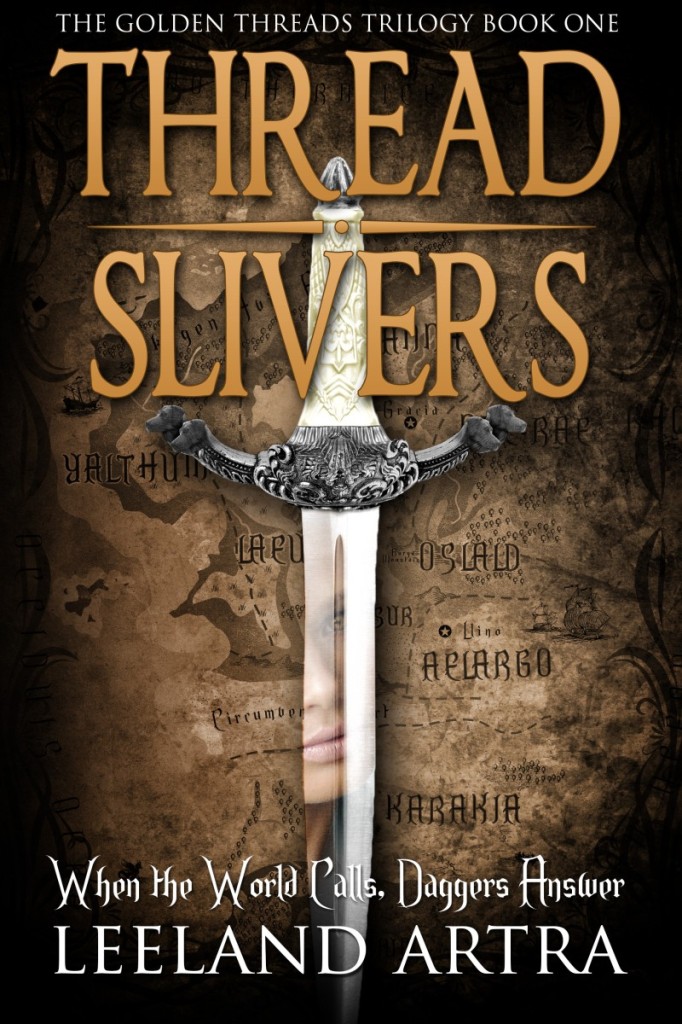
thread-slivers-cover“Don’t judge a book by its cover.” That is not true. Everyone I know is attracted or repulsed by the book cover. Even more so my cover had to work well the smaller sizes for Facebook ads, and Amazon also bought lists. I knew I needed this to be extremely good, eye catching, and compelling.

How did I solve this? I asked YOU (Lindsay) and Elle Casey for advice, at the time you two had already been chatting with other would-be-indie authors such as me. We had already chatted on other writing topics at the time because I had spent the prior six months reading all the writer blogs I could find and asking questions.

Both of you said to not skimp, and both of you gave me some references. I didn’t just blindly follow your advice (and I highly recommend any soon-to-be-indie author reading this to do your homework too.) I looked on my own for other cover art designers, I checked out dozens of example works (and how well they were selling) and in the end I just loved some of the work done by Streetlight Graphics. They had made a number of covers that resonated with me so I chatted with them and finally hired them. It has been a wild and fun ride ever since.

I see you tweeting book quotations and other such teasers often on Twitter. Can you talk about how social media has played a role in your sales success?

I believe social media has been a primary factor in my book’s jump in sales. Before I decided to become an author I had decided I didn’t like Twitter and only played with Facebook to keep up with a few friends. However, the moment I decided to be an author I knew I needed to be “socially visible.” Again I read articles, I looked at other authors (indie and traditional) and I lurked on their Facebook and Twitter feeds carefully monitoring what they did. Over six months I came to some conclusions on how to use these well without being annoying. First and foremost I always want to be able to connect with any fans directly. Naturally I wanted to advertise too.

I followed the advice of some savvy social media folks and have been slowly building a following ever since. One of the things I try to do is to promote other authors’ works. Especially authors I admire and think others should know about. Many people I speak with think this is crazy because they think I am just handing sales to some other author. But I don’t think I am in a competition. I think there will always be thousands of new fantasy readers who would love to know about other authors. There is no reason to hide the fact that I admire one author. In fact there is every reason to broadcast it. This means my readers will find authors I like, and I hope those authors will also point their readers at me. It takes a few months to produce a great fantasy, but only a few hours to read one. Thousands of like-minded authors could easily share fans without any loss of sales.

What are you planning next, and where can people find out more?

Right now I am working hard to make the deadlines to get the entire Golden Threads Trilogy out without slipping dates. Thread Slivers (book one) is of course out now. Thread Strands (book two) is just about complete and scheduled to head out to the editors in a couple of weeks. Thread Skein (book three) is already half done and pretty solidly figured out.

After getting Golden Threads Trilogy out I am not sure. I have gotten a number of requests for prequels. The Golden Threads Trilogy is based in a universe that spans over 15,000 years of known history as the blended world as well as 5,000 years of sci-fi level times within our current universe. There are hundreds of characters that would be fun to write about. But, I haven’t got anything firmly in mind yet.

The best place to find me is the standard three Twitter (https://twitter.com/LArtra), Facebook (https://www.facebook.com/LArtraAuthor), and Goodreads (http://www.goodreads.com/LArtra).

I have an author blog at (http://lartra.com)

Of course you can find Thread Slivers at Amazon.com. It will be available on Apple, Kobo and B&N in May 2013.

Posted in Interviews / Success Stories | Tagged , , , , | 41 Comments

New Author Series: How Do You Find Beta Readers?

I’ve received quite a few questions (more than two, I’m certain of it) from folks finishing up their first books and wondering about self-publishing. A year or two ago, the main one was “should I self-publish or seek an agent/publisher?” but there seem to be more authors these days who know they’re going to jump straight into the independent route. Given some of the impressive success stories out there (here’s a new one by an author who was losing money traditionally publishing, but who may hit seven figures in 2013 after two years of self-publishing) it’s not surprising.

So, I’m doing a series of blog posts answering basic questions for those just getting started. I hope these will be of some use to the writers in the crowd.

First up, a question I’ve  been asked to blog about by a couple of different people, where do you find beta readers?

If nobody except a couple of friends and family members have read your work, it’s a good idea to get outside feedback before assuming you’re ready to find an editor and publish that bad boy. This is especially true if we’re talking about the first novel you’ve ever written and you don’t have a track record of short story sales or any other sort of outside validation to suggest, “You’re ready, kid.”

Technically anybody can be a beta reader, but it’s wise to solicit other writers/editors who are very familiar with your genre/niche (i.e. they can spot a clunky sentence a mile away, and they’ve seen all the been-there-done-that plots, character archetypes, and cliches). Peers like these are going to be hard people to please, which is, believe it or not, a good thing. If you can get them to give your novel a thumb’s up, it might just be ready for the masses.

And where do you find these elusive souls?

If you take classes or join writing workshops, you’re going to have an opportunity to meet a lot of other writers, some of whom will specialize in your genre. Some will be serious about writing and some will already be published, independently or otherwise.

Classes and workshops will not only give you a chance to get your work critiqued, but you’ll have a chance to do the same for other people. Yes, that’s work, but it can be amazingly educational work. I’m sure I’ve learned as much from analyzing what works and what doesn’t in other people’s fiction as I have from having my stuff brutalized, erm, critiqued by others.

I have a fondness for online writing workshops myself (not only do you tend to get more honest feedback when people aren’t gazing into your hopeful eyes, but you’ll have a larger variety of folks from which to choose long-term beta readers). As a fantasy author, I’ve belonged to Critters and the Online Writing Workshop for SF, F, and H. I’m sure there are similar types of online workshops for other genres.

I’ve seen some authors pooh pooh peer-based writing workshops (blind leading the blind, grammar and sentence structure get focused on to the detriment of character/story, writing “rules” are emphasized too much, etc.), but they are, if nothing else, a good place to meet other writers. You won’t click with everybody, but you only need a couple of good beta readers to help you grow as an author and publish better stories, stories that are ready for broader audiences. I also think that if you can survive the workshop experience, you’ll feel more confident about the work you’re producing and less likely to make radical (perhaps unfounded) changes at the first sign of a negative review.

Thanks for reading, and let us know if you have any suggestions for places to find beta readers in the comments. If there are other “new author” topics you’d like to see discussed, feel free to mention those too.


Posted in New Author Series | 19 Comments

New Emperor’s Edge Contest: From the Mouths of… Maldynados (and Akstyrs)

I wrote the last line in the last scene of EE6 yesterday. There’s lots of editing to be done (and a Ch. 1 except of EE7 — or perhaps EE6pt2 — to write), but it seems like the time to celebrate… by posting a new contest. Last year’s “Design a Hat for Maldynado” event was well-received, so let’s see what else we can do here…

From the Mouths of Maldynados (and Akstyrs)

The task:

Come up with a Maldynado-appropriate (or inappropriate, as the case may be) euphemism (i.e. getting one’s snake greased)

OR

Come up with an Akstyr-appropriate curse or idiom (i.e. that licks donkey balls)

You’re welcome to enter both halves of the contest. Please post your entries as a comment below, and make sure to leave an email address you check, so I can get in touch with you if you’re the winner.

The prize:

A winner will be selected from each category (Maldynado and Akstyr), possibly with the help of your peers. The winning snippets of dialogue will be used somewhere in EE6. Also, you’ll have your choice of two of the Emperor’s Edge books in paperback versions, signed of course (possibly by Maldynado or Akstyr as well as myself).

Any questions? Let me know. Otherwise… let’s see what you’ve got! 😉

Update April 8th: Thanks for the entries, everyone! I’ll pick winners soon and announce them this week.


Posted in Cut Scenes and Fun Extras | Tagged , , | 108 Comments

Common Mistakes Writers Make by Editor Claudette Cruz

As always, I’m busy writing (two or three more chapters to go to finish the draft of EE6!), and I’ve been neglecting the blog a little bit. Next week, look for a new book giveaway contest with a chance to put some words into our heroes’ mouths. In the meantime, please enjoy this guest post from editor Claudette Cruz. She has some helpful advice for writers, new and old (I suspect my now infamous “the breast’s maw” typo is covered in there somewhere…).

Common Mistakes Writers Make

Hello, dear readers! My name’s Claudette Cruz, and I’m an independent editor and an avid reader. Today I’d like to mention a few of the more common mistakes I often come across in my line of work. I know there are many indie authors out there who are forced to go through the self-publishing route as traditional publishing houses become more and more selective. I hope my article helps you catch those small, common mistakes that translate to bad reviews and cranky, unsatisfied readers. This, in turn, will hopefully lead to better sales and reviews.

The first thing I have to mention is that you should get your book looked at by as many friends, family members, or beta readers as you possibly can. Try to have some of them focus more on the fluidity of the reading experience than on the content itself. Sure, all of them may concur that the story’s great, but are they overlooking the fact that your manuscript is riddled with grammatical errors? When asking them for their opinion, specifically ask these people to point out any errors they might come across.

If you can afford to do so, hire an editor next. They’re more experienced in catching tiny mistakes other people might miss, such as omitted letters or punctuation, misspellings, or words used out of context. Speaking of errors, I’ll now go into more detail regarding mistakes I’ve seen in every single manuscript I’ve worked on.

Omitted letters or words:

This is THE most common issue I deal with when editing or proofreading. You need a fresh pair of eyes to look at your manuscript. Many authors tell me it’s amazing how many missing words or letters I caught, considering they had gone through the manuscript a bazillion times. I believe that’s exactly the reason they can’t see the mistakes themselves—they’ve gone through the same text so many times, their brains just fill in the missing letters and words automatically. If you can’t afford to hire an editor, or have no friends or family who’ll go through your manuscript for you, set the document aside for a week or more, and then read it again after having given your brain a vacation from looking at the same chunk of text every day.

I want oyu to read an study this sentence carefuly. Then look it again. Now focus on the two sentences before this one. Maybe you were looking for mistakes in the first one and didn’t notice the second sentence was missing a word. Sure, I was trying to trick you, but keep in mind that a manuscript is way longer and probably far messier than this. You may have caught all the mistakes this time, but try doing it in a manuscript that’s over 60,000 words long. Most likely you’ll miss at least one thing, and while a single error isn’t bad at all, it’s far more likely that you’ll miss way more than one error. Readers run the gamut from picky to indifferent. Many won’t care if there’s a few editing blunders, but others will complain about too many mistakes and leave you bad reviews, scaring away potential new readers. If you want to increase your fan base, start by having a manuscript that’s as clean, neat, and error-free as possible.

Missing or incorrect punctuation:

I see this a lot, especially in manuscripts that are more dialogue-heavy. Sometimes you forget to add a quotation mark here or there, effectively confusing the heck out of your reader when a character replies to something the other just said. Other times, a missing comma can affect the fluidity of the whole sentence. Your reader has to stop and backtrack to try to make sense of what you just wrote. You don’t want that. You want your manuscript to read fluidly. A missing period can equally affect the reading experience. Also, remember that a single apostrophe can completely change the meaning of a word. “It’s” and “its” are used in different situations, and replacing one with the other is not advisable if you want your sentence to make any sense at all.

Words used out of context:

Similarly, editors will fix any instances in which you used a word out of context. Homophones, or words that sound the same but are spelled differently, are some writers’ bane. The writers will confuse “their” with “they’re,” “rain” with “reign” or “rein,” “whose” with “who’s,” and the list goes on. They’ll also fix up errors in which you happened to use an adjective instead of a noun, like in “I was paralyzed with frightful.” That doesn’t exactly make sense, does it? You meant to use “fright.” “The sheriff padded her down.” Huh? Didn’t you mean, “The sheriff patted her down”? “The article was trying.” That can have two completely different meanings. It might mean that the article tested your patience, in which case “trying” is used as an adjective, or that it was making an attempt or effort to do something, in which case “trying” is a verb. To be fair, that last example is a stretch, as “the article was trying” seems like it’s missing words to effectively place it in the context I meant, but hopefully you get my drift.

Repetition:

Okay, so your characters are particularly inquisitive and ask a lot of questions. That doesn’t mean that you have to use the word “asked” every single time you write that your character inquires about something. This is when a thesaurus comes in handy. If I notice a manuscript is overusing a particular word, I highlight the offending word throughout the document and provide my client with a list of acceptable replacements they should consider using now and then. They then have the option of replacing a few of the highlighted words with some of the ones I provided for them, thus dealing with the repetitiveness issue. You can easily do this yourself, though. Look up any word you find yourself using way too often. An online dictionary will usually provide synonyms as well as the definition of the word. Coincidentally, this also helps you tackle the issue of words used out of context. Look up “rein” and “reign” in a dictionary, and you’ll easily find out which word you meant to use.

There are a lot of other things editors can help you out with. They’ll make sure your manuscript is consistent, for one. They’ll make sure you spell the name “Lindsay” consistently, and not “Lindsey” by mistake. They’ll also help out if you want your manuscript to use British English instead of American English, and vice versa. If they have the specific skill, they can make sure that your Spanish-speaking character is saying things correctly in Spanish and not just uttering what a website offering free translations managed to cough out for you. They will deal with cumbersome run-on sentences and with sentences that seem disjointed.

I hope my article has been of use to you. Several of my clients have raved about seeing an increase in sales and good reviews after I worked on their manuscripts. I don’t believe that’s a coincidence. In my opinion, a neat, clean, error-free book is more likely to get better reviews and be recommended to other readers. Go ahead and put my advice to use. I wish you all many sales and worldwide fame. Thank you, Lindsay Buroker, for allowing me to contribute this guest post, and thanks to all of you guys for reading my article!

Bio:

Claudette Cruz is a pet lover, a crafting supplies hoarder, and a fan of all her clients. Fluent in English and Spanish, she’s been an independent editor since September of last year, when author Joseph Lallo helped launch her career by giving her a chance to prove herself. After posting on publishing forums based on author Jeff Gunzel’s advice, she got her first paying client, author M.K. Baxley, a total sweetheart who provided encouragement and her first referrals.

When she’s not working, Claudette is either making cards or enjoying long walks with her dogs. Every now and then she plays Zumba on her Wii U because she happens to have a chocolate addiction. Email her at claudettecruz@ymail.com for rates and to request a sample edit.

Posted in Editing, Guest Posts | Tagged , , , | 15 Comments

Where Can Authors Advertise for the B&N, Apple, and Kobo Stores?

If you’ve decided you’re tired of relying on Amazon for your sole source of e-publishing income (or maybe you’re not doing well at Amazon, and you’re hoping the other stores might take off for you), then you may have looked at Kobo, Apple, Barnes & Noble, and wondered how the heck you can get your books noticed over there.

Every now and then, you hear of some independent author who’s selling extremely well at Apple or perhaps Barnes & Noble, even though they haven’t hit it big at Amazon. I haven’t “hit it big” in those stores myself, but my sales in the last 6-12 months have grown fairly substantial, especially considering how insubstantial they were in the first year I was publishing. Right now, I could actually pay the bills without my Amazon income (of course, I love my Amazon income very much, and hope it doesn’t go anywhere, thank you).

So, what’s the deal? Are there advertising options? Ways to get some Apple/Kobo/B&N loving? I’ve already talked a bit about this in a post on increasing international ebook sales, but here are the main things that I’m guessing are helping me:

  •  Having lots of titles out (lots is a relative word, and authors with 50 books under their belts would snicker at my list, but considering I have seven novels and several shorter ebooks out now, it’s a far cry from the two titles I started with). Each book is a way for people to stumble across your work, and when someone likes one story, there are numerous others for them to go on and buy, thus making your overall earnings much more significant.
  • Having free stuff available in all of these stores. I’ve talked a lot about how I’ve done this and how well it’s worked for me, so I won’t go into that here, but it’s the first thing I ever did that started helping me sell at Barnes & Noble. In all of these stores, people continue to find my first book when browsing for freebies, then go on to buy the rest in the series.
  • Linking to all of these stores with marketing campaigns. Pretty self-explanatory, I think. A lot of authors just have links to Amazon on their sites and on Twitter/Facebook. There are lots of tools now that let you link to multiple sites, but you can always put up an excerpt on your own site with all the links listed there, then link to that page during your book promotions. That helps make people aware of your blog, if you have one, as well. They might subscribe or sign up to your newsletter while they’re there.
  • Being “out there” in the community. Some authors wonder if/why they should bother blogging and building up a social media presence. It’s not always easy to see results (i.e. book sales) from these efforts, but I know I’ve been featured in at least one of these book stores and linked to from numerous publishing blogs because I’m out here enough that people have noticed. You never know who’s reading. If you’re in people’s minds because you’re putting out valuable information or building a fan-base in an interesting way, they might think of you when it’s time to use an author as an example somewhere.
  • Advertising. I’m not one to poo-poo at the notion of paying for advertising. When it makes sense (and it only does for places that have huge audiences of readers), it’s just about the most time-saving form of book promotion you can do. In the last couple of years, there have been a handful of really good places to advertise Kindle ebooks, but what of the other stores? I’ve found a couple of spots, and I’ll share them below, but I’m always on the look out for more. If you hear of any good ones, please let me know, and I’ll add them to the list:

“Beyond Amazon” Places to Advertise Your Books

Bookbub — I’ve mentioned these guys several times in the last few months — I’ve bought three ads from them for different books, and they’ve always been worth the money. Their prices are going up, but their subscribers are, too, and unlike with other sites, they have their subscribers segmented by genre (i.e. fans of SF, mystery, romance, YA, etc.), and you’re only paying to advertise to readers who enjoy your genre. Also unlike other sites, they don’t simply put Amazon links in their advertisements. I ran my free Emperor’s Edge book with them at the end of February, got lots of free downloads at B&N, Smashwords, Kobo, and Apple (as well as Amazon) and ended up having my best earnings month ever this March (of course, I released a new book at the end of February, so that helped too).

NookBoards — If you have a banner, you can advertise your “Nook Book” to the Barnes & Noble forum goes here. It’s been a couple of years since I tried this, and it may be time to give it a whirl again, now that I have more titles in their store. There’s at least one other fantasy author who always seems to be in the ad rotation when I pop in there. I don’t see the current rates listed anywhere, but you can email the owner for information.

Facebook and Goodreads — I’m not a huge fan of pay-per-click ads when it comes to selling books (our earnings aren’t very big on any individual book sale so it’s tough to break even), but these sites allow you to run campaigns and post links to your books within the system or to off-site book pages. I’ve sent people to Amazon and Barnes & Noble, as well as my own site. Here’s a write-up I did of my experience with Goodreads (it’s a couple of years old now, but should still apply to creating a campaign). Goodreads was more effective for me than Facebook, though I remember I did get about 50 “likes” to my page when I ran a Facebook campaign for a couple of weeks (I question whether those likes were worth much, but new authors with only 10 or 20 Facebook likes might want to add some just for the “social proof” aspect — i.e. look, other people have heard of me, so you should try my books!).

Unfortunately, these are the only significant sites I’m aware of right now that allow authors to advertise to Apple, B&N, and Kobo — I’d really like to find some big book forums (are there any out there specific to Apple iBooks or Kobo?) or blogs akin to Pixel of Ink and Ereader News Today that post links to all of the sites (not just Amazon) when you advertise. I’ll post an update if I find some good ones; if you know if any, please post in the comments. Thanks!

Posted in E-publishing | Tagged , , , , , , , , , , | 18 Comments