Short Stories vs. Short Story Collections–Which Sell Better?

As we’ve discussed before, there are no rules about minimum word count when it comes to ebooks. You can publish a 150,000-word novel or you can publish a 5,000-word short story, and anything above, below, and in between is up for grabs too. You can put together a collection of short pieces or you can sell a single adventure. Are novellas allowed? You bet.

You can do anything you want, but it’s worth being aware of what sells best. As it turns out, readers seem to be less interested in short-story collections and more interested in single-story ebooks, regardless (to some extent) of length. In other words, short stories can outsell bundled works.

It seems odd, since a collection may be much longer and give the reader far more value, but my collections are always at the bottom when the sales totals come in at the end of the month. I’ve heard other indie authors report similar findings. (If you have experience with short stories and/or collections, please let us know about it below!)

Now, let’s talk about price. It’s all well and good to know that short stories sell, but you have to decide if you’re comfortable charging for yours. For something very short, you might not be.

The minimum price you can list an ebook for in most bookstores is 99 cents. If you’re like me and your full-length novels are only $3 or $4, it may seem like a lot to ask a reader to pay a dollar for a story that may be 1/20th of the length.

Personally, I’m not planning to break up my collections and sell the short stories individually since I’m not skilled enough to make my own cover art and paying for a design for each short story would be cost prohibitive. Also, most of my short stories are less than 6,000 words, and I don’t want to charge a dollar for something that short. Since I’ve started e-publishing, the shortest single-story adventure I’ve published is Flash Gold, which comes in at 17,000 words and is priced at 99 cents. In general, I’m someone who wants to under-price and (try to) over-deliver.

That’s just me though. You may feel that 99 cents is very fair for a 6,000-word story, or your shorter works may be longer. If this is the case, you may do better turning individual short stories into ebooks rather than bundling them for readers, especially if you can do your own cover art or have it done cheaply.

All right, time for you to chime in:

Short stories or collections, which do you prefer? And, if you’re a reader, do you mind paying 99 cents for a short story, or is that too much?

Posted in E-publishing | Tagged , , , , | 18 Comments

Nicholas Taylor Finds Success Through Giving Away a Free Ebook [Interview]

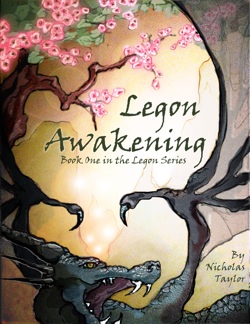
Legon Awakening Cover ArtWe’ve chatted about pricing the first ebook in a series at 99 cents or even giving it away for free as a way to get readers to check out your work (and, we hope, go on to buy the rest of the series!). If you’ve been wondering if this is actually working today, then you’ll want to check out this interview with indie fantasy author, Nicholas Taylor.

Welcome, Nick! It looks like it’s been a little over a year since you published your first novel as an ebook. What was your first year as an indie e-publisher like?

First thank you so much for having me on your blog; it is very sweet of you. I wish I could say that my first year in publishing was an amazing slam dunk but it wasn’t. Like most indie authors I had to learn things the hard way (by screwing up).

My first book Legon Awakening was first a podcast on Podiobooks.com back in 2007.  So my first task was to take my raw scripts for the podcast and clean them up for a book. It was a long process to say the least but a good one at the same time. Over the last few years I have had to learn a lot about publishing, I’ve had editor drama, new cover art, learning how to layout in the interior of the a book- you name it. It was a lot of fun and gave me tools that I will use for the rest of my publishing life.

At some point, you decided to give away your first fantasy novel for free. What prompted the price drop?

It was a combination of things that prompted that price drop. First off I have to say that when it comes to this business we have to put on several hats. First is your writer’s hat. It’s the hat that you use to write a book and when you have this hat on the thought of giving your baby away for free can be appalling. And that’s where you need your publisher hat.  This hat is a business man or woman and frankly it doesn’t care about the writing hat’s feelings. Its job is to increase your bottom line.

It was in this thought of mind when Brian Rathbone talked about a strategy that he was using on his Dawning of Power trilogy. He had the first book free and it was moving and moving well. I liked the idea. Using a loss leader is nothing new in marketing and I remember that even in books it had been used. I remember reading a series by Charlie Huston about vampires in New York. I don’t read a lot of books like that but the first book was free and I was enamored with my new Kindle app so I got it. After reading the first book I went out and spent $40 on the rest of the series. Brian was doing the same thing and he too was seeing success. Shortly after that I started hearing about Brain Pratt and how well he was doing with free.

When everything finally clicked home with me I was excited, but I knew that the key to using free was to have other books that weren’t free. In short I needed to get off my butt and write Legon Ascension and start building a backlist.

As you know, Amazon doesn’t let indies set the price below $0.99 from the KDP dashboard. How did you go about getting your work listed for free?

That’s correct, the Kindle and the Nook store won’t let you set your book at free. BUT Smashwords does. So here’s what you have to do. Set your book at free on Smashwords and let it flow out to Nook and Sony and at some point in time Kobo. Get a reader to go onto Amazon and right below your books sales rank is a link to report a lower price. It will ask for links to the free books on BN and Sony etc. From there Amazon will get its knickers in a dither and do one of two things- either A send you a nasty gram telling you that your book has been price matched or B they just price match the book.

I know authors that got the nasty grams. I didn’t get one; I wanted one but alas. Now we have tried this on other books. It was working wonderfully for awhile but not so much anymore. I don’t know why but some titles are staying at $0.99. I don’t know if this has to do with the length of books or if Amazon doesn’t see value in listing them for free… I don’t know. But I hope it works for you guys.

Once your book was listed for free, it really jumped to the top of the charts. I remember you tweeting about it. What other promotion did you do?

Ok, here is the rub: I didn’t do any promotion… I was going to but I didn’t need to. I did tweet about the book going free and posted some status updates on Facebook, but that was it. My initial plan was to get the book listed for free and then on Friday the 17th I was going to spend around $200 on Google adds and do Facebook, Twitter, Goodreads and blog pushes.

You see, Amazon will sell your book for you in two different ways. First is with their “people who bought this also bought this” section at the bottom of every book page.  This is great for long term sales. The second is with bestseller charts. I knew that if I could move 200 units I could start showing up on those charts and from there my cover art would do the rest.

I want to give a quick tip here for people who want to rush the free chart. My book had all of three reviews at the time and my description while adequate wasn’t anything that was amazing. My book moved because of one thing and one thing alone- my cover art. People don’t see your books description if they don’t click on the cover, so you have to have amazing art work. Now the first thing authors ask me when they see my book is who is your artist and is he taking on new clients. Yes he is, his name is Mike Brooker. When Brian and I were talking about Awakening going free he said that with the cover I had it would move 20,000 units by the end of June and I thought he was just being nice.

Now I also want to say that I went free at the right time. I don’t mean the right book at the right time but literally the time. Amazon was wrapping up its sunshine sales that devastated so many indie authors sales. For me it was driving a crazy amount of traffic to Amazon and its bestseller pages where my book was listed along side of the sunshine books.

And the question everybody’s going to be wondering: how much did it affect sales of the second book in your series (currently listed at $4.99)? Are you earning more now that you’re giving one book away for free?

The sales on book two have skyrocketed.

I will go ahead and share some numbers. Prior to this free run I was selling Legon Awakening at $0.99 and moving about a copy a day. The second book Legon Ascension was moving about a book every other day. Late in the evening on June 15th Amazon listed Legon Awakening for free. As of the end of the month, it is just shy of 23,000 copies downloaded. Legon Ascension is $4.99. I knew at this price point it wasn’t going to be an impulse buy. People were going to have to read and like Awakening before they would buy Ascension.

I thought I would see sales go up in about two months. It turns out that people read fast and starting on the 16th sales for Legon Ascension started to climb. I went from 3 sales a week to around 25 to 30 a day. Legon Ascension ended June well over the 400 mark and paid for the entire publishing cost of the book in that two and half week period.

Do you want to tell us what’s next for you? A third book in the series? Something else?

I know I’ve been long winded so I’ll keep this brief. Right now I am finishing up the last book in the Legon series. It’s called Legon Restoration and should be dropping sometime in September. After that I have another series which will start coming out later this year.

Sounds great. Thanks, Nick!

Lindsay, thank you again so much for having me on your blog it’s been a blast and if anyone has any questions for me please feel free to ask or visit me at www.nicholastaylor.co or you can email me direct at nick at Legonbook.com. Thank you.

You can also find Nick on…

Posted in Interviews / Success Stories | Tagged , , , , | 5 Comments

Interview with…Me: 1,800 Ebooks Sold in June and Other E-Publishing Topics

Dark Currents Cover ArtI’ve hosted quite a few interviews with indie authors over the last few months, and, in a narcissistic fit, I thought I’d “interview” myself today. The questions have either come through the contact form on this site or via blog comments and are paraphrased (though you’re welcome to claim one in the comments if it sounds familiar!).

The impetus for this post was me reaching one of the goals I had when I started e-publishing. Back in December, when I published my first ebook, there were quite a few blog posts and forum lists sharing names of indie authors who had made it into the “1,000 ebook sales a month” club. Through some unspoken agreement, this number seemed to indicate success as an indie, so I figured it was a good goal.

Thanks to the awesome folks who have downloaded my ebooks (and told others to try my work!), I hit that mark in May, and then did even better in June, after releasing my third full-length novel, Dark Currents.

Now, this is a modest success compared to what some independent authors are seeing (I just finished reading John Locke’s How I Sold 1 Million eBooks in 5 Months!), and it doesn’t represent great wealth (less than 800 of those ebooks sold for more than $0.99), but, hey, a goal’s a goal, and I know many folks finding this blog are just starting out, so I’ll share some of what I’ve learned here.

I hope something’s of interest!

What’s the secret to selling ebooks?

If there are any secrets to becoming an overnight success, I sure don’t know them. Most indies I’ve come across who are hugely successful today started slowly, having unimpressive sales for the first 6-12 months, and then reached a tipping point where they were selling enough to get into bestseller lists and start getting recommended all over Amazon. We all dream of that day!

I’ll try to give a couple of useful tips though:

Get more books out there.

This means there are more doorways into your world. Don’t get hung up on not being able to write that fast. Lots of people are publishing novellas and short stories as ebooks. If you’re someone who had his or her eye on the traditional route, you’ve probably made some short story sales to magazines and anthologies over the years. Check and see if the rights have reverted back to you yet. You may very well have a number of stories that could be turned into ebooks right now.

Another perk of having more books out there is that there are more opportunities for sales from “repeat customers” (AKA those totally awesome readers who enjoyed your first book and want to grab the rest).

Market smart, not hard.

Yeah, you can sell books by “tweeting” 50 links to your books a day, having thousands of posts on e-reader forums, and spamming the Kindle Facebook page, but these are activities that don’t have lasting effects (forum posts, tweets, etc. get buried with time, so you have to keep repeating your efforts). They’re also tactics that everyone else is doing (nobody ever made it big doing what everyone else was doing). Ideally, you want to do something once and reap the rewards again and again. Read my recent post on high vs. low level book promotion techniques for ideas.

One example would be giving away a free ebook. As I’ve mentioned numerous times, I did a short story with an excerpt to Emperor’s Edge at the end (the short has the same heroes as the novel), and that was the first small break for me.

I also like advertising on Goodreads because it doesn’t cost me much, but it’s resulted in book sales and, more, it’s resulted in lots of people adding my books to their “shelves” over there.

Though it has less obvious results, I like guest blogging too (though I’m finding myself with less time for it these days). Every time you leave a post (with a link back to your site) on someone’s blog, it’s a little vote for your site in the eyes of the search engines. If you maintain a blog of your own, this can grow to a huge source of traffic over time, and some of those readers might just become buyers of your books.

What are your thoughts on pricing ebooks at $0.99?

Well, since I’m doing it, I can’t very well be against it! I think it’s a fair price for short fiction, which explains most of my 99-cent price tags, and I also think it’s a good way to draw readers into a series, which is why I lowered Emperor’s Edge (a 105,000-word novel) to 99 cents in May. Though the book didn’t become an on overnight bestseller (sales roughly doubled), it resulted in more sales across the board for my work. As I mentioned, that’s the month I first broke 1,000 in sales.

I don’t think you have to price ebooks at $0.99 to sell them (EE was $2.99 up until that point, and I hit the 1,000-total-sales mark for that book in April), but I think it can be effective as part of a marketing strategy.

Aren’t you devaluing yourself and your work by pricing a novel at $0.99? At $0.35 earnings per sale you’ll never even make minimum wage….

I always scratch my head when people bring hourly wages into this. We’re entrepreneurs, guys, not hourly or salaried workers, and we’re creating intellectual property that can pay us in perpetuity — we’re not trading an hour’s work for an hour’s pay.

Ultimately that means you’ll probably make squat in the beginning (you know the saying about most businesses taking five years to turn a profit…if they do at all), but there’s no ceiling on what you can make down the road.

There are people out there selling 10,000+ copies a month of their $0.99 novel.

There are others (the more likely road to success) selling a mix of novels and novellas and short story collections at different price points with some titles doing extremely well and others doing less well but still making money. They may not be blockbuster sellers, but these authors are able to make a living from their body of work (I’m not there yet, but I can see the potential, and how cool would it be to make a living as a fantasy author? Yeah, pretty cool!).

Ebooks, remember, need never go out of print, so when you’re writing a novel it’s not about what you earn in the first month or year but what it can earn over its entire lifetime.

Why did you choose to e-publish instead of seeking an agent and a traditional publishing house?

I’ve received this question a number of times, and I have to admit it’s flattering (since it often comes with a “hey, I think your stuff is good enough to be published normally” kind of tag). There are a few reasons:

1. My lack of patience and disinterest in busy work. I didn’t want to deal with the rigmarole of writing query letters, writing a synopsis, researching agents, emailing agents, waiting weeks and months for replies to query letters, etc, etc. etc. Seriously, you could write an entire new novel in that time. And I don’t write in “hot” genres or even easily defined ones, so I didn’t expect a lot of agents to be shoving each other aside for a chance to represent me. Even if you get an agent, that’s no guarantee your book will appeal to a publisher.

2. Independence. I haven’t worked for anybody else since I got out of the army ten years ago, and nothing about being in the army convinced me I enjoy answering to higher powers.

3. Money. This wasn’t one of my original reasons, but it’s certainly become a factor. As it stands right now, you’re a heck of a lot more likely to be able to make a living as an indie ebook author than you are as a traditionally published novelist who shares a big chunk of the earnings with middlemen. Also, you can get your work out there into the marketplace much sooner, so it starts earning you money sooner.

I should say, too, that I didn’t see the choice to go indie as an either/or option that would last for all eternity. I’m starting out this way, but maybe I’ll look for an agent and a publishing deal down the road if the stars align correctly. I believe without a doubt that once you’ve made a name for yourself and proven you can sell, you’ll find it a lot easier to find representation and a publishing deal.

What’s the hardest part of being an independent author?

I imagine every author would have a different response to this, since it’ll depend on what your strengths and weaknesses are and what you enjoy doing.

There’s nothing I hate doing, but I’ve experienced the most grief over cover art. I don’t know anything about design, and I never know what to ask for with this stuff. I also (and, yes, I’m saying this in a whiny pouting voice) think high fantasy has got to be one of the hardest genres to do cover art for. Thrillers can get away with some stock picture of a knife with blood spattered across it, and, bam, you know exactly what kind of book it is at first glance.

Okay, there’s my least favorite thing about being an indie. Not a big deal in the grand scheme of things at least. 🙂

What’s the best part of being an independent author?

Okay, nobody has asked me this question, I admit it. But I thought it’d be a fun one to finish up on.

I’ll share a couple of “best parts.”

Calling the shots.

Hey, if your first cover sucks, you get to try again. Traditionally published authors are stuck with covers they hate all the time, and they still have to carry that eyesore around to sign at conventions.

You get to play with price and experiment with blurbs and marketing strategies to your heart’s content too. You also have final say on whether the story gets published as is. I do sometimes miss having the expert input of an actual publishing house editor, but I’m not sure I’m the kind of person who would always appreciate what might be mandatory “suggestions.”

Seeing sales as they happen.

This can be a blessing and a curse, but Amazon and B&N (through PubIt) update sales stats as they happen. Sure, you can get obsessed and spend too much time checking them, but the real benefit here is that you can see which of your promotional tactics are working.

You also know exactly where you stand at any given time. I’ve had traditionally published authors ask me what a sales ranking of such-and-such correlates to in book sales at Amazon. These guys have to guess how well they’re doing because they otherwise won’t know until royalty checks come in.

I know I’d find it harder to stay motivated about marketing if I only got a royalty check (and any clue as to how well my efforts are paying off) twice a year or once a quarter or whatever it is. Ouch.

All right, that’s probably enough for my first “interview” with myself. If you have questions, let me know in the comments. Thanks for reading!

 

Posted in Interviews / Success Stories | Tagged , , , | 12 Comments

Excerpt from the Next Flash Gold Steampunk Adventure

I’ll get back to e-pub chit chat highly informative blog posts on e-publishing after the holiday weekend, but I thought I’d share a little snippet from my latest project today. I just sent the story off to beta readers, so this is rough and unedited, but here’s a little fantasy fun from the follow-up to Flash Gold, a steampunk adventure set in the Yukon during the gold rush era:

*The “SAB” is one of Kali’s latest inventions, a steam-powered “self-automated bicycle.”

Hounded Excerpt

“There’s the SAB!” Kali blurted, relieved when it came into sight.

She kept herself from running over to check it. The tracks led straight toward it. She and Cedar stepped carefully, checking for more booby traps on the ground. They found nothing more treacherous than a pile of bear dung, but Kali lingered a few feet from her vehicle without going close enough to touch it.

“Let’s be optimistic,” she finally said. “Maybe she knew we were after her and went straight through.” She pointed to the tracks, which continued past the bicycle and back down the road she and Cedar had followed up the river. It made sense that the woman would need to return to town to have her wound treated.

“She stopped here.” Cedar pointed to the ground next to the bicycle. “The tracks are deeper where the vehicle came to rest.”

“I better take a look.” Kali spent the next fifteen minutes inspecting the SAB. She checked all the spots she would booby trap if her goal were to incapacitate someone’s steam vehicle.

Cedar spent the time leaning against a tree, his arms folded. “Shall I set up camp?” he asked at one point.

“No, but I wouldn’t mind something to eat if you’re offering,” Kali said, her voice echoing oddly since she had it stuck in the furnace. The fire had burned out while she and Cedar were roaming the hills. When he did not respond to her comment, she withdrew her head and looked at him. “Oh, was that sarcasm?”

His eyebrow twitched. “Possibly.”

He had to be getting impatient with this side trip. Might he be wondering why he had bothered to take her along? Aside from providing a mode of transport, what had she done to assist him? Even the transportation was of dubious worth. He would be closer to Wilder’s claim by now if he had walked up the trail.

Maybe they would catch this woman and find out she was some sort of super villain with a huge bounty on her head, and that would make this detour worthwhile.

Kali climbed on top of the SAB seat. Though the bicycle was a broad, sturdy contraption, it wobbled under her weight, and she kept a hand on the smokestack for balance. She peered inside it. And froze.

“What the blazes is that?”

“What?” Cedar strode over.

A black device similar to the ones on the trail nestled inside the smokestack—far inside the smokestack. Kali swiped a hand toward it and missed it by a foot. Her own body blocked the daylight when she leaned in farther, so she could not tell what she was dealing with. Another booby trap, presumably.

“I need help,” she said. “Can you hold me, so I can lean in farther?” She must sound ridiculous with her head stuffed in the smokestack.

Hands squeezed her waist, and she squawked when Cedar lifted her off the seat so her feet dangled in the air. His firm grip had the steadiness of steel, though, and she soon realized she was more secure than when she had been relying on her own balance. Thanks to his height, Cedar could also boost her entire body above the smokestack without trouble.

“Thanks,” she called, her voice supremely muffled now. “I appreciate your strength and—” She inhaled soot and broke into a coughing fit. The stuffy, hot environs pressed in from all sides, and she could see nothing. Lingering smoke made her eyes tear.

“My strength and what?” Cedar asked, his voice distant to her ensconced ears.

When she tried to speak, she ended up coughing again.

“Ah,” Cedar said. “I’m to guess at the rest. I see. You appreciate my strength and…masculinity?”

The confines of the smokestack made movement awkward. Kali had to wriggle and twist to loosen a shoulder enough to extend her arm. Her fingers brushed against the obstruction. Cold and smooth, it did not tick or whir or do anything to suggest moving parts or a timer that would cause an explosion to occur at a set moment.

“Strength and virility?” Cedar asked.

Kali felt around the edges of the device, hoping she could remove it to examine in the light, but something lumpy filled the cracks. Whatever it was had solidified and was doing a good job of holding the object immobile. She scraped a sliver off and held it to her nose. Though the sooty smokestack made it hard to put her olfactory organs to satisfactory use, the gunk had a pungent identifiable scent. She groaned.

“No? Strength and good looks?”

“Pull me out,” Kali said.

“Not until you finish that sentence.”

“What?” She had barely been paying attention to him.

“You appreciate my strength and what else?” Even though the smokestack dulled the nuances of his tone, she had no trouble imagining the amused smirk on his lips. Better than the sarcasm, she supposed.

“Strength and willingness to grab my butt and hold me aloft,” Kali said. “Now get me down.”

“Hm, I doubt that’s a trait unique to myself.” Cedar lifted her free of the smokestack and lowered her to the ground. The smirk she had anticipated rode his lips, and it transformed into a full-fledged grin when he got a good look at her. “You look like one of the black gang on a steamship.”

“What?” Kali wiped her face. Her already sooty sleeve grew sootier. “Ugh. I’m losing my love for this woman. She’s starting to vex me.”

* * *

Thanks for checking out the excerpt! It’ll be a few weeks before the story is ready to go, but if you haven’t read Flash Gold yet, you can grab it for 99 cents at Amazon | Barnes & Noble | Smashwords.

Posted in My Ebooks | Tagged , , , , | 10 Comments

How to Sell More Ebooks at Smashwords

Sell Ebooks at SmashwordsIf you’re like many indie authors, you’d like to sell ebooks through Smashwords since there are quite a few perks:

  • They pay a higher royalty than Amazon, Barnes & Noble, and the others (85% and there’s no dip in your cut for titles priced under $2.99).
  • They offer all ebook formats so you don’t have to worry about directing Nook people to B&N, Kindle people to Amazon, etc. etc.
  • They have a more flexible affiliate program, meaning you choose how much to offer affiliates (people interested in promoting your ebooks so they can make some money too).

There are lots of reasons Smashwords should be appealing to authors, but their marketplace doesn’t get nearly the eyeballs of Amazon or even Barnes & Noble and Apple, so it can be a challenge to sell ebooks there.

That doesn’t mean you can’t make some sales at Smashwords though. Here are a couple of things that have worked for me:

Doing periodic giveaways via their coupon program

I don’t bother with half-off coupons or anything like that. I do 100% off and make the coupon good for a few days. Then I’ll publicize it in the Mobile Read forum.

As I’ve mentioned before, I’ve sometimes had bloggers pick up on those giveaways and write them up on their sites. This ends up helping me with promotion, and sometimes the folks who get the freebies go on to pay full-price for other ebooks (just recently, I gave away some free copies of Emperor’s Edge this way, and I had quite a few sales of the sequel, Dark Currents, as a result. Some people picked up Encrypted too).

Talking up the affiliate program

I admittedly haven’t done much with this since I wrote up my “How to Make Money Promoting My Ebooks (and other people’s too)” post back in January, but I do see sales from affliates now and then on my Smashwords dashboard. Quite a few came after that post, which makes me think I should probably put a permanent link to it over in the menu somewhere so new readers can find it.

But, anyway…

We can talk about book promotion techniques all day, but ultimately your fans are the ones who are going to be responsible for your career taking off. If they like your stories, they’ll talk about them regardless (because they’re awesome like that 🙂 ), but you can give them a further incentive to talk up your books by offering a percentage of the earnings via the Smashwords affiliate program. The default for affiliates is 11%, but you can give away your entire cut if you want (I have my ebooks set at 75%, which is close to the max). These are sales you wouldn’t have gotten if someone else wasn’t promoting your books, so there’s no need to be stingy.

If you do decide to participate in the affiliate program, let your readers know about it. Even folks who shop at Smashwords might not be aware of it, and writing up instructions that let readers know how to add affiliate links to their sites can be helpful for those who are new to the idea.

Advertising

I’ll be the first to admit, advertising tends to be more misses than hits when it comes to book sales (meaning you’ll probably spend more than you make), but, as I’ve mentioned before, I have had some luck with Goodreads pay-per-click ads.

Also, if you have an entire series out, and it’s common for readers to go on to buy the rest of the ebooks after they read the first, it may be worth taking a loss on Book 1.

While Smashwords lacks the name recognition of an Amazon or Barnes & Noble, it’s not a bad place to send people who click on an ad since they do have every ebook format available. You don’t have to worry about wasting money by sending Nook people to your Amazon book page, for example. And, again, since you’ll make the largest cut at Smashwords, there’s another reason to direct people there as opposed to other venues.

Well, there are three ways to get a sales boost at Smashwords. Do you buy there, or have you done well selling there? Do you have any tips for other authors?

Posted in Book Marketing | Tagged , , , | 10 Comments

Dealing with Procrastination by K Gorman

Ah, procrastination. A word every writer knows. Sometimes in multiple languages….

Today, we have a guest post on the topic from K Gorman, author of “The Star-Eater,” a short story in a for-charity 12-tale anthology: Twelve Worlds (science fiction and fantasy anthology)

Dealing with Procrastination

Procrastination. I’m sure it is familiar. A growing nag at the edge of the conscious that, naturally, we ignore. The trouble is that little nag was caused by ignoring something in the first place.

I did a lot of research on this post. A lot. In fact, I was aiming to have this post done sometime in May. The beginning of May, to be exact—after all the shenanigans with final exams were finished, but before I left for my vacation.

But then I had a bunch of work that gave me overtime. So I didn’t get it done. Poop.

So I decided to get it done on the plane. I’d have eight hours to kill, right? Well . . . turns out that it’s good to sleep during those eight hours to kill jet lag. And besides, there were movies. And the Rockies were very pretty. And I’d never seen Nunavut before. Or Greenland. So I only wrote a few paragraphs.

Double poop.

Well, there’s the trip back, right? The jet lag is reversed this time, so it’s better to stay awake! But they were playing Black Swan—and I’d been meaning to see it—so that took up an hour and a half. And food. And then there was Iceland. And . . . you get the idea. I actually did write a bunch, just not this.

So I’m probably not the best person to talk about fighting procrastination.

Here are my tips, anyway.

Don’t look it in the eye. Got a project that needs doing? Some despicable task? Sneak up on it. Don’t let yourself know that you’re going to do it for real. Come home (or wherever), whistle a guilt-free tune, and attack that thing like a… a… well, I don’t know. I never was one for violence. Maybe just dust it off and, in cleaning it off, notice how unfinished and desperate for attention it looks. And then—and this is the tricky part—decide you’ll do something about it right then. Not tonight. Not tomorrow. Then*.

*This really only works if you have some time to kill. If you’re sneaking around and have a dentists appointment or a hot date, this is probably not a good idea.

Schedule it in for real. Another tricky one. This is mainly for the writers out there, myself included, that still can’t quite believe that this is a job. A bonafide, nine to five (or whatever block of time), working job. That baby (and by baby I mean that project novel that, by this time in its gestation, might as well be a two-year-old child. See what procrastination does?! Think of the children!) could have been written and published and you could have been making money!

So. Take a look at that schedule of yours. Plan out your time. Don’t forget to account for little things such as eating and sleeping. They are important. And, for heck’s sake, don’t schedule it in for breaks at work. Breaks are for exactly what the name implies. Breaks. Presumably, your other job (some people mistake it for a ‘real’ job, but that implies that writing is somehow not a ‘real’ job, and we don’t like that attitude here. We’re very professional.) is stressful, laborious, and mentally taxing. During breaks, you should chill. And probably eat.

So, plan a block of time. Make it a big block of time. Ten minutes is good for freewriting exercise, but just won’t cut it for serious writing. You can’t write a novel during that time, no matter how good you are. For some reason, one hour won’t do it for me. I have to have at least two. Otherwise I’m looking at the clock all the time and thinking about how I have less than an hour left.

Procrastinate something else. Since we’re so good at it, why not use it to our advantage? For writing, I usually find some schoolwork I should be doing. Usually something big, like a research paper—the bigger the better. Makes it easier. Then you simply procrastinate the one project by doing the other project. Sounds silly, doesn’t it? But trust me. It works.

Have a deadline. It has to be a real deadline, or else you’ll just ignore it. I find this is easier done when you have a large or important audience—not that your current audience isn’t important. But if, say, you have an essay for school due tomorrow and your teacher is far from lenient, you tend to get that done. Done last minute, probably, but done. And then you date it for a few days ago. While last-minute stuff isn’t ideal, it will work. So if you can get that done for your teacher, you can get it done for, say . . . your cover designer. Or your editor. Get some nice guilt going about how they are losing money because you haven’t finished the story/novel—I don’t care how. Got beta readers? Cool! A looming work schedule? Vacation? Awesome!

Whatever floats your boat. Got something that works? Do it. And maybe tell us about it in the comments so we can try it, too. Unless it’s really embarrassing—in which case I think we definitely need to hear it.

Visit K Gorman on the web or on Twitter.

Posted in Guest Posts | Tagged , , | 6 Comments

Should Authors Be Amazon Reviewers?

If you’re an author, you may be aware of a couple of small promotional opportunities you can make use of by leaving reviews on Amazon.

First off, your reviewer profile can include information about you so you can sneak in a plug for your work. You can also include your website or a link to your Amazon author page (which should list your books).

Second, you can customize your reviewer handle to use your author name (and you can even add on “mystery author” or some such).

Amazon Author Reviewer

If you’re a prolific reviewer, this can be a way to get your name out there and perhaps entice a few Amazonians into checking out your work.

A few suggestions in case you want to try promotion through reviews:

Try reviewing books that are similar to yours (similar but more popular, eh?), so it’s likely your target audience will notice you.

If it’s possible to be first, then go for it. I’m not positive how Amazon chooses which three reviews get to show up on the main book page, but it seems to be a combination of being early and posting something substantial.

Don’t expect too much out of this. If you already love reviewing, then this promotional strategy makes sense (as long as you’re leaving reviews, they might as well help you sell books), but reading and reviewing is time-consuming so if it’s a job and not for pleasure (i.e. you’re reading popular books you might not otherwise try because you want to be the first to leave a review…) then you’ll probably find the whole process tedious and not particularly rewarding.

Caveats

Personally, I don’t do many reviews and not any with the idea of promoting my own work. There’s an art to writing good reviews, the kind that entertain and inform, and if you’re not publishing that kind, you’re probably not going to get folks clicking your name to check out your profile.

I tend to be too critical (a common faux pas amongst writers — some of us think we know everything 😉 ), and I can’t imagine my overly analytical reviews winning me any fans. I’ve known other authors who leave short 5-star reviews praising everything they read. Again, that probably wouldn’t get you a lot of profile views, especially if it’s not even clear you read the book.

I’d be leery, too, about leaving harsh reviews for other indie authors if you’re an indie author. I’ve stumbled across some clearly retaliatory reviews on Smashwords, and I suppose they exist on Amazon too. A one-star review probably isn’t going to matter when you have ten other four- and five-star ones, but I imagine that could be a real sales buzzkill if that’s your first review.

Do you guys have any thoughts? Do you review on Amazon or not?

Posted in Amazon Kindle Sales, Book Marketing | Tagged , , , , | 24 Comments

Faith Carroll Offers Editing Advice and Tips for Finding an Editor

Editing CartoonIt’s interview day and I wrangled up someone to answer your editing questions today. Faith Carroll from Have Faith Proofreading worked on The Emperor’s Edge, Flash Gold, and my Goblin Brothers short stories, and she’s helped a lot of other indie authors too.

If you have questions about editing, please leave them in the comments section, and I’ll try to get her to pop in to answer them.

Would you like to tell us a bit about yourself and how you got into editing?

Hmmm . . . me . . . I am a reader.  A hopeless bibliophile.  I began reading while I was still in diapers, and have never stopped.  I have a 2,000+ paper-and-glue book library and a 300+ ebook library—99% have been read at least once; three-quarters more than twice.  I say 99% because I recently acquired several more reads and am in the process of digesting them . . . My husband and son call me GEB: the Giant EyeBall, and swear that, at night, when the moon is full , they hear me murmuring, “Feed me books; feed me books . . .” in my sleep.  They’re a bit frightened of me, I believe.

It was my love of authors, and a desire to communicate with them that led me here.

I found my true vocation, and so began the schooling and the training.   I interned for a small boutique press as their Project Coordinator, copyediting and proofreading all fiction titles released under their imprint, as running interference b/t the publisher and authors. I was promoted to Editorial Director and, as the publisher says, I have a stranglehold on the fiction department, a position of which I guard jealously.

I started Have Faith Proofreading as strictly a proofreading service, but, much to my utter delight and amazement, it grew into an editing company, as well.  I am so very lucky.  “Find a job you love and you’ll never work a day in your life.”  Author unknown.  Folks, I haven’t worked in years and years.  🙂

What are two or three reference books every writer should have on the shelf?

Without a doubt, all writers should invest in the latest unabridged dictionary.  The big one.  I make sure it has the British/UK spellings as well, due to the nature of my job, as well as a style manual in the back and the New Words section.  I replace mine every seven years in order to keep up with the ever-dynamic English language.

A style manual is a definite plus to a writer’s arsenal, and a Thesaurus.  Take advantage of online resources, as well.

Ideally, every indie author would hire an editor, since it’s impossible to catch all of one’s own mistakes, but some folks just can’t afford that when they’re starting out. Do you have any tips for people who are editing their own work?

Walk away and read something else.  Get up, grab a cup of coffee, grab your favorite book, and step outside; breathe deeply of the fresh air.  Think about anything pleasant other than the novel you are writing for several minutes.  If time allows, walk away for a few hours.  Now read something that will take you away from here and now, most importantly, from that novel you are trying to clean up.

Those “it’s” look like they should be “its,” but you know that’s wrong.  And let’s not get you started on those “there” vs. “their” issues, or em vs. en dashes . . . !  Bottom line is do something to refresh your brain.  That manuscript will be there when you return; don’t sacrifice quality for speed.

For those who are looking for professional help, what should they look for in an editor?

Hmmm . . . this isn’t fair 🙂 .

Editors should be indiscriminate readers, and they should always be reading something. They should be servants: ultimately, the author has the final say, no matter how strongly we suggest a revision, the author has the absolute authority to ignore it or incorporate it into the manuscript. Editors should be adaptable, but firm in their assessments; no-nonsense and definitely not pushovers.

Open-mindedness is a must. The editor must have the author’s best interests at heart, and not sacrifice deadline time so the author can be published early.  An editor must have an excellent eye for detail, a firm grasp of the language in which they are editing, and must realize that language is dynamic.  It’s quite okay to allow an author to use “C’mon” in dialogue, as opposed to writing out “Come on.”  We speak this way!  As a matter of fact, depending on the character who is speaking, I may suggest this type of abbreviation.

An editor should never be condescending, and never, ever be arrogant.  Hubris should never be accepted by an author when dealing with an editor—and vice versa.

Finally, and perhaps most importantly, an editor must love writers.  Not merely like them, but have a healthy dose of respect and admiration for authors in general—this is a must-have if one is considering editing as a profession.  Authors, being an intuitive bunch, can feel out who is editing because they truly derive joy out of it, as opposed to those who edit for less noble and arrogant reasons.  And let me give my fellow editors out there kudos: the latter of the two groups I mentioned above are few and far between.   All of the editors I know are devoted to their profession and the writers for whom they work.  We are such a lucky bunch!  AUTHORS RULE; OTHERS DROOL.  That’s the motto on my office door.

Thanks for answering these questions! Why don’t you tell us about your services and where folks can find you?

Lindsay, I can’t thank you enough for having me on your popular Ebook Endeavors!  The pleasure has been mine, I assure you.

Have Faith Proofreading offers Editing and Proofreading services for all genres.  I have a special love for short stories and horror.  I have had the honor of working with some amazing individuals, such as you, Lindsay!  (How are my fine little green friends, Malagach and Gortok?  Please give them my regards, and inform Gortok I’ve a rather large pot of spaghetti with whom I have no one to share . . . would he be interested?) With the editing package, I make four passes: one reading pass, two editing passes (Substantive/copy edits and line/copy edits) and a proofreading pass.  The proofreading package has one pass with the option of an additional pass—this is the author’s choice.  Depending on the size of the project, I usually ask for a four- to eight-week deadline with the Editing package, and four to six for Proofreading.

A note: I am in the process of adding an Author Showcase page and an Author-of-the-Month Spotlight page to my website.  Please check back once in a while to see some of the talented authors with whom I have had the honor of working.

Thanks, Faith! And that spaghetti? Are you sure it’s not already gone? Goblins are good at sneaking in on the sly, you know….

Posted in Interviews / Success Stories | Tagged , , , , , , | 15 Comments