Why E-publish? 5 Reasons to Ebook It up!

benefits epublishing ebooksQuite a few new folks have found this blog lately (thanks for visiting!), many of whom are starting to contemplate e-publishing, so I thought I’d do a basic post covering some of benefits of becoming an indie ebook author.
I don’t have anything to sell you, and I’m not against traditional publishing, but there are some perks I wasn’t aware of when I got started, and maybe sharing these will help you decide if this route makes sense for you.

Without further introduction…

Five Benefits of E-publishing

1. Higher Profit Margins as an Indie

As an independent ebook author, you keep 60-85% of the earnings for ebooks priced $2.99 to $9.99 (it’s usually 35-40% for lower or higher priced ones). Compare this to a traditionally published paperback where an author might get 15% or less. Even with ebooks published through presses, the earnings aren’t that good, since there are more people that have to get their cut.

The high royalty rate is one of the reasons you see so many inexpensively priced ebooks out there now. You can price a novel at $2.99 and still make a respectable $2 on each sale.

2. Real-time Sales Statistics

This may very well be my favorite part of e-publishing.

While not every ebook seller is this high speed yet, Barnes & Noble and Amazon update your book sales hourly. This is tremendously helpful when it comes to marketing, as it makes it easy to see which tactics are resulting in sales (and which aren’t!).

If you buy a daily advertisement on a site, and it doesn’t result in any more sales than usual, then it may not be worth paying for again. If a book review at a certain blog brings in a couple dozen extra sales that week, then you might buy that blogger a beer and see if he/she will review more of your work!

3. Ability to Give Away Free Ebooks for Marketing Purposes

Not every seller lets you list ebooks for free (Amazon and Barnes & Noble require indies price their work at a minimum of 99 cents), but Smashwords and some of their distribution partners do (if you go through Smashwords, you actually can get a free ebook listed at B&N). This can be a helpful marketing tool.

If you’ve published a brilliant new novel that nobody knows about, you can generate interest by giving away a free story, perhaps set in the same world or with the same characters. (If you haven’t seen it, read about my results giving away a free ebook short story.) Include an excerpt of your novel at the end of the story, and your freebie just might generate some sales.

4. Nothing Is Set in Stone

With e-publishing, it’s easy to change the price of your ebook, change the blurb, change the cover, or upload a new version of the text (always helpful if you find a couple of typos down the line).

In particular, a lot of indie authors will change prices from month to month, trying to find that sweet spot.

5. No Delays in Getting Books out There

With traditionally published books, it can take years to find an agent, a publisher, and get to the point where your work is available at Amazon. Lots of books don’t make it at all.

With e-publishing, it takes a day or two (at the most) between the time you upload your book to the time it’s available for purchase. Sure, you might add on a couple of weeks for having it professionally editing and getting an ebook cover created, but this is still a small amount of time when compared to traditional publishing. We’re not all going to get rich from our e-publishing passion, but the sooner your work is out there, the sooner you can start making money from it!

Can you think of other benefits of e-publishing? (Or maybe you’d like to disagree with me?) Chime in below!

Posted in E-publishing | Tagged , , | 11 Comments

Podcasting and Blogging for Book Promotion with Joanna Penn

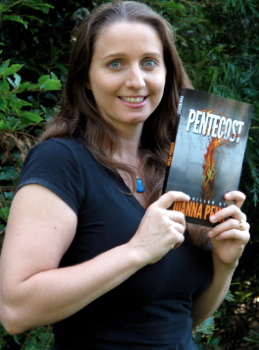
Joanna Penn holding PentecostWe’ve got an interview with Joanna Penn, an experienced blogger, podcaster, non-fiction writer, and thriller author for you today. Read on to learn about her, her work, and to get some tips on promoting your books online.

~*~

Joanna Penn is the author of four books including Pentecost, an action-adventure thriller novel. Her blog, The Creative Penn is one of the Top 10 Blogs for Writers.

You’re a blogger, a non-fiction writer, and now a thriller author! Do you want to tell us about your path, and where you’re heading in the future?

I always wanted to be a fiction author but I spent many years crippled by the thought that I needed to write prize-winning literary fiction. That daunting block stopped me writing anything until I found myself hating my IT job and not knowing what to do with my life at 33. So my first book was “How to Enjoy Your Job…or Find A New One” and that helped me to get past my own blocks. I started the blog, shared what I had learned about publishing and finally in 2009, I started writing Pentecost and now you can’t stop me!

I’m a thriller author and happy to be one, as well as a dedicated blogger and also a speaker on the new world of digital publishing and author platform building. It’s been an incredible time and I would ever have guessed a few years ago that I would be in the Top 100 action-adventure novels on the Kindle store. In the next few years, I’ll be writing more in my series of thrillers, expanding the blog and also developing my speaking further. I do define myself as being an author/blogger/speaker so eventually my day job will drop away and I’ll be able to do it full-time (yes, I’m still in IT but I enjoy it a lot more these days!)

I’m sure my readers, many of whom are e-publishing their novels, would be interested in what you have to say in From Book to Market: Internet Marketing, Sales and Promotion. . .For Your Book. Can you talk a bit about that book and give a couple teaser tips for us?

The book has its origins when I first self-published and sat in my living room with a pile of printed books and no sales. I had made the classic mistake of thinking that books = customers. Not true! I had no way to reach people so no one could buy the books. I then tried traditional marketing and made it onto Australian national TV, radio and into the papers but I still sold very few books. So I started to investigate internet marketing and blogging and soon discovered this was the way forward. It takes time but no money (or very little) so I started learning about all the ways to market online. I then found that many authors have no clue about this so I wanted to share as much as possible, hence the book (which is only a few dollars on Kindle and my website). You can also get my most up to date marketing information for free here http://www.TheCreativePenn.com/marketing/

My most highly recommended marketing strategies are (1) blogging  (2) Twitter or Facebook (3) multimedia e.g. video or audio. Start with something and stick to it for at least three months. Blogging takes around six months before you get any real benefits. None of this is instant success or get rich quick but writers are experts at the long game, so we’re used to it!

Do you find it easier to market and sell your non-fiction or your fiction? Any thoughts on indie authors being able to make a living from their e-novels?

I have found it much easier to sell my fiction on the Kindle store and there are a number of reasons for that. Kindle readers buy a lot more books and they devour a good novel in no time so there is always demand. I wrote a mainstream, fast paced action-adventure thriller and targeted a particular market (it’s also what I like to read so I know those people!). I used pro editors, cover design and book design and I did a huge launch to get the sales rolling (read all the details of the launch here).

It’s also designed as a series and people are already signing up for it now so I have it all planned out.

I definitely see authors making a full-time income from ebooks particularly if they write genre fiction for a market that is always wanting more. One of my online friends Zoe Winters is doing that  right now, and Ruth Ann Nordin and LJ Sellers are also doing a great job (interviews with these authors and more here).

These are “normal” authors, not A-listers with huge names (although they will be soon!) We also hear of others like Amanda Hocking and Joe Konrath making huge sales but also check out John Locke who is rocking the Kindle store with 99 cent thrillers. My own sales of the last nine weeks have convinced me that with a few more books I will be in the same position.

It’s a matter of writing a great story, having a cover and a price that catch people’s interest and then getting great reviews and word of mouth marketing. It’s possible for all of us to sell direct to customers now, you just need to know which customers and what they want.

In addition to blogging, you have a podcast that covers many writing-related topics. What led you to start a podcast, and what role has it played in expanding your blog audience and selling your books?

I started a podcast because:

(a) I wanted to stand out amongst all the text only blogs and offer outstanding value to people who subscribe. You can also do this with video now and I try to blend video and audio interviews.

(b)  People need to know, like and trust you in order to buy your book. If people listen to your voice for 30 minutes per week, hear your laugh and a bit about your life, they are far more likely to buy your book.

(c)  I wanted to network with other authors and marketers and I can take contacts from Twitter, have a 30 minute conversation and have a far better bond by chatting than you can do by email. It’s also a form of favor bartering i.e. people will have you back on their blog if you promote them on yours.

(d)  I wanted to learn and asking questions seemed a great way to do it. I always try to interview people I personally want to learn from.

(e)  I wanted incoming links and people always link to their own interviews – this builds page rank critical for search engine optimization

(f)   I also wanted to support other authors and so it gives people a platform to promote by offering something of value to listeners e.g. Zoe Winters and I discussing our respective launches, me for my thriller and her for paranormal romance, offers great value to listeners with ideas for their book launch but also promotes our books.

Given all these amazing benefits of podcasting, I’m surprised that so few are actually doing it!

Okay, I know you’re excited to sell some copies of your thriller, so why don’t you finish up by telling us about it?

I believe you should write what you love to read and I am obsessed with religion and psychology, especially when the two collide. I also love to travel and read fast-paced thrillers set in exotic places. I blended all this into Pentecost, the first in a series featuring ex-Israeli Defence Force psychologist Morgan Sierra, now based at Oxford University. The back story to the book is that when Jesus rose from the dead, the apostles took stones from his tomb and wore them as pendants, a symbol of their Brotherhood. These stones were empowered at Pentecost by the fire of God, enabled the Apostles to perform miracles and then were handed down to Keepers across the millennia. Now, in the present day, the Keepers are being murdered and the stones stolen by those who would use them for evil. Morgan is an unwitting Keeper of a stone and when her sister is kidnapped, she is drawn into the hunt for the other stones across the ancient Christian world – from Iran to Tunisia, Rome and Venice to Santiago de Compostela in Spain and across the ocean to America in the footsteps of Carl Jung. She is helped by the mysterious ARKANE, a secret British agency specializing in the paranormal and religious artifacts but they have other plans for the stones. It’s aimed at fans of Dan Brown, Preston & Child as well as adventure heroes Indiana Jones and Lara Croft.

For a 1 minute overview, check out the book trailer http://www.youtube.com/watch?v=qfybPq-ERoY Pentecost is available as a print book or ebook at all online bookstores. Heres the Amazon.com link.

Great, thanks for visiting with us, Joanna!

Thanks for having me on your blog!

Posted in Interviews / Success Stories | Tagged , , , , | 2 Comments

E-publishing Expenses: Are You Spending More Than You Make?

e-publishing expensesA couple of weeks ago, I wrote a post on Common E-publishing Questions, and one of them was “How much does it cost to publish an ebook?” I talked about how you’d probably want to spend some money on editing, cover art, and formatting, but I also mentioned something I feel it’s important to keep in mind: you can e-publish your book for free.
Some of the people doing very well right now started out having a friend or critique buddy edit their work, and they did their cover art themselves. And I’ve seen more than one ebook selling decently (going by the sales rank) with no cover at all.

I’m not recommending that, mind you, but I want to bring awareness to the fact that up-front expenses are optional. You can technically format your ebook yourself and upload it to Amazon, Barnes & Noble, and Smashwords (an outfit that can get you into the other ebook stores) for free.

As e-publishing becomes more and more popular, there are lots of industries cropping up to sell things to indie authors. Most, if not all, of these businesses are perfectly legitimate, selling things such as ebook formatting, distribution, cover art, advertising, etc., but their ultimate goal is, of course, to make money from your new endeavor.

As an up-and-coming author, it’s worth keeping track of expenses, because, for most of us, writing fiction is never going to be a hugely profitable adventure. While I think there’s potential to make a full-time income from e-publishing, this is going to be nothing more than a hobby for the majority of the people who get into it. That’s just the nature of the beast.

Paying Up-front for Distribution?

Because most people won’t sell a ton of ebooks, I’m leery about recommending formatting and distribution services that charge substantial up-front fees and/or tack on an annual fee for each title you publish through them (and why I recommended Smashwords the other day–they’re not perfect, but their business model means they only make money if you make money, since they take a cut of your earnings rather than charging you up-front fees). If you’re selling a lot of ebooks, then these fees won’t matter much, and that distribution set-up might make sense for you, but if you’re selling a book a day or less, it’s worth whipping out the calculator and doing some math.

Is your e-publishing hobby costing you money every month?

Advertising, usually a losing proposition

I’ve paid for several advertising opportunities over the last few months, and the best I can say for any of them is that I came close to breaking even. In most cases, it wasn’t even close.

Most of your advertising opportunities come via message boards and blogs, and are pricey (in a you’re-unlikely-to-earn-back-what-you-spend kind of way).

Message boards are almost always a losing gig, since people come to socialize rather than to buy. It’s easy to get suckered into the idea that you’re “branding yourself” by appearing lots of places. Eh. Maybe. I’ve seen some folks branding themselves one month (ads all over the place) and languishing in the one-ebook-sale-a-week club the next.

Blogs could, in theory, be a good place to advertise, but most of them cater to general ebook audiences, rather than a specific genre (so odds are against visitors actually being readers of cozy mysteries or science fiction or whatever your niche is), and most of them don’t get that much traffic, probably not enough to justify the expense of the ad (though sellers will charge whatever the market will bear, so we can’t blame them if the costs are high).

Speaking as someone who makes a living selling advertising, I’m a little floored that bloggers are charging fees of $25-$30 for daily ads on blogs that, quite frankly, don’t have many visitors per day.

For a little perspective, I charge $100 for a sponsored post and $50 a month for a text link in the side bar on my home-and-garden blog, which gets over 100,000 visitors a month in a very specific niche. Granted that’s ancillary income (most comes from Adsense, which only charges an advertiser if the ad is actually clicked), but those are pretty typical figures for the industry. Also, in the home-and-garden niche, a merchant stands to make a heck of a lot more from a sale than we authors do from the sale of a $2.99 ebook.

With the exception of sponsored blog posts (which live on perpetually and should include keyword-based links to the advertiser’s site because people largely buy these for search-engine-optimization purposes), I’d never seen anyone charge for daily ads until I started surfing around blogs catering to indie authors.

I don’t begrudge those bloggers anything–hey, I’ve got the entrepreneurial spirit too!–and I’ve even purchased ads to support them since many of them are indie authors themselves, but, again, it’s worth being aware of the cash you put out versus the cash you take in. Paying $25 for a daily sponsorship when your ebook is 99 cents (thus making you 35-40 cents per sale) on a blog that gets 100 visitors a day, most of whom probably don’t buy books in your genre… is unlikely to make you enough money to cover the expense of the ad.

If you do want to advertise, I’ve had some luck with Goodreads. I’d also advertise in a heartbeat on a popular genre-based blog.

At the end of the day, I think you can do as much for yourself, however, by giving away review copies, getting involved in social media (Twitter, Facebook, etc.), and getting to know other bloggers and offering to guest post for them (I’ve written on Guest Blogging Your Way out of Obscurity), as authors and readers are often open to helping each other out this way.

I know I’ve rambled a bit here, so I’ll close with my reminder that you technically can publish your ebook for free, and all expenses are optional. While I believe you should have cover art, a professionally edited manuscript, and decent formatting, most further expenses are something to be weighed. If you can afford to throw away money, then, hey, try everything (I’ve certainly tried a lot myself!), but we’re probably all better off approaching this like a business and watching what we spend carefully to make sure the earnings at the end of the month justify those expenses.

Posted in E-publishing | Tagged , , , | 6 Comments

Can a “Normal” Author Make a Living E-publishing?

While I was wondering what to blog about today, someone (thanks, Kevin Tross!) sent me an email asking how well I’m doing with my ebooks and if there’s hope for normal authors (not the Amanda Hockings, JA Konraths, Brian S Pratts, and other folks who, some feel, are doing so well in part because they got in early and/or brought a big back-list of books to the table so they could dump 17 ebooks into the marketplace from the get-go). What if you’re coming into the game now, when there’s a lot more competition than there was even a year ago, and what if you’re publishing your first novel or two?

I guess I’ll put myself out there as a “normal” author (which is funny since I’m a big geek and people don’t call me normal very often!) and talk about how I’m doing so far.

My results may even be sub-normal, since I write cross-genre stories (a little urban fantasy, a little science fiction, a little steampunk, a little high fantasy, a little romance…you get the picture), which aren’t the easiest things to categorize and promote. Even with straight-up science fiction or high fantasy, you’re not looking at popular genres. I also don’t know squat about art, so getting cover art done that people actually find appealing has been an ongoing challenge.

Before I ‘fess up my sales numbers (I’m nowhere close to making a living at this), let me point out that I published my first ebook in December 2010–a year from now, I’ll have more books out, and higher numbers, I hope!

I’ll also point out that, back in 2004, it took me six months before I started making any money (and that was less than $200) with my websites and blogs (my day job for the last six years). So, I come into e-publishing with the perspective of this being a long-term game and not something you get into if you’re hoping to make a living overnight. My sales numbers have consistently grown each month since I started, and I can tell already April will be better than March. I’m grateful to the folks who have purchased my work thus far, and I hope many more will find me in the future!

Okay, enough hemming and hawing. Here are the numbers:

My sales numbers for March, 2011

Amazon: ~ $390 (they haven’t come out with the March report yet, so this is an estimate–they show $600 for the last six weeks)

Barnes & Noble: $254

Smashwords & Partners: $80 (also an estimate, since they report quarterly, and I’m too lazy to go add up individual sales for March).

Total: $724

Hey, it’s better than a paper route! 😀

Hope for the mid-list ebook author

While my numbers aren’t going to blow anyone out of the water, I can see the potential for growth, and I think it’s heartening to know you can make some money as a “mid-list” ebook author (I’m not on any bestsellers lists anywhere, and I haven’t dropped the price of my novels to $0.99 to see if I can sell piles of them at a next-to-no-barrier-to-entry point).

On the Kindleboards and on a few author blogs, I see people doing better than me, so you may very well out-perform me. I’m a little lazy when it comes to marketing (I do some things regularly, such as guest posting and blogging here, but I’m honestly not very social online, so I’m not out there networking with the important people, racking up a thousand posts on the big e-publishing forums, or schmoozing everyone with a Goodreads account).

A final point on “making a living” as an indie ebook author

The initial question that spurred this post was, “Can you make a living at this?” One of the tough things about answering that question is that everyone has a different notion of how much money it takes to make a living. Where you live, how many incomes contribute to your household, and your lifestyle all factor into what you consider a decent income.

I remember someone claiming to make a living writing articles for eHow once, and I later saw she was making $800 a month. Hey, great for her, but in the Seattle area, you’d be lucky if that covered half a house payment. In New York, that’s probably what it costs to take the family out to eat.

That said, sure, I can see the potential for normal authors to make a living via e-publishing. The biggest thing you can probably do for yourself is get a lot of work out there. More ebooks mean more chances for people to find you, and once you turn someone into a fan, they’ll go on to buy more of your work.

Final notes:

If you are eager to make more, sooner, non-fiction is historically more profitable. If you can teach someone how to solve a problem, you can make a lot. If that’s something you’d be interested in, check out “Kate Harper on Making Money Publishing Kindle Articles

I make a little extra from this blog (and my Kindle Geeks one) by sticking in affiliate links to ebooks when appropriate (including my own!). For more information on that, check out my series on How to Make Money as a Book Blogger.

Update (Sept. 7th, 2011): I made $3,000 in August. I had three novels, two novellas, and some short stories out at that point. I’m looking forward to seeing what happens with the next release, later this fall!

Posted in E-publishing | Tagged , , , | 29 Comments

5 Reasons to Publish Your Ebooks on Smashwords

Smashwords LogoSmashwords is an ebook marketplace and distributor you may not have heard of if you’re new to e-publishing, or if you’ve primarily focused on the Kindle so far. Or maybe you’ve heard of it, but you didn’t get the appeal (or got frustrated with the way ebooks are uploaded there).

In today’s post, I’m going to give some reasons why you might want to check Smashwords out, or give them another chance if you’ve tried and dismissed them in the past.

1. Smashwords can get your ebooks into marketplaces you can’t on your own.

Amazon & Barnes & Noble are very friendly to indie authors, and uploading an ebook to their marketplaces is the work of a few minutes. You don’t need an ISBN or anything to get listed in those stores. Apple is less friendly (ISBN required and hoops to jump through), and, as far as I know, you can’t even get into Borders or the Sony Reader and mobile app stores.

Smashwords can get your ebooks into those places, and you can always opt out of distribution to B&N and Amazon if you want to handle that on your own (I do with one exception–see the “bonus” reason down below).

2. Smashwords pays a high royalty on ebooks sold through their site.

Smashwords gives you 85% of the ebook sales price, which is a higher cut than anyone else offers. Granted, they don’t have the eye traffic an Amazon or B&N gets, but if you actually put forth some effort, you can certainly sell books there, and it’s not as if it takes away from your sales elsewhere.

I uploaded my free short story, Ice Cracker II, there, and have been getting sales from Smashwords ever since. Also, if you’re someone who likes to promote by conversing in forums, the folks who hang out at MobileRead have all sorts of different e-readers, and many of them use Smashwords (I asked in a post a couple months ago), since it provides all the ebook formats in one place. People can even grab pdfs there if they don’t use an e-reader.

Oh, by the way, that 85% applies to ebooks of any price (as opposed to Amazon and B&N, who will give you a smaller 35-40% royalty on ebooks priced less than $2.99.

3. Smashwords lets you upload free ebooks (and distribute them too).

As an indie, you can’t currently upload anything for less than $0.99 at the Amazon and B&N stores, but, as I’ve written about before, giving away a free ebook can be a great promotional tool.

I hardly sold any ebooks at Barnes & Noble before my freebie appeared there, but I’m doing much better there now, and I’m sure that’s helped.

4. Smashwords has a more appealing affiliate program than other bookstores.

In my post, How You Can Make Money Promoting My Ebooks (and other people’s too), I told bloggers how they could make a few extra bucks with affiliate programs. That’s where they get a cut of the sales price for books sold through links on their sites.

On Amazon and B&N, authors have no say as to how much they can offer their affiliates (it’s a flat 5-7% or so). On Smashwords, you can offer anything from 0 to the default of 11% on up to 81.5%. I have all my ebooks set for 75%.

You may be thinking that’s nuts–why would you want to give someone else some of your money?–but keep in mind these are ebooks that wouldn’t be sold at all if not for that “someone else.” You’re giving that person a reason to promote your work on their site and help you get the word out. And, hey, if it’s a Book 1 in a series, the reader might come back and buy several more books for which you’ll get the full cut.

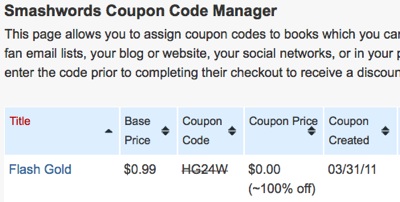
5. Smashwords’ coupons make it easy to give away ebooks.

Whether you’re giving away review copies or freebies to contest winners, it can add up if you’re sending e-gift certificates for your books through Amazon. Also, not everyone is going to be a Kindle owner, so it’s good if you can give away other formats as well. Sure, you can always send the files directly to people, but I’ve run into more trouble than you’d think with that from folks who aren’t sure how to get a file from their inbox to their e-reader.

You can also create coupons that are good for a certain percentage off, which may be something you’d like to try if you have a higher priced ebook, or you’re not looking to give your work away for free.

Bonus reason: If you’re a fan of publishing 99-cent ebooks, you’ll make more from Barnes & Noble sales via Smashwords

I only recently found out about this. On accident, I ended up with my 99-cent Ice Cracker II (and other stories) collection on Barnes & Noble via Smashwords distribution. Instead of getting the usual 40 cents I get for a 99-center uploaded through B&N’s PubIt, I get 60 cents per sale. That’s apparently the across-the-board deal Smashwords has with its partners.

So, if you’re selling a lot of sub-$2.99 ebooks at B&N, meaning they don’t qualify for the 65% royalty, it might behoove you to get them listed through Smashwords instead.

Any thoughts? Love Smashwords? Hate them? Both?


Posted in E-publishing | Tagged , , | 17 Comments

How Do You Get Book Reviews? (and related questions)

Book Reviews for Indie EbooksIt’s no secret that reviews play a big role in helping people decide whether or not they should buy a book. It’s a form of social proof–in the absence of other information, we’ll rely on the opinions and actions of others to help us figure things out.

Whether it’s true or not, a book with no reviews implies nobody is buying it. Even a luke-warm review may be better than no reviews, since it suggests people are at least buying the book! Good reviews, are, of course preferable.

A couple questions that come up frequently are “Should you pay for book reviews?” and “How do I get people to review my book?” I’ll chime in with my opinion on these questions, which you’re welcome to take with a grain of salt, since I’ve been e-publishing all of four months.

Should You Pay for Book Reviews?

Known book reviewers tend to be seen as authorities, and reviews from them can have more sway than reviews from one’s peers. They can also perform double duty, helping to get the word out about your book. I was tickled when Liviu Suciu over at the Fantasy Book Critic reviewed Encrypted on his popular blog.

That said, I’d be leery of paying for reviews. I’m not sure what reviewers offer paid services, but I’ve heard some of the big internet-based ones are starting to go this way.

While I can see where busy book reviewers with well-established reputations would feel justified charging for their time, there is a stigma associated with paid reviews. Potential buyers might think the reviewers only gave the book a thumb’s up because they were paid to do so, and my guess is it’s tough, as a reviewer, to be totally impartial when someone has given you payment.

That said, it’s your call. Most readers probably aren’t going to be up on which outfits are charging for reviews.

I don’t, however, think this is necessary. If you’re an indie author, you’re already spending money on cover art, editing, and the like. I don’t think this is a good investment. Besides, there are other ways to get reviews.

How Do You Get People to Review Your Book?

Okay, so you’re over the paid-review idea. But what are your other options when you’re a brand new author and nobody knows your books exist yet? Glad you asked. Here are a few:

Give away review copies

This is how I got my early reviews for Encrypted. You can go onto Facebook (there’s a Kindle and a Nook page) or to the Kindleboards or Nookboards and say you want to give away copies to anyone who’d be willing to review the ebook. For best results, do a nice writeup in the post, giving the blurb and showing the cover art.

Be prepared to give away at least 10 copies to get 1 review (it’s just the nature of things–people are busy and won’t necessarily get around to reading and reviewing your book).

For us ebook authors, the cheapest way to give away review copies is to send the epub or mobi files to people or to provide them with Smashwords coupon codes for 100% off.

Submit to review sites

It can be tough to find book review sites that are interested in ebooks and indie authors, but there are some. There are indie-specific review sites as well, though, unless your work has broad appeal, I suggest focusing on bloggers who review in your genre rather than bloggers who solely review indies.

First off, it’s more of an accolade to be talked about alongside established authors in your genre. Second, your target audience isn’t necessarily someone who prefers indie authors but someone who prefers the genre you’re writing in, regardless of the publication method.

For me, an example was the fantasy site I mentioned. Since they review a lot of traditionally published fantasy and have been “in the biz” for a while, it was great to be reviewed there. I sold quite a few extra copies of Encrypted that week, and I snagged a nice sentence I could stick into the ebook’s product description. (Thanks, Liviu!)

Ask your readers to leave reviews

This is the best way to get reviews on Amazon, Barnes & Noble, etc., and these are the perfect people to review your book. Unlike book review sites, or even folks on message boards, they’ve self-selected themselves as your target audience by buying your book. I’d argue that you might not even want reviews from people who aren’t in this demographic.

Of course, you may need to try the other tactics (i.e. giving away review copies) so you can get those first couple reviews to help convince these folks they want to grab your book!

As for getting your readers to review, you can put a note in the afterword, asking them to chime in if they enjoyed the book. Not everybody’s going to do it (heck, I don’t even do reviews any more–too busy!), but you’ll undoubtedly get more people if you ask than if you don’t.

Update: I blogged about this again on my self-publishing site at How to Get Book Reviews. My methods, of course, remain the same, but I mentioned BookRooster too, an outfit some folks have used as a shortcut.

Posted in E-publishing | Tagged , , , , , | 7 Comments

How to Make Money as a Book Blogger Part 5: Affiliate Links

Amazon affiliate earnings

It’s time for a new post in the “How to Make Money as a Book Blogger” series, and today we’re getting to the good stuff, the actual making of the money! In previous installments, we set up our blog, and we worked on building traffic to it. Today we’re going to talk about signing up for affiliate programs and adding affiliate links to our posts.

Overview of Affiliate Marketing

We’ve touched upon this in earlier posts, so just a quick blurb here:

Affiliate marketing is the internet version of getting paid on commission. You sign up with Amazon, Barnes & Noble, Borders, or other online sellers, then promote books on your blog by including special affiliate links (on the surface, these links don’t appear any different from regular links, and they can go to specific book pages, to searches, or to category pages in the bookstore).

If one of your readers clicks on the link and goes on to purchase the book or ebook, you’ll receive a percentage of the sales price (it varies from retailer to retailer, but 5-7% is about average for books). You’ll also get a cut of other purchases the buyer may make during that shopping trip (with booksellers, there’s usually a 24-48 hour window during which you’ll get credit).

Signing up for an Online Bookstore’s Affiliate Program

It’s not hard to sign up to be an affiliate, and it doesn’t cost anything. As long as you have a website, especially one that’s book-related, you shouldn’t have trouble being accepted into affiliate programs for the online bookstores.

Here are the sign-up links for the major ones:

You can also sign-up at Commission Junction if you want to browse around and see what other outfits have affiliate programs. CJ acts as a middleman, categorizing and listing hundreds (probably thousands) of online stores.

Adding Affiliate Links to Posts

When it comes to making sales, text links inserted directly into a post work best. Amazon, in particular, has a lot options (product previews, banners, kindle chicklets, etc.), but I recommend sticking to old-fashioned text links.

After fifteen years of staring at banner ads on the web, we’ve all gotten good at ignoring them, and funky widgets tend to clutter up a site, but links directly in the content of the post are a different story. Since we’re presumably reading the words on the page, we’re more likely to notice and click on a link in our eyes’ path.

Most affiliates have wizards of varying degrees of sophistication that will guide you through creating the links you want. Smashwords keeps things the simplest. Scroll down to the bottom of any of their book pages, and, if you’ve signed up for their affiliate program, you’ll see a link you can simply copy and paste (it’ll already have your affiliate ID embedded).

Tips for Selling More Books Through Your Affiliate Links

In the third part of this series, I suggested some “what to write about” ideas, such as book reviews, new releases, and lists of books by category (i.e. 99-cent ebooks, mystery bestsellers, medical thrillers).

One of the great things about book blogs is you’re naturally going to attract people who love to buy books. They’ll already have accounts set up at Amazon or other popular stores, so there aren’t a lot of barriers between them and making a purchase.

Reviews traditionally do a great job of converting (turning clicks on links into sales on the other end) for you. If you’re going to do a review, you’ll want to include at least one affiliate link to the book in the post. Unless you’re participating in an author’s blog tour or some such, you may want to avoid linking to the author’s various sites and social media pages. It’s up to you, but the fewer things in the post there are to click, the more likely people will click your affiliate links (you can always link to favorite authors in a blogroll list over on your menu).

You don’t need to create a link every time you mention the book, but once near the beginning and then at the end improves the odds of someone checking it out.

Can You Still Make Money if You Tell People to Avoid the Book?

You may wonder if it’s worth adding affiliate links when your book review isn’t going to be flattering. My response is: sure, why not? Sometimes people’s tastes will be different than yours, and they may want to check out the book anyway. Or, they may click on the link to see if the reviews at Amazon agree with yours, at which point they may wander off and buy something else at the store. You’ll still get credit and make a percentage of the sale.

Also, if you post a review suggesting folks steer clear of a book, you could always end with a couple of recommendations (with affiliate links, of course) to similar reads you did enjoy.

Even if you liked a book, don’t feel you need to make it sound ultra scintillating to encourage people to buy it. Readers will appreciate it if your reviews are balanced, raising good and bad points. We tend to trust reviews like that more, and it’ll be clear you’re genuinely interested in helping people find enjoyable books, not just sell things.

Don’t Forget

I want to emphasize again that no matter how brilliantly you place your affiliate links or how great of reviews you write, you won’t make any money if you don’t have anybody visiting your site. Lots of great content built up over time plus lots of visitors every day is the secret to making money from a blog.

I’ll talk about adding advertising to your book blog in the next post in this series (hey, there’s no reason to limit yourself to one source of income!), but, in the meantime, you may want to check out How You Can Make Money Promoting My Ebooks (and other people’s too), a post I did a couple of months ago. It talks more about Smashwords, in particular, and how to find authors offering high affiliate percentages over there.

Until next time!

Posted in Tips and Tricks | Tagged , , , , , , | 13 Comments

New Promotion Opportunity for Children’s Ebook Authors

Promoting children's ebooksSince my first ebook was a collection of short stories for middle grade readers, I like to keep up with the children’s ebook market. While you’re still a lot more likely to find e-readers in the hands of adults than in children, more and more kids are gaining access to iPads, Nooks, and Kindles. That means a growing market for electronically available children’s books.

If you’re penning ebooks for kids, you just have to help those young readers find your work. I know that’s easier said than done, but there’s at least one new spot where you can submit your stories for promotion:

Daily Cheap Reads Junior is an offshoot of the popular Daily Cheap Reads blog, and it is dedicated to showcasing stories for children, tweens, and teens.

“Junior Edition books are in three age categories: children, tweens and teens. We rely on the publisher to identify the best age group for each book. We take seriously the responsibility of making sure you have good reading material, so we will try to filter everything that goes on the site so that it is appropriate. If you find objectionable material, please let us know.

We post book reports on books that we have read, so you can check out what we think and see if you might be interested in reading that book too. In the Old School section, we feature classic books that have stood the test of time, as well as books that our site readers enjoyed in their childhood.

While the blog predominantly features traditionally published ebooks, they are open to sharing finds from indie authors. A review of my “Goblin Brothers” stories will appear there later this week.

All ebooks must be $5 or less to be considered.

You can reach Paula, the blogger, at jrdailycheapreads AT gmail.com. She says, “I will respond, but sometimes it takes a while as I get about 25 e-mails a day.  And with a full-time job and the sites, I don’t have much excess time!”


Posted in Book Marketing | Tagged , , , , , | 5 Comments