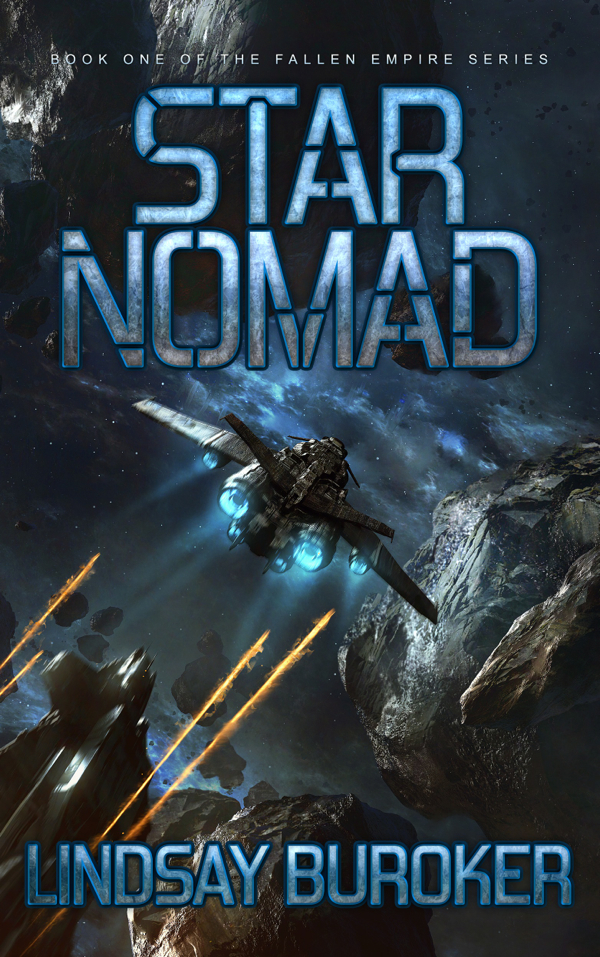

The Emperor’s Edge: 1,000 Ebooks Sold, New Cover, and Other News

It’s a rainy Friday afternoon, so I thought I’d do a quick update post for those who actually read this blog because of my ebooks (all three of you, you are awesome!) rather than an interest in e-publishing in general.

My first novel, The Emperor’s Edge, has officially sold 1,000 copies. This happened toward the end of April, meaning it took about four months. A thousand sales isn’t much compared to some of the numbers you see ebook authors post, but I’m tickled, and let me take this moment to thank you if you bought a copy. Thank you!

Since EE sells for $2.99, I earn roughly $2 per sale, meaning the book paid for itself (cover art, editing, formatting, advertising) a while ago. It also seems to be at the point where people find it on Amazon, and I get sales there, whether I’m actively promoting it or not. It’s nice to reach these milestones.

New Cover

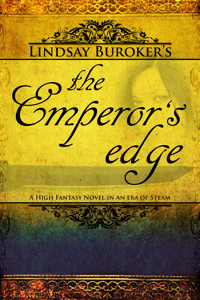
I’ve never been that crazy about the original cover for EE, which was a reflection of the fact that I didn’t want to spend a lot of money on “start up” costs (December, in addition to being the month I released EE, was my first month e-publishing at all).

I thought the artwork itself was fine, but not a reflection of my characters. Folks also had a love/hate reaction toward it, which isn’t always a bad thing, but I thought I’d go for something more neutral. Hey, the walls in my house are white and beige. What d’ya expect?

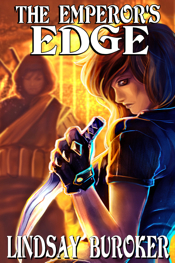
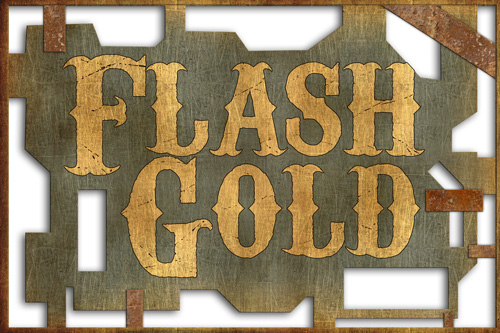
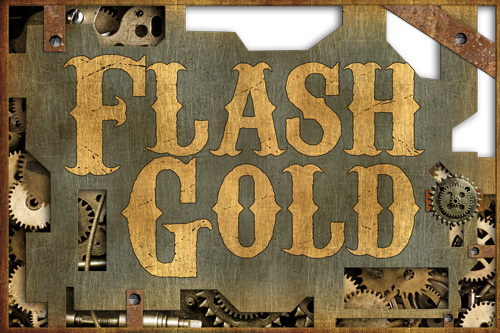
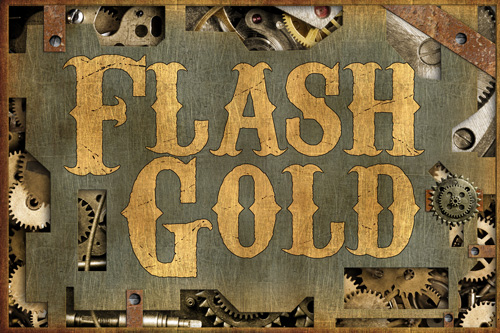
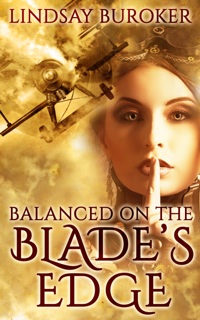
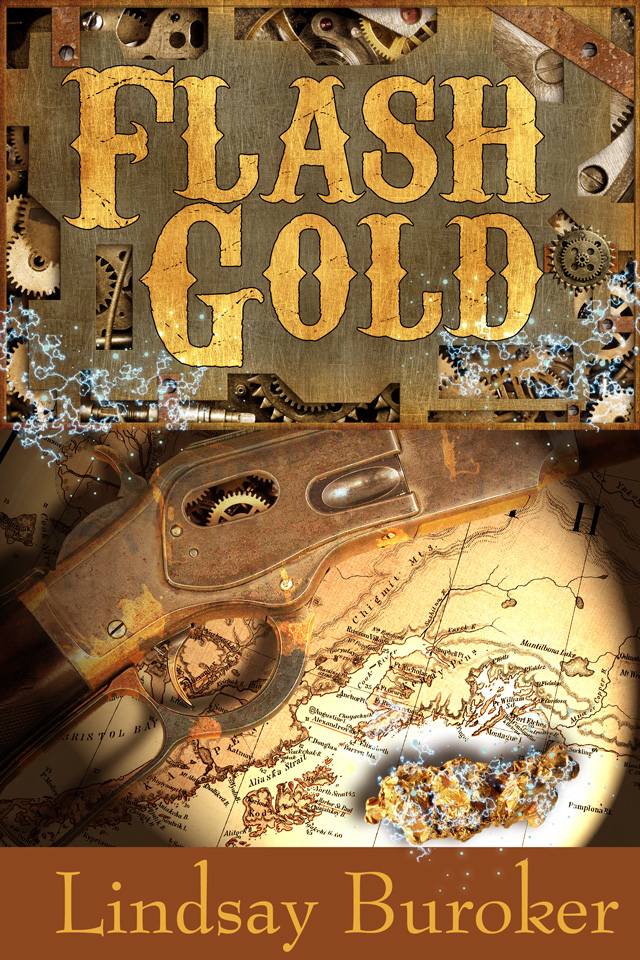
After Glendon Haddix did the cover for Flash Gold, I decided to ask him to take a stab at it. Here’s the new version (and the old) in case you’re curious:

I haven’t updated the covers in the actual ebook files that are out there yet, but I’ll do that when I release Book 2 next month. Speaking of that….

Book 2 News

I’ve handed the last chunk of Dark Currents off to beta readers (thank you, ladies!), so I believe I’ll make my goal of publishing the second book in the series in June. One of the nice things about e-publishing is once you get the manuscript the way you like it, it doesn’t take long to get your ebook out there.

I haven’t come up with a blurb for it yet, but there’s plenty of action, a bit of a mystery, some new (nasty!) monsters, and some steampunk-y machines and artifacts making things tough for the gang. Also…Sicarius gets to crack a joke or two (albeit very dry ones).

I hope folks will enjoy it!


Posted in Ebook News | Tagged , , | 16 Comments

How to Make Money as a Book Blogger Part 6: Advertising

Advertising on a Book BlogIt’s been a while since the last post in this series, so here are the threads to the earlier entries in case you’re coming in new or want a refresher:
Now that we’ve got some traffic flowing to our blog, and we’re making a few dollars with affiliate marketing, we may want to look into another way to make money: selling advertising.

Types of Advertising

We’ll look at third-party pay-per-click ads, third-party pay-per-impression ads, and a variety of ways to sell ads directly to a client (most likely authors).

Third-Party Pay-Per-Click Advertising

With third-party ads, someone else handles the interactions with the client, and you simply get a snippet of code to embed somewhere on your blog. Naturally the middleman takes a cut of the earnings, but there’s a lot to be said for the set-it-and-forget-it nature of these ads. No need to worry about billing or customer service.

As the name suggests, with pay-per-click ads you only make money if a visitor clicks on the ad. This makes things a little easier than with affiliate programs, where you only get paid if there’s a sale, but you might only get a couple of pennies for a click (in industries with high-end products, where profit margins are greater, per-click-earnings tend to be greater, but books alas are not that industry).

As you can imagine, you need to sign lengthy terms of services in which you promise not to click your own ads or encourage others to click them for you (that’s a one-way ticket out of the program).

Pay-per-click ads can be text-based or image-based or a combination of both. Examples include Google Adsense and Chitika. Sign-ups are easy, and they’re not usually that picky on what sites they accept.

One excellent aspect of this type of advertising is that the third-party services send bots to crawl your site, and they attempt to match the ads closely with the content on the page. People are far more likely to click ads that are relevant.

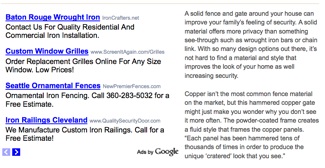
Note: pay-per-click ads work best (earn you more) when you’re willing to display them prominently near the main content of your page (i.e. in the blog post itself or right next to it, not over in a side bar or anywhere people would have to scroll down to see). If you’re not willing to “ugly up” your book blog with ads stuck right in the middle, this method may not be worth pursuing.

google-adsense-placement-example
Google Adsense Block Displayed Prominently

Third-Party Pay-Per-Impression Advertising

The web was built on banner advertising, and this is usually what you’ll find in this arena. Again, you’ll sign up with a third party, and you’ll receive a snippet of code to embed into your blog.

Payment is based on the number of times the banner is seen, and clicks aren’t a part of the equation. Don’t expect to get paid a lot though, as it’s usually something like a buck or two per thousand impressions. Those with high-traffic sites are rewarded with this type of advertising.

Placement is usually at your discretion, but you’ll earn more if you display the ads prominently (yes, that’s a theme with advertising), such as at the top of your blog.

An example is Project Wonderful.

Selling Ads Directly to a Client (AKA authors)

This involves the most work, but it also offers the highest potential for earnings since you’re cutting out the middle man. You also have the most flexibility, since you decide whether you want to display text links, banner links, include blurbs in a newsletter, or perhaps try sponsored posts where your blog post itself promotes an author’s book.

With these ads, you usually charge by the month or day (you need to have a really popular book blog to make a daily ad worthwhile for authors!). To simplify things for yourself, you might try offering discounts to people who sign up for multiple months at a time. This means less time spent on rotating ads and worrying about billing and such.

About that billing, it’s up to you to handle it when you’re selling ads directly (Paypal is popular and inexpensive for set-up). You’ll have to deal with customer service too. Oh, and it’s also up to you to find clients! (Once your site becomes popular, some of them will find you, and all you’ll need is a page with advertising details and information on how to sign up.)

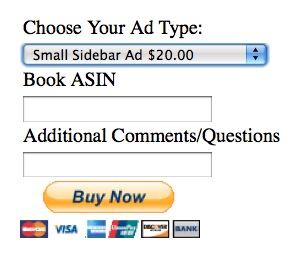
You can make things easier on yourself by automating the sign-up area (i.e. create a form where users simply select the type of advertising they want and click a “buy” button that takes them to Paypal). If you’re not techy, you can hire someone to do this for you.

Red Adept is an example of a book blogger who has an automatic sign-up for advertising, so check out her page for ideas.


advertising-form-example
Red Adept’s Sign-Up Form

There you have it: three ways to make money selling advertising on your book blog. I advise waiting to implement advertising until you have a decent amount of daily visitors, otherwise you’ll have ads cluttering up your site and you’ll be making next to nothing.

Good luck!

Posted in Tips and Tricks | Tagged , , , , , , , | 1 Comment

Ebook Cover Art Tips with Designer Glendon Haddix

I’m sure it won’t be a surprise to anybody that art isn’t my specialty. I love finding cool examples of ebook cover art, but I sure couldn’t tell you how to design any (or even what to tell to a designer to get something you love). Fortunately, I’ve got a little help for today’s post.

Glendon Haddix from Streetlight Graphics is here today (he’s the fellow who did the art for my novella, Flash Gold, and he’s reworking the cover design for The Emperor’s Edge and its sequel (coming next month). He’s going to answer a few questions about designing ebook covers, so without further ado…

Interview with Glendon Haddix

Do you want to start out telling us a bit about yourself and how you came to be a cover artist specializing in working with indies?

I’ve been working in engineering for manufacturing using 3D CAD (Computer Aided Design) for 15 years. In 2003 I decided to pursue my passion of graphic design. I started a little website, www.streetlightgraphics.com, to showcase some of my work. After folks found out about it, I started getting requests for this and that. A logo here, business cards there, poster design, tattoo art, websites, and anything even remotely related to graphics.

A little over a year ago my wife, T.L. Haddix, wrote her first book, and she asked me to do the cover. It was like everything else I did, I read all the technical specs and jumped right in. The result (in my opinion) was a clean professional look. Once a few people saw her cover word started spreading. I did one here and one there and it started building. Right now I’m looking to add people to the current team due to demand. I love doing this!

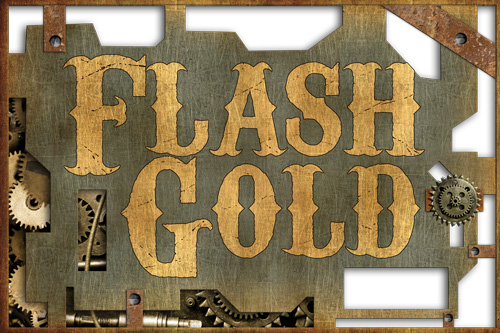
What’s involved in designing a cover? For example, how did you go about coming up with ideas for Flash Gold? I know I threw some elements from the story at you, but you found that cool cog-filled steampunk header on your own. 🙂

Every cover is different, which is what I love about doing them. I start by reading what the story is about and a chapter or two. I wish I could read the entire book, but at the current rates we charge, that’s just not possible. After that usually an idea or two pops in my head and then I pop in some heavy metal and do a mock-up in Photoshop. Send it to the client and ask them if I’m hot or cold and it goes from there. Sometimes I nail it right out of the gate and sometimes it takes several tweaks back and forth.

Flash Gold was fun. My wife and I had made dental appointments on the same day and while she was getting her work done, I sketched the idea out on my trusty clipboard. I could see it in my head. I knew that being a steampunk theme, cogs and gears were essential and needed to be plentiful.

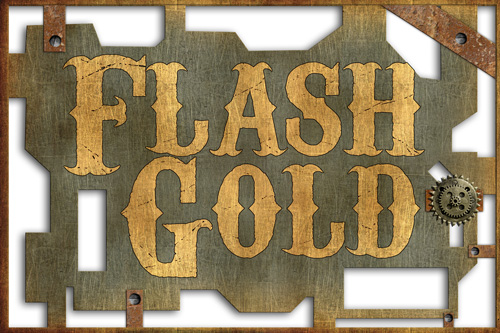
The image I could see in my mind didn’t exist in the real world, so I created it from 10 different stock photos and various other images I drew using Photoshop. (The entire cover used 14 different images not counting the things I drew in, like the lightning.) You can see the progression of how I drew the header it in these images:

What are some of the mistakes you see people making when it comes to cover art (no poking fun at mine now *g*)?

I feel a little guilty answering this one, but mainly what I see is the covers don’t look professional. Text not aligned when it should be, poor choice of fonts, ultra super fancy illegible text, and the overall design creates confusion as to what genre the book is in.

How much does genre impact the sort of cover you design?

Huge. It’s always on my mind. A bloody hand is a cool image, but doesn’t fit for historical romance. The genre is super important. Books that cross genres are the most difficult for me to do, because if not careful, it creates a mixed signal as to what type of book it is.

Can you give us some tips for people who can’t afford to hire a cover artist and need to put together something themselves?

Research, Practice, and Persistence. Your first foray into cover design may very well look just awful. If it does, scrap it and try again. Read books, learn your graphic design software, and look at other covers as examples.  Also, Gimp is a great, freeware program to download.  It has a lot of the same elements of Photoshop, which can be quite pricey.

For those who are looking to hire a cover designer, can you tell us a bit about your company and what all you guys handle?

We are a very small company and have slowly been building up a team of talented individuals who strongly believe in providing quality work at an affordable rate. All members of our team provide their work on a contract basis, so we don’t have the overhead of a typical design studio. And we are always on the lookout for talented artists, designers, and web gurus to add to the team.

After seeing what my wife goes through just to publish a book (cover, promotion, cover design, ads, blogs, websites, etc.), I decided to change the focus of Streetlight Graphics to help her and the ever growing independent author community. Our primary mission is to provide an affordable one stop shop for authors to get all the services they need so they can spend their time doing what they love…WRITE!

Currently Streetlight Graphics does E-Book covers, print covers, interior E-book and print formatting, banner ads, logo design, and just about anything else related you may need. We have some great package deals where you can get several of these combined at a great price. We don’t do editing, but we recently made an arrangement with Red Adept’s editing services so all Streetlight Graphics clients who are new to Red Adept and who buy an EBook cover from us are eligible for a one-time discount of 10% on her editing services on that same book we did the cover for. And if I may say, Red Adept does fantastic work.

That’s it guys. If you have questions for Glendon, leave them below, and I’ll let him know. Thanks for reading!

Posted in Tips and Tricks | Tagged , , , , | 5 Comments

What It Means to Be an Independent Author

Author/Publishing HumorShould you go indie? Should you pursue the traditional publishing route?
I thought I’d go over some of the pros and cons today for those on the fence. I’m obviously biased since I chose to e-publish, but I’ll try to “keep it real.” Please chime in below if you want to disagree (or agree!).

What It Means to Be an Indie Author:

More money…maybe

As things stand today, thanks to the economics of e-publishing and the royalty rates the big booksellers offer, you’ll make a lot more money on each book sold. I mentioned this blog post last week, and I’m sure I’ll reference it often because it’s definitely worth a look: Robin Sullivan at Write2Publish does the numbers, comparing the earnings of two mid-list fantasy authors, one self-pubbed and one traditionally pubbed, with a similar number of books out. We’re talking in the neighborhood of $2,000 a month vs $10,000 a month.

That said, you are completely and utterly on your own for selling your books. Especially in the beginning, you’ll feel like you’re putting way more effort into promotion than you’re getting back in sales. It’ll seem like you have to personally sell each and every copy because nobody’s finding your work on Amazon on their own. Certainly, nobody’s going to chance across your book on a shelf in a local bookstore.

As I’m learning, you don’t have to master every marketing avenue, but you do need to find some tactics you don’t mind pursuing and…pursue them. Relentlessly. And hope that some day you reach a tipping point where your books are high enough on sales charts that readers find them on their own. Not everybody gets to that point.

The freedom to write whatever you want at whatever length you want…maybe

As an indie author, you don’t have to make sure your paranormal romance falls between 70,000 and 90,000 words because that’s what agents want, thank you very much. If you’re publishing ebooks, you don’t even have to stick to novels. My 18,000-word fantasy story, Flash Gold, is about a quarter of the length of a novel, so I’ve priced it at 99 cents (as an e-publisher you can choose whatever sales price you wish) and many folks are checking it out (thank you). Other indie ebook authors are publishing even shorter stories.

When it comes to content, you needn’t stick to formulas or write to a potential agent’s wishlist either. There’s a big world out there, and just because your book might not have bestseller written all over it, that doesn’t mean you won’t find a readership.

That said, if you want to sell books and continue to sell books, you do have to please your readers. Unfortunately, I can’t give you the secret formula on how to do that. You’ll know, when you start getting reviews from people you don’t know, if you’re hitting the mark.

Total control over your destiny…maybe

Because you are on your own for the story and the marketing, much of whether you succeed or fail lies in your own hands. This is comforting for some (those with the entrepreneurial spirit) and terrifying for others.

But even the entrepreneurs must realize that luck is going to play a role at some point. Sure, you can help things along by working hard at promotion and writing great stories, but there will be times that luck helps (or hinders) you: an influential reviewer writing up your book, an A-list blogger linking to your site, a bargain books site mentioning your 99-cent ebook, etc.

The more you put your work out there and make people aware of it, the more likely it is good luck will find you, but some people can do everything right and never “get lucky” (though, thanks to those higher royalties I mentioned, even modest sales can lead to a nice part-time income).

Being taken advantage of…maybe

When you’re struggling to get your book noticed, you’ll see a lot of opportunities that sound great but that might end up costing you far more money than they’re worth in sales.

There are lots of new companies cropping up that are jumping at the chance to help you get your ebooks published and out to the world. And there are tons of forums, book sites, and blogs that offer advertising options. None of these guys are out to scam anyone, but there’s doubtlessly a lot of truth to that old saying that the most money made during the Gold Rush was by the folks selling picks and shovels to the prospectors.

If you’re choosing to be an indie, you’re choosing to be in business for yourself, and (successful) businesses track their spending carefully. To stay afloat, they must ensure earnings outweigh expenses.

A beating on your ego…probably

  • You’re going to get bad reviews. (Hopefully you get plenty of good ones to balance things out, but it’s still hard to read criticism, especially when you sense there’s truth to it).
  • You’re going to see other indies who started at the same time or after you making it big while you’re still struggling to make sales. (Maybe you feel you’re doing well when you measure month-to-month progress, but it’s hard not to get down when you see others doing so much better.)
  • Somebody’s going to say bad things about you somewhere online. (This is especially true if you have a blog and state your opinions on it — chances are you’re going to rub someone the wrong way sooner or later.)

Of course, those points about ego are relative to traditionally published authors too. For good or ill, when you choose to put yourself out there, you put yourself at risk. But, hey, we all know it’s the people who take risks who reap the rewards.

Whichever publishing path you take, good luck!

Posted in E-publishing | Tagged , , , | 15 Comments

3 Indie Fantasy Authors Making Thousands a Month E-publishing

indie fantasy author BV Larson's first ebookQuite a few folks find this blog searching for information on how much money indie authors are making e-publishing. Is it possible to make a living? Which genres sell best?

I’ve addressed some of these questions in previous posts, so today’s post is all about inspiration. You can make money as an indie, and you can even make a lot.

Today we’re looking at indie fantasy authors Brian S. Pratt, BV Larson, and David Dalglish. I don’t know any of these fellows personally, but from their sales rankings and their various blog posts and interviews, it’s clear they’re earning enough to make a living from their e-publishing careers (sometimes a very good living!). And the fact that they write high fantasy and science fiction shows that you don’t have to stick to popular genres.

Brian S. Pratt

Mr. Pratt is the author of almost 20 high fantasy novels, with his most popular series being The Morcyth Saga. The first ebook in the series is free, but then he bucks the how-low-can-we-go $0.99-$2.99 trend by charging $5.95 for subsequent novels.

Check out his interview at Smashwords for an inspiring read. Mr. Pratt admits that he faced a lot of rejections from agents before going it on his own. He probably doesn’t mind those rejections now:

Pratt began publishing with Smashwords in early 2009. His first quarterly royalty payment was $7.82. While most authors would find that number discouraging, Pratt was encouraged. It was a start.

In the quarters since, Pratt’s earnings have grown, and in recent quarters he’s become a veritable breakout success. Last quarter, he earned over $18,000 from sales across the Smashwords retail distribution network. This quarter, with three weeks to go, he’s on track to break $25,000. He’s on track to earn over $100,000 in 2011 at Smashwords, and up to $200,000 total when he includes his projected Amazon sales.

BV Larson

I first learned of BV Larson through a guest post he did on JA Konrath’s popular publishing blog.

He writes science fiction and fantasy novels, and in less than a year he’s gone from a brand new ebook author to a popular one making thousands of dollars a month.

I’d been successful in non-fiction (have a textbook series), but I’d never managed more than a few pro short story sales in fiction. I’ve actually had three agents and many “rewrite this” and “almosts” with editors.

When I started ebooking I’d never laid eyes on a Kindle, but by the end of May I had two books up and 7 big sales. Things grew rapidly from there, and over the last six months I’ve had over 100,000 PAID ebook sales, including 26,000 in December and 38,000 in January. Most of these sales were for $2.99.

I did it all without a fan-base or a web-presence. I had nothing going for me other than determination, a pile of unsold manuscripts and a willingness to adapt.

If you want to take a look at his fantasy, his first ebook is only 99 cents: Amber Magic (Book #1 of the Haven Series). His first science fiction ebook, Mech (Imperium Series), hovers around 1,000 sales rank in the Kindle Store.

David Dalglish

Mr. Dalglish is a frequent poster on the Kindle Boards and has an interesting interview up at the Fantasy Book Critic. He writes high fantasy that reminds me of the Forgotten Realms and DragonLance books I devoured as a kid (the sort of things agents turn their noses up at today).

Mr. Dalglish has slowly built up a number of ebooks and his earnings have grown tremendously in the last eight months or so. According to a fascinating article comparing earnings of self-published vs. traditionally published mid-list authors, he was making $800 in August of 2010, and it’s stepped up every month until he made just shy of $12,000 in February 2011.

His first ebook is 99 cents if you want to give it a try: The Weight of Blood (The Half-Orcs, Book 1).

There you have it: three fantasy/science fiction authors not only succeeding but making it big!

In case you’re wondering what all these authors have in common, they all have a lot of ebooks out, so those of us aspiring to riches (or maybe just a reasonable income) better get writing!

Posted in E-publishing | Tagged , , , , , | 10 Comments

3 Reasons to Interview Other Authors on Your Blog

Interview Questions HumorYou’ve published your first ebook (or you’re planning to), and you’ve decided to start a blog to help build awareness of yourself and your work. Great!

If you’re like a lot of writers, you’re blogging about…yourself. If you’re fascinating that might be okay, but let’s assume that tactic hasn’t won you a huge readership thus far (no idea why). You might try writing about other authors, maybe even interviewing them.

What’s the point in that, you ask? I’m feeling garrulous, so I’ll give you three:

1. The people you interview will help you promote your blog.

No, I don’t have a Magic Eight Ball that predicts all, but this happens a lot. You interview someone, and that person posts the link to FaceBook, Twitter, a personal blog, etc. The reason authors agree to do interviews in the first place is to help get the word out about their books, so naturally they want to help make people aware of your post. This is good for them and good for you, since you might acquire a couple of new readers of your own — especially if the people you interview write in the same genre as you do!

2. You may get extra search engine traffic down the road.

Months later, people are finding my blog via the search engines because they’re looking for information on Jason Letts, Nathan Lowell, and other indie authors I’ve interviewed. (And, to the lady who posted the comment last week, sorry but I don’t know when Book 3 in Jason’s series is coming out.)

While none of these folks were originally interested in me (depressing, yes), some might stick around and check out more pages of my site if they’re interested in the topic. (This is why it’s a good idea to have a quick “about” or “tagline” prominently on every page of your blog.) Who knows? Maybe some will even check out my books.

3. Interviews are free and easy content for you.

If you’ve set yourself a goal of doing a certain number of posts a week (it’s three for me), and you’ve been blogging a while, you might get to the point where you’re struggling to find time to maintain your blog and/or running out of ideas for posts.

With a simple email interview, you can send a few questions along, and let the guest author do all the writing for you! Unlike with a guest post, you have full control and can guide the interview to ensure the content is something you think your readers will appreciate. (If you browse through my interviews category, you’ll notice I don’t use generic questions for everyone–I pick something the author has success and/or experience with and make that the theme of the post.)

Note: Start out interviewing your peers; Stephen King doesn’t want to appear on your Blogspot blog for your three followers.

Okay, I’m done with my three reasons. Have I sold you yet? Or would you like to add another reason? Have your say below!

Posted in Blogging | Tagged , , , , | 7 Comments

Turning Your Novel into a Podiobook with Collin Earl

Podiobook your Ebook!If you’ve read some of the past interviews here, you know several now-successful ebook authors started out podcasting their stories. Through Podiobooks and iTunes, these authors were able to build a readership (er, make that a “listenership”) before they released their first ebooks.

This is something I’m going to try with The Emperor’s Edge, and I’m looking forward to seeing how it goes. If this is a route you’re considering, then you’ll want to read today’s interview. We’re talking to Collin Earl, an indie fantasy author and part of the Darkfire Productions team (they’re doing the grunt work for my podiobook).

All right, here’s Collin….

As you know, I’ve interviewed Nathan Lowell here before, and he built up a large fan base by podcasting his novels long before he did ebooks or print books (which are now selling very well!). What do you think about podiobooks as a means of building a fan base? Can it work well today, or is the market too crowded?

I think the podcasted or serialized novel, like anything can be an arrow in your quiver. If it’s used right, it can be highly effective. As for market crowding, at Podiobooks.com, there are around 500 titles and they are the biggest distribution network I know of for serialized novels. If you consider that distribution centers like Barnes & Noble has over a million ebook titles and Audible has over 75,000 traditional audiobook titles, a place like Podiobooks becomes a drop in the bucket. Podiobooks is however, gaining momentum. They are adding books faster than ever before, but I think there is room for anyone who is willing to do it properly. But that is the key- the willingness to do it properly.

Do you see any genres or types of podiobooks being more popular than others? Or does it just take a good story of any genre?

I think there is less non-fiction on Podiobooks.com and that non-fiction is less popular than fiction. But that just might be a creature of the unique cutting-edge authors of Podiobooks.com rather than the audience. The fact that there are less non-fiction titles is not a function of the site either. Evo Terra, the master for all things Podiobooks, has made it clear that almost anything is welcome on Podiobooks (he’s turned down like 3 titles in the last 6 years). So I think you see the books of people who are willing to take the jump and people who take the jump earlier, let’s face it, have a head start.

I think good writing is important. However, and this is a BIG however, “good” is a relative statement. I read the first book in the Twilight series and didn’t care for it. But many, many people did. Good is relative. What I like and what you like is going to vary. So don’t waste your time trying to please everyone. It’s not possible.  When it comes to a good story, I think you need to make your story the best it can be within its respective elements. And I don’t mean listening to every single person with an opinion, but getting the story properly taken care of like proper copy and story editing, cover art, etc.

Podcasting is the same way. I think much more than a “good story,” you need proper production, voicing acting, and mastering. You need to make sure you are doing it right because the people of the podcasting community will tell you if you aren’t. It doesn’t matter if the product is free. If it’s crap, it’s crap and they will let you know that. You don’t want your podcast to be crap. Some good production value can go a long way to getting people immersed in your world and that is always a good thing.

How should an author looking to turn his or her novel into a podiobook get started?

You need to decide how you want it done first. Do you want to do it yourself or have someone else do it for you? There are pros and cons for each. I would recommend at least TRYING to do it yourself. It can help with branding but more importantly it will save you some money and everyone knows how poor most authors are. We at DarkFire Productions are doing Lindsay’s book, Emperor’s Edge, but only after she understood what went into the creation of the podiobook. I am all for authors DYI-ing it so I want you to at least look into doing it yourself. I think if you can pull it off, you’ll thank me later.

If you want to do it yourself, the Podiobooks.com community page is great resource. Some of the old timers there are very helpful. You can also always look at Podiobooks.com for the specs that you need. Also there are many podcasting books out there, Evo Terra’s Podcasting For Dummies included, that can be helpful.

The very first thing you need to look into is software. You shouldn’t be spending any money on this. Audacity, which is a free download and GarageBand, which comes with a Mac, are more than enough for your podcasting needs. Next you need a decent microphone and wind screen.

If you want to do it the other way, and have someone do it for you. Just email me at DarkFire, look at Voices.com, Voices123 or another production company like ours. There are options.

Where can you host your podiobook, and what’s involved with getting it uploaded to iTunes and Podiobooks?

You can host your Podiobook anywhere you want- your website, your blog, other distribution points, and more. Podiobooks.com don’t take any rights at all when it comes to your product. You do with it what you please. You upload to Podiobooks and they automatically get you into iTunes, which will eventually filter out, to about 20 different places. You don’t have to do a thing.

How can you promote your podiobook once the first chapters are up?

So many ways…I like to use pass along cards. They are promotion cards that are bigger than a business card but smaller than a post card.  They have your cover art on one side and a “pitch” of the book and where it can be found on the back. I passed those out to everyone and their brother and they worked well. Trading “promos” with other podcast novelists is a great way to spread the word as well. Some will do it and some won’t, but you can always ask and you’d be surprised at how helpful our little community can be.

Many of the podiobook marketing strategies are similar to ebook strategies that people are already implementing like tagging the project properly, reviews from bloggers, email campaigns, etc. The great thing about the podcast novel however, especially while it’s being serialized, is that it’s different. There are only 500 hundred titles on Podiobooks.com compared to thousands upon thousands of traditional audiobooks and millions of ebooks. The audience of the podcasting community is growing every single day. It’s a different experience than the ebook or trade paperback. You can be a part of that community, which is growing faster than ever before.

If your goal as an author, is to get this out in front of as many people as possible, which mind you that should be your goal, this is a great way to do it.  Another great thing about the podiobook is you can hook them with something free and then hopefully keep them for life. Free is a powerful force. As the lowest barrier to entry into a particular community, it takes away the cost benefit analysis that all of us go through when we do something. People simply say “Something is ‘free’ so why not.” It’s your job to keep them there once you get them hooked. This means at least two things–Content and Consistency. I am going to say it again because people are ADD- Content and Consistency. If you do those two things, people will come to you.

You’re part of a company that helps authors put together podiobooks if they don’t have the time or inclination to do it themselves. Do you want to talk about what you guys do?

Not really. The last thing I want to give your readers is a pitch. I will say this: DarkFire Productions, which includes myself and two other podcasters, helps authors with digital production of their literary works, converting ebooks, creating audiobooks and podcasts etc. If you don’t want to do it yourself, we can help and you can learn from our mistakes or if you simply have questions, we’re always willing to answer them.

That is all the pitch I’m willing to give. If you want to know more, I am all over the bleeding Internet just contact me and we can talk.

Would you like to finish up by telling us about your own work and where we can listen to–or read–it?

LOL, I thought you’d never ask. Sure let me give you some information. I can be reached www.collinearl.com

To check out my books and to maybe figure out what this podcasting stuff is, you can go to Podiobooks.com or iTunes and look up my titles- The House of Grey and Harmonics: Rise of the Magician. Harmonics is available as an ebook, http://amzn.to/ffVZ4M, and a trade paper back http://amzn.to/i2XGhm

Collin Earl's Podiobook Harmonics

Thanks for all the great information, Collin!

Thanks all.

Collin Earl is the CLO of DarkFire Productions

Posted in Interviews / Success Stories, Videos & Podcasts | Tagged , , , | 8 Comments

How to Use Smashwords Coupons to Promote Your Ebook

Make ebook coupons at SmashwordsA few days ago, I argued that it was worth publishing your ebook through Smashwords, even if you’re using PubIt (Barnes & Noble) and Kindle Direct Publishing (Amazon) to handle distribution to those stores on your own. One of the benefits of listing ebooks on Smashwords is that you can generate coupons for your titles.

Sure, you can change your ebook’s price in the Kindle or B&N store any time, but with a coupon the buyer is aware they’re being offered a deal. This can be a helpful promotional tool.

As you probably know from your own grocery shopping experiences, a coupon can entice you to try something you might not buy at full price. Too, coupons with expiration dates or “limited time offers” encourage us check things out sooner rather than later (or never).

How I’ve Used Coupons for My Ebooks

I noticed the Smashwords coupon generator right away and started using coupons to give away review copies of my ebooks. While not everyone has a Smashwords account, many of the bloggers who run review sites that accept indie ebooks do.

I’ve also used 100%-off coupons to offer people free books as prizes in contests or giveaways (if you do blog book tours, you’ll have lots of opportunities to do this on other people’s sites). Unlike with an email, where you send the epub or mobi file, you can track whether or not the coupon is actually redeemed.

When I released Flash Gold earlier this month, I didn’t do a lot of promotion since it was just a side project (and, okay, I’m lazy at times). I did decide to create a 100%-off coupon that first weekend in hopes that a couple of folks might read it and leave reviews at Amazon, Barnes & Noble, or Smashwords (there are reviews in all of those places so thank you readers!). I headed over to the MobileRead forum and posted the blurb, cover art, and coupon code in the “Author Self-Promotion.” I also made it clear the coupon was only good through Sunday.

Several folks there downloaded the ebook, and then, Sunday morning, I received an unexpected bonus. A hundred-odd downloads had showed up on my Smashwords dashboard since the night before. After scratching my head and hunting around the internet, I discovered the reason. Thanks to the MobileRead post, Flash Gold had been mentioned on a popular blog that lists ebook bargains. By the end of the day, the coupon had been “cashed in” more than 300 times.

Sales of my other ebooks have been good thus far in April, and I believe some of those buyers might be people who first found my work because of that blog post and that coupon.

Generating a Coupon for Your Ebook

Smashwords-coupon-menu

At Smashwords, you can type in any “percentage off” for your coupon. I’m a fan of free, but you can do anything you want. If you’re selling your ebook for $5, then a “half off” coupon might be perceived as a good deal.

To generate a coupon, head over to your book’s page on Smashwords, and click “Manage this book’s coupon” on the right-hand menu. On the next page, you’ll choose a percentage and an expiration date, and that’s all there is to it. Once you’ve created the coupon, you can also access the information from your dashboard (under “operations”).

Promoting Your Coupon

A coupon is no good if people don’t know it exists, so now it’s time to get the word out. The minimum you need to give people is the link to the book’s Smashwords page and the coupon code itself, but you may get more takers if you also include the cover art and blurb with your announcement. Even when an ebook is free, time is still money, so you have to convince people your ebook is worth checking out.

As far as places to promote go, I already mentioned the MobileRead forum, but you can doubtlessly think of lots of other venues. Try forums full of ebook-reading people (Kindleboards, Nookboards, etc.), Facebook, Twitter, your blog, etc. One of the perks with Smashwords is that they list your ebook in all formats, so anyone will be able to use the coupon, no matter which e-reader they prefer.

If you have questions or suggestions for people (maybe you’re already a coupon-using pro!), feel free to comment below. Thanks!

Posted in Book Marketing | Tagged , , , , | 21 Comments