Indie Fantasy Author Tracy Falbe Making Solid Part-Time Income

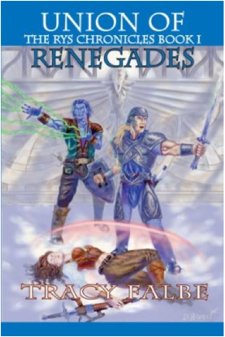
Fantasy Series Book 1 Tracy Falbe eBook CoverIndie fantasy author, Tracy Falbe, hasn’t quit her day job yet, but she’s making a reliable second income from her four-book fantasy series. She got into self-publishing before the Kindle came along, so she’s experienced the changes the e-publishing revolution has brought. We’re talking with her today about her work, her promotion and pricing strategies, and the positive changes e-publishing has brought for authors who want to self-publish.

Why don’t you start out telling us about your novels?

My novels comprise The Rys Chronicles fantasy series, and Union of Renegades is the first book. The remaining three are The Goddess Queen, Judgment Rising, and The Borderlands of Power.

I write epic fantasy, which in my definition means that it has many characters, multiple cultures, sweeping landscapes, high sociopolitical stakes, and grand personal ambitions.

In the fantasy world of The Rys Chronicles there are two human civilizations plus the rys. The rys are a rare super race ruled by Onja who controls one civilization as its Goddess. Elite rys can use their magic to manipulate energy on a destructive scale, read minds, influence behavior, remote view across long distances, communicate telepathically, and seize the souls of the dead.

The second civilization has developed separately and is now penetrating a Wilderness guarded by Onja’s enslaved wraiths. The Rys Chronicles tells the story of the conflicts that erupt after the civilizations make contact.

The main human hero is Dreibrand Veta, a noble officer in an imperial army who explores this region new to his civilization. His love interest, Miranda, is an escaped slave and mother of two. They become embroiled in a rys power struggle and side with Onja’s rival, Shan.

The series includes a big cast of supporting characters and subplots. There’s King Taischek of the Temu Tribe who makes war on his hated neighbor every year. He also has nine wives and a drinking problem. One of my personal favorites is Faychan, a Spymaster in the notorious Kezanada Brotherhood that is loyal to Onja. As the series progresses I bring in more characters, like Dreibrand’s older brother Atarek and Madame Fayeth, a desperate mother seeking the rys in the hopes that their magic can heal her ailing son.

The Rys Chronicles series is hard-hitting medieval style fantasy. I try to tell a story in each novel while still propelling the overall epic.

How have you been promoting your ebooks?

My primary marketing channels are my website www.braveluck.com and my blog www.herladyshipsquest.com. I run a monthly ebook giveaway that people enter by joining my readers’ list. So that leads into email marketing.

I have online advertising through Google AdWords and Project Wonderful. In the social media arena, I’ve recently got the hang of Twitter. I’m @tracyfalbe and in addition to tweeting about my fiction, I find book review blogs, fantasy art, and other writers that might interest followers. I participate at Goodreads.com, which is a site I really enjoy. I’m also a contributing reviewer at Historical Novel Review.

Can you talk about your pricing strategy? I see your first book is $1 and the others at $4.95. Do many people go on to buy the rest in the series after getting the introductory book at a low price? Have you experimented much with prices?

It’s hard for me to pin down a specific figure for how many people buy Union of Renegades for $1 and then buy the rest of the series. Union of Renegades is still free at www.braveluck.com and www.herladyshipsquest.com and readers still find it there and then sometimes pick up the rest of the series at an online retailer or from me. It makes things hard to track.

I’ll throw out a guess and say that for every 1,000 maybe I get 20 readers who buy the whole series, which seems like miserable conversion, but if a reader buys the whole series, then I’ve moved 3 more units at $4.95 each. Also consider that of the readers who choose to continue the series, over 90 percent of them go on to read all my novels. I actually tracked that data through my website for years. Basically, when my fiction genuinely connects with readers, they buy all my work.

I have always priced Book I as a loss leader. Fantasy is a competitive niche market and it’s a way to get readers to check me out.

To answer your second question, I have never experimented with the prices, and don’t have any plans to alter prices. The free or $1 first book of the series followed by reasonably priced novels works to my satisfaction. Mass market paperbacks are $7.99 and I figure that $4.95 is a reasonable price for a full length novel in digital form. My novels are all in the 100,000 word range.

You have print editions too. How do they sell compared to the ebooks? Do you do any out-in-the-world book promotion?

The ebooks outsell the paperbacks by easily 100 to 1. The paperbacks are harder to market for a number of reasons. They have to have a much higher price point due to significant production costs. They have extremely limited opportunities for being in bookstores where paperback readers are browsing. Of course my paperbacks are at Amazon, and I’ve always had a trickle of paperback sales through Amazon. However, production and shipping costs and the wholesale percentage I have to give up to Amazon basically erase the profit margin on the paperback so I could never justify applying my marketing dollars to promoting my paperbacks at Amazon.

Ebooks are a totally different entity however. Ebooks have a profit margin that will actually support a viable business model (Why do you think all the big retailers are pushing them now?). I once read that selling ebooks is considered the “perfect” online business. This means I can afford to market the ebooks and reach readers.

As for out in the world marketing, I have not had an opportunity for that. I started having kids right when I started publishing my novels, so that makes it very hard to do public events. When I compared child care and the effort involved in a public event against the likelihood of only selling a few copies, I decided not to bother.

In the future I would like to do some in-person marketing. My kids will be older and I’ll have a little more liberty to function as an independent human being. After I publish my next fantasy series (currently a work in progress), I will seriously look into doing a table at a sci fi fantasy convention. I think that might be fun and productive.

You’ve been self-publishing for a few years. Can you tell us how it was in the beginning and how you’ve seen the industry evolve with the new ease of ebook publishing?

Wow! Everything has changed for the better. When I started publishing my fantasy novels in 2005, it was considered an absurd and desperately stupid practice. Conventional wisdom in the publishing industry was that ebooks were never going to go mainstream. Self publishing was the pig-headed pursuit of people who could not properly compose sentences. There was no Amazon Kindle, Smashwords, Barnes & Noble Nook, or Apple iBooks. Among the legitimate ebook retailers in existence a few years ago, self publishers were not allowed. It wasn’t back of the bus. It was you can’t get on the bus.

So I marketed myself from my website. Even though ebooks were officially declared dead by the media, people were reading ebooks on their computers and PDAs and early dedicated ebook reading devices. I’ve gotten a few bored office workers through a lot of down time in their cubicles. (They sent me grateful emails.) Every month, I consistently sold $50 to $200 worth of ebooks from my website. This was how it was for about three years and I always wished I could have wider distribution.

Then came Smashwords and Kindle and Nook and all the big companies were in the game and independent writers weren’t banned anymore! It was like I woke up one day and the world decided it liked ebooks and readers would be allowed to view the work of indie writers. See, retailers aren’t publishers. They’ve discovered that there’s almost no risk in listing a product and there’s much to gain if people like it.

In late 2009 I signed up with Smashwords and then in the summer of 2010 I added my novels to the Amazon Kindle store when the royalty structure was made attractive. By far 2010 has been my best year. My sales quadrupled because I was able to have my novels in places where people were actually shopping for ebooks. Gasp! This had been my Holy Grail.

This is such an exciting time for writers. All I ever wanted was my chance to connect with an audience. I had to make my own opportunities in the beginning and now the marketplace even tolerates my presence. But even if big business hadn’t let me play with its ball, I would keep going. Right now I’m making a very helpful and badly needed second income doing what I love. As I continue writing and marketing my work I hope to improve my work and entertain more readers.

Thanks for the meaty interview, Tracy!
Bio:

Tracy Falbe is the author of Union of Renegades, The Goddess Queen, Judgment Rising, and The Borderlands of Power that comprise The Rys Chronicles fantasy series.

Fantasy readers can sample the first novel Union of Renegades by downloading a free copy from her website www.braveluck.com. Paperbacks available too.

All her fantasy novels are also widely available at major online retailers:

Posted in Interviews / Success Stories | Tagged , , , , , | 2 Comments

Help with Ebook Formatting

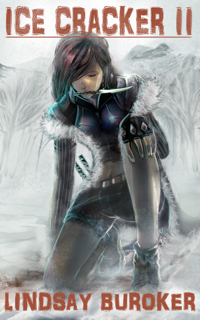
I’ve had several folks ask me about ebook formatting. Since I either a) pay someone to do it or b) use the Smashwords Word-to-ebook converter (I didn’t want to pay with my free Ice Cracker II short story, since that price tag was going to make earning back my expenses tough), I’m not the person to write the post answering these questions. However, there are some great resources out there already, so allow me to point you to a couple…

Ebook Formatting Help:

  • Take Pride in Your Ebook Formatting by indie horror author Guido Henkel (this link goes to Part I in what is a very thorough nine-part post)
  • If you’re daunted by the idea of a nine-part post and want the super simple version, Derek J. Canyon’s $0.99 ebook may be more your speed: Format Your eBook for Kindle in One Hour – A Step-by-Step Guide
  • If you want mobi (kindle) and epub (everyone else) files all in one (relatively) simple swoop, you can use the Smashwords meatgrinder to upload your ebook to their site, but make sure to read their formatting guide, as anything funky in your Word document will cause problems. You can download copies of your own ebook to use wherever you want afterward.

If you come across other resources I should list here, let me know in the comments. Thank you!

Posted in E-publishing | Tagged , , , , , , , , | 3 Comments

Simon Royle–Indie Author Selling Well with Debut Ebook [Interview]

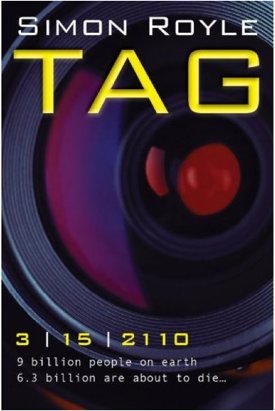
Simon Royle Tag Ebook CoverWhether you’re already an indie ebook author or just thinking of getting started with e-publishing, you’re probably as excited as I am to hear about all the folks doing well with their offerings. Today, we have a short interview with Simon Royle, a science fiction thriller author who published his debut ebook Tag a couple months ago. He was nice enough to interview me about Encrypted last week, so I wanted to return the favor. He’s also selling quite well, despite only having one novel online, so you might want to stalk him to see what he’s doing!

You can purchase Tag at Amazon, Barnes & Noble, and Smashwords.

Let the questions begin!

I don’t usually ask the “can you tell us about yourself?” question, but it sounds like you’ve led an interesting, well-traveled life! Would you like to share some highlights for us? And tell us what led you to settle down in Thailand?

My father was in shipping. The closure of the Suez Canal meant many ships had to travel around the Cape of Good Hope. This happened when I was three. When I was ten we moved to New Jersey, my father worked in New York, and after a short spell there, back to England. When I was sixteen we moved to Hong Kong. By then I had lived on four continents, and experienced vastly different, but same (English speaking for the most part) cultures.

I think the most enduring thing to come out of that is a perspective on nationality and culture that is in the minority – a global outlook. I don’t have allegiance to any particular nation state, but rather look upon humans as a race (and a fairly poorly developed one at that). As an example: I bemoan the fact that we’ve been around for 7,000 years as “civilizations”, and yet we still spend the most of our money on perfecting ways to kill other humans.

Thailand just happened. I first went there when I was twenty-four on a short week’s holiday, and had a great time. For the next two years I flew there regularly, practically every chance I had, and traveled the country extensively. I’d fly in, do the ‘One Night In Bangkok’, (makes a hard man humble) thing; and then hire a rental car and drive. On those trips I found the Thai people to be incredibly generous, warm-hearted, and, well, I guess suited to my character. Two years after that first holiday, I went back to live and have stayed. I travel quite a lot around the region, and sometimes further afield as part of my day job, but for most of the last twenty-one years, I have lived in or near Bangkok.

Okay, now for the book stuff! Please tell us a bit about your first novel and what led you to e-publishing.

I got the idea for Tag after reading an article about a Dutch nightclub where members were (voluntarily) injected with an RFID device. The RFID chip held their personal details and credit. Passports and social security numbers, or other forms of identity are relatively modern (and still primitive) constructs. It got me thinking that as as we evolve the various issues around personal identity become more complex and inevitably technology will play a greater part. I chose to address those ideas in the form of a futuristic thriller.

E-publishing was a natural step given the rising dominance of digital channels. I work in the software industry so I was aware of what was happening on-line and had been tracking the rise of eBooks since mid-2007.

I also prefer the business model. I hired my own editors, proofreaders, cover designer and typesetter – all of whom are involved full-time in publishing. Some were great, some not so – that’s business. Live and learn. Now I’ve got a great team. A side benefit is that I have met some incredibly talented, savvy, and genuinely cool people while doing this. You have a problem or don’t know how to do something – put your hand up – someone who knows will give advice.

I’m impressed (envious?) of how well Tag is doing at Amazon, especially since it’s your only novel out there, and you just published it a couple months ago. What have you been doing for promotion?

Kindle Nation Daily and blogging that’s it.

It looks like your blog has been up longer than your book. When did you start it, and what made you decide to start your “Indieviews” series?

I started the blog in September of 2010 and traffic has grown steadily every month, it averages between eighty and one hundred visitors a day. Month on month, traffic has been increasing by about 45 per cent. That just tells me that the interest in indie authors and their books is growing all the time.

The ‘Indieviews’ came about simply because I had traffic and could make my visitors aware of some cool authors and their books. I expanded that to indie ebook reviewers and readers. Everything on my site is an offshoot of stuff that I am interested in – I’ve learnt many things by reading those interviews.

Are you working on any new projects you’d like to share?

K:OS, the sequel to Tag. First chapter is out there already. It picks up three months after where Tag ended. That’s all I’m saying for now 🙂

Thanks, and good luck, Simon!

Posted in Interviews / Success Stories | Tagged , , , , | 2 Comments

Offering a Free Ebook for Marketing — My Results

About six weeks ago, I e-published my first novel, The Emperor’s Edge, and, at the same time, I uploaded a free ebook (okay, it’s just a short story) to Smashwords. I hoped people would try the free ebook, like the characters, and go onto buy my novel, which is currently priced at $2.99.

The story features the same characters as are in the novel, and I included an excerpt from Emperor’s Edge at the end of the ebook. I also included purchase links for EE at Smashwords, B&N, and Amazon.

The story, Ice Cracker II, promptly went live at Smashwords and took about three weeks to filter through and appear at Barnes & Noble (you can’t upload a free ebook directly to B&N, but if you ask Smashwords to distribute it, it’ll get there eventually–as far as I know, the Apple Store and Amazon won’t take the free ones, which is a shame).

I discussed the pros and cons of offering a free ebook when I was getting ready to do it, though, as far as I was concerned, it was all theoretical at the time.

So, what actually happened?

In short, it’s working. *author does happy dance*

I’ve sold numerous copies of my novels at Smashwords, despite doing little else to promote my work there. The increase at Barnes & Noble has been more substantial.

I had very few sales there before the free ebook appeared in their store, but now I sell nearly as many ebooks at Barnes & Noble as at Amazon most days, and some days B&N outsells Amazon.

More telling is the fact that The Emperor’s Edge outsells Encrypted, my other novel, by four to one at B&N. At Amazon, where I don’t have a free ebook listed, Encrypted sells about the same number of copies a week as Emperor’s Edge (it’s actually ahead in the count for February).

I should point out that my free ebook isn’t a bestseller or anything special at Barnes & Noble. I’m not even sure how people find it (I tried to drill down in a category and never got to it), since I don’t shop there and know the ins and outs of the site. It has a couple reviews, though, and the sales rank hovers around 1850, so it’s definitely getting some downloads. I’m toying with the idea of having some banners made and trying harder to promote the freebie at Barnes & Noble.

A few notes for others who may wish to try offering a free ebook to encourage other sales:

  • This may not appeal to every author, but I think it helped that I used the same characters in the freebie as in the ebook I hoped people would buy. I didn’t plan it this way (I wrote Ice Cracker II almost a year ago, before e-publishing was a twinkle in my eye), but the short story takes place after the novel and leaves a lot of questions unanswered about the character backgrounds. The lack of backstory may irk some folks, but I hope it leaves more people curious to read the novel and find out how these characters ended up as wanted criminals working together.
  • You can give away an entire novel (I’ve seen people with a series do this to great effect), but if you’re like me and don’t have a whole series ready to publish, a short story can work just fine.
  • Including an excerpt for one of your novels probably helps (though people might feel your ebook is too promotional if the excerpt is huge and the free story is short; in my case the short story is about 6,000 words long and the excerpt is 1,000 words or so).
  • Including the actual links to your non-free novel(s) can only help. I’m not a Nook person, but I assume it’s similar to the Kindle in that you can click a link and go right to the store and buy the next book on your e-reader.
  • Don’t name your free ebook after a ship with numerals in the title like I did, because I’ve had several people admit to being confused because they thought Ice Cracker II was a sequel. Oops.

Have you had any luck (or the opposite) giving away a free ebook? Let us know about it below.

Posted in Book Marketing | Tagged , | 12 Comments

Three Amazon Marketing Tactics to Increase Book Visibility

If your books are languishing in obscurity at Amazon, and you’re sure folks would love them if only they could find them, there are a few marketing tactics you can try on the Amazon site itself.

I’ve done some of these things, and my sales-per-day average has been increasing, but I’m not sure how much, if any, credit to give these tactics. The reviewers who mentioned how they came across my books cited other sites — reviews, Twitter, guest posts, Goodreads advertising, etc., so I’m not sure if anybody stumbles across my work while browsing Amazon or not.

Either way, these little tricks are easy to implement, so there’s not much to lose. And who knows? Maybe they’ll help a smidgen.

Using Keywords in Your Title Space

Amazon Title with Keywords

Out of everything I’ll mention here, my guess is this could do the most for you. Amazon, Barnes & Noble, and Smashwords all currently let you add words to the title that aren’t necessarily on the cover of the book. Some authors are sticking their genre, or keywords related to their book, into the title space, so their piece will come up if people search for those things on the site.

Examples:

The books in these examples are by indie ebook authors, and they’re selling a lot of copies. The books have also been out a while, they have good reviews, and they’re priced low ($0.99 for the top two and $2.99 for the last), so I’m sure it’s not just the use of keywords in the title that’s moving these titles, but this is something that probably won’t hurt and could help, especially if you write in a popular genre.

My books don’t fall into neat genres or sub-genres, but I decided to give this a try anyway. You can see the picture for Encrypted up there, and my other novel is listed as The Emperor’s Edge (a high fantasy mystery in an era of steam) on Amazon and Barnes & Noble. “High Fantasy” was the keyword I wanted in there, and I used the rest to describe the novel briefly. Someone finding your book via the search results will only see the title, your name, the price, and a thumbnail of the cover, so sneaking in a mini blurb might help them decide to click yours over another that’s more vague.

My ebook does actually come up on the first page results (as I’m typing this anyway) for “high fantasy,” but I doubt that’s something many people type into the search box. I’m skeptical that many people look for books by searching by genre (though it’d sure be interesting to get a copy of Amazon’s web statistics to find out!), but, again, it probably can’t hurt to do this.

Do you need to? Obviously not, since there are tons of bestsellers who don’t. Indie phenom Amanda Hocking’s first book is simply My Blood Approves.

Getting Tagged on Amazon

Tagging on Amazon

If you’ve done reviews, or you’ve memorized every pixel on your book’s Amazon page, you’ve probably noticed the “tags” or keywords that people can plug in to help categorize a book. As with using keywords in the title, these tags help the internal search engine find relevant results to display when someone types in “paranormal romance” or “urban fantasy” or what have you.

I’ve seen numerous tag-me-and-I’ll-tag-you threads on discussion boards, and I’m not sure how I feel about asking people who haven’t read the book to do this, as it seems like gaming the system. But you could probably argue that is true for everything in this blog post. Ultimately, you’ll have to decide which of these tactics you’re comfortable with. I’ve noticed some authors ethics tend to become a little more pure after they’ve established themselves and can count on regular sales. *innocent whistle*

You can tag your own books once, so make sure to do that. It’ll give reviewers some guidelines when it’s their turn to tag.

As to how effective book tagging is, I don’t know. Based on my Google SEO knowledge, I’d guess there’s more weight to having your preferred term in the title, but the tags might help you show up across a number of sub-genres. The Emperor’s Edge has been tagged most often with “steampunk,” and the novel does show up on the forth page of results for that term. Of course, not many people are going to click through four pages of results to find a new book to read, but since I don’t use steampunk anywhere in the book description or title, it suggests tagging does help (note, a number of reviewers used the word steampunk, and that may have some weight in the Amazon search engine as well).

Note: Tag your book on Amazon UK as well as the regular Amazon site (the tags don’t automatically carry over).

Get Listed (Amazon Listmania Lists)

Amazon listmania

You’ve no doubt seen Amazon’s “listmania” lineups; these reader-created lists of books show up all over the site, usually for a certain genre or about a specific topic. They show up on specific book pages if that particular book is in the list.

Fans create lists for fun; you can create them for marketing purposes (it’s okay if you have fun doing it).

The idea is to list your book with other popular titles that are similar in genre/style/theme. If you have a YA fantasy, for example, you might want to include your offering and other related ones on a list that mentioned Harry Potter and other bigwigs in the field.

I did a list for one of my books when I first published it, and then I promptly forgot about it. I imagine it helps if you plug your list various places and routinely add to it. I must admit, it did feel a tad…lame (yes, that’s the big, impressive vocabulary word I’ll use) to make a list and put my book at the top. Once we’re popular and well-loved by more than three people, maybe folks will create lists for us.

Here’s a nice writeup with some tips for creating Amazon lists for book promotion purposes.

So, there you are: three marketing gimmicks to try at Amazon. Keywords in titles, tagging, and listmania lists.

In the end, it’s hard for me to conclude whether these tactics have more than minimal impact (I’d love to hear your thoughts in the comments below), since I’m doing a number of things for promotion and no one has yet said, “Hey, I found your novel by typing in steampunk on Amazon,” or “I saw you in a science fantasy romance list,” but none of them take a lot of time to implement, so if something sounds appealing, you can give it a try.

Posted in Amazon Kindle Sales | Tagged , , , , , , | 6 Comments

Book Trailers for Promotion, Yay or Nay?

If you haven’t heard of book trailers, they’re just what they sound like: short videos, similar to movie trailers, that are designed to generate interest in your book. If there’s a film producer inside you, waiting to get out, you could create one yourself. If not, there are numerous companies willing to make one for you (for a fee, of course).

The question is…

Are book trailers worth the time and/or expense?

Judging by the view count of most of the ones I’ve seen on YouTube and the prevailing opinions on the KindleBoards forum…

Probably not.

Most of them just don’t get watched often enough to do any good.

YouTube, the biggest site you’ll likely upload your book trailer to, is similar to Amazon: it gets a lot of traffic, yes, but that doesn’t mean any of it is going to come to your page.

If you start a YouTube channel, you have to promote it, just like your blog and your books and everything else. Most people who become popular on YouTube post new videos regularly, much like running a podcast. If you’re just planning to post the one book trailer, then it’s unlikely you’ll get many page views or build an audience.

That doesn’t mean you can’t create a promotional video for your books. If it sounds like a fun project, give it a shot. In addition to Youtube, there are other sites where you can upload it (Veoh and Blazing Trailers are a couple, and Smashwords allows you to upload a trailer to your author page as well). That said, if you’re already feeling bogged down by all the online book marketing you’re trying to do, you can give this one a pass.

My videos

I tried creating a couple videos this week, mostly for kicks. They’re more about book promotion, with a little humor sprinkled in, than a trailer for my novels (though I did plug Encrypted). I used Xtranormal, a free program that does everything except write the script for you. Xtranormal may not be enough for creating a book trailer, but if you want to try something similar to what I did, you might find the site fun to play with.

Here’s my YouTube channel and the videos I did this week. Feel free to subscribe, comment, or send me a note on there, and I’ll be happy to come give a thumb’s up to your book trailer or whatever other videos you’ve posted.

Posted in Book Marketing, Videos & Podcasts | Tagged , , , , | 13 Comments

Interview with Successful Indie Fantasy Author Jason Letts

Jason Letts Fantasy Indie Ebook AuthorWe’ve got an interview with indie fantasy author Jason Letts for you today. He’s been e-publishing for less than a year, but he’s already sold thousands of ebooks. As you can see from his official author picture, he’s a bit of a character who doesn’t take himself too seriously!

Here’s a quick intro, and then we’ll jump into the questions:

Jason is an author and editor of young-adult and paranormal fiction. The books in his young-adult fantasy series, Powerless, are available. The first book in his new paranormal trilogy, Inevitable, has just been released on Amazon and BN.com. You can find out more about Jason and his books by visiting www.powerlessbooks.com.

Welcome, Jason!

Thanks so much for having me, Lindsay!

What made you choose the life of an indie author?

I’ve always loved writing, and I was an English major in college, so I always felt like I would end up writing novels eventually, but becoming an indie author and selling books on my own was something I couldn’t have imagined. It just wasn’t possible even a few years ago. But things have changed, and now I write my stories the way I want them to be, produce them just how I like, and hope that readers find them just as enjoyable as I do. It’s great when it works out that way, and that’s what makes it worthwhile.

Your main body of work is the Powerless series. Can you tell us a bit about it and how well it’s doing for you?

Powerless is a young-adult fantasy series about a girl who has to bring her family together despite being the only one in the world without a unique, magical ability. The first book was published in June 2010 with the next two books following after that. After selling thousands of copies, I’m very happy with the series and the response that it’s getting, but there are things you can only learn after you’ve put the book out. So like every other author, I’ve got to take what worked, leave behind what didn’t, and try my best to create the most entertaining work possible as I continue to write.

Jason Letts Powerless Book 1 Cover

Congratulations on all those book sales. Pretty impressive considering you just started last summer! Is Amazon your biggest seller, or do you do better elsewhere?

I sell about 60% on Amazon and 40% on BN.com, which is actually hugely surprising to me because for the first few months I didn’t sell much at all on BN. I think there are different strategies to have success on each site. For Amazon, you’ve got to get in touch with readers and work on getting good reviews. For BN, you’ve got to be extremely lucky and hope your book magically gets a good search result for a few keywords. I’ve heard creating a shrine in your bedroom can help with that.

As I’m learning, the biggest challenge for us indies is being found. What kind of promotional tactics have you pursued?

Yes, obscurity is one of the most difficult things to overcome. Of course, blogging like this and being active on kindleboards is a good start, but it helps to be outspoken too. While a lot of people might tell you that it’s important to be ultra-professional all the time, which is so often true, I also take joking around very seriously and try to bring that spirit with whatever I’m doing. At the end of the day, we’re entertainers and we’re people, and we’re naturally drawn to people with which we can share an easy laugh.

I see you sell the first book in the series for $0.99 cents and the latter ones for $2.99. How is that working for you? Does the low-priced introductory ebook draw in a lot of readers who go on to purchase the others? Have you experimented with higher prices?

Ebook pricing is always a touchy issue, and people base their decisions on countless factors. The second month my book was out I tried to raise the price to $2.99. This didn’t work for me, and it severely squelched my sales beyond what the revenue increase would provide. For new authors, you want to create the lowest barrier possible for people to try your work. After that, it really depends on what the market will bear. Especially for a series, starting the books out at .99 is a good idea to cast the widest possible net for your other books.

I see you have an omnibus edition of the Powerless trilogy on Amazon. What a great idea, and it’s a deal for the readers, too. How well does that sell compared to the individual ebooks?

The omnibus sells surprisingly well, and it’s something I recommend all authors with a series think about doing. It’s sort of like building a sale into your pricing structure, and a lot of readers have jumped on it. It sells probably twice as well as the 2nd and 3rd books do individually, and on some days it does just as well as the first book. Putting it together was a great move!

Would you like to talk about your new ebook? You wrote it with e-publishing superstar Amanda Hocking–how did that come about?

My new book is called Inevitable, and it’s sold about 100 copies in its first two days. Many of the things I learned from Powerless went directly into this. The biggest one is importance of including romance in books, and so the genre of this story is actually paranormal romance. Though PR isn’t that distant from young-adult fantasy, it was enough to make me feel a bit like a fish out of water. Enter Amanda. I am her editor, and when I told her about the book I was working on, she was very interested in helping out. I have to say the book was drastically improved because of her guidance, and I’m very confident that paranormal readers will enjoy it.

Inevitable Ebook Cover Jason Letts Amanda Hocking

Thanks, Jason!

Posted in Interviews / Success Stories | Tagged , , , , , , , | 5 Comments

Goodreads Advertising Results and Tips on Creating Campaigns

Warning: this post is long and rambling. Read at your own discretion.

There are a lot of challenges as an indie ebook author, but perhaps the biggest is being found. As I’ve mentioned before, nobody is going to stumble across your work at the bookstore, and, with Amazon’s millions of books for sale, it’s unlikely on-site searches are going to lead people to your work either. That will change if you start selling enough for your ebook to show up in various bestseller categories, but getting to that point is a challenge.

I’ve written about my Kindle Nation Advertising Results, which helped me sell a bunch of ebooks in one day, and today I’m going to talk about Goodreads, which has led to a small trickle of continuing sales.

I’ve run pay-per-click advertising campaigns for my day job, and I was leery about getting anything except a high credit card bill out of Goodreads, but they’ve proven more effective than I expected. Amazon and Barnes & Noble don’t tell you where sales originate, so it’s hard to say anything with 100% certainty, but I believe I’m spending less on advertising there than I’m making from books purchased through the ad campaigns.

In other words, it’s profitable.

Let me give you a breakdown of how Goodreads works and what I’m doing to achieve my results. (Just to be clear, these are not staggering results. Right now, I’m spending in the neighborhood of $4-$5 a day there and making $10-$14 in royalties–selling 5-7 ebooks a day at $2.99 each. Not all my book sales are from Goodreads, since I still sell some on days when GR clicks are low, but I’ve definitely noticed a correlation between higher click days and higher sales days. Because I’m very new as an ebook author–you can read my recent Indie Ebook Publishing Results After Six Weeks–and my books aren’t being mentioned left and right all over the web, I suspect this isn’t a coincidence.)

How Goodreads Advertising Works

As I mentioned, Goodreads is a pay-per-click advertising system, meaning you pay every time someone clicks your ad. If nobody clicks, you get charged nothing, but Goodreads also won’t show your ads much. Here’s a blurb from their FAQ:

We use a complex algorithm to determine which ads are shown on the site. A major factor in this algorithm is initial click-through rate– that’s the click-through rate for the ad in its first few hundred impressions for the day. The ads that generate more clicks in those first few hundred impressions are shown more frequently throughout the day, while those that don’t generate as many clicks early are given a lower priority. This is how we make sure that the most relevant ads are shown most frequently. How the ad was performing the day before has no bearing on this, as each ad gets a fresh chance each day.

You can choose how much you want to bid per ad, with the minimum being ten cents. Here’s another blurb to explain how the bidding works (sort of):

All self-serve ads are sold at a default rate of $0.50 per click, but you can bid anywhere from $0.10 to $300.00 per click. While higher bid amounts are given higher priority, the initial click-through rate is still more important in determining which ads are shown the most frequently.

In my experience 10 cents doesn’t end up getting you many page views a day, whereas 50 cents gets you plenty, so I don’t think there’s a need to go higher than that. If you’re an indie ebook author like me, and you’re only charging $2.99 per ebook ($2 royalty, give or take a few pennies, depending on the retailer), you need to be careful about how much you bid. At 50 cents a click, you’d only break even if one in four people bought your novel, and that’s asking a lot from an ad.

You can do some things in the ad copy and with the targeting to make it very likely only people who read your genre and have an ebook reader will click (any other clicks are a waste of time), and I’ll talk about that in a minute.

On slow days, I tinker with my campaign, and I’ve found I get a reasonable return on my investment coupled with a reasonable number of clicks per day when I bid around 30 cents. I’ve got a $15 daily cap on my campaigns, but I’ve never come close to spending that much (because I do target my ads very precisely). I’d be happy to spend more if it resulted in more sales, but, as big as Goodreads is, there’s a limited number of people who fall into the target audience for my science fantasy romance novel (someday I’m going to write a book in a popular genre just for kicks!).

Before I move on, I want to say that I believe paying for Goodreads advertising on a novel you’ve priced at $0.99 is going to be a waste of money. Since ebooks in this price range only earn the author $0.35-$0.40, you’d have to bid very low and have a ridiculously high conversion rate to break even. If you want to throw money around to increase visibility and get your name out there, that’s your call, but, like I said, it’s easy to waste a lot of money quickly with pay-per-click ads. I’d probably choose banner advertising where you’re paying a flat monthly fee for exposure if that was the goal.

Creating an Ad Campaign

Okay, you’ve read this far, and you’ve decided to try Goodreads yourself. What’s Step #1, you ask?

First, sign up here: Goodreads Advertising.

You’ll fill in all your personal information and give them a credit card number and say how much you want to spend. I wasn’t sure what to expect or if I’d get billed right away or after I’d burned through some clicks (right away is the answer), so dumped $300 in. In retrospect, that was pretty high, but if you write in a popular genre, you may go through money (and sell more ebooks!) more quickly than I.

Next it’s time to set up ads. It’s a bit like Twitter in that you don’t get much space to woo people. I’ve never liked selling, and I’ve never studied copywriting, so I won’t presume to advise you here. Nothing is permanent, however, so you can experiment to your heart’s desire.

I do recommend creating a campaign for each book and trying several ads within each campaign. There are a couple reasons for this:

Split Testing to See Which Ad Copy Works Best

Goodreads-Advertising-Split-Testing-Ad1Goodreads-Advertising-Split-Testing-Ad2

If you create two ads where all other factors are equal (destination URL, book price, audience targeted, etc.), then, after a while, you’ll be able to tell which book blurb is drawing more interest. Eventually you can eliminate the poor performer and swap in a new ad and start the comparison process over again.

I’ve definitely had instances where the ad copy I thought was best didn’t turn out to be the best performer. I’ve got one running now that’s, in my opinion, a little cheesy, but it gets a lot of clicks, so it stays.

Using Different Destination URLS

Goodreads recommends you make the destination URL (or web address) your book’s Goodreads page. I have mixed feelings about this. I was on Goodreads two months before I even noticed book pages had buy links on them. Even if other Goodreads members are swifter than I, you’re putting extra steps between the buyer and the purchase if you send them to the GR page and hope to earn a sale from there.

I’m not saying you should never do this (I have an ad in each of my campaigns that delivers the clicker to the GR page), but you may want to pay less per click, as you’re probably going to see fewer direct sales. That said, there are some less tangible benefits. Goodreads members can add your book to their shelves, which are seen by their friends, who might add your book to their shelves and so on and so forth.

Aside from using Goodreads as a destination URL, if you are an ebook author, you will probably want to set up an ad for each of the places your book is for sale. This is because people with different ebook readers shop at different stores. If they’ve got Nooks, they go to B&N. Kindle people go to Amazon. Etc. etc. etc.

Yes, you could send people to Smashwords, where all ebook formats are available, but a) not many people outside the biz are aware of Smashwords yet and b) you know people already have accounts at the store their e-reader is linked to so there’s only one single solitary click between that reader and a purchase of your ebook. Compare that to some store they’re visiting for the first time and where they have to set up an account and enter in credit card information. More steps means more places from them to bail out and decide they don’t want the book so badly after all.

So, long story short, consider setting up an ad for Barnes & Noble, Amazon, and Apple if your ebooks are available in all these places. They can be the same ad (though it wouldn’t hurt to put the name of the e-reader in the title or the description) for each, just with a different destination.

Note: The least effective thing you could probably do is send people to your author website. I’ve seen a few ads that do this on Goodreads, and unless you’re snagging the person’s email address for your mailing list, this will likely lose you money. Internet marketers will give away free ebooks in exchange for email addresses (once you’re on their list, they can try to sell you other stuff), but this is beyond what most of us are doing with our marketing campaigns. In most cases, you’re just going to be putting extra roadblocks between the interested party and the actual act of purchasing your book. Simple is almost always better. Interested person clicks ad and interested person is delivered to place to purchase book with one click. Author success story!

Crafting Your Ad to Attract Your Target Audience (and nobody else!)

Still reading? Good, because this is the section that’s going to keep you from wasting money and make it possible to profit from running a Goodreads advertising campaign. The other stuff is important too (everything I say is important, duh!), but this is key:

If all you have available is an ebook make sure it says ebook somewhere in your ad.

This is common sense, but easy to overlook (I see people overlooking it on Goodreads right now). A lot of people don’t have e-readers, and they’ll only read paper books. That means it’s pointless to have them click your ad, because they’re not in your target audience.

Consider mentioning the price.

Ad space is finite, but you may also want to list the price of your ebook in your ad. I do this because, at $2.99, Emperor’s Edge and Encrypted are both low compared to traditionally published ebooks. A low price tag alone may make a book more appealing to a Goodreads member.

If your ebook is higher priced, it may still be worth mentioning, because you don’t want bargain-seekers clicking your ad if they’re never going to pony up $10 for an ebook.

Only target people who read in your genre.

After you’ve inputted your title, ad, url, and uploaded a little picture of your book, it’s time to select your audience. This is pretty easy. Click unselect all, and then check the boxes that match your ebook (i.e. science fiction and fantasy or young adult and romance). This means your ads will only be shown to people who’ve indicated they read in your genre.

The downside of precise targeting:

A possible downside to being this precise is that your click-through-rate may be so low that Goodreads won’t display your ad every day. I included the blurb above about how they choose which ads to display (if yours doesn’t get a click early on, it’ll get shelved for the day), and I never have all my ads running full throttle, because some days they just don’t get those early clicks. I do always end up with at least one or two ads from a given campaign running, but this is a big reason as to why my Goodreads bill isn’t very high each day.

From our point of view it’s good not to waste money, but from GR’s point of view, they only want to show ads that are making them money. It’s admittedly a balancing act.

The nice thing is that every day starts anew with Goodreads, and it’s easy to tweak ads and keep trying to see what works. Once you’ve got things down, this system is very “set it and forget it.” Compare that to all the other promotional stuff we try as indie authors, and I think you’ll see the benefits of having a campaign running quietly 24/7 without you having to do anything.

What if I’m a dead-tree-book author and don’t sell ebooks?

Ah, who let you onto this blog? Sorry, kidding. Everything above can apply to you as well, but it’s probably going to be harder to track your results. With the digital publishing platforms, you see sales the same hour they’re made, so you can more easily see the correlation between a bunch of clicks one afternoon and a few sales that afternoon. You can certainly give things a try though.

If you’re published through a traditional press and getting a much smaller royalty than indie ebook authors get, then Goodreads may not be cost-effective for you. Success really depends on you being able to make a profit, and you have to assume it’s going to take multiple clicks to sell a book.

Good luck to you with Goodreads!

Posted in Advertising, Book Marketing | Tagged , , , | 58 Comments