Jennifer Hudock–From Podcast to Ebook with the Goblin Market

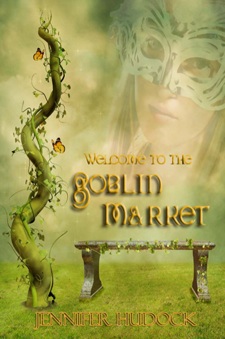
Goblin Market Jennifer HudockAs promised, we have an interview with Jennifer Hudock today, another indie who got her start podcasting and then released her ebook after she had built up an audience. Her novel, The Goblin Market, is available at Amazon, Barnes & Noble, and Smashwords.

Thanks for joining us today, Jenny. Let’s jump to the questions!

I first noticed your novel being mentioned (retweeted) on Twitter. Since I write children’s stories about goblins, the title piqued my interest. Do you want to start off telling us a bit about the story?

The Goblin Market was originally inspired by Christina Rossetti’s poem of the same name. Much like the poem, mine features two sisters–one ensnared by the allure of the poisoned fruit in The Goblin Market, and the other so used to taking care of and cleaning up after her younger sister it feels like just another day when young Chrissie is kidnapped by the goblin king. On her journey Underground and into the faerie world, elder sister Meredith discovers that her ties to that world run much deeper than her kidnapped sister.

It’s very dark, much like the faerie tales of old before Disney got their hands on them and made them pretty.

Sounds interesting! You first published it as a podcast, didn’t you? That seems like a good way to build a fan base. How has it worked out for you?

I podcasted The Goblin Market from July 2009 into March of 2010, offering it free to listeners in hopes of building a fan base. I was very fortunate in having a lot of friends who were also podcasters, as they helped spread the word when I was ready to launch the audio. I am always surprised when someone I don’t know contacts me and tells me how much they loved the podcast. I’ve even gotten a few emails over the last year and a half from fans who hoped I would one day consider publishing it.

The first weekend The Goblin Market was live on Amazon and Smashwords, more than 90% of my sales came from fans of the podcast, so I think it gave me a slight edge from a promotional perspective.

What are you thoughts on pricing? I think you started out at $2.99 but have it on sale at $0.99 now. Do you sell a lot more at the lower price? Enough to make it worth the lower royalties at Amazon?

I did start out selling at $2.99, but am currently running a $.99 sale because I just recently got married. It was my way of celebrating and hopefully sharing a really exciting time in my life with a few new readers. After lowering the price I saw a huge surge in sales. It isn’t much in royalties at this point, but I am really excited about reaching out to new readers with the lower price.

Congratulations on your marriage!

You have a good-looking blog with lots of great content. Do you think it’s helping you sell ebooks? Do you do any link tracking to see which sales originate from your blog?

Thank you for the compliment. The Inner Bean is a labor of love, and I do think the more traffic I draw in with the content, the more attention it draws to the fiction I put out and the projects I do with others. Having my blog made a huge difference last year when I was working on the From the Dark Side Charity Anthology, the proceeds of which were donated to The Office of Letters and Light (the folks who bring us NaNoWriMo and Script Frenzy every year). I also edited a second charity anthology, Farrago: The Michael Bekemeyer Project, to help raise funding for my dear friend, indie filmmaker Michael Bekemeyer.

I focus a lot of my content on indie authors, podcasters and eBooks, including a lot of book reviews. Ever since I got a Kindle, I can’t stop reading and that’s a beautiful thing.

As for link-tracking, I track outclicks through Sitemeter and Google Analytics, but neither of them are accurate as far as determining whether or not a sale was made.

Do you have any future projects you’d like to tell us about?

Right now I am working on the sequels to The Goblin Market, Jack in the Green and The Goblin Prince. I’ve also got a YA urban fantasy novel on the back-burner at the moment, but I’m not quite ready to talk about that just yet. I will say this: It’s going to be called Little Boy Blue.

Good luck, and thanks for visiting today!

If you want to learn more, visit Jennifer’s site and say hi to her on Twitter.

Posted in Interviews / Success Stories | Tagged , , | 5 Comments

Emperor’s Edge Updates: Audiobook Coming and New Cover Text

I’m taking a break from talking about book promotion, blogging, and e-publishing today to post a couple updates on my own stuff.

First off, for those who are curious about such things, I did some counting tonight, and Emperor’s Edge has officially sold enough copies to cover the ebook-creation expenses (cover art, editing, and formatting). In the next week or two, if the good fantasy-loving folks of the world continue to shop EE, the novel should recoup what I’ve spent tinkering with various advertising methods (if you haven’t seen my posts on Goodreads Advertising and Buying a Kindle Nation Daily Sponsorship, there they are).

As I write this, Emperor’s Edge has been out for two months. I’m definitely encouraged by this start. Encrypted has a ways to go to earn back its production costs, but it came out a month later, so that’s forgivable.

Now, I have a couple of fun (well, they’re fun for me) updates for EE.

New Cover Text

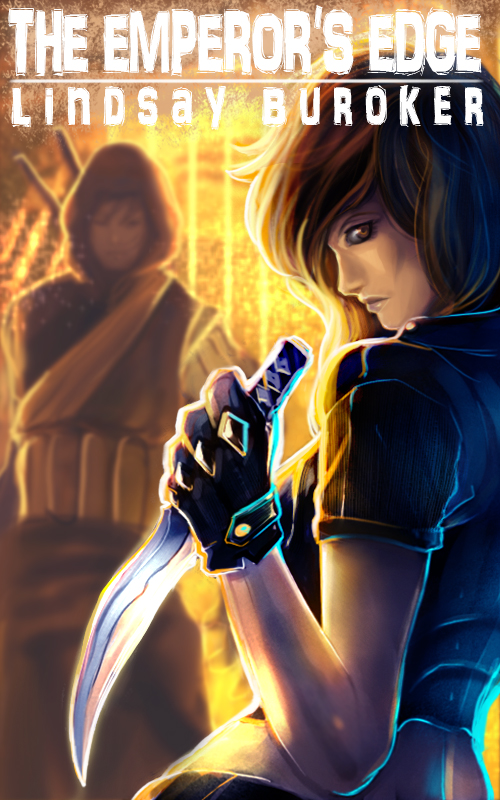
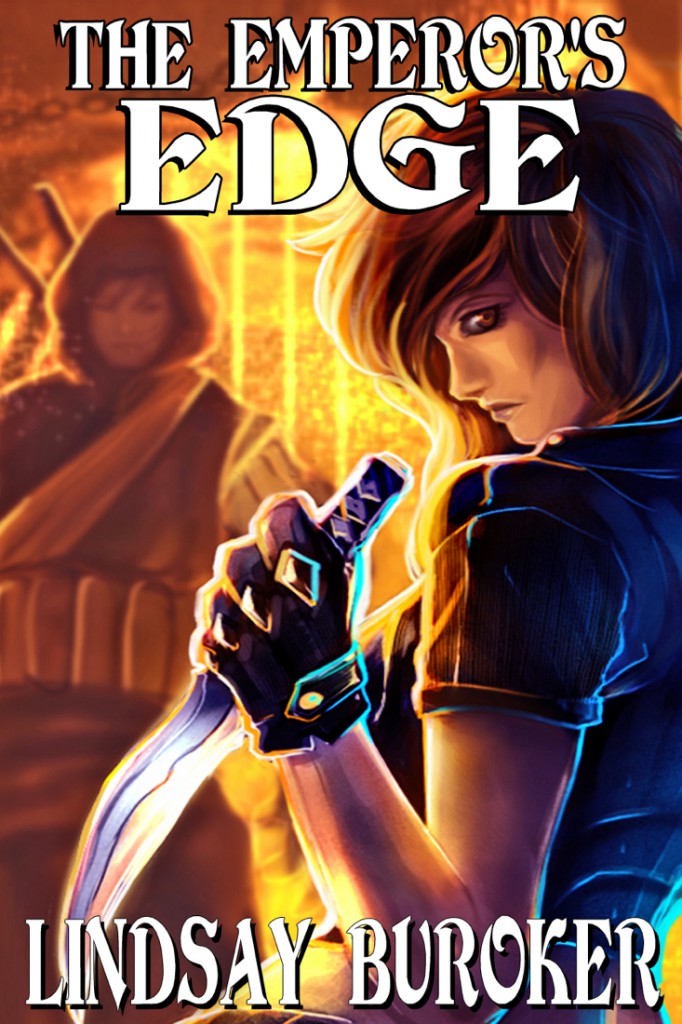
First, I asked Terry Roy of TERyvisions to create some more professional text for the ebook cover. It didn’t cost much, and I think it looks more like something you’d see on an actual paperback now. You can see the old and the new below:

Emperor's Edge Original Ebook Cover

Emperor's Edge New Ebook Cover

I’d still like to re-do the cover art some day, as the characters didn’t come out as I imagine them, but I want to move on and get more books out in the series before worrying about that overmuch.

By the way, if you need publishing-related jobs done, look Terry up. He was easy to work with, affordable, and gave me several options to choose from so I could get a color and font I liked.

Here’s his company’s blurb: “TERyvisions (including Cathy Wiley who is my business partner) can provide covers, interior illustrations, editing (all kinds), formatting for EPUB, Kindle, and print book interior page layout and formatting (for CreateSpace and Lightning Source), and we can help come up with taglines, buzzwords, descriptions, and ads/ad art.” I’m planning to bug him again when I’m ready to move forward with making print editions of my novels.

As to my second update, I was inspired by Nathan Lowell’s success in the podiobook world, and I’ve decided to do a podiobook of EE. This is basically an audiobook that is released in segments, like the old radio dramas, which can be downloaded to your mp3 player.

I’d been thinking it’d be fun to podcast my Goblin Brothers stories for iTunes anyway, but I wasn’t aware of the podiobooks site and that a lot of folks were doing entire novels.

I decided I might as well do it right if I’m going to do it (i.e. I don’t want people forced to listen to my dogs barking in the background), so I signed on with DarkFire Productions, a small company that helps authors with ebook formatting, audiobooks, and social media marketing, among other things. We’ve got a voice lady lined up, and production should get started soon. Yes, I’ll have to sell many more copies of EE to cover the costs, but it should be great exposure!

Thanks for reading. We’ll get back to the regular stuff tomorrow. I have a nice interview to post with Jennifer Hudock, another indie who used a podcast to help build a fan-base and launch her ebook. Then, next week, I’m going to start a series on how to make money as a book blogger. Several book bloggers have been nice enough to write up my novels, so I want to share some of my experience with increasing blog traffic and earning money through affiliate marketing and selling advertising.

Posted in My Ebooks | Tagged , , , , | 7 Comments

Twitter Basics for Authors

TwitterI’ve poked a bit of fun at Twitter in the past, but it’s actually my favorite social media site. The short messages don’t take long to write, and it doesn’t take long to check in on your “tweeps” each day. I haven’t found it to be nearly as much of a time sink as forums and Facebook (though I’ve been dragged, kicking and screaming, into the Facebook world, and will try to do more there eventually).

Twitter can be a decent place to promote your books, though perhaps not in the way people initially assume (that being the stalk-a-bunch-of-people-who’d-follow-anything-back-and-then-spam-your-book-links-every-15-minutes way).

As I’ve written before, I feel Twitter is more like a Starbucks than a Barnes & Noble. People are there to socialize and network, not necessarily to buy books. If you’re a writer, the real power of Twitter lies in meeting fans, authors, and book bloggers. These are folks who may retweet your tweets (repost your messages for their followers to see), trade blog links with you, and let you guest post on their sites.

Sure, some of these people might buy your books, too, but to think of only that is a little short-sighted. As authors, it’s not just about selling this one book to this one person; it’s about turning your name into a brand. There’s a reason Stephen King’s name is bigger than the title on his books. He’s become a brand, an extremely well-known one!

Here are answers to a few basic questions authors new to Twitter often have:

What should I tweet about?

There aren’t any real rules here. Just try to be interesting. Bonus points if you can be interesting to your target audience (AKA the folks you hope will buy your books). I’m not sure I always accomplish that, but, since I write fantasy, I post a lot of fantasy-related tweets. One of my most popular ones (most retweeted) was a link to steampunk wedding cakes.

It’s good to talk to other people, too, not just create a steady stream of links. After all, you’re here to network and meet future fans, right?

You can use the search box and browse people’s lists to find folks you might be interested in interacting with. Depending on your genre, you may be able to find weekly or monthly “chats” as well. People participate in them by using hash-tag keywords, so anyone searching for those keywords can follow along. I.e. #sfchat #yalitchat

How do I get more followers?

First off, let everybody know you’re on Twitter. Mention it on your blog, on Facebook, in forums, or wherever you already hang out online.

After that, go out and follow people with common interests. And make sure you look like someone people would want to follow back! Put your own interests in your bio–it’ll help people figure you out right away. Not everybody has the patience to read through a stream of tweets, deciding if you’re a common soul worth following.

Also, it helps to talk to the people you hope to entice into following you. Some folks aren’t actively looking to grow their list of followers, and they won’t automatically follow you just because you followed them. They want you to say hi first. Crazy souls, I know!

Okay, got all that? Here’s a little more on being follow-worthy:

People like folks who…

  • Follow back — You don’t need to follow spammers or people you’re not interested in, but, unless you’re already a celebrity, it’s a good idea to have a follow-back policy when you’re getting started. You may decide to keep that policy later on down the road, too, as it makes you appear approachable. Not a bad thing if you’re an author!
  • Mix up tweets — There’s no formula on what or how to tweet, but most of us are more interested in following human beings than those who could be Twitter-bots, simply retweeting and posting links. Consider a mix of dialogue (comments you make @ other tweeps), interesting links, endearing or wry commentary on what’s happening in your life, and retweets of other people’s posts.
  • Limit blatant promotion — I know, the only reason you’re on Twitter is because you want to promote your books, but people aren’t keen on being sold to. You can certainly mention your books with links to your site or the bookstore, but, when you do promote, consider making it less of a hard sell. I’ll often link to guest posts I’ve done, reviews people have written for my books, or just make comments on author life. If people are interested, my website is in my profile.

By the way, you can follow me, and I’ll follow you back if your interests are book-related and you don’t look like you’re going to sell me a used car or a get-rich-quick ebook.

How do I get people to list me?

On Twitter, you can make lists and place people in them (this makes it easier to follow conversations once you’re following a lot of people), and they can do the same for you. Being in lists meas appearing in more places where people can find you.

If you’re already doing the stuff we talked about in the how-to-get-followers section, you’ll probably find yourself placed on lists naturally, as you follow (and get followed by) more people.

Impatient? One easy way to get listed in more places is simply to find some lists where you think you’d fit (writers or indie authors, for example), and then follow the owner of the list. If they’re fairly active and have a fairly equal number of followers/following, there’s a good chance they’ll add you on the spot (just make sure something in your bio makes it clear you belong in that list).

Okay, enough Q&A for today.

Final words:

If you’re brand spanking new to Twitter, and some (much?) of this sounded like an alien language, you could check out one of the books out there for a more complete, starting at Ground Zero, introduction. They won’t be specific to authors and book promotion, but many of them cover marketing on Twitter.

What do the Twitter pros in the house think? Any more suggestions or caveats for up-and-coming tweeps?

Posted in Social Media | Tagged , , , | 4 Comments

Novellas and Short Stories–Ebooks Not Just for Novels

Back in ye olde days, we could only write stories at lengths publishers were willing to buy. Thanks to the economics of the paper-based book-printing business that meant novels tended to fall into certain word count ranges, and short stories were only sold in anthologies or magazines, where issues were also put together to fall within certain economical lengths.

If you wrote a story between 10,000 and 50,000 words — too long for a short story and too short for all except children’s novels — you were out of luck, because it was going to be a hard sell.

Enter the world of e-publishing and ebooks. While an editor will charge more to proofread a longer work than a short, the cost of creating and delivering an ebook doesn’t change based on word count. In other words, there’s no reason you have to write within certain word-count guidelines any more. And quite a few authors are taking advantage of this. More and more, you can find novellas and even short stories for sale in the Nook and Kindle stores for $1.99 or $0.99.

I’ve actually been surprised by the number of short stories (usually 4,000-8,000 words) selling for $0.99 as I hadn’t considered turning anything that short into an ebook I’d charge for. My Ice Cracker II ebook pictured above is a short story of 6,000 words or so that I give away for free.

I probably won’t sell anything that length for $0.99 myself (my three-story Ice Cracker II anthology is about 17,000 words, and even that feels short to me!) but people are doing it and getting positive reviews and making money, so I wanted to write up this post for other authors who might consider it.

After all, it takes a lot of work to write and edit a novel. A short story, on the other hand, might be the work of a week or two. Even writing a novella can be a less daunting task than creating a whole novel.

Putting out some shorter works in between your novels is a way to keep yourself in your readers’ minds and maybe make some extra money too. The $0.35-$0.40 royalty (your cut when you price your ebook for $0.99 at Amazon or B&N) that seems pretty measly for novel-length fiction might make more sense for a shorter work.

One thing you’ll want to do, however, is make sure to include the word-count (maybe a page count too) in the story blurb. People who purchased an ebook, expecting a novel, probably won’t be pleased when they read it in twenty minutes! You could also label it “short story” or “novella” in the description.

In case you want to see what your fellow authors are doing, here are a couple $0.99 short story ebooks in the Kindle store:

Any thoughts? Do you have short story ebooks out there for $0.99, or are you thinking of publishing some?

Posted in E-publishing | Tagged , , , , , | 32 Comments

Introduction to E-Publishing by L B Gschwandtner

Yesterday, I wrote about the benefits of guest posting, and today we’ve got a guest post by L.B. Gschwandtner. Appropriate, don’t you think?

She’s here to write about her experiences e-publishing, statistics on the growing ebook industry (interesting stuff for authors!), and her novels, The Naked Gardener, and a fun children’s ebook Page Truly and The Journey To Nearandfar (visit the Goodreads giveaway page to enter to win a copy). And now for her post:

The Indie Author, That’s Me

It may be as big a reading revolution as the Gutenberg Bible. You’ve heard of Indie rock, Indie film, even Indie classical. But what about Indie books? Well, their time has arrived. And when you talk Indie authors at this moment, you’re talking Kindle and, to a lesser degree, Nook.

I’ve answered questions about my new book, The Naked Gardener, for many different blog interviews and the subject of how book publishing is changing came up in each one. We’re talking fiction – from an author’s point of view, and Indie authors.

The Indie Road

When a writer friend talked me into going Indie on Kindle, I hesitated. But when her sales took off, I uploaded The Naked Gardener in digital format and Amazon.com’s sister business, Createspace, as a traditional print book. We all know about Kindle and that the iPad has a Kindle app. There are others. Barnes and Noble’s Nook, and a host of new devices that allow users to download books and other print products in digital form to read as they like. It’s great. People seem to love their Kindles or Nooks or whatever. But what about writers? And what about traditional publishing? What is going to happen?

For one thing, there will be more books available for digital devices. A lot more. That’s because Amazon has set up an incredible supply channel and marketing machine using authors not only to supply the books but to promote them as well.

According to Stephen Shapiro, a blogger who attended last year’s annual convention of the book industry, BEA, each year, 172,000 new books are published in the United States. Of those, only 1,000 books sell more than 50,000 copies in retail channels. Less than 25,000 sell more than 5,000 copies. Ninety-three percent of books published (160,000) sell less than 1,000 copies. That represents all books published.

I personally know fiction authors whose agents tell them that sales in the 5,000 range for a work of fiction is highly respectable. In the 10,000 range it’s highly unusual. And in the twenty to fifty thousand range it’s highly unlikely. Above that you’re talking DaVinci Code and The Help. Rare cases that defy the odds makers.

Enter Kindle, and the Indie author. In July, 2010, Amazon founder Jeff Bezos reported: “ …  while our hardcover sales continue to grow, the Kindle format has now overtaken the hardcover format. Amazon.com customers now purchase more Kindle books than hardcover books –astonishing, when you consider that we’ve been selling hardcover books for 15 years and Kindle books for 33 months.” In January, 2011, he reported that Kindle book sales had eclipsed paperbacks on Amazon.com. Much earlier than his company had predicted.

Now not all of those Kindle books were by Indie authors. But this and other inroads by digital books have sparked a quiet revolution. Authors whose digital rights are owned by big publishing houses are beginning to abandon these giants and go out on their own, publishing new titles only on Kindle and promoting them through their own and everyone else’s blogs. In addition, Amazon has done something so clever that it seems obviously simple now. The site, and others not associated with Amazon like Kindle Boards, host dozens of message boards where readers, authors and anyone else can post thoughts and share ideas about books in general, specific books, digital readers, authors, and anything else that is not offensive or downright ornery.

It’s a bit daunting to first enter this message board world. The rules for each message board are prominently featured. Amazon has assigned moderators who will jump in and answer questions when the need arises. But here’s the really amazing and wonderful part of this for an author. Anyone can add to a discussion and post a salient comment or question. But you can also start your own discussion topics. And if you need help or just want to chat with other writers, everyone is supportive, helpful, and sometimes funny. Some boards allow authors to list their books, post sample text, tell readers about price, special sales and other offers.

Enter The Blogger

In fact a cottage industry of book review bloggers has sprung up like a field of poppies in France. There are hundreds – maybe thousands – of bloggers who review books. Everything from women’s fiction to religious to children’s to non fiction and anything else, always for free. Bloggers make a big point of that. At the same time, many of these blogs also offer all manner of freebies from manufacturers so it’s a grass roots marketing system that works for companies, bloggers (who get free samples), and authors, who get unbiased reviews from the markets they actually serve. The middlemen – critics, agents, publishing houses, book distribution companies – are becoming less important for authors and readers alike.

Here’s a little secret no one outside the book industry – especially writers – realizes. Most books spend less than three months in any bookstore. The churn is enormous. And when a  book is done selling, the big houses send them to the book scrap yard. But Indie authors’ books can stay online forever. Which is why the big houses are now listing their titles on sites like Amazon. But not at the price Indie authors charge. Indie authors don’t have to share royalties with agents or give half (or more) of the cover price back to the book distributor so the price point can come down while the sales volume can reach thousands a month.

My first novel, The Naked Gardener, will reach that magic 1,000+ sales milestone this month and my Middle Grade novel, Page Truly and The Journey To Nearandfar, which I just pubbed, has begun to sell.

An Indie author friend whose romantic suspense novel went on sale in the Kindle edition in early June sold over 7,000 books this January. At ninety-nine cents per sale she keeps thirty-five cents. If she has three or four books on Kindle, she can set different price points and the math is obvious. Amazon has set the royalty schedule so it benefits the author. If your Kindle book sells for $2.99 or above the author keeps seventy percent as a royalty. Under $2.99 the author keeps thirty-five percent. But beyond the numbers is the issue of control, which stays in the author’s hands. And that is setting the traditional publishing system on its head.

The Tradition Rich Industry

Here’s how traditional publishing works. You write a book. It takes you years, sometimes decades. You want to share your book with readers. After all that’s what a book is all about. It comes alive when someone reads it. So you start asking around and discover you can’t send your book to a publishing house because editors, for the most part, only look at submissions through agents. So, just like thousands of other writers you start what’s known as the querying process. Your query shows up with the hundreds of other queries the agent receives every day and, lucky for you, a few requests to see the first chapter or maybe the first three chapters come back to you. More often – much more often – your book gets rejected right there. Boom. You’re out of the game.

Or, you do get an agent to represent your book. The agent gets fifteen percent of everything that happens from here on out, takes anywhere from a week to a year or more to shop your book around and maybe you get one or two offers. An offer consists of a dollar figure advance payment to lock in your book with an editor at a publishing house and fifteen percent to you of each book sold. I have writer friends who’ve received advances from five thousand dollars to eight hundred and fifty thousand dollars and everything in between. The average advance is around ten thousand dollars. The publishing house then deducts your royalty payment against your advance so if a book doesn’t – as they say – pay out, you get nothing further. Oh, and by the way, your publishing house also holds back anywhere from twenty to thirty percent against – listen carefully here – returns.

That’s right. Publishers don’t really sell books to people. They sell books to book distribution companies who have orders from bookstores to buy them. Book distributors deliver the books to stores who pay them a percentage of the cover price. The distributor takes forty to sixty percent of that and gives the rest to the publisher. If your books don’t sell in the stores, the distributor takes them back (returns) and sends them back to the publisher. The author gets those returns debited against the original advance or any accrued royalties. The upshot? It takes years for the author to know how many books have been sold.

Case in point. An author friend’s agent sold her first novel to a large publishing house in December 2007. It was released in hardcover on March 31, 2010. It had already sold enough in foreign rights to publishers in other countries to cover her advance of sixty-five thousand dollars. By July it was already gone from most of the bookstores, even though it was selling well and she figured it had earned out its advance. However since the publisher is “holding back” twenty percent of the money it has collected in foreign rights sales and another twenty to thirty percent (she has not been informed yet what this percent is) against returns, and since she only gets a royalty statement twice a year, she has absolutely no idea how her book is doing or if she will ever see any more money from its sales. Three years after her agent sold her book, she still hasn’t seen a penny in royalties.

Oh, but you say, her publisher is promoting her book and sending her on book tours and treating her really well. No. No. And no. The editor sent her on a book blog tour from her telephone and computer. During the first eight weeks after her book’s release she did about forty blog interviews. On her own, she also arranged some book signings in the city where she lives and some other events, including a short book tour by car to a few neighboring states. I know of many similar stories. Some worse. Hers is pretty good by comparison.

Enter Indie Publishing

I’ve been asked: “Why did you decide to bring The Naked Gardener and Page Truly and The Journey To Nearandfar out as ebooks instead of going the more traditional publishing route?” Here’s my long list of reasons:

  • I didn’t want to wait for someone else – an agent, an editor, the marketing dept. of a publishing house etc. – to give me permission to sell my book or waste the time to wait for the traditional process to take hold. I’d rather be writing my next book.
  • Friends who have books with traditional publishers are almost universally unhappy with their situation or outcomes (no matter what advance they got, even the huge ones).
  • It takes years to get an agent. Then takes months (or more) for the agent to sell it to an editor. Then it takes at least 1.5 yrs (and many longer than that) to come out with the hardcover or in some cases soft cover.
  • Publishers promote a book lackadaisically for about 2 months and then move on leaving the author to do the rest of the promoting alone (or not at all).
  • Everything the authors do to promote their own work is what I would be doing anyway as an Indie. And I can do whatever seems to be working better for my book.
  • Kindle (or other apps like Nook & iPad) sales are growing rapidly while bookstore sales are declining. Borders went belly up in bankruptcy court.
  • Readers purchase more Kindle type books because of the price & recent stats say they read more.
  • As an Indie I get immediate feedback on sales figures and I can have an impact on sales.
  • Publishers keep authors in the dark about sales except twice a year when they send out royalty statements so authors never know how their book is doing. I can look at my online sales whenever I want and Amazon automatically figures the royalty for me.
  • A Kindle book costs almost nothing to publish.
  • But the biggest reason for me is the control issue. I feel I’m in control of my future to the degree that is possible.

And on the downside:

  • I’ll never get a traditional review but writers who get published by small presses or in paperback won’t either and there are fewer and fewer book reviews in the traditional print media anyway. Except for Publishers Weekly, which is an industry publication and Kirkus Reviews, there are fewer and fewer ways for a book to be reviewed in print.
  • I won’t have bookstore sales. That is for the two months or so I might have had them.
  • I’ll never have the caché of being with a traditional “house.”
  • Finally there’s that advance. It’s a double edged sword. If you get a big advance and your book doesn’t pay out, it’s unlikely you’ll get a second bite at the apple. And big advances are even more rare these days.

So a couple of questions always come up in interviews. The first is am I making any money on book sales?  Well of course I am. I’m happy with the control I have on everything from price to promotion. I can’t move to a villa on the Riviera – yet. But I am making sales and I do get a royalty with no agent taking a percentage. As my romantic suspense writer friend once told me, “I write to entertain people. I’m not writing for agents or editors but for people who like to read. They’re my authority.”

The second is do I have plans for any other books? Why thank you for asking and yes I do. I’m working on a sequel to The Naked Gardener about how the women from the Naked Gardener save their dying town. It’s called Trout River Falls. And the writer friend who led me into Indie authorship and I will be releasing a new series very soon. The first book is called Foxy’s Tale.

I hope you’ll click onto your favorite book site and download some copies of mine or someone else’s book – for as low as or lower than 99 cents. At those prices, everyone can afford to read.

Sidebar:

The Saga Of The First Harry Potter Book Deal.

J.K. Rowling worked on the first Harry Potter book, Harry Potter and the Philosopher’s Stone on and off from 1990 through 1995. After being accepted by Christopher Little Literary Agents, the book was rejected by all twelve publishing houses where it had been submitted. A year later Bloomsbury, a small British press finally gave Rowling a £1500 advance. Interestingly Harry Potter may owe its life to Alice Newton, the eight-year-old daughter of Bloomsbury’s chairman, who was given the first chapter to review by her father and immediately demanded the next. In 1997, Rowling received an £8,000 grant from the Scottish Arts Council to enable her to continue writing. The following spring, Scholastic Inc. won the rights to publish Harry Potter in the U.S. for $105,000.

Check out L.B. Gschwandtner on Amazon and Barnes & Noble, and look her up on Twitter.

Also, visit her children’s book pages: Kidz Like To e-Read Facebook Page and Kidz Like To e-Read  Goodreads Group.

Posted in Guest Posts | Tagged , , | 2 Comments

Guest Blogging Your Way out of Obscurity

Earlier this week, I posted an interview with successful indie author, Nathan Lowell, and one of his comments rang home for me: “Obscurity is a bigger obstacle than quality.”

You can have an awesome story, a thrilling blurb, and gorgeous cover art, but if nobody knows your book exists, nobody’s going to buy it. Sucks, huh?

Some folks get lucky and get rescued from obscurity fairly early on (and we hate them, yes, we do, my precious). For the rest of us…we have to plug away, getting our names out there, one mention at a time.

One way to do this is with guest posting. I know of at least a couple people who have been kind enough to purchase my ebooks after learning about me on someone else’s blog. Also, I just had a peep at the traffic stats for this site, and, while Google and Twitter are the biggest sources, the guest posts I’ve done do add up. If you haven’t tried this yet, it may be worth considering.

So, without further ado, a short (haha, short, you believe that, right?) primer on guest posting:

What is guest posting?

Let’s start with the basics. Guest posting is writing an article for someone else’s blog. In exchange for sharing your informative and (we hope) interesting content, the blog owner should let you plug your books and your site.

It’s a good deal for both parties. The blog owner gets a day off from blogging (especially great if they’re heading off on vacation and want to keep the content flowing for their readers), and you get the word out about your work.

Though guest posts are an opportunity to mention your books, they’re not usually promotional in nature. (Bloggers are less enthused about inviting you to post if it’s obvious you’re just there to plug your books and aren’t providing content their readers will appreciate.) If you’re good (hey, you’re a creative writer, aren’t you?), you can probably work in mentions about your work in the post while keeping it informative and related to the blog’s niche.

Where can you find guest posting opportunities?

This tends to be an ask-and-ye-shall-receive thing. Most of the guest articles I’ve written have been for people I’ve met on Twitter. If you let folks know you’re interested, you might be surprised how often someone will appear to take you up on the offer. I’ve also seen people recruit guest posters on the KindleBoards.

If you’re not big on the social media life, check through the blogs you already visit frequently. Not everybody is going to be interested in posting guest articles, but if they have a category for guest posts, chances are you might have a winner.

It’ll help if the bloggers you approach know you a little, even if that just means you’ve left comments on their blog from time to time. You might tell them what you’re interested in writing about, as well, so they know you’re not just looking to share a 500-word advertisement for your book. Give them a couple options, and make sure your proposed topics are tailored to the blog’s niche.

What types of blogs should you post on?

It can be argued that any links to your books/site are good links, but since most of us have a limited amount of time for book promotion, it doesn’t hurt to pick and choose.

The ideal setup would be to appear on a blog related to your genre of book, since that’s where your target audience is hanging out. If you’re not familiar with many of these blogs, try doing a search for your genre + blog + guest post. You’ll probably find some new blogs to check out, blogs that accept guests posts now and then. Follow them for a while to get a feel for what they’re all about and leave a comment here and there to make the owner aware of your existence (as I mentioned, bloggers are more likely to invite guest posts from people they know, at least nominally).

Another option is to guest blog for your fellow writer friends. Whether they blog in your genre or not, this is an non-intimidating way to start out, and who knows? Maybe some of their readers also enjoy books in your genre.

In addition to considering the blog’s focus, check out its popularity. Are people commenting on any of the posts? Does the site get a decent amount of traffic? (You can check it out on Alexa.com–not the end all/be all in traffic ranking, but it’ll give you an idea.) Has the blog been around for a while, and does it get updated regularly?

If time is limited, and you have the opportunity to choose one blog over another, these are factors to consider. You want eyeballs on your brilliant guest post, after all!

Note: I wouldn’t pass up a chance to appear on a high-traffic blog, no matter who the primary reader demographic is.

Any thoughts? Have you been out there guest blogging? Have you seen it send visitors to your site?

Posted in Blogging | Tagged , , , , | 5 Comments

How Full-time Ebook Author Nathan Lowell Got Start with Podiobooks

Nathan Lowell first came onto my radar last month when I was looking for new Kindle science fiction releases for a post on my other blog. I saw his two ebooks selling extremely well and did a little writeup on the latest. Then a couple weeks ago, a Nathan Lowell left a review for one of my novels, The Emperor’s Edge, at Amazon and followed me on Twitter. Same guy! Little did he know I’d wrangle him into answering a bunch of questions for my blog….

He’s followed a unique path to full-time ebook author (full-time with only two ebooks out in his series thus far, mind you), and he’s selling well even though he’s priced his work at $4.95 (lots of folks argue for pricing at $2.99 or even $0.99 if you’re a new author). Of course, he already had a big audience, thanks to starting out podcasting his novels. If this is something you’ve considered (and even if it’s only mildly of interest), you’ll definitely want to read this interview.

Before I get to mention it, you can find Nathan on the web at his Trader’s Diary and access his audiobooks there. You can grab his first two ebooks at Amazon (Quarter Share, Half Share), Barnes & Noble (Quarter Share, Half Share), and Smashwords (Quarter Share), among other places.

First off, can you tell us how you got into self-publishing? Though you only have two kindle titles up as I write, you have a number of books out there, and you’ve built a huge following with your blog. What’s your road been like?

My “self-publishing” started at podiobooks.com in 2007. I discovered podcast fiction in 2005 and by 2007 I knew I wanted to play along at home. In those days, there weren’t that many podcasters, and the idea that I wouldn’t have to deal with agents, slush piles, or long waits while people passed judgment on my work had a lot of appeal. All I needed was a book, a way to record my voice, and the willingness to stick it through.

So it started in January, 2007, when I finished my first novel length work and recorded it on a cheap mp3 recorder in the front seat of my car. (It was the quietest place I could find.)

My goal was to see if I could pick up a couple hundred listeners and to have a little fun.

Eight books later, with 15,000 listeners and over 2.5 million downloads, I think I can say I’ve had a LOT of fun.

In 2009 I began to seriously consider text publication. I had played with the idea before, and even talked to some small presses about publication. The contract terms were unattractive so I never followed through with any of them.

By 2009 (with a fan base of about 10,000 people) I got really tired of one particular email. Several times a week (often two or three times a day) somebody would write to ask where they could get my books in print format to share with a friend or family member who didn’t listen to audio. I started the agent search early in the year and had some significant success in a relatively short time.

Before I signed a deal, though, I sat down and had a little talk with myself about what I wanted from my writing and determined that a successful agent hunt would – at best – yield me a “debut author” contract with a Major. I’d seen what those contracts are like — long delays between signing and availability, encumbering related works without any commitment to produce them later, and advances that are impossible to earn back in a timely manner with the royalty rates they offer debut authors. I decided that if that was the *best* I could expect, I really didn’t want any part of it.

I started pursuing self-publication, and along the road I was discovered by Ridan Publishing — an indie publisher in Virginia — and after a couple of weeks of back and forth negotiation, I was convinced that together we could do something better than what I might be able to do on my own and I signed with them in January 2010, almost three years to the day after I started the book they signed.

That book came out in text in May and chugged along pretty well. My second book was due in October, but delays on my part in getting edits back to them in time delayed it until December. It released the week before Christmas.

Sales have been astonishing.

Full Share is due out in April, Double in October. Ridan and I have an agreement to produce 10 titles in text including my Trader’s Tales series, the spin off titles, and also my fantasy line of Tanyth Fairport Adventures.

Since then I’ve published the last of the six-volume Trader’s Tales series at Podiobooks and on iTunes. Almost 10,000 people have downloaded all 30 episodes since I began releasing it on Christmas eve.

The voyage so far has been breathtaking.

Do you want to tell us about your flagship series? Trader’s Tales? Will you have the rest available for Kindle readers soon?

The Trader’s Tales of the Golden Age of the Solar Clipper is a six book cycle following the main character – Ishmael Horatio Wang – on his journey up through the ranks, from a lowly Quarter Share crewman to earning his Owner’s Share.

The universe is based on the idea that humankind explores the universe with an airline rather than an air force. I got tired of reading the “save the universe by blowing up the bugs” books and wanted to explore the idea that trade, rather than war, might make a viable raison d’etre for expansion.

The first two books are out now, two more will come out this year, and the final two are scheduled for 2012. That’s as fast as we can produce them and still have great cover art, do the editing to convert them from podcast to text, and create the kind of reader experience we want.

Anybody familiar with the “one book every other year” phenomenon from the Majors knows that two novels a year is a pretty aggressive schedule.  The people who are waiting anxiously for the next volume aren’t terribly happy with it.

I saw you mention on the Kindleboards that you’re able to write full time now, and I can tell just from your Amazon ranking and the number of reviews you have that you’re selling a lot of books. When were you able to make the shift to writing full time?

I made the shift last July when my DayJob went away. I worked for a federally funded (US) non-profit. Our mission (supporting educational efforts for children who are blind, deaf, or who had significant support needs) was deemed “pork” and funding was zeroed by Congress.

By then the first book was out, but had not yet gained any velocity. Starting in October, I was selling 1000 units a month with the one title. That went to 3000 a month with the release of my second book in December, and I sold almost 6500 in January. February is moving nicely, but I’m a little nervous that the bubble might burst.

For a point of reference, 2500 units worth of sales matches my old salary as a PhD for the national center.

Can you tell us more about the podiobooks? It’s interesting that you chose to start there rather than with print. And it’s doubtless the fanbase you built there played a huge role in your success when it came to ebooks.

As I said in the earlier question, that’s where I started. It’s where I built my fanbase and honed my craft. Looking back over the last (almost) million words and eight books, I’ve learned a lot about writing. Those lessons are going into the print works as they come out now.

I viewed writing the podcast as an end unto itself. Based on a donation model rather than sales or subscriptions, I was able to test my work against the market in an environment where there was not quite so much competition for attention – and in a medium where the rules are still being developed. There’s also no stigma attached to self publishing in podcast because it’s not that kind of market (yet).

In a very real sense, this is where I developed what today’s market would call “my platform” although we just called it “finding an audience.” When my first book came out, it sold into a fanbase of 10,000 people who already knew my work and were asking for it in print. I figured I had a lock on about 500 sales coming out of the gate. That number went by in the first five weeks and I’m selling twice that number every week now.

Do you have any advice for up-and-coming indie authors who are hoping to be able to make a living as writers one day?

Podcast. Give them away. Build your platform.

The pool for good writing is still largely untapped in the podcast space. Millions upon millions of people have mp3 players now and the demand is huge. Geared toward daily workouts, long commutes, and even household chores, podcast fiction is gaining ground at an astonishing rate. With a very modest investment in time and a lot less equipment than you think, a new author with a book or two already written can find an audience in audio without jeopardizing print rights and can test their stories against a market of eager ears.

Obscurity is a bigger obstacle than quality. I’m not sure who first said that but it’s certainly true today and podcasting is a way to break out of obscurity.

It doesn’t work for everybody. Nothing does. But as a way to break in, a way to differentiate yourself in a saturated marketplace, I believe this is the kind of thing that can set a new writer above the pack and give them a huge leg up.

Do you have any recommendations for authors who want to turn a book into a podiobook? Equipment, setup, editing, or anything else?

The biggest expense is equipment. I did my first book with what I had laying around the house — and listening to it now, it shows. Knowing what I know now? I’d have set aside $200 and spent half on a recorder (Zoom H1) and half on a decent pair of “full coverage” headphones. That’s if you’re not sure you want to do this or not — or if you need to ‘ease into it’ for budget reasons.

You *can* spend a few bucks ($50 or $60) and put a mic on your computer if you must, but the technical obstacles of getting a clean sound that way are not trivial.

Software is free and the set up is relatively easy — especially if you happen to have a walk in closet (I don’t).

For writers who want to try this, don’t let the cost of equipment be a barrier to entry. Go to http://community.podiobooks.com and create an account. Join the “Mentorship” group. There are a lot of resources available there including authors in all stages of production expertise.

Where does one upload podiobooks and how does one go about promotion?

You can create a podcast on your own server easily enough with a WordPress blog and appropriate podcasting plugins. A hosted solution is readily available on services like Bluehost and Dreamhost.

I only publish my books through Podiobooks.com and my blog (which is separate) is where I talk with my audience. It’s handy as a place to point listeners to in the closing credits so they can learn more about you and your work.

By publishing on Podiobooks, you join a community already established with 75,000+ members who are looking for your content. The works are automatically pushed up to iTunes and made available thru the iTunes Music Store. It’s sorta like the Kindle store – where people are coming to find the kind of media you’re providing and are pre-disposed to look at new stuff.

The community helps promote new works and – if you can find an audience – it does so enthusiastically.

Podiobooks works on a donation model, which is perfect for a new author. Lots of people will take a chance on a free audio, especially grabbing the first episode to see if they like it. People do donate, and I’ve been very fortunate in that regard over the years.

There are a lot more tips and trick, but as in the previous question, if you’re serious about it, join the podiobooks community and get active in the mentorship community there.

That’s it. Thanks for all the great information, Nathan!

Don’t forget to visit Nathan at Trader’s Diary.

Posted in Interviews / Success Stories | Tagged , , , , , , , | 10 Comments

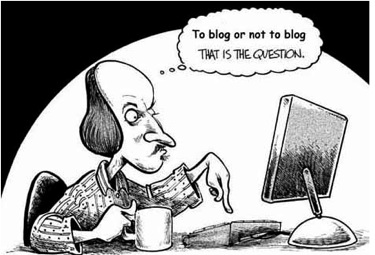
What if You Don’t Have Time to Blog?

Do I Have to Have a Blog CartoonA couple weeks ago, I posted a tongue-in-cheek video on YouTube that talks about Blogging for Book Promotion. Near the end, the heroine notices  she’s being instructed to spend more time blogging than working on her novels and as much time promoting her blog as her book, even though she only started a blog to promote her book…

It can definitely feel like you’re spending so much time worrying about marketing your book that you don’t have time to write the next book. And, in the end, will all those efforts pay off? Do you need a blog or does blogging fall onto the less desirable side of the Pareto Principle? The side where 80% of the efforts account for only 20% of the returns? (Ideally, we want to identify and expand upon the 20% of the efforts that account for 80% of the returns!)

I can’t imagine not doing a blog, because it’s been my day job for years. It just seems natural. But, despite the links to my books and the covers in the sidebar, this blog isn’t ultimately about selling stuff. It’s not that I’m against people here buying my ebooks (really, go right ahead), but, for the most part, I’m writing for other folks interested in e-publishing, most of whom probably don’t read fantasy. If it was 100% about selling the books, I’d be writing about things that would appeal to fantasy readers.

I’m maintaining this blog because I love learning new things and sharing what I learn with others. But the argument could be made that my time would be better spent writing and publishing new novels and pursuing only the most effective means of book promotion (for me that’s been advertising, giving away a free ebook, and appearing on other people’s blogs via interviews, blog tours, guest posts, etc.).

Fortunately, or unfortunately as the case may be, I have writers’ ADD and have trouble focusing on any particular project for long, so I like being able to turn to this blog when I’ve grown weary of writing snarky dialogue and monster battles.

But is a blog something every author must maintain? Is it worth the effort?

For the last month or so, I’ve been tracking book sales that originated either here or at Kindle Geeks, and the number is in the neighborhood of (prepare to be underwhelmed) 10. That’s not many for all the time and effort that goes into maintaining a blog.

As much as it pains me to say it–and as much as it goes against prevailing wisdom (establish a platform, OMG, even if you don’t know what one is!)–a blog probably isn’t a requirement for a writer of fiction. The whole build-a-platform mantra comes more from the non-fiction realm. Over there, it’s important to establish your authority in your field because anyone can give advice, qualified or not. With fiction, you just have to entertain folks and the proof is more likely in the novel than on the blog.

This doesn’t mean you can’t or shouldn’t maintain a blog or that you won’t sell any books through your blog (though it’s better to create a blog that targets your fan base rather than fellow writers, so do as I say, not as I do), but if I was pressed for time and I really had to choose carefully where to spend my one free hour a day, I’d pick working on the next novel over blogging. I’d save up some coins for advertising, get more books out so I could give one away free, and I’d do guest posts for other people’s blogs now and then.

Your thoughts? Have you tried and abandoned blogging? Do you have one you feel guilty about because you don’t update it often enough? Or have you actually created a popular blog that attracts your target audience and sells a lot of books for you? And, if you did the latter, did your blog become popular after your books did, or do you believe your blog was key in selling your books from the beginning?

Related posts:

Posted in Blogging, Book Marketing | Tagged , , , , | 6 Comments