Interview with KC May, Successful Fantasy/Science Fiction Author

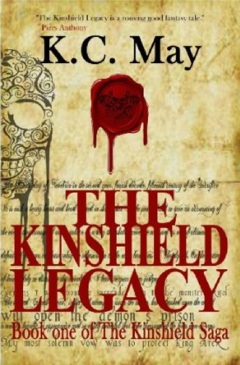
KC May Fantasy Kinshield LegacyToday we have a short interview with K.C. May. She writes fantasy and science fiction, and, though she doesn’t have a huge body of work out there, she’s already doing quite well for herself as an indie author. Her The Kinshield Legacy is a fantasy bestseller and the higher-priced science fiction thriller The Venom of Vipers (science fiction thriller) sells a lot of copies a day too!

She’s agreed to answer a few questions for us:

What led you to e-publishing?

My first novel was published by a small press in 2005, but without marketing, it didn’t sell many copies. I received the rights back in the summer of 2010, and so I decided to try my hand at self-publishing through Amazon.

It was such a great experience that when it came time to publish my next novel, I set my heart on self-publishing it, too. I did query my old agent about it, but he didn’t respond and so I went ahead with my plan.

Can you talk about your road thus far? I’ve seen you rework your cover art, and I know you’ve been working hard to promote your books. It seems to be paying off!

I went in totally clueless about everything! There’s a lot of info on the internet about how to format books, how to market, etc. and over time I gained a better understanding of what works for me and what doesn’t.

I did have my cover redone after readers told me the original one looked like it belonged on a YA vampire novel. hahaha! That was so NOT what The Venom of Vipers is. I’m quite happy with the new cover.

I’ve found that there are two effective promotion approaches. One is to play by the rules (don’t spam, post only occasionally to the sites that allow it and only on their allowed schedule) and be yourself the rest of the time (hang out with other readers, talk about books, let people get to know you as a person).

The other is to make a name for yourself as a rogue — spam your book ads at every opportunity and insult readers publicly if they don’t like your books or your marketing approach. Both methods seem to work to sell books, but I can’t bring myself to try the latter. πŸ™‚

What are your projects for the future? Can you see this being a full-time gig someday?

I’m currently working on the sequel to The Kinshield Legacy. This will be the second and last book in the series, but I could see myself writing more (unrelated) stories about the characters in the story. I would LOVE to write fiction full-time! It’d be a dream come true. I write professionally for a large technology company, and I do love my job, but I’d give it up in a heartbeat if my books took off. πŸ™‚

Want to learn more? Visit KC May on the web.

Posted in Interviews / Success Stories | Tagged , , , | 5 Comments

The Ebook Omnibus: A Win for You and Your Readers

Since I read fantasy, a genre that often features trilogies and longer series, I have plenty of paperback and hardback omnibuses on my shelves. In case you’re not familiar with the publishing-world version of the term, this is when two or three novels are bound together in one book. If you have an ebook series, releasing an omnibus can be a great decision (I don’t have enough novels out to do it myself yet, but I’ve seen other authors do this to great effect).

Here are a few benefits of releasing an omnibus:

It gives your readers a deal

Let’s say you have Book 1 priced at $0.99, Book 2 at $1.99, and Book 3 at $2.99. A reader would spend $6 to acquire all three individually. If you list an ebook omnibus with all three titles for $4.99, then your reader will save money.

You can potentially make more money

When I mentioned the above example, your first thought might have been…”Wait, but then I make less money.”

But, with the current royalty structures, that’s not true, at least not at Amazon, Barnes & Noble, etc. where you only get the 70% cut if you price your ebooks at $2.99 and up. You’d only be making 35% on Books 1 and 2 if the readers purchased the novels individually. If you group them together for a single higher-than-$2.99 price, you’ll be making 70% on all three titles and taking home more than if you only sold them as singles.

Wait, I say in my best Ron Popeil voice, there’s more:

While we hope every reader who picks up your first book will love it and go on to buy the other two, it’s a foregone conclusion that this won’t be the case. In that event, you’d only be making the 35 cents (35% of the Book 1 price) from that reader.

But, if they were attracted by the savings the omnibus represented (hey, we all love a deal!) and went straight ahead and bought all three novels together, you would make $3+ (on a $4.99 ebook) from that same reader. They’ll probably be more likely to try Books 2 and 3 as well since they already bought them.

You have more books “out there”

As we’ve talked about before, one of the biggest “secrets” to success seems to be simply having more ebooks out there for people to find. Most of the authors I’ve come across who are making a living e-publishing have in the neighborhood of 10 (or more!) books out.

An omnibus let’s you have another book out there that people might stumble across while they’re roaming the virtual aisles of Amazon, iTunes, B&N, etc.

Downsides?

As far as I’m concerned, the only downside of releasing an omnibus is that you’ll need to have another cover illustrated, which is an expenditure if that’s not something you can do yourself (and most of us can’t). That said, I have seen several authors just take vertical slices from their existing covers and add new title text. This should be an inexpensive job for an artist, and you may even be able to manage it yourself (I couldn’t, but we all know you guys are more talented than I am).

I suppose, too, that an omnibus won’t work for every author. It’s tailor made for those with a trilogy or a series, but you could always give it a try if you have three novels in the same genre. If you have multiple novels to choose from, try bundling your best seller with one or two that don’t sell as well. This might get more readers to try those other books.

One of the great things about electronic publishing is it doesn’t cost any more to put together a 1,000-page ebook versus a 200-page book. But the omnibus still represents a deal to your reader, so it’s a win all around.

Thoughts? Have any of you tried an omnibus yet, or do you plan to?

Posted in E-publishing | Tagged , , , , , | 5 Comments

5 Reasons to Consider Giving Away a Free Ebook

FreeOkay, before some random Twitter person pops in and tears into me for suggesting something as blasphemous as giving away work for free, let me start out saying I’m not necessarily advocating giving away novels (short stories can work just fine) nor am I suggesting this strategy if you only have one ebook out there.
That said, you may want to try giving away a freebie if you’re trying to jump start sales. Here are a few arguments for why:

1. More People Will Find and Try Your Work

Free is a way to get noticed when the other methods you’re trying aren’t panning out (at least not to the extent you wish). Lots of folks troll through the free ebook areas at Barnes & Noble, Smashwords, and Kindle.

Granted, some people collect wheelbarrows full and don’t read half of them. Others may enjoy the freebie but aren’t willing to pay for further works by the author. But for some readers, people who may be a part of your target audience, it’s a way for them to find you and try you with no financial risk involved.

At Amazon, the Top 100 Free in the various sub-genres is still relatively unpopulated, so this is a way to get noticed. I hope to have a freebie in the Kindle store eventually (it’s rather recent that indies have been able to get a free ebook listed over there: read this post on how to maybe possible make it happen).

2. A Free Ebook Can Be a Gateway to Further Sales

In the first month and a half my ebooks were listed at Barnes & Noble, I sold about five copies. Impressive, huh? After my free short story, Ice Cracker II, made its way to B&N, I started selling ebooks there. Oh, it wasn’t a quick ride to a bestseller list, but I started selling about 10 novels a day there (five months later, it’s dropped to 4-5, which is somewhat negligible compared to Amazon sales, but that’s still better than where I started, and it might be an argument for putting out a free short story once a quarter or so).

I believe short stories work best if they’re closely related to your other work. In my case, Ice Cracker II features the same characters as are in my Emperor’s Edge ebooks, and I included an excerpt to the first novel at the end.

3. Possible Publicity on “Cheap Reads” Blogs

The increasing popularity of the e-reader has birthed a slew of new blogs aimed at helping folks find bargain ebooks. The first week I released Flash Gold, my 99-cent steampunk novella, I posted a coupon code to the MobileRead forum, letting folks know they could grab it for free through Sunday. On Sunday morning, a popular blog published a post with the cover art, blurb, link, and coupon, and about 300 folks ended up downloading it that day.

That was a bit of luck, of course, but I had it happen another time too with a different free-with-a-coupon ebook and a different blog (the story was also picked up via MobileRead). Quite a few of these blogs have forms or email addresses, so you can always try submitting your deal to them as well.

4. Free Doesn’t Have to Be Forever

The fun thing about being an indie author and publishing your work digitally is that it’s easy to fiddle with price. Try making a book free for a couple of months, and if it doesn’t work out, raise the price. Or keep the price as is and use Smashwords to give away 100%-off coupons.

5. The Math May Work out Better Than You Realize

A lot of authors balk at the idea of working hard and then giving away their work for free, and I can’t tell you how many times I’ve seen calculations figuring the (always abyssal) hourly wage if a book is sold at 99 cents or whatever it is. (These calculations rarely factor in more than a year’s worth of sales, but I digress….)

Instead of thinking of this one ebook that you’re not going to make anything from, consider the money you’re making from your body of work as a whole. If, by giving away this ebook for free, you increase the sales of the rest of your ebooks beyond what you might have made by charging for your free one, then you come out ahead.

In my case, Ice Cracker II was simply sitting around on my hard drive. I’d originally submitted it to an anthology, but it didn’t get chosen, so it was hanging out, collecting virtual dust, and making me…nothing. Now it’s helping me sell copies of my novels at Smashwords and B&N.

Okay, there are my five arguments for giving away freebies. Do you agree? Disagree? Have more to add? Let’s here it!

Posted in Book Marketing | 15 Comments

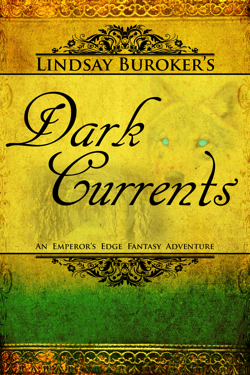
Dark Currents (Emperor’s Edge Sequel) Published!

Those of you in the “inner circle” (AKA the elite and privileged folks who were willing to sign up for my newsletter) know Dark Currents, the sequel to The Emperor’s Edge, has been up on Smashwords for a couple of days, but now it’s out at Amazon and Barnes & Noble too. It should make its way to Apple, Kobo, Sony, etc. in the next couple of weeks.

Here’s the blurb:

It’s been three months since former enforcer Amaranthe Lokdon and the notorious assassin Sicarius thwarted kidnappers and saved the emperor’s life. The problem? Nobody knows they were responsible for this good deed. Worse, they’re being blamed for the entire scheme. With enforcers and bounty hunters stalking them, and the emperor nursing a personal hatred for Sicarius, it’s going to be hard to earn exoneration.

When Amaranthe’s team discovers mutilated bodies in the city aqueducts and a mysterious illness incapacitates thousands of citizens, she and Sicarius see an opportunity to solve the mystery and prove their loyalty. But they’ll have to defeat vengeful shamans, man-eating predators, and deadly mechanical constructs, all while dodging imperial soldiers who would rather kill them than accept their help.

Nobody said exoneration would be easy.

The ebook is $3.99 at Amazon, Barnes & Noble, and Smashwords, and you can read the first chapter on my site.

If you’re stumbling across this post, and you haven’t read Book 1 yet, you can grab that one for a mere $0.99 at Amazon, Barnes & Noble, and Smashwords.


Posted in My Ebooks | Tagged , , , , , | 14 Comments

Camille Picott on QR Codes–How Writers & Publishers Can Supplement the Reading Experience

Camille Picott, one of my critique buddies from the SFF Online Writing Workshop, has officially joined the e-publishing world, though she’s been an independent author and publisher for some time. She’s here to guest post on some interesting new technology: QR Codes (if that doesn’t ring a bell, just read on — you’ve probably seen them and didn’t realize what they were for) and how you might want to use them.

How Writers & Publishers Can Supplement the Reading Experience

By night I’m a writer and self-publisher, by day I’m a full-time working mom in the wine industry. My daytime and nighttime lives rarely intersect, but in recent weeks I’ve been learning about these nifty things called QR Codes. Here’s an example of what they look like:

QR Code

A QR Code is a two-dimensional bade code that can be read by a Smart Phone. (If you’ve already got a Smart Phone with a QR Reader, go ahead and scan this code – it should take you to my website, www.pixiupress.com.) They have the potential to open new doors for indie writers and publishers.

This past week I had the privilege of taking a webinar on QR Codes. The webinar was presented by Rick Breslin, Founder and CEO of Hello Vino. And though the webinar focused on QR Codes in the wine industry, I learned quite a bit that can be applied to the publishing company.

Here’s some of what I learned from the Hello Vino webinar. And although this webinar was aimed at the wine industry, most of what I learned can be applied to the publishing industry.

You can use a QR Code to:

1. Link directly to a URL – sends your customer to a URL of your choosing. From a URL, there are a various things your customer can do:

a. Discounts/Coupons

b. Access additional information about product

c. Enter sweep steaks

d. Sign up to receive more information

e. Access video

f. Make purchase

g. Interact with social media

2. Send a text message – allows your customer can send you a text message (Interesting tidbit: this allows you to capture the phone number of the person texting you.)

3. Call a phone number – allows customer to call phone number supplied by you

4. Decode a secret message – you can embed a message up to 500 characters long in the QR Code; scanning the code will display the “secret” message. Some companies have been using this method to send customers on scavenger hunts.

5. Download Vcard contact info – allows you to download contact info; the future of business cards

Where you can get a free QR Code:

1.Go QR – this is a neat site that allows you to create QR codes that do all 5 of the items listed above. It’s totally free.

2. Kawya – another free site. It allows you to do all of the above except #5.

3. To find other free QR code generators, do a Google search for Free QR Codes.

What the QR Code Scanners do (not all do exactly the same things):

1. Send you automatically to a website

2. Capture the website so you can go to it later

4. Give customer yes/no options

5. Maintain history of accessed sites

What your customer needs to scan a QR Code:

1. A Smart Phone with a camera

2. An App that reads QR Codes. Here are a few:

Red Laser (iPhone)

ScanLife (Blackberry)

Quick Mark (Android)

3. A QR Code that’s dark in color on a white/light background (contrast is imperative)

4. A crisp QR Code, preferably one that’s generated from an EPS file. JPEGs may work, but be sure to test them.

Why QR Codes are good for businesses:

1. Deliver extra value to your customer

2. Allow you to collect contact info

3. Allow you to capture the location of your customers (usually with their permission)

4. Present incentives to purchase

5. Allow you to interact with your customer

6. Inexpensive and quick to set up

7. Allow you to track consumer awareness and engagement

Best Practices for businesses using QR Codes:

1. Use short URLs. The longer the URL, the more complex the QR Code. The more complex the URL Code, the more difficult it is to scan (generally, you have to make complex codes proportionately larger). If you don’t have a short URL, you can shorten it using bit.ly.

2. Cross Platform Compatibility – make sure the Code can be used on multiple devices.

3. Give instructions to your consumer so they know what to do with the QR Code. For example, if you print the Code on the cover of a book, print a statement like this below/beside it: “Scan this with a Smart Phone app that reads QR Codes.” Until QR Codes are more widely recognized, businesses must help educate consumers. Check out this Macy’s YouTube campaign to educate consumers on QR Codes.

4. Test QR Codes over and over again with multiple apps and phones before releasing to the public.

5. A “micro site” for customers. A regular webpage can be pretty hard to read and navigate on a Smart Phone. Landing sites for QR Codes need to be dimensionally smaller; in other words, designed for a small Smart Phone screen. Check out Hello Vino’s website for an example of a “micro site”. On the right hand side of their home page is a picture of a Smart Phone displaying the Hello Vino app. The website even allows you to navigate the app right on your computer so you can see how it will look on a small screen. Notice how easy everything is to read and how nicely it fits on a small screen.

A quick story relating to QR Code Best Practices: A colleague of mine did some experimenting with QR Codes. Using a long URL, she was unable to successfully scan .5″ QR Code. When she blew the code up to 1″, she was able the scan it. Our IT department shortened the URL, and she was able to scan it at .5″. This illustrates 1) how important it is to have a short QR Code, and 2) how important it is to test QR Codes.

QR Codes are Ugly! What can I do?

Worried that QR Codes are going to look tacky on your book cover? Check out some of the innovative ways you can spruce up at QR Code:

decorative QR codes with color

If you’re looking to do something like this, you have to hire a designer. I did a quick Google search and found BeQRiuos, a place that specializes in creating custom QR Codes. I don’t know what this sort of thing costs, but if you’re interested it would probably be worth your time to request a quote from a few of these companies. (Notice that both of these QR Codes adhere to #3 of “What your customer needs to scan a QR Code” – that is, both provide a dark QR Code on a lighter background for contrast.)

My plans for QR Codes:

I have a lot of ideas for how I would like to use QR Codes on my upcoming books. I’m thinking they will function as “Bonus Features.” Here are some things I would like to include:

a. full color illustrations for fantasy creatures in my books

b. YouTube video of me giving a school presentation

c. YouTube video of me talking about my writing process/inspiration for my story

d. early drafts of the book or deleted/altered scenes

e. promote the free teaching curricula I give away on my website

QR Codes and E-books: I don’t see any reason why a writer/publisher can’t include QR Codes in e-books. I’m thinking in my table of contents, I will have a “Bonus Features” hyperlink which will take readers to the QR Code. I will also include a hyperlink to the website, in case the reader does not have a Smart Phone. For those readers who may not have a Smart Phone or an e-reader with access to the web, I may also include the actual website address.

I’d love to hear ideas from other indie writers and publishers regarding QR apps. How would you use them to supplement the reading experience for your customer?

***

About the author of this article: Camille Picott is the author of Raggedy Chan, a middle grade fantasy novel named Best Juvenile Fantasy 2010 by the Bay Area Independent Publishers Association. Check out the Raggedy Chan e-book on Amazon and Barnes and Noble. Hard copies of her book (which includes 40 full-color illustrations) can be purchased at Pixiu Press.

Posted in Tips and Tricks | Tagged , , , | 8 Comments

Trading Excerpts with Other Authors in the Back Matter of Your Ebook

Kindle ExcerptI’m seeing more and more ebook authors trading excerpts with other authors, and it came up on JA Konrath’s blog today as well, so I thought I’d write a few words on it too.

What does “trading excerpts” mean exactly? Well, at the end of my heroic fantasy ebook, I might include opening chapters or scintillating passages of one or more other authors’ works, ideally authors who write in a similar genre. Then they would do the same for me in their ebooks. This gets your name out to an audience who might enjoy your work but may not be aware of you yet. And, naturally, it does the same for the other author.

It’s not something I’ve looked into myself yet, but I can see why you might give it a try. It’s a form of collaborative cross-promotion that has a lot of precedents (the big internet marketing gurus always cross-promote each other on their mailing lists, and those people make millions).

If you’re thinking of trading excerpts, here are a few things to consider first:

  • Does the other author sell a lot of books? Granted, you’re not likely to get Stephen King or even a bestselling indie author to trade excerpts with you if you’re just starting out, but if you’re doing reasonably well with sales, you might not get much out of this by trading with someone who doesn’t sell more than a couple of ebooks a week.
  • Do you genuinely like the other authors’ work? Whether you say so or not, adding an excerpt to the back of your ebook may be considered an endorsement by many of your readers. You don’t want them going on to buy a book that tanks in the back half or has huge numbers of grammatical errors.
  • How long will the trade last? You’ll probably want to agree ahead of time to a length, especially if this is your first time experimenting with this. You might agree to try it for a month or two at first and see how much it affects your sales.
  • Will it annoy your readers? I wouldn’t think it would (it wouldn’t annoy me, at least), since they’re not paying extra and it’s easy enough to skip something in the back if they’re not interested, but you never know. If you have a blog, you could always ask your fans for their thoughts before going ahead.

Readers, authors, what are your thoughts? Good idea or not? Anything else to consider?

Posted in Book Marketing | Tagged , , , , , | 15 Comments

Steve Richer on “Who’s REALLY Making Money with E-books?”

I like to highlight success stories and interview authors doing well with e-publishing, but I’ll be the first to admit this isn’t a road to riches for most folks. It’s easy to get dazzled by the fortunate folks doing well and start thinking, “Hey, maybe this could be my road to fame and fortune (or at least quitting the day job),” but it’s worth staying grounded. Today’s guest post, by indie author Steve Richer, points out some of the realities of the business.

Who’s REALLY Making Money with E-books?

Gold Mining ToolsWhen I wrote my historical thriller/Western The Gilded Treachery, I went a little overboard with the research. I must have spent three or four hours looking into the history of Nebraska, specifically the town of Florence. I made a startling discovery. One of the place’s founders, James C. Mitchell, had made his fortune during the Gold Rush in Council Bluffs, Iowa.

Wait a minute, you say! Iowa wasn’t where the Gold Rush took place. You’re right but Mitchell saw something few people had. The village was the starting point of the Mormon Trail and it was a route favored by immigrants going west to Oregon and California. He figured out something few people had at the time.

Why play the lottery when you can be the one selling tickets?

What he actually did was open up a store to outfit the adventurous settlers heading out West to seek their fortune. Everyone believed they would be striking gold and getting rich. The reality was that most prospectors ended up losing money. Aside from a few who did strike gold, those who became the wealthiest from the ordeal were the businessmen who catered to them. There was Levi Strauss whose blue jeans became bestsellers with settlers or Samuel Brannan, shopkeeper and a newspaper man, who became the first Gold Rush millionaire.

You see where I’m going with this, don’t you? It seems like the e-book craze is in fact a publishing revolution. The numbers back this up, books are increasingly downloaded and paper copies are in a downward spiral. Self-publishing, thanks to easy-to-use services such as Smashwords and Amazon KDP, is thriving. Everybody’s a writer these days, the short story you wrote in 10th grade is now put on the market for $0.99.

Smart people are taking advantage of this. You have the cover designers and you have proofreaders. There are those who specialize in e-book formatting and others who’ll try to sell you advertising. And I won’t even mention the thousands of blogs on the subject. Don’t be surprised if new companies spring up offering to package your books, from formatting to marketing, for a small fee. [Lindsay comments: lots of them out there already!] Don’t be surprised if some people start calling themselves e-book agents, charging money for something you could do yourself. Ever heard of estributors? There is a lot of money at stake, a lot of people trying to cash in on this new phenomenon.

Of course, the people I mention provide valuable services but I believe it’s useful and timely to consider where you stand in all this. The bloggers and the service providers have a stake in continuing to promote this revolution, in making everyone believe that you too can become the next successful independent author.

What you have to ask yourself is whether you’re a fly-by-night prospector hopping on the Oregon Trail on a whim or if you really know of a great piece of land where gold is buried. And this finally boils down to one basic fact: if you’ve written a great book you’ll have a great publishing career. There’s money to be made everywhere, just make sure you’re on the right side of the counter.

Steve Richer is the author of two novels, The Gilded Treachery and The Kennedy Secret. You can visit him at SteveRicherBooks.com.

Steven Richer Gilded Treachery

Posted in Guest Posts | Tagged , , , | 9 Comments

Using Twitter to Promote Your Blog

Twitter Tips for Blog PromotionIf you’re an author or a book reviewer, you’re probably interested in getting more people to visit your blog. Heck, even if you’re rambling without an agenda, you’d probably love more blog visitors. It’s fun seeing your traffic stats climb.

We’ve talked about building links to get more search engine traffic to your blog, but social media sites can be another good way to attract visitors. I’m a fan of Twitter since it’s hard to waste a lot of time there (hey, how verbose can you be in 160 characters?), but it’s easy to check multiple times a day, and you can even get to know people over time. And — the reason why you’re here — you can use Twitter to bring more people to your blog.

Here are a few tips for promoting your blog (effectively) on Twitter:

  • Use titles or blurbs that answer the “What’s in it for me?” question for your followers — If your blog post title already does this, you can simply use it in your tweet, but you might have a little more room to entice folks. If you just say something like, “Hey, I updated my blog and here’s the link,” you’re less likely to get clicks than if you detail what you’ve written that’s worth reading.
  • Don’t just tweet links to your blog — I don’t even follow people who do this (and I’m not picky about who I follow back). Most tweeps want to engage with people, not get someone’s RSS feed in an alternate format. It’s called social media for a reason.
  • Don’t bury your own promotional tweets — While it is called social media, you won’t get many clicks if you post the link and then respond to thirty @ messages in the next five minutes. Most people aren’t sitting at their computers, following your Twitter stream 24/7 (an ego buster, I know). I often post a link to my blog before I’m heading offline to do other things. This gives people who check my tweets more time to notice it.
  • Link to your old articles too — I should do more of this myself. There’s nothing that says you can only tweet about your most recent blog post. Do you have some gems from the early days of your blog (back when you had no followers)? You can tweet links to them if they’re still relevant.
  • Have enough followers that you’ll get retweeted — This is the true power of Twitter. Thanks to the “retweet” button, it needn’t be just about promoting your blog to your followers. Your followers can promote it to their followersΒ  and so on and so forth. An interesting article could bring you quite a few new visitors. You don’t necessarily need thousands of followers, just some that like to spread the word and share cool links. (Make sure to retweet them once in a while too so everyone benefits.)
  • Tweet during “prime time” — I’m not the best about this, since I’m a night owl in a late time zone, but Twitter tends to be most active during the work day (which says volumes about our culture), especially the morning. Your link will be more likely to be noticed if more people are online. If you’re in a different time zome from many of your followers (maybe you’re in Australia, but you have a lot of U.S. readers), check out some of the free services that let you schedule tweets.

Do you have any tips you’d like to add? Let us know below!

Posted in Social Media | Tagged , , | 11 Comments