Updates on the New Novel (Plus How to Get a Free Copy)

Sunday updates:

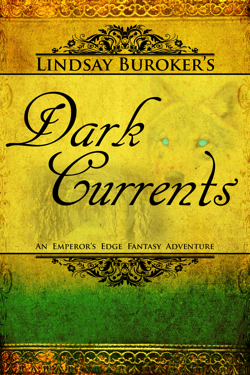
Editing of Dark Currents, the second book in what’s becoming The Emperor’s Edge series, is done!

I’ll be sending it off for ebook formatting in the next couple of days. First, I’m working on an Author Q&A to add after the story (last week’s discussion on afterwords inspired me, and I thought it’d be fun to do something extra at the end of the ebook). I have a few questions that I’ve received a number of times that I’m answering, but I’m open to others if anyone wants to ask something soon (like today).

As for how to get a free copy, I mentioned it before, but I’ll do it again because I’m sure not everybody reads every blog post I write:

I’ll be sending out a Smashwords coupon for 100% off, good for a week or so, to those on my mailing list, so sign up now if you’re interested. (Sign-up form in the sidebar on the right.)

Otherwise the price will be…I haven’t decided yet. Thoughts?

Thanks for reading!

Posted in My Ebooks | 16 Comments

Interview with Full-Time Ebook Author S. J. Reisner

If you like success stories, you should dig today’s interview. I first learned of S. J. Reisner when she left a comment on one of my posts about short fiction ebooks. She mentioned she was a fan of short fiction because she’d been able to quit her day job, thanks to the sales of her novellas in particular. I, of course, pounced on the chance to get that story and stalked her back to her website to request an interview.

She agreed, so here we are:

Interview with S. J. Reisner

Do you want to start out telling us about what let you to e-publishing and how you came to have four pen names?

I have been a (starving) published author since 1996 (in print), but in 2008 I decided to go ahead and make my fantasy novels available on Kindle since I still owned all the electronic rights. At that point, Kindle was pretty new and having my books as e-books increased my sales about 6-10 copies a month so I was happy with it. I kind of forgot about it. Meanwhile I had quite a few non-fiction books self-published through Lulu and CreateSpace. My readers started asking for my non-fiction books as e-books. So after about the third request in 2010 I began converting all my self-published print books to e-book format. Meanwhile, I’d begun writing mystery novels and when the first one came out, I immediately published it as a Kindle book. I was also among the first writers to sign up with Barnes & Noble PubIt. When I saw my sales increase 100% – that’s when I realized that maybe there was something to be said for the e-book thing. As I saw it one of my biggest obstacles as a small press author and Indie author who books were POD, was getting readers to fork over $10+ for a paperback. With e-books I could price the books lower and in some instances make more money so it was benefiting me and my readers. Not to mention I saw it evening out the playing field between those authors published with the big six, and those of us who were both self-published or working with small presses. I went from making about $600 a month in physical book sales to $1000 a month in both physical and e-book sales almost instantly. Then, after my erotic romances hit it big, I started making even more and now, only about 100 sales a month are paperbacks. The rest are e-books and my sales numbers vary wildly month to month. Some months I’ll sell 20,000 books (usually when a new one comes out), but in an average slow month I sell about 5,000 books. That’s my goal number because that means I’m selling enough books to make the same amount of money I was making at my day job.

Of course this doesn’t explain why I have four pen names. Since my non-fiction, written as S. Connolly, is about witchcraft and magic (and therefore controversial) I wanted to keep my fantasy novels separated so I wouldn’t alienate readers who might be offended by such topics. So I wrote the fantasy novels as S. J. Reisner. When I began writing mystery novels I was originally going to write them as S. J. Reisner, too, but then I had to contend with the problem that my mystery novels are written for adult readers and my fantasy novels were safe for ages 11+. Since my fantasy fan-base seems to consist of a lot of younger readers I was not willing to make the mistake of publishing books for adult readers under that pen-name and accidentally have one of those books end up in the hands of an eleven-year-old. Could you imagine the parental outrage? Hence Audrey Brice was born. Finally, Anne O’Connell started out as my experiment in writing romantic erotica just to see if it was something I really wanted to do (or could do). I didn’t write those stories under any of the other pen-names just because if I was terrible I didn’t want to admit I was Anne O’Connell, and at the time I wasn’t sure how my family and friends would react to me writing such racy novellas and novels. Of course once Anne became popular and my family questioned how it was that I was making so much money, the jig was up and I decided to go ahead and publicly claim Anne.

Of course having four pen names is kind of a pain because it required the maintenance of four websites and blogs. After a few months of that I gave up and combined everything into one website I call The Quadrant. http://www.the-quadrant.com/ It’s also sjreisner.com, s-connolly.com, audreybrice.com, and anneoconnell.com.

You mentioned that you were able to quit your day job thanks to your success with short fiction. Congratulations! What made you decide to try shorter stories?

Thank you! Basically what happened is while writing the second mystery novel, I wrote a particularly erotic scene between the two main characters. When it went through critique, the entire group agreed that it was far too graphic (x-rated if you will) for a mystery/thriller novel so I had to tone it down considerably. That’s when one of my critique partners approached my privately and asked if I’d ever considered writing erotic romance. I’ve been writing for about thirty years and I can tell you that writing erotic romance was something I never really considered. She suggested I try it, so I started out by reading an avalanche of erotic shorts by other writers. I wanted to see if it was something I enjoyed reading or could even consider writing. If I don’t enjoy reading it – I won’t write it. It’s really that simple. By the time I’d finished reading about twenty of these novellas, I was inspired to write one short story (about 8000 words) and two novellas. I had an editor friend who was willing to edit them for me (since it was an experiment), a friend did some covers, and then I priced them based on the market and got them out there.

I honestly wasn’t expecting what happened next. My sales on Barnes and Noble took off and in the first sixty days I made a substantial amount of money. Please know that my results are NOT typical. After my success several writer friends attempted the same thing and while they’re selling their erotica shorts, maybe twenty copies a month, none of them have been able to emulate my sales numbers. For whatever reason my books just started selling like crazy (without any heavy marketing). I suspect it was word of mouth, or a bunch of eager Nook users because my stories were some of the first hardcore erotica stories on PubIt Nook. It was when my fourth story when sales really took off and next thing I knew, Training Amy was #1 on Amazon’s Kindle Erotica list and it made Kindle’s top 100 romance novels for a month.

How successful you ask? As of the beginning of June – I’ve already made $70K, which is about $20K more than the yearly salary I was making at my day job.

I’ve heard romance and erotica are popular genres. Do you think you’ve had to do less marketing because you’re in a hot niche, or is there just more competition (more writers publishing in that area)?

I think romance and erotica are popular, but I also think readers are discriminating. There is a lot of competition and there are a lot of good writers in the genre. It’s probably one of the most saturated genres, too.

I think I got lucky and was in the right place at the right time (being one of the first erotic romance authors with books on PubIt) and my work ended up getting noticed. That, right there, for an indie writer, is your biggest obstacle. Getting your work noticed. So as much as I hate to say it – I don’t have to market my erotica nearly as much as I have to market my fantasy and mystery novels. It may have also helped that I was already a best-selling Indie author with my non-fiction. But I worked hard marketing my non-fiction to build a name for myself there. I have noticed my non-fiction has helped to increase my fiction sales since a lot of the people who read my non-fiction also read fiction. I do some marketing though. Don’t get me wrong. I’m constantly marketing. I don’t think I do any less work than you average indie. Writing is still a business.

What are your thoughts on ebook pricing? I see that, across your pen names, you’ve got prices that range from 99 cents to $9.99.

I think pricing is what gives the Indie e-book author some advantage over the traditional publishing model. An example to illustrate my point – I wanted to read the latest Charlaine Harris. But because she’s so popular, the big six publisher she’s with is charging $12.99 for the Kindle book. Sorry to say, but as a reader, I’m not paying $12.99 for a novel unless I’m buying a physical copy of the book. But I will gladly buy two or three Indie paranormal mystery/romance novels for $3.99 each (provided the samples look promising). So when I price my books, I look at it from a reader’s perspective. As an unknown fantasy author, $1.99 isn’t bad for a fantasy novel that’s been out for several years. It keeps my sales steady and slowly grows my audience. But I’m still not charging rock bottom prices for an 80K word novel. That novel took a long time to write and I deserve to get paid. And you better bet that when the third book in the series comes out next year, I’m charging $3.99 for it and after it’s been out six months I’ll drop it to $2.99 and after a year, down to $1.99 with the rest of them.

Mystery is a hotter seller than fantasy. I can get away with starting the books at $4.99, dropping them to $3.99 after six months, and finally letting them rest at $2.99. With non-fiction – you can get away with higher pricing. Since most of my NF is around the 200 page mark – I put all new releases at $9.99 and for the NF chapbooks – between $2.99 – 7.99. For short stories under 10K, .99 cents and for my fantasy short story collection – also .99 cents.

With the erotica I chose to create my own little pricing system that seems to be working for me, .99 cents for short stories under 10K, $1.99 up to 15K, $2.99 for anything longer. However, I am considering putting a $3.99 price tag on the next erotica novel to see what happens (since I might be able to get away with that price now that I have an audience). I also have a series of erotic horror short stories coming out at .99 cents each and another novella that will likely price between $1.99-$2.99 (won’t know until the revision is done).

Do you have any tips for new indie authors looking to break into the e-publishing scene?

I guess first and foremost I’d say don’t get into e-publishing because you think it’s a quick buck. I can’t even begin to tell you how many people I know who decided to jump into writing when they heard my books were doing so well because they thought it was a get-rich-quick scheme. So many of them were like, “If she can do it, so can I. It can’t be that hard.”

Then, after a few months, they found themselves upset and frustrated when they weren’t getting the same sales I was. Like I said, my success seems to be an exception rather than the rule and I suspect that while it was probably a combination of luck, pricing, the popularity of e-books and the popularity of erotic romance, I also think it may have something to do with the fact that I’ve been writing for thirty years. Just concentrate on writing good stories. Readers always have been and always will be the real gatekeepers. You never know when something you write will get noticed. What becomes popular may not be, in your opinion, your best work either. Also know that you need to keep producing. Never bank an entire career on one book. Writers who can make a career out of writing are prolific, self-disciplined, and they can consistently produce at least one to two books a year. Not only that, but all books have a life cycle. You’ll make the bulk of your book sales in the first 3-6 months after it comes out and then it’s going to taper off. If you aren’t consistently putting out new material sales will eventually level off.

Great information. Thanks for the interview!

Here’s the link to SJ’s Amazon page, in case you want to check out her fantasy. And here’s the Anne O’Connell page (for the other type of fantasy).

Posted in Interviews / Success Stories | Tagged , , , , , , , , | 6 Comments

Should Your Ebook Have an Afterword?

I’ve always been a fan of afterwords in traditionally published books. It’s nice to get a little thank you message from the author or the tale of how the book came to be. Sometimes you’ll even get an interesting essay on the genre or the author’s book-related experiences (some of the omnibuses I’ve purchased by my favorite authors have had these).

That said, afterwords don’t seem to be all that common.

If you’re an ebook author, you might want to consider adding one. What you write is up to you, but this is the ideal place to add links to your other books.

You’ll often see a list of an author’s other works in the front of a paperback, but people reading on a Kindle or other e-reader aren’t that likely to “flip” back to the front when they finish.

Also, with ebooks, you have the unique ability to put live links into the text. Naturally, you wouldn’t want links in the middle of your novel, but adding a list of other books at the end makes sense.

If I’m reading on my Kindle, and a link takes me to the Amazon sales page for the Kindle-version of the sequel, I can buy it right then and there, without having to get out of bed. If I’m not sure if there’s a sequel, and I have to look up your name in the browser, hunt through other offerings, etc., then you’re putting more steps between me and purchasing the next book. Remember, I’m in bed already, so I’m not feeling terribly ambitious.

I always figure the easier you can make things on readers the better. If you do decide to include links to sales pages at the end, make sure to tailor them, i.e. your mobi-formatted Kindle ebook should take readers to the Amazon store. An epub for Barnes & Noble should have B&N links. With Smashwords, if you’ve opted in for distribution, you can’t be sure which store someone will buy your ebook from, but you can always include links to your Smashwords sales pages, since they sell every format of ebook.

Beyond Sales Page Links

Okay, so what else can you do with your afterword? Let’s say you’ve already thanked the reader for trying your book and you’ve included links to your other ebooks. Here are a couple other things you might add:

  • A link to your website or email address — Readers might want to visit and find out what else you’re working on.
  • A line or two letting them know you having a newsletter they can sign up for on your site — You do have a newsletter, right?
  • A request for reviews — While not everybody is into writing up reviews, it doesn’t hurt to add something like, “If you enjoyed my story, please consider leaving a review on Amazon, B&N, etc.” This can be especially helpful if your ebook is new and doesn’t have many yet.
  • An excerpt of the next adventure — I hate getting these when the next book isn’t due out for 8 months, but if your follow-up is already on the virtual shelves, waiting for buyers, this can be a nice teaser.

You don’t want to go too crazy with making requests (I’ve seen indie authors ask readers to review them, tag them, add them to lists, tweet about them, add them on Facebook, etc. etc. etc.), but the afterword is a chance for you to communicate briefly with the reader so it doesn’t hurt to use that space!

Can you think of any other things authors might want to include in an afterword? Let us know below!

Posted in Tips and Tricks | Tagged , | 8 Comments

Interview with MeiLin Miranda on Ebook Pricing, Web Serials, and Crowd-funding

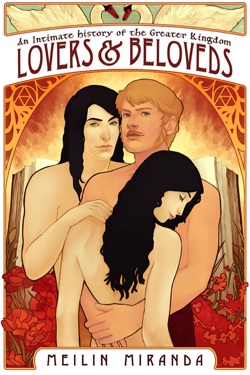
MeiLin Miranda Lovers and Beloveds Ebook CoverToday we’ve got an interview with indie fantasy author MeiLin Miranda. I tracked her down after reading a review of her novel, Lovers and Beloveds, over at Frida Fantastic. She started out publishing her work as a web serial and got help with the initial ebook start-up costs (for cover art, editing, etc.) from her fans. Read on for details….
What led you down the road to independent publishing?

Frankly I didn’t know if I had time to do it the traditional way. I finally began my lifelong wish to write fiction after a 30-year career in nonfiction when I had a near-death experience five years ago. None of us know when we’re going to die, but that kicked me into high gear; I started writing. And while I’m a lot better now, when it came time to figure out what to do a couple of years ago I didn’t know if I had the years to find an agent, years to find a publisher, years to wait for the book to come out.

I started reading a webserial and thought, hey, maybe this is what I’ll do. I began writing my series, “An Intimate History of the Greater Kingdom,” as a serial. It quickly gained a large audience, and I never looked back. When it came time to make it into novels rather than a serial — it turned out to be unsustainable as a serial — going indie was a no-brainer.

I read in a review that your first novel, Lovers and Beloveds, was a crowd-funded project insofar as paying for editing and cover art went. How did that come about?

Yes. Forty-eight people bought pre-sale packages to the tune of $2500. That paid for my editor, artist and typographer, and then the purchase and shipping of the paperback for those that bought the print package. The $50 presale bought them an autographed paperback, the finished formatted ebook and a thank-you in the acknowledgments, but the real attraction was that they got the raw manuscript as soon as my editor and I decided it was done (the $25 package was everything but the paperback). I finished on August 31st, 2010 at 9:30 pm; the raw manuscript was in their hands 24 hours later.

It came about because I needed $500 to match $500 I’d saved up for my editor. So I put this package together and said, OK guys, match me. I had the $500 in 24 hours, I closed the presale, and a bunch of people complained that they didn’t get a chance to buy one. So I reopened it. I had the rest of the $1000 in less than 72 more hours.

After that I just kept it open so that everyone would have a chance. It stayed open until about two months before the book came out, at which point it switched to pre-orders of the book–regular-priced autographed paperbacks.

I see you have your novels priced at $4.99 in the Kindle store. That’s a higher price than many indies try, at least in the beginning. Does $4.99 work well for you? Have you tried other price points?

I was priced at $2.99 for a while and sales were okay. Reading other authors’ experiences, though, there seems to be a “sweet spot” for each book, and sometimes that spot is *higher* not lower. So as an experiment I raised the price to $4.99. I’m selling the exact same number of books as I did in March and April (the price went up in the middle of April)–in fact this month I’m on track to sell more. And I make a lot more money. This is a BIG book–140,000 words, 420 pages in a 6×9 trade paperback–and $5 is not a lot for that many hours of quality reading. In fact, just the other day I got $5 from someone who got the book for free and liked it so much she paid me for it. When book two comes out I will probably drop the price of book one for a while, or perhaps for good.

One could argue that your novel has a fairly niche target audience. Do you have any marketing tips for those who aren’t writing in the most popular genres?

Quite honestly, no. What has worked best for me is to figure out who I’m most like and then appeal to that audience. For me, apparently that’s Jacqueline Carey, who I’ve never read myself. I’m told that while our styles and stories are different, we’re mining similar veins. So I’ve started saying in my marketing “If you like Jacqueline Carey, you’ll like ‘Lovers and Beloveds.'” It seems to be working–it gets me many more acceptances on reviews, at least. I’m still trying to figure out how to find Carey fans, though! Her fan sites don’t take advertising.

You have some shorter ebooks (stand-alone short stories and collections of shorts) out there too. How do those sell for you?

On initial release very well, but then they taper off. I think they’re selling to the choir, so to speak. I don’t think I have my blurbs down yet, or they may just be limited to people who’ve read the book. I did my best to make them stand-alone; reviewers of “The Gratification Engine” say they can tell you’d get more out of it if you’d read the book but that it was enjoyable nonetheless.

Do you want to finish up by telling us more about your work and any future projects in the pipe?

I’ve just today put book two in the corner to let it think about what it’s done. 🙂 I lost my way, and I’m taking a break for a week or two on the order of my editor to let the thing settle. While I’m doing that I’m working on another related short that takes place not long after the story-in-story of “Lovers and Beloveds.”

And I’m writing some more episodes of my fantasy western webserial, “Scryer’s Gulch.” I put it aside to work on book two, and its readers are peeved–especially since its last page was an April Fool’s story written by another writer in a round-robin the webserial community did. The story’s title: “The End.” People think I’ve abandoned the story, even though that entry is marked APRIL FOOLS! Gotta get back to that.

You can read “Lovers and Beloveds” in installments free on my website at http://www.meilinmiranda.com/intimate-history, where you’ll also find links to buy the ebook at Amazon, B&N, Smashwords and direct from me.

You can read all of “Scryer’s Gulch” for free on my site as well, though there are also ebook collections of Gulch episodes for people like me who prefer to use their e-reader to reading on a computer. 🙂 You’ll find the beginning of “Scryer’s Gulch” at http://www.meilinmiranda.com/scryers-gulch-1


Posted in Interviews / Success Stories | Tagged , , , , | 9 Comments

How to Help Your Favorite Authors

As authors, we spend a lot of time trying to promote our books. Our biggest obstacle is obscurity because there are a lot of books out there. No, really. A lot.

We like to think that good stories are all it takes to make it (in author terms “make it” usually means “become well known enough and sell enough books that I can quit my day job and write for a living”), but you can doubtlessly think of mediocre books that are selling bazillions of copies and authors you love who never make it out of the “mid-list” category.

Sometimes it’s just the author (or publishing house) with the biggest marketing budget who wins, but you, as a reader, have amazing power. Don’t believe for a second that you don’t have anything to do with whether an author makes it, because you do. A lot. No, really. A lot.

Why does this matter to you? Well, authors who get to quit their day jobs can write faster and put more books out for you!

The following are some little things you can do that can make a big difference. Some of them only take a few seconds. Your favorite authors will appreciate the effort. Trust me. 🙂

Helping out on Amazon

Amazon is the big kahuna of book sellers, especially when it comes to ebooks, so helping an author “get found” on there can give them a big boost. You can certainly do these things on other bookstore sites as well (nothing against copying and pasting a review, for example), but Amazon tends to have more cool features to help an author get found.

Here’s the list (any one of these things can help):

  • If you do nothing else, consider writing a review on Amazon, even if the book already has quite a few and/or you’ve reviewed it elsewhere. There’s evidence that ratings and reviews factor into the Amazon algorithms that decide which books are promoted on the site (i.e. certain books are recommended to customers who bought books in similar genres). If reviewing isn’t your bag, don’t worry about writing paragraphs-long in-depth studies of the book; maybe you could just pen a few sentences with a couple of specifics about why you liked the book.
  • “Tag” the book with genre-appropriate labels (i.e. thriller, steampunk, paranormal romance). You don’t have to leave a review to do this; you just need an account at Amazon. A combination of the right tags and a good sales ranking can make a book come up when customers search for that type of story on Amazon.
  • Give the book a thumb’s up. This takes less than a second and probably doesn’t do much, but it may play into Amazon’s algorithms to a lesser extent than reviews/ratings.
  • Make a “Listmania” List and add your favorite authors’ books to it. This creates another avenue for new readers to find books. It’s better to create lists around similar types of books (i.e. genres or sub-genres) than to do a smorgasbord, and consider titling it something description so folks will be more inclined to check it out, ie. “Fun heroic fantasy ebooks for $5 or less”
  • If you have a Kindle, highlight some wise or fun quotations from the book and share them publicly (if enough people share their highlights, they’ll show up at the bottom of a book’s page):

Popular Highlights on a Book's Sales Page

Helping out with Social Media

If you’re involved with Twitter, Facebook, Digg, StumbleUpon, etc., you can give your favorite authors a shout-out when they release new books. If they blog, you can follow their site (through Google Reader or other RSS readers) and share the link when they post something that may be interesting to your friends. If they’re on Twitter, you can follow them and retweet their links now and then.

Authors don’t expect you to follow them 24/7 and repeat everything they say (that might actually alarm some folks…), but a little promotional help now and then is greatly appreciated.

If you like to be social about books, you can join sites such as Goodreads, Shelfari, or LibraryThing. You can help your favorite authors by posting reviews and talking about their books on those sites, or you can just use those places to find online reading buddies with common interests.

Helping out with Your Blog

Do you ever talk about books or what you’re reading on your blog? You might consider reviewing your favorite authors on your site (you could even make a few dollars if you signed up as an Amazon affiliate).

Also, if most of your favorites maintain websites, you could add an “author blogroll” list in your menu with links to those sites.

And Lastly…

These days, most authors have websites and contact forms so you can get in touch. If you enjoyed their work, consider sending them a short note to let them know. While it won’t help them sell more books, it’ll make their day.

Thanks for reading (this post and books in general!).

**Authors, you’re welcome to reprint this article and post it on your blog. All I ask is that you give me credit with a link back to my site, i.e. “Originally by <a href=”https://www.lindsayburoker.com”>Lindsay Buroker</a>” or something like that. Thanks!

Posted in Tips and Tricks | Tagged , , , , , , , | 36 Comments

My Story, My Way–A Guest Post by David Baboulene

David BabouleneToday we’ve got a guest post from UK author David Baboulene who’s here to talk about something dear to all of us: writing.

He’s a published author of two humorous books, two children’s books and The Story Book — an academic work on story theory. He also has three film production deals, two in Hollywood and one in the UK.

He works as a story consultant with training and development organisations, aspiring and established writers and producers. He is also working at Brighton University on his Ph.D. on the critical importance of subtext to a story’s power. David writes extensively on his subject, including his monthly column in Writing Magazine and Writers’ News.

You can find him on the web at http://www.baboulene.com.

My Story, My Way

The most obvious difference I see between the successful writers I have met and the aspiring writers who fail is confidence. Confident writers are focused and productive. They say, “This is MY story. I’m writing it MY way, and I don’t care what anyone thinks.” They put their blinkers on, they get busy, do what they think is right, and deliver. The final product may sell a million, or the writer might end up having thirty copies printed for his own bookshelf, and go back to his day job. Either way, he did it right.

Well, almost…

The wrong thing to do, which I see a lot in the writers I work with, is to go on endless courses or read a pile of books on ‘How to Write’. They inevitably provide you with a set of rules that seems to apply to famous stories. As soon as you buy into this, your story becomes driven by structure. It becomes a little unnatural and it loses its spark, and you have your creative instinct damaged by someone else’s rules.

In my experience, when I get writers to sit down and think about what they are really looking for, it’s not ‘How to Write’ help. You learned how to write when you were at school. The questions they really want answering are: “How do I make the most of my story ideas? How do I tell my story to its absolute best? How do I guide my ability to tell stories without damaging my natural talent? It takes me months to find out what’s bugging me in my story. How do I understand and solve story problems quickly and effectively? What gives one story power and another one not? What are the story tools that are available to writers that make stories grip and intrigue?”

There is only one person who can tell your story the right way, and that is YOU! What you need is knowledge of the craft of story so you are empowered to tell your story your way. Then you will also have the confidence to send it off, take rejection knowing that what you’ve done is right.

Because there’s only one right way to write your story, and that’s your way. If you think about it, there simply can’t be any other way. So take responsibility. Learn about story so you can squeeze the most from your ideas. Write every day, and say to yourself every day:

“My Story. My Way. And balls to the lot of you.”

Say it now. Say it out loud and mean it. Not only will you laugh at yourself, but take responsibility for your own development and suddenly life as a writer, and your path forwards from today, becomes very clear indeed…

And if it’s not clear, contact me and I will send you a free chapter from The Story Book on the topic that is puzzling. Unless your puzzled by `How to Write`. In which case, you`d better find someone else…!

David Baboulene Story Book Cover

Posted in Guest Posts | Tagged , | 4 Comments

Are Readers Downloading Pirate Copies of Your Ebooks? Does It Matter?

In the last couple of weeks, I’ve had indie authors mention pirated ebooks to me in various Ebook Piratesonline conversations. “How can you find out if your ebook is up on a pirate site?” “How many sales am I losing because of pirated ebooks?” “What do I do if I find my ebook listed on a pirate service?” Things of that nature.

I’m not really the right person to ask about this stuff because honestly I don’t worry about it (though I’m throwing in a couple of links at the end of the post in case you are looking for answers).

Why don’t I worry about it?

a) The people who pirate stuff probably weren’t going to buy a copy of my ebooks anyway, so it’s not like I’m losing sales.

b) I think Elizabeth Warren is right and a lot of people just can’t afford to spend much money on entertainment these days (I pirated music left and right when I was a broke private in the army — back in the late 90s, when I was stationed in South Korea, everybody in the barracks with a computer had Napster on it. I share this tidbit, not because we were in the right, but because it might change your opinion of who your stereotypical pirate is.) Don’t want your stuff pirated? Write to appeal to an older, upper class audience :D.

c) I’m a nobody author at this point, so I’d be more flattered than anything if someone went through the hassle of hunting for my ebooks on a pirate site (that said, I doubt my opinion will change even if I become a somebody author one day). I kind of wonder how much of a problem this really is for any indie author who isn’t in the Amazon Top 1oo.

Naturally, I’d rather folks bought my ebooks, but I’m not going to take it as a personal betrayal if they don’t.

Oh, and incidentally, I ended up buying tons of CDs back when I was in Korea (and you could find anything on Napster for free). I discovered a lot of good music, stuff that wasn’t played on the radio, stuff I never would have tried if I’d had to take a chance on a $12-$15 CD (this was before Pandora and iTunes existed). Just saying. I agree with Neil Gaiman on this.

Okay, now that I’ve had my little say, here are some links if you’re concerned about this stuff:

Posted in Ebook News | Tagged , , , , | 5 Comments

The Indie Journey by Successful Author Scott Nicholson

Scott Nicholson's Indie JourneyA couple of months ago, I interviewed full-time indie author, Scott Nicholson, and we talked about advertising, pricing concerns, and other topics pertinent to ebook authors. If you liked that short piece with him, you may be interested in his new ebook:

The Indie Journey: Secrets to Writing Success

Scott was nice enough to give me a review copy, and I just started reading this morning, but I’ve already highlighted quite a few passages on my Kindle. It looks like a good resource for anyone getting into e-publishing. Years ago, Scott started out going the traditional route, which never did make him a living — something he was able to do within 14 months of turning to e-publishing his work as an indie.

It’s clear from the opening, this isn’t how-to-get-rich-as-an-indie-author ebook, and that’s good because that’s not going to happen for many of us. Scott’s book is a straightforward look into e-publishing, and I’m sure you’ll find some inspiration and some tips you can use within the pages.

Here’s the blurb:

The e-book era has launched thousands of writing careers and holds tremendous promise for future growth. Here’s how one author went from publishing his first e-book to becoming a full-time author in a little more than a year. While offering general tips on business, craft, product development, and marketing, its primary goal is to inspire you to embrace your creative entrepreneurship and success. Bonus essays by successful indie authors J.A. Konrath, Zoe Winters, Vincent Zandri, and Vicki Tyley.

Scott Nicholson is author of more than 20 books, including the indie bestsellers Liquid Fear, Disintegration, and The Red Church. He also edited the charity writing manual Write Good or Die.

If you’re buying this book to sell a million copies, you probably won’t be happy. If you are buying this book to be happy, you probably have a better chance of selling a million books.

You can buy The Indie Journey (or download a sample) at Smashwords, Amazon, or Barnes & Noble.

Posted in E-publishing | Tagged , , , | 4 Comments